Your Guide to Finding High-Paying Pharmacist Jobs Remote
Discover the best pharmacist jobs remote with our expert guide. Learn how to navigate licensure, build a standout application, and land a career you love.

Yes, high-paying remote pharmacist jobs aren't just a fleeting trend—they're becoming a permanent part of the healthcare system. The demand for telepharmacy professionals is accelerating, driven by a massive global pharmacist shortage and record-high clinician burnout. This shift is creating stable, flexible, and often lucrative career paths for pharmacists looking for a better way to work.
Why Remote Pharmacist Jobs Are Here to Stay
The move toward remote work isn't just about convenience. It’s a strategic response to some deep, systemic problems in healthcare. Two major forces are reshaping the pharmacy job market: a critical shortage of pharmacists and unsustainable levels of professional burnout.
Because of this, telepharmacy is solidifying its role as an essential part of delivering patient care. The opportunities are expanding far beyond the four walls of a traditional pharmacy, offering a lifeline to professionals worn down by conventional roles.
The Workforce Shortage and Burnout Crisis
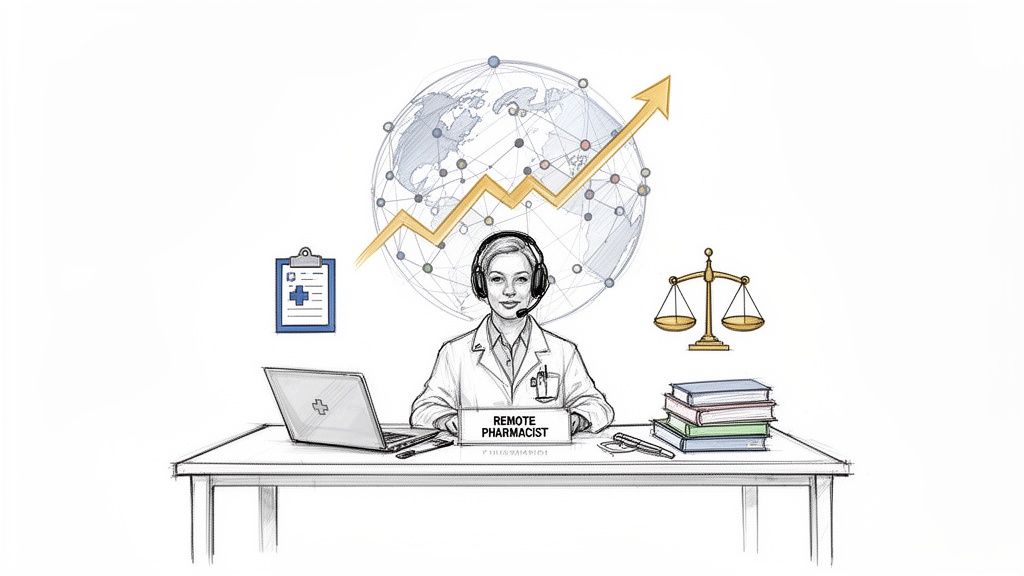
The pharmacy profession is facing a serious staffing crisis, making remote work a necessity, not just a perk. Projections point to a staggering global deficit of over 100,000 pharmacists by 2026, with the U.S. alone needing more than 20,000.
This is made worse by an alarming burnout rate, with 78% of pharmacists reporting feeling overwhelmed—the highest of any healthcare field. As a result, more than a quarter plan to leave the profession within two years. This creates an urgent need for more sustainable ways to work. You can read the full analysis on the pharmacy workforce crisis to see how remote roles are providing a critical solution.
This isn't just about plugging gaps; it's about keeping highly skilled professionals in the field. Remote roles offer the autonomy and flexibility needed to escape the high-stress environments that cause so much burnout, making them a key strategy for stabilizing the workforce.
The Benefits Driving the Remote Pharmacy Movement
The advantages of remote pharmacist jobs benefit everyone involved—employers, patients, and pharmacists alike. This alignment is exactly why the model is gaining so much traction.
For healthcare organizations, remote pharmacists offer:
- Access to a national talent pool, which is crucial for filling roles in underserved or rural areas.
- Increased operational efficiency by centralizing tasks like medication verification and prior authorizations.
- Reduced overhead costs associated with maintaining large, physical pharmacy spaces.
For pharmacists, the benefits can be life-changing:
- Genuine work-life balance by eliminating long commutes and offering more flexible schedules.
- Less stress and burnout by stepping away from the chaotic, high-pressure retail environment.
- A chance to focus on clinical skills in roles like Medication Therapy Management (MTM) without the constant interruptions of a busy pharmacy floor.
What Do Remote Pharmacists Actually Do?
When you picture a remote pharmacist, what comes to mind? If you’re imagining someone just clicking through prescriptions in a home office, you’re only seeing a tiny piece of the puzzle. The reality is that many pharmacist jobs remote positions have little to do with traditional dispensing. Instead, they let you flex your clinical muscles without the constant chaos of a retail pharmacy.
These roles aren't all the same. They're spread across different corners of the healthcare world, each with its own rhythm, workflow, and skill demands. Getting a handle on this landscape is your first real step toward finding a job that fits your career goals and gives you the work-life balance you’re looking for.
Prior Authorization and PBM Roles
A huge slice of the remote pharmacist job market is in Pharmacy Benefit Management (PBMs) and with big health insurance players like UnitedHealth Group or CVS Health. Here, your main gig is usually reviewing prior authorization (PA) requests. This means you’re the detective, digging deep into patient charts, clinical guidelines, and formularies to decide if a prescribed medication is the right call and should be covered.
Your day is built around a queue of cases. It's a heads-down, analytical role that's perfect for pharmacists who love evidence-based work and can apply their clinical knowledge to complex insurance rules. It's completely non-patient-facing, so it's a great fit if you thrive on detailed, methodical tasks.
Clinical and Patient-Facing Opportunities
But what if you actually enjoy talking to patients? Don't worry, there are plenty of remote roles for you, too. Medication Therapy Management (MTM) and other clinical consulting positions let you do just that. You'll conduct comprehensive medication reviews with patients over the phone or on video, helping them untangle complex drug regimens and flagging potential interactions or adherence problems.
These jobs are all about strong communication and counseling skills. You're working one-on-one with patients to improve their health, often teaming up with their doctors and other providers. You’ll find these gigs at specialized MTM companies or large health systems, and they are a massive part of the growing ecosystem of telehealth jobs that are making care more accessible.
The biggest win in a remote clinical role? You can focus completely on one patient at a time. Without the endless distractions of a busy pharmacy, you can give your full attention to building a real therapeutic relationship.
Mail Order and Central Fill Verification
Mail-order pharmacies are another major source of remote work. While it sounds like dispensing, the remote part is all about verification. Your entire job is to clinically review and sign off on prescriptions that technicians have already processed.
This work is intense and requires an incredible eye for detail. A typical day looks something like this:
- Working through a digital queue to verify the accuracy and appropriateness of new and refill orders.
- Using sophisticated software to double-check for drug interactions or contraindications.
- Making sure every prescription complies with a web of state and federal laws.
It’s a high-volume, production-based environment that’s a great match for pharmacists who are efficient, meticulous, and work well on their own. You’re the final checkpoint ensuring millions of patients get their medications safely and accurately.
Navigating Licensure and Telepharmacy Regulations
Going remote often means your practice will cross state lines, which throws a major, yet manageable, hurdle in your path: licensure. Instead of seeing it as red tape, think of it as your passport to a nationwide pool of opportunities. The real trick is knowing how to navigate the framework efficiently.
Your most powerful tool here is the Pharmacist Licensure Compact (PLC). This brilliant agreement lets pharmacists in member states practice in other participating states without jumping through endless hoops. If your home state is part of the PLC, getting a multistate license is your first and best move. It saves an incredible amount of time and paperwork.
But what if a great job is in a state that isn't in the compact? You'll need to get licensed by endorsement. This usually involves an application, verification of your current license, and often a state-specific law exam (MPJE). Be strategic about it—don't just collect licenses. Focus on states where you see a steady stream of jobs that fit your profile.
Understanding State-Specific Telepharmacy Rules
Getting the license is just step one. You also have to know the specific telepharmacy laws for any state where you'll be practicing or serving patients. These rules can differ wildly, covering everything from remote dispensing protocols to how you're allowed to counsel patients from afar.
And it goes without saying, but staying on top of HIPAA compliance in remote medical settings is non-negotiable. Protecting patient data is paramount, especially when your digital footprint expands.
Not sure which remote role is right for you? This decision tree can point you in the right direction.
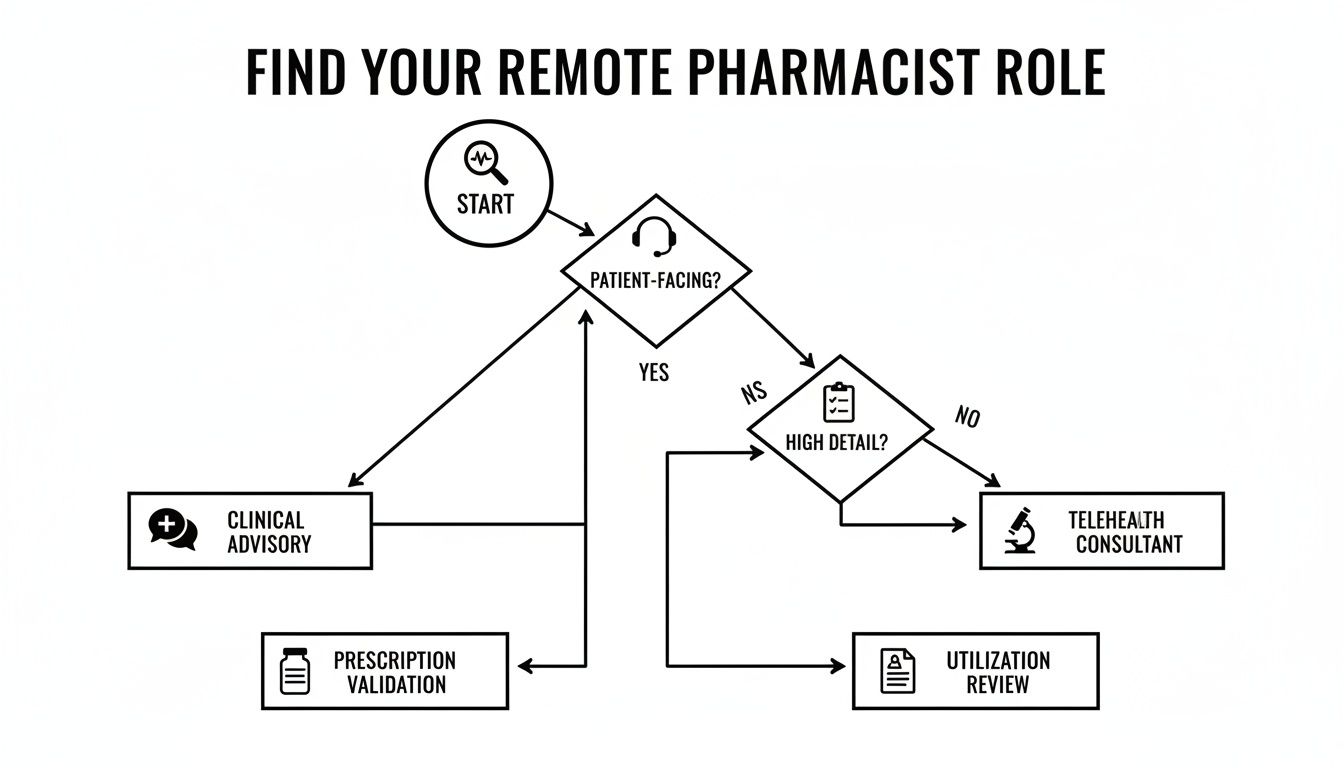
As the flowchart shows, your ideal remote job really boils down to how much patient interaction you want and how much you enjoy diving into the fine details.
The growth in this space is staggering. The remote dispensing telepharmacy market is expected to rocket from $7.21 billion in 2026 to $18.88 billion by 2034. A big driver is the push to bring pharmacy services to rural areas and the huge efficiency boost from tech like robotic dispensing, which can slash routine tasks by 30-40%.
A Quick Look at State Rules
To give you a better sense of the regulatory patchwork you'll be dealing with, I’ve put together a snapshot of a few key states. Keep in mind that these laws change, so always double-check with the state board of pharmacy for the most current information.
State Telepharmacy Regulations at a Glance
| State | Pharmacist Licensure Compact Member? | Key Remote Dispensing Rules | Remote Counseling Guidelines |
|---|---|---|---|
| Florida | No | Allows automated dispensing systems and requires a specific "Special Telepharmacy" permit for certain remote operations. | Counseling required for new prescriptions and can be done via video/audio link, but must be documented. |
| Texas | Yes | Permits telepharmacy systems for remote dispensing, often requiring an on-site technician supervised by a remote pharmacist. | Live, real-time audio and video counseling is mandatory for all new prescriptions filled at a remote site. |
| Arizona | Yes | Has specific regulations for "remote dispensing site pharmacies" which must be linked to a supervising pharmacy. | Pharmacist must offer to counsel via a communication link. Patient can refuse, but the offer must be made. |
| California | No | Very restrictive. Generally prohibits remote dispensing from a location without an on-site pharmacist, with few exceptions. | Counseling requirements are strict and typically expect an in-person offer, making fully remote practice challenging. |
This table just scratches the surface, but it highlights how different the rules can be from one state to the next. What's perfectly fine in Texas could be a major violation in California. Doing your homework is essential.
Actionable Tips for Managing Your Licenses
Keeping multiple state licenses active doesn’t have to be a nightmare. A little organization goes a long way.
- Build a Renewal Calendar: Use a digital calendar and set reminders for 90 days before each license is set to expire. This gives you a comfortable buffer to finish up any CE and get the paperwork in.
- Track Your CE: Don’t try to manage this with a spreadsheet. Use a service like NABP's CPE Monitor. It automatically logs your credits and makes it easy to see if you've met each state's specific requirements.
- Budget for Fees: These licenses aren't free. Factor in application, renewal, and potential exam fees into your annual professional budget so you're not caught off guard.
My best advice? Be proactive. Don't wait for the perfect job to pop up before you get licensed in a key state. If you consistently see great remote openings based in Florida or Texas, investing in that license now makes you a far more compelling candidate when the right opportunity finally appears.
Crafting an Application for the Remote Job Market
When you’re applying for remote pharmacist jobs, you’re not just up against local candidates—you’re competing with pharmacists from across the country. That standard resume you’ve been using for local retail or hospital gigs simply won't stand out.
You have to completely reframe your experience, translating your hands-on clinical skills into the language of telepharmacy and remote work.
Hiring managers for these roles are on the lookout for specific keywords and abilities that prove you can succeed in an autonomous, tech-driven setting. It’s less about what you’ve done and more about how you present it. The goal is to show you're not just a great pharmacist, but a great remote pharmacist.
Translating Your Clinical Experience for Remote Roles
Your background in retail or a hospital is incredibly valuable, but you need to shine a spotlight on the parts that matter for a work-from-home job. Forget about dispensing volume. Instead, hammer home your digital proficiency and communication skills.
Think about all the tasks you've done that didn't require you to be physically present with a patient.
For instance, a standard resume might just say:
- Counseled patients on new medications at the pharmacy counter.
Now, let's optimize that for a remote role:
- Conducted telephonic medication counseling for patients with complex regimens, improving adherence rates by 15% through clear, empathetic virtual communication.
See the difference? This version directly answers the "Can they do this job remotely?" question. When you’re rewriting your resume, make sure you highlight the specific remote work skills for your resume that show you’re ready for this shift.
Quantifying Your Impact and Tech Proficiency
Numbers cut through the noise. Remote hiring managers can't watch you work, so they rely on cold, hard data to gauge your efficiency and impact. Back up your accomplishments with metrics whenever possible.
Let’s look at a few more before-and-after examples:
| Standard Resume Entry | Remote-Optimized Entry |
|---|---|
| Processed prior authorizations. | Managed a daily queue of 30+ prior authorization cases, achieving a 95% approval rate by meticulously applying clinical guidelines. |
| Familiar with EMR systems. | Proficient in Epic, Cerner, and CoverMyMeds, ensuring seamless data entry and clinical review in a fast-paced virtual setting. |
| Worked with insurance plans. | Expertly navigated complex formularies for major PBMs, reducing prescription rejections and patient wait times. |
This move toward remote work is only getting stronger, fueled by pharmacists demanding better work-life balance. Already, 16% of pharmacists globally work part-time, and the telepharmacy market is expected to hit $28.20 billion by 2034. The industry is changing, and you need to change with it.
Your cover letter is where you connect all the dots. Don't be shy—explicitly state why you want a remote role. Explain how your independent work ethic, tech-savviness, and communication style make you a perfect fit for a distributed team. This is the exact same proactive approach needed for finding remote nurse practitioner jobs.
How to Find and Vet Burnout-Friendly Remote Roles
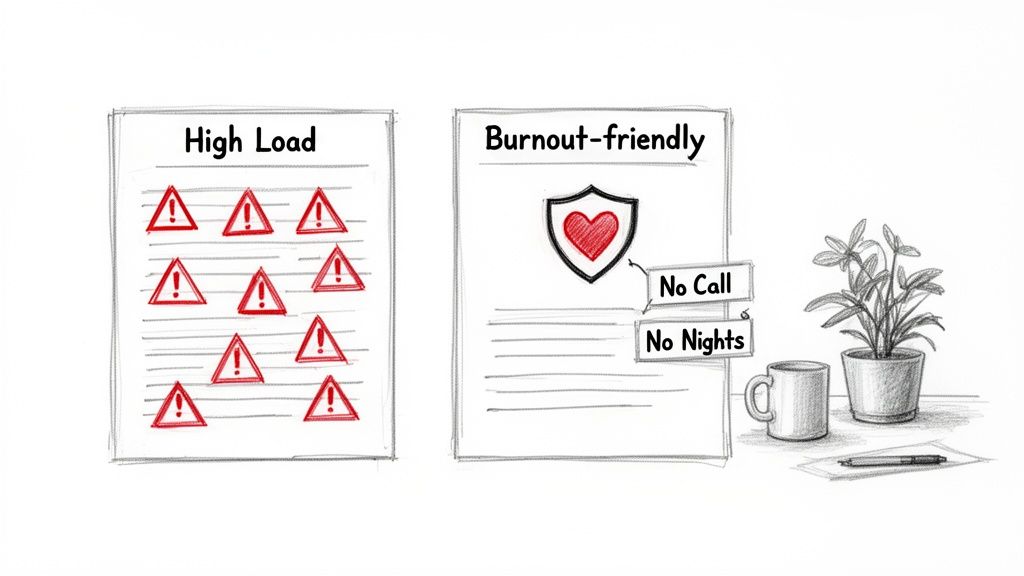
Let's be honest: the dream of a better work-life balance is what pulls most pharmacists toward remote work. But a poorly designed remote job can just be the same high-stress, high-volume pharmacy environment with a different backdrop. If you’re not careful, you can end up just as burned out, only now it’s happening in your living room.
Finding a genuinely burnout-friendly position isn't about luck; it's about a deliberate strategy. You have to learn to read between the lines of a job posting, ask the tough questions in an interview, and know exactly what you’re looking for. The goal is to uncover the reality of the daily grind and company culture before you sign on the dotted line.
Using Advanced Search Filters to Your Advantage
Your search has to start with precision. Just typing "remote pharmacist jobs" into a generic job board is going to flood you with roles that don't fit the bill. Instead, you need to leverage the advanced filters on specialized platforms built for clinicians.
This is where you can specifically target the roles that protect your time and mental health.
- No Call: This is non-negotiable for true work-life separation. It filters out any position requiring you to be on standby for after-hours emergencies.
- No Weekends: This simple filter ensures your Saturdays and Sundays are actually yours. It's a critical boundary for recovery and preventing burnout creep.
- Specific Hours (e.g., 9-5): Look for jobs with clearly defined business hours. Vague schedules are a recipe for working late into your personal time.
Using these filters from the get-go is the single most effective first step. It saves you from wasting hours sifting through jobs that will ultimately compromise the very balance you're seeking.
Decoding Job Descriptions for Red Flags
A job description is more than a list of duties—it’s the company’s first signal about its internal culture. You need to scrutinize the language they use, because it’s full of clues about their expectations.
Keep an eye out for these potential red flags:
- Buzzwords like "fast-paced environment" or "ability to handle high volume." These often translate to "understaffed and overworked."
- A heavy emphasis on production metrics without any mention of quality, support, or teamwork.
- Vague or non-existent descriptions of the team structure or how collaboration happens.
On the flip side, green flags include mentions of structured training and onboarding, mentorship opportunities, and a clear focus on collaborative work. These are signs of an employer that actually invests in its people. To get a better sense of which environments might be a bad fit for you personally, you can even use a tool like our Burnout Index to understand your own triggers.
Critical Questions to Ask During the Interview
The interview is a two-way street. This is your prime opportunity to vet the employer just as much as they’re vetting you. It's where you can dig past the polished job description and get to the reality of the role.
Don’t be shy about asking direct questions about workload and expectations. A company truly committed to preventing burnout will have clear, reassuring answers. Evasiveness is a massive red flag.
Come prepared with a list of targeted questions that get to the heart of the matter:
- "What are the daily or weekly performance metrics for this role, and how are they tracked?"
- "Can you walk me through the onboarding and training process for new remote pharmacists?"
- "How does the team handle the workload when someone is on vacation or during peak periods?"
- "What communication tools does the team use to stay connected and support each other throughout the day?"
The answers you get—or don't get—will tell you everything you need to know about the company’s culture and whether the job is built for sustainable, long-term success.
Your Top Questions About Remote Pharmacist Jobs, Answered
Making a big career change always comes with questions. When you're thinking about moving from a traditional pharmacy setting to a home office, you probably have a lot on your mind. Let's tackle some of the most common questions pharmacists ask before going remote.
What Kind of Salary Can I Expect as a Remote Pharmacist?
This is usually the first question on everyone's mind, and for good reason. The good news is that remote pharmacist salaries are very competitive, typically falling in the $120,000 to $150,000 range. They’re generally right in line with what you’d make in an on-site role.
Of course, your final offer will hinge on a few key factors: the type of work (an MTM role is different from a PBM prior authorization job), who you're working for, how many state licenses you hold, and your overall experience level.
But don't just look at the base salary. Think about the hidden financial perks. No more commuting costs, no more buying work clothes, and no more pricey lunches out. Those savings can easily add up to thousands of dollars a year, giving your actual take-home pay a nice bump.
What Kind of Home Office and Tech Do I Really Need?
Most reputable employers will ship you the essentials—think a secured company laptop, one or two monitors, and a professional-grade headset for all those calls. Your job is to set up the right environment.
Here’s what you absolutely must have:
- Rock-solid, high-speed internet. You'll be on video calls and accessing large patient files all day, so a spotty connection is a non-starter.
- A dedicated, private workspace. This is non-negotiable. You need a room with a door you can close to ensure every patient interaction is HIPAA-compliant.
- A good handle on the software. You should be comfortable navigating electronic health record (EHR) systems and standard communication tools like Microsoft Teams or Slack.
The single most important piece of the puzzle is privacy. Patient confidentiality is the bedrock of telepharmacy. Proving you have a secure and quiet space to work is a fundamental requirement for any remote clinical position.
Are There Remote Jobs for New Pharmacy Grads?
It's true that many remote roles are looking for pharmacists with a few years of clinical experience under their belt. However, the landscape is definitely changing, and more opportunities are opening up for new graduates.
Positions in areas like prior authorization or mail-order pharmacy are often great entry points. They tend to have highly structured training programs, which is perfect when you're just starting your career.
If you’re a recent grad, you need to make your application shine. Be sure to highlight any residency experience you have, especially rotations in managed care or informatics. Emphasize how comfortable you are with technology and sell your ability to be a quick learner who can work independently. That’s how you’ll catch a recruiter’s eye.
How Do You Actually Work with a Team When Everyone's Remote?
Collaboration from a distance is all about being intentional. You can't just pop your head into a colleague's office anymore. Instead, remote teams use a specific set of tools to stay in sync.
Your day-to-day will likely revolve around a few key platforms. Think Slack for those quick questions, scheduled video calls for team meetings, and shared project management boards to track progress.
To succeed, you have to be a proactive communicator. That means jumping into conversations, writing clear and concise updates, and making a real effort to build relationships with your coworkers, even if you've never met them in person.
Ready to find a role that values your well-being? WeekdayDoc curates the best burnout-friendly pharmacist jobs remote opportunities, all with filters for "No Call" and "No Weekends." Start your search for a sustainable career today at https://www.weekdaydoc.com.