Remote Pharmacist Positions: Roles, Pay, and Fit
Explore remote pharmacist roles, pay benchmarks, state eligibility, schedules, and workload before you apply.

Searching for remote pharmacist positions often returns a flood of listings that sound identical on the surface. Before applying, you have to decipher which roles let you work from your house, which limit your residence to specific states, and which require fixed overnight shifts. A remote label describes a location arrangement rather than a specific lifestyle. It never guarantees a weekday schedule, flexible hours, or a lower risk of burnout.
Evaluating these opportunities requires looking past the job title to understand the daily workload, the coverage model, and the legal constraints of out-of-state practice. WeekdayDoc helps you compare these work-life trade-offs by making call volume, shift expectations, and compensation visible before you submit a resume. Reviewing the mechanics of each role family clarifies what you are signing up for.
What Remote Pharmacist Positions Mean in Practice
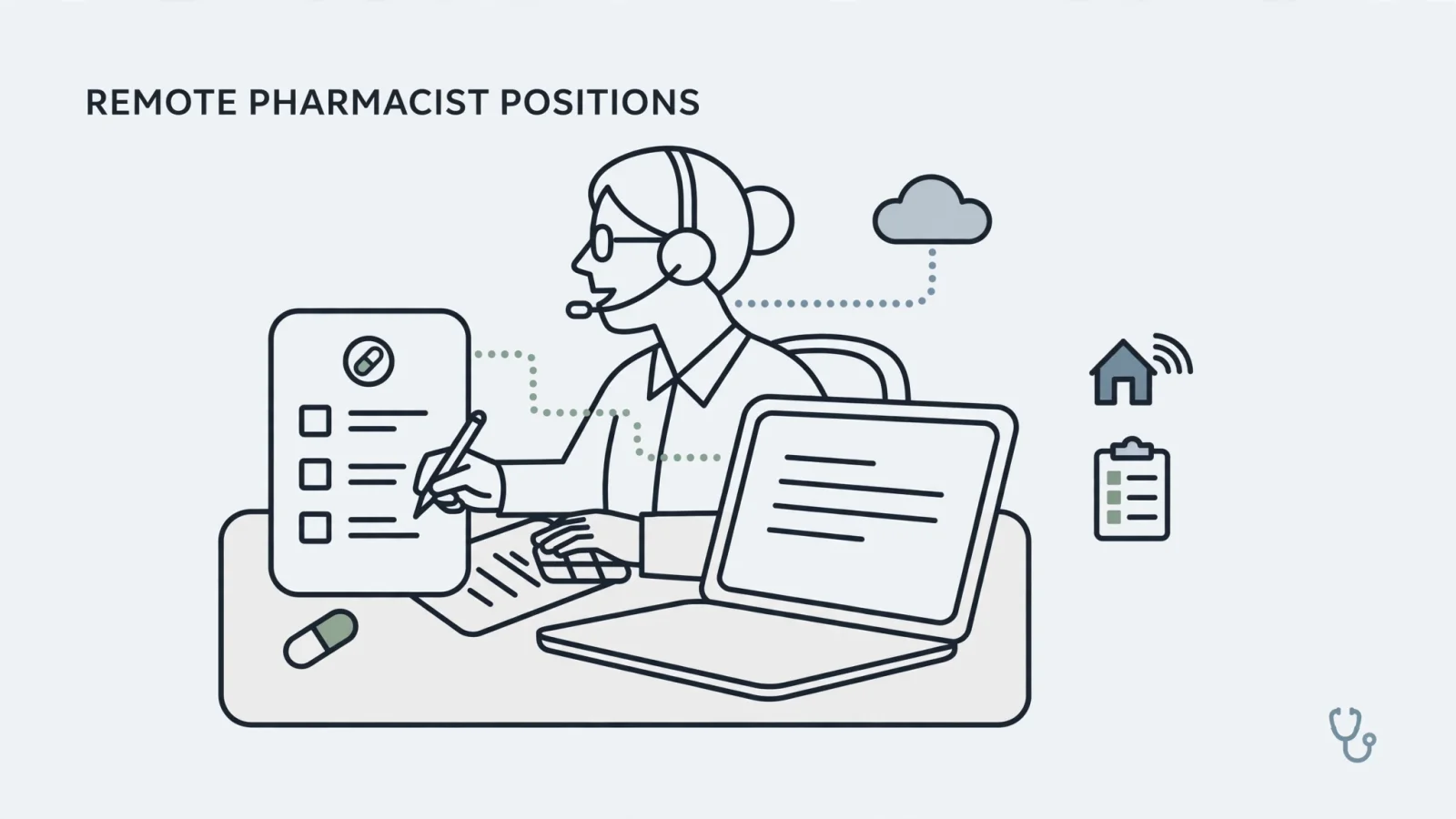
"Remote" in pharmacy practice splits into distinct categories that dictate your daily routine. A home-based role allows you to log in from a home office, relying on secure network access to view patient records, verify orders, or conduct telehealth consultations. Hybrid arrangements mandate a certain number of days at a physical clinic, corporate office, or local fulfillment center. Remote pharmacy services, however, often require you to work inside a licensed worksite away from the primary patient-care facility.
Take two posting-specific examples to see this variation. A recent UnitedHealth Group specialty pharmacist listing describes a fully remote position. By contrast, a Cardinal Health ASHP CareerPharm posting for remote pharmacy services requires the pharmacist to work within a licensed pharmacy rather than from a home office. Neither example defines the entire market, but both show why it's important to ask where the employer expects you to work.
Types of Remote Pharmacist Jobs
Job titles guide your search, but they rarely confirm a home-based setup or current openings in a specific specialty. Grouping the field into role families helps clarify what the daily work involves and which metrics you need to evaluate.
| Role Family | Common Search Terms | What to Investigate Before Applying |
|---|---|---|
| Patient-Facing Clinical Work | Remote clinical pharmacist, MTM pharmacist, telehealth pharmacist | Patient-call volume, required documentation time, provider follow-up expectations, and daily schedule constraints. |
| Specialty Pharmacy | Remote specialty pharmacist, adherence, medication management | Patient counseling quotas, coverage change processing, average case volume, and performance targets. |
| Payer and Managed Care | Utilization management pharmacist, prior authorization pharmacist, formulary review | Review queue volume, decision criteria, turnaround time mandates, and weekend coverage requirements. |
| Remote Operations | Remote order entry, remote order verification, hospital remote pharmacist | Whether the job is home-based or at a licensed regional pharmacy, night coverage, and shift rotation policies. |
Patient-Facing Clinical and MTM Roles
Clinical roles center on direct patient interaction through phone calls or video platforms. Medication therapy management (MTM) pharmacists conduct comprehensive medication reviews, identify drug interactions, and help patients manage chronic conditions. The daily reality involves high call volumes, managing phone tag with patients, and coordinating with primary care providers to adjust regimens. Ask how the employer accounts for documentation time. If your performance metric measures only completed calls and charting takes ten minutes per patient, a standard eight-hour shift can easily spill over into unpaid administrative time.
Specialty Pharmacy Roles
Specialty pharmacists manage complex, high-cost medications for conditions like oncology, rheumatoid arthritis, or multiple sclerosis. A home-based specialty role focuses heavily on patient counseling, adherence monitoring, and navigating insurance coverage changes. The workload depends on case volume and the specific disease states you manage. These positions require deep clinical knowledge and frequent interaction with both patients and specialty clinics. Ask about the performance targets and the support staff available to handle shipping logistics or baseline insurance verifications.
Payer and Utilization Management Roles
Managed care roles shift the focus from direct patient care to clinical review. A utilization management (UM) pharmacist evaluates prior-authorization requests against coverage rules, medical-necessity guidelines, and clinical criteria. A UnitedHealth Group UM job description provides a standard example of this work, requiring pharmacists to review incoming requests and render decisions within strict regulatory timeframes. The work often involves processing a continuous queue of case files. You need to know the expected review volume per day, the turnaround time mandates, and how often the department requires weekend or holiday coverage to meet regulatory deadlines.
Remote Pharmacy Operations
Hospitals and large health systems frequently outsource order verification to remote teams, especially for night and weekend coverage. A remote order entry or verification pharmacist reviews computerized physician order entry (CPOE) queues, checks for interactions, and verifies doses before nurses administer the drugs. This work demands intense focus and a fast pace. Because these positions serve specific hospitals, you must confirm whether the role is home-based or located at a centralized, licensed pharmacy site. Shift rotation is common, and you should expect irregular hours based on the facility's staffing gaps.
Qualifications and State Eligibility
The U.S. Bureau of Labor Statistics notes that pharmacists typically need a Doctor of Pharmacy (Pharm.D.) degree, and every state requires pharmacists to be licensed.
Licensure demands also vary based on where the patients reside. A telehealth pharmacist managing patients across a region may need active licenses in five or ten different states. The National Association of Boards of Pharmacy provides a current guide to help practitioners identify jurisdiction-specific testing requirements. The hiring company and relevant state boards of pharmacy can clarify the exact license expectations. Assuming a remote role is available nationwide leads to wasted applications. Employers face strict regulatory environments, and a company based in Texas will not automatically hire a resident of California without established payroll and compliance infrastructure.
What Remote Pharmacist Positions Pay
Evaluating compensation requires comparing the full financial package against the specific demands of the role. The BLS reports a $140,910 median annual wage for pharmacists overall. This figure provides broad occupation-wide context rather than a remote-pharmacist salary estimate. The available research does not establish a verified, remote-only national median or a predictable pay premium for working from home.
Compare a posting’s pay against its location constraints, specialty requirements, and hours. A salaried utilization management position might offer a predictable income, but mandatory unpaid overtime to clear a queue lowers your effective hourly rate. Hourly positions offer clearer boundaries but may lack the paid leave or benefit structures of salaried roles. Factor state-license costs into your compensation comparison. Holding ten state licenses costs thousands of dollars annually in renewal fees and continuing education requirements. Ask whether the employer provides full license reimbursement, home-office stipends, and shift differentials for night or weekend coverage.
Does Remote Mean a Better Schedule?
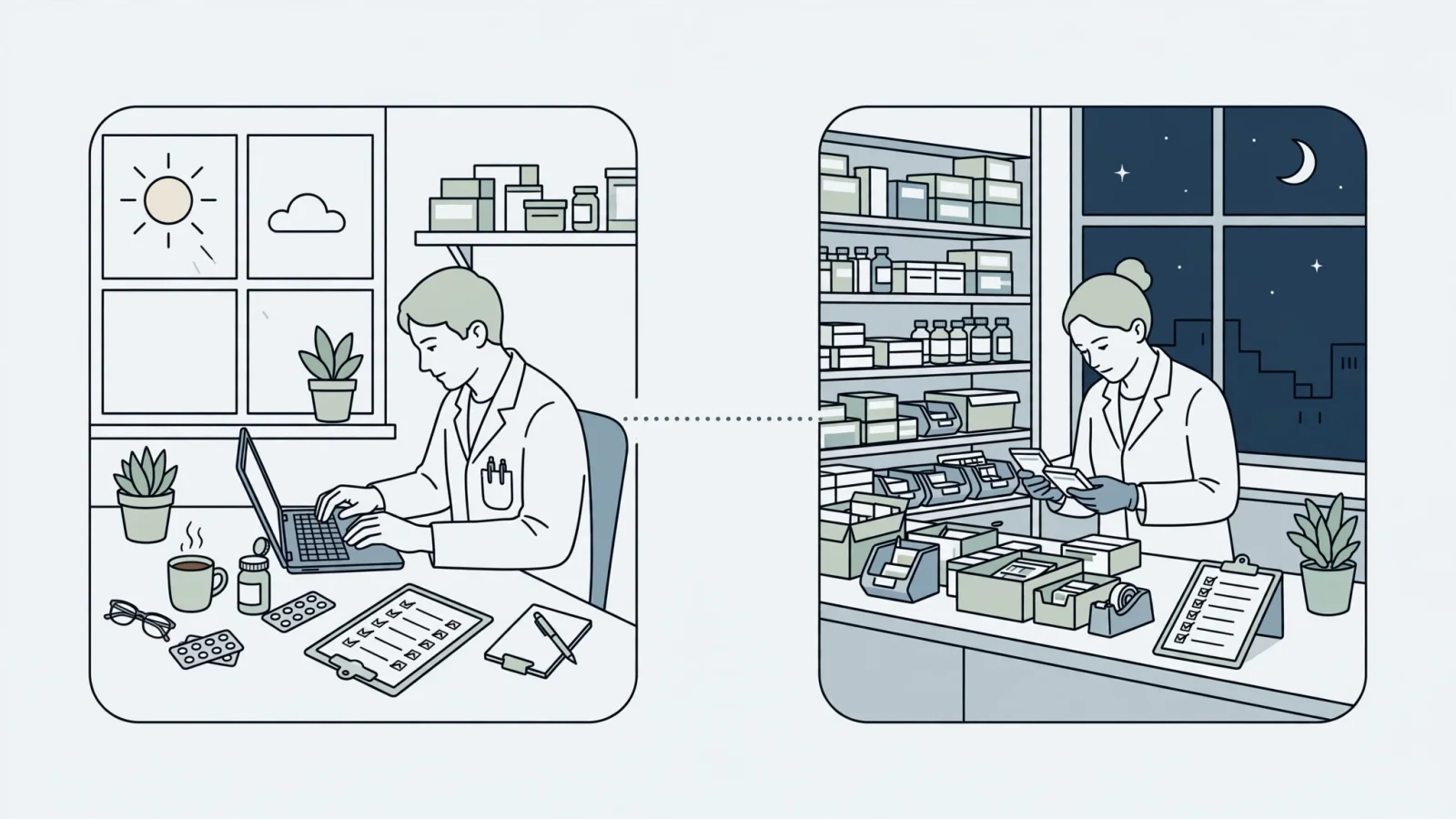
Remote work removes the commute, but it does not automatically remove the stress of high-volume pharmacy practice or grant you control over your hours. The schedule depends entirely on the coverage model the employer sells to its clients or patients. Time zones and client needs dictate your logging-on times. The UnitedHealth Group specialty role mentioned earlier generally operates on daytime weekday hours, roughly 8:00 a.m. to 5:30 p.m. Central Time, subject to change based on business needs. The Cardinal Health remote pharmacy services posting specifies a 7-on/7-off overnight schedule. Working from your living room at 3:00 a.m. on a Saturday is still a night shift. Time zones add another layer of complexity, as a west-coast resident hired for an east-coast queue might start work at 5:00 a.m. local time. Ask how the employer handles holidays, paid time off, and emergency on-call expectations.
Sustainability depends on the workload rather than the absence of a commute. A remote clinical pharmacist expected to complete 40 comprehensive medication reviews a day faces significant burnout risk, regardless of the home-office setup. Assess the daily patient-call volume, case review requirements, and prescription verification targets, then ask how the employer measures productivity and quality. Some systems track idle time between keystrokes or record screen activity, while others measure the pure output of resolved cases. If documentation time is excluded from the productivity targets, you will fall behind or work off the clock to catch up. WeekdayDoc makes these variables easier to spot by assigning a 0-to-10 work-life score to listings, placing visible call expectations, night shifts, and salary context next to the job description. This lets you evaluate the operational burden before committing to an interview.
Questions to Ask Before Applying
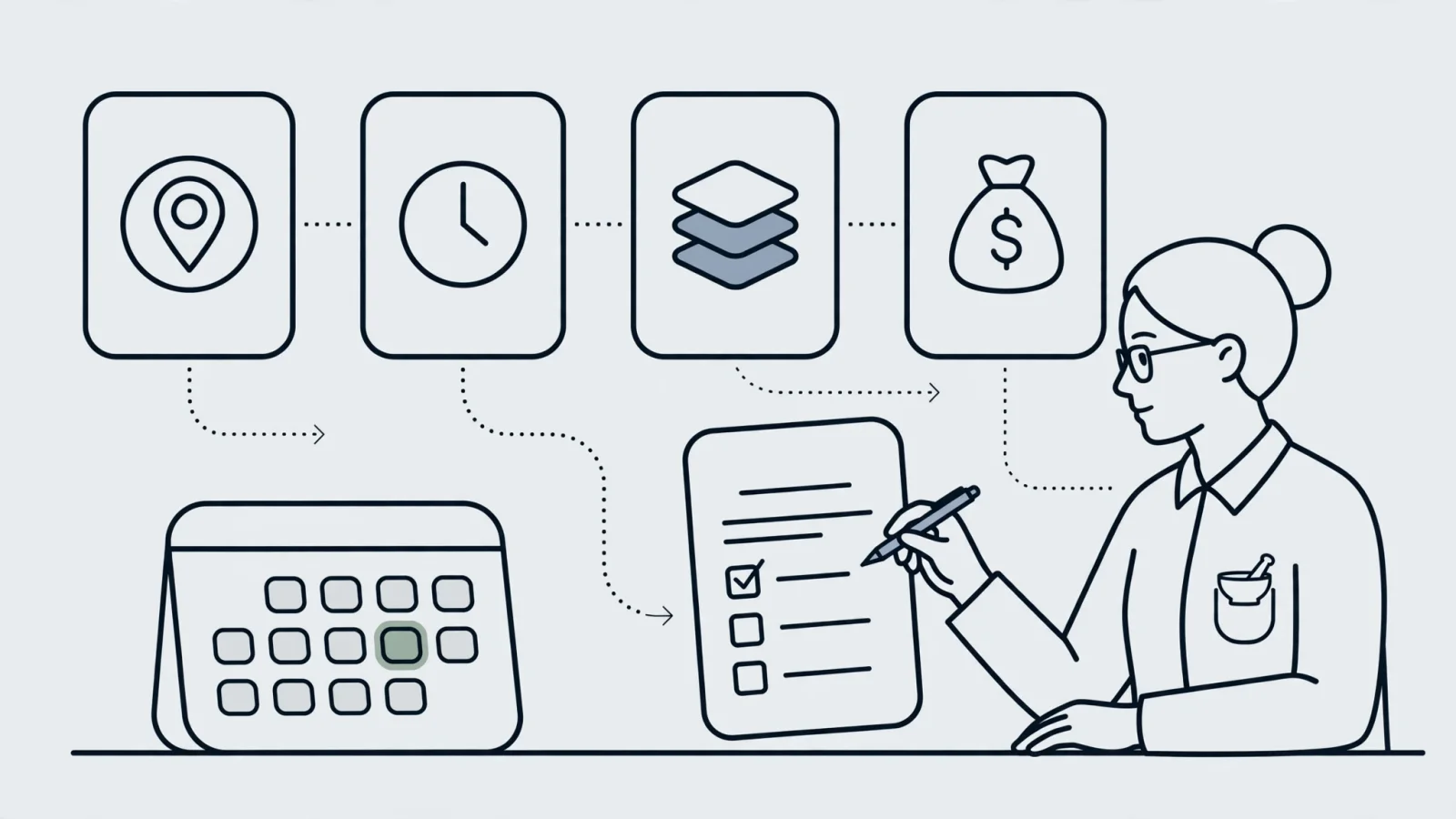
The interview is also a chance to assess the recruiter's transparency and the role's sustainability.
- Is the role work-from-home, hybrid, or performed at a licensed pharmacy? Clarify the physical location requirements immediately.
- Which states may employees reside in, and which licenses are required? Determine if your current residence qualifies and who pays for any new licenses.
- What time zone governs the schedule? Establish the exact local hours you will work and whether rotating shifts, nights, weekends, holidays, or travel are expected.
- What are the expected daily case, prescription, review, or patient-call volumes? Ask for concrete numbers, not vague descriptions of a fast-paced environment.
- Is time for documentation included in the workload expectations? Confirm that charting and administrative follow-up count toward your daily productivity metrics.
- How are productivity and quality measured? Understand the surveillance or tracking software the employer uses to monitor remote staff.
- Is compensation hourly or salaried? Verify how the company handles overtime, shift differentials, bonuses, benefits, and paid leave.
- How much of the role is patient care versus review or administration? Ensure the daily tasks align with your clinical interests and burnout limits.
How to Find and Compare Remote Pharmacist Openings
Finding the right role requires expanding your search vocabulary. Relying solely on a single keyword limits your options. Use related search terms naturally across different platforms, including remote clinical pharmacist, telehealth pharmacist, remote specialty pharmacist, managed-care pharmacist, utilization management pharmacist, and prior-authorization pharmacist. Treat phrases such as part-time remote pharmacist jobs and remote pharmacist jobs with no weekends as search avenues rather than promises of widespread availability.
Active job seekers can browse remote pharmacist positions on WeekdayDoc to compare location rules, work arrangements, and compensation in one place. The platform goes beyond basic job boards by offering paid clinician tools that protect your transition. AI-matched alerts notify you when a role fits your exact parameters, and negotiation scripts help you address compensation and schedule boundaries professionally. You can also use the contract scanner to flag issues such as non-competes, tail coverage, and payback provisions. The scanner highlights these clauses for your review, helping you ask the right questions, though it does not replace reading the agreement or obtaining appropriate legal advice.
Employers posting these roles can improve applicant quality by stating eligible locations, the governing time zone, and what remote means for the position. Listing the shift and weekend coverage, workload expectations, and compensation upfront helps candidates judge fit before they apply, saving time for both the recruiter and the pharmacist.
Frequently Asked Questions
Are Remote Pharmacist Jobs Always Work-From-Home?
Some remote pharmacy roles are fully home-based, allowing you to log in from a private home office. Others require you to work at a licensed worksite away from the main hospital, or operate on a hybrid schedule that mandates days in a corporate office. The job title alone cannot settle the work location, so you must verify the physical requirements in the posting.
Can I Work Remotely From Any State?
State and license eligibility must be confirmed for each opening. Employers often limit candidate residence to states where they have established tax and payroll infrastructure. Furthermore, you must hold active pharmacy licenses for the jurisdictions where the patients reside, which may require taking additional state board exams.
Do Remote Pharmacist Positions Pay More?
The available evidence does not establish a remote pay premium. Compensation depends on the specialty, the required hours, the regional market rate, and the employer's compensation structure. Candidates should compare total compensation, including benefits, bonuses, and license reimbursement, rather than assuming a home-based role commands a higher or lower salary.
Are Part-Time or No-Weekend Remote Roles Available?
Part-time or no-weekend availability varies heavily by role family. Utilization management and some specialty pharmacy positions often follow standard business hours, while remote hospital order verification roles frequently require rotating shifts, weekends, and overnight coverage. Candidates should verify the exact coverage expectations in the posting and with the employer.
Finding a remote role that fits your life requires clear data on schedules, workload, and pay. Browse verified listings, check work-life scores, and evaluate real compensation structures at WeekdayDoc.