Remote OT Jobs: Find a Role That Fits
Explore remote OT jobs in telehealth and clinical review, and compare state licensure, pay, workload, and schedule before applying.

Occupational therapy translates well to virtual environments, but the label of a remote role tells you very little about the day-to-day work. Some positions require constant live video interaction with pediatric patients, while others involve quiet chart review and asynchronous administrative tasks. Understanding these differences helps you identify roles that align with your clinical background and your lifestyle requirements.
As you begin your search, WeekdayDoc provides a marketplace designed to give you transparent data on schedules, pay, and burnout risk. We help clinicians look past a basic remote tag to evaluate the actual clinical duties, state footprint, and daily expectations of a role before committing to an application.
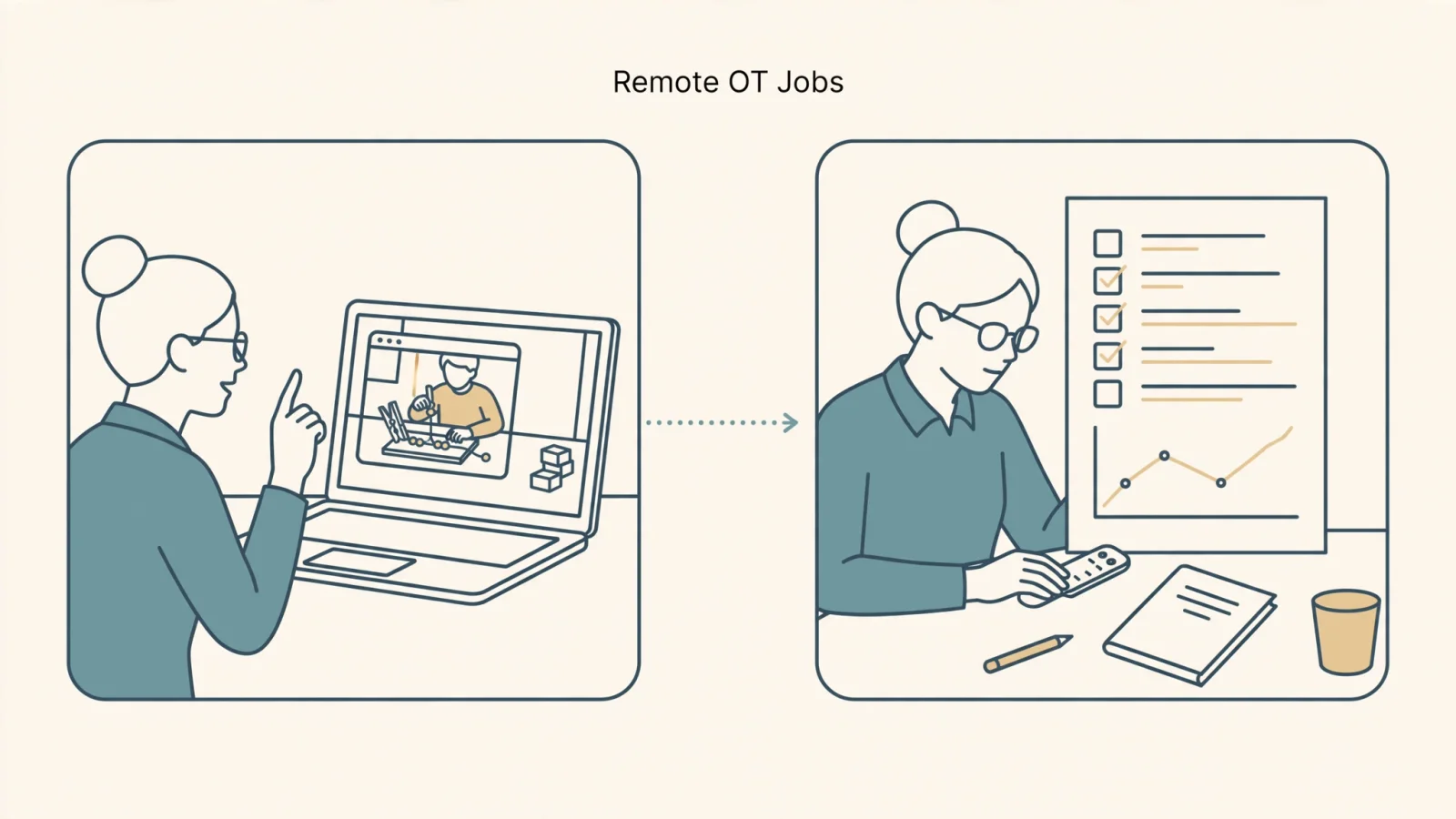
What Remote OT Jobs Include
The phrase "remote work" often suggests a work-from-anywhere, self-scheduled arrangement. In healthcare, a remote position means you do not share physical space with your patients or colleagues. Employers use the term to describe direct telehealth care, remote clinical operations, and hybrid models that require occasional on-site visits. Evaluating a position requires understanding which of these categories you are entering and how the employer structures the daily tasks.
Qualifications also dictate your options. Occupational therapists (OTR/L) can practice independently in most remote environments, whereas occupational therapy assistants (OTA/COTA) have different qualification requirements and face specific supervision rules, which can be complicated to manage across state lines.
Direct telehealth care
Telehealth roles keep you in a patient-facing capacity. You conduct evaluations, guide interventions, and monitor progress during live video sessions. This format requires high engagement, excellent verbal communication, and creative problem-solving to help patients use their own home environments for therapeutic activities.
School-based occupational therapy and early intervention programs are common examples of direct telehealth. Practitioners often work with children to develop fine motor skills, establish sensory diets, or improve visual motor integration. According to AOTA telehealth resources, providing these services remotely requires careful coordination with parents, teachers, or on-site aides who physically facilitate the session. Adult populations also utilize telehealth for ergonomic assessments, home modification consultations, and neuro-rehabilitation follow-ups.
Because telehealth involves scheduled patient appointments, these roles rarely offer complete schedule autonomy. You need a quiet, private workspace during specific blocks of time. Cancellations and no-shows are common, which can impact your day and your compensation if the employer pays per visit.
Remote review and care-management work
If you prefer to step away from direct patient care, remote operations roles offer an alternative path. These positions draw on your clinical expertise to evaluate care plans, manage resources, and coordinate services without conducting therapy sessions yourself.
Utilization review and case management are frequent examples seen in current listings. In a utilization review role, you assess treatment requests submitted by other clinicians to determine if they meet medical necessity criteria under specific insurance guidelines. Case managers take a broader view, coordinating care across multiple disciplines, facilitating safe hospital discharges, and ensuring patients receive appropriate adaptive equipment.
These non-clinical roles often provide greater daily flexibility. As long as you meet productivity targets and review deadlines, you can typically structure your own hours. However, the work requires high screen time, comfort with complex insurance portals, and a willingness to spend significant time on the phone with providers, patients, and insurance representatives.
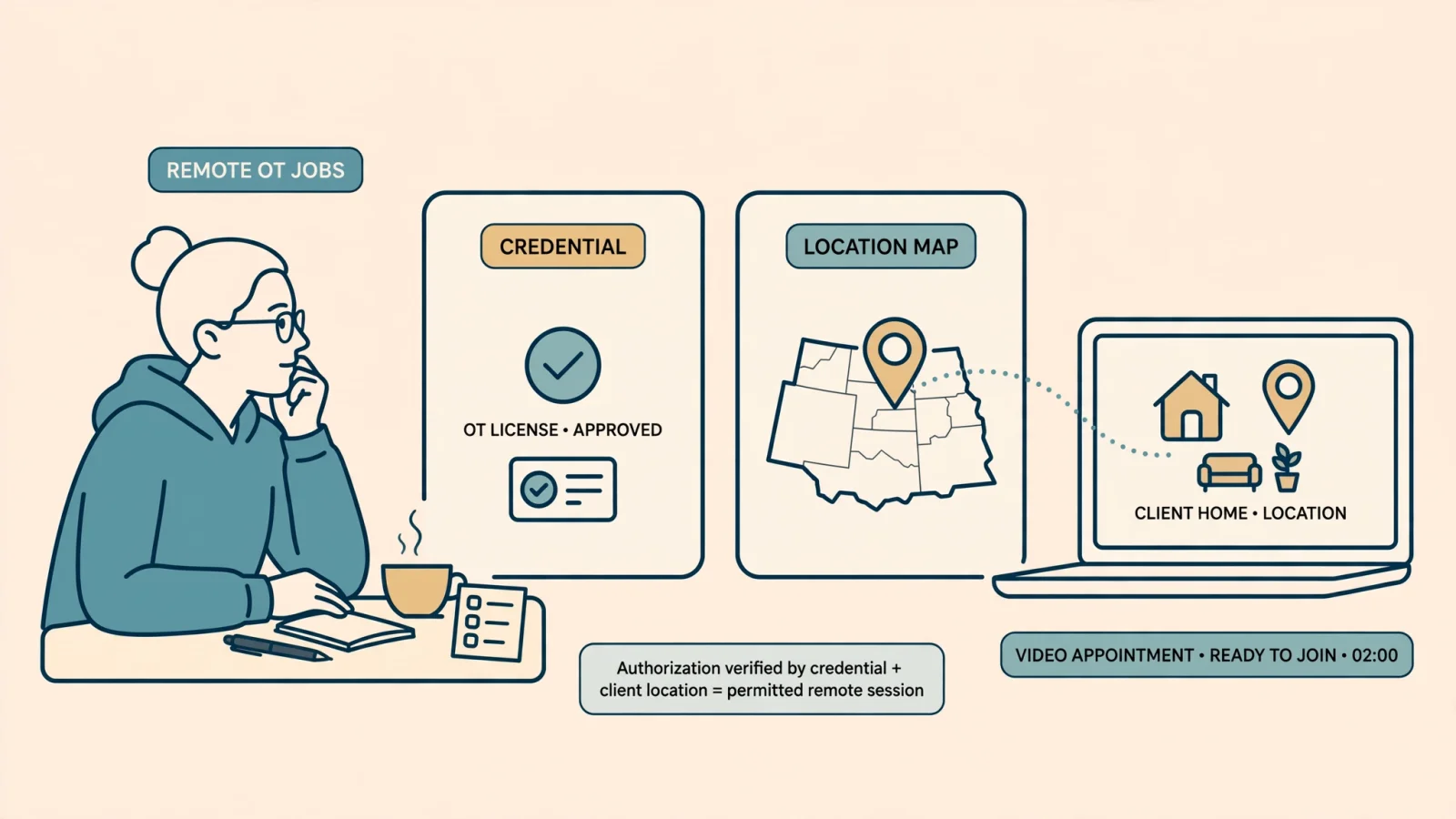
Check Licensure and State Eligibility Early
An employer’s national footprint does not grant you permission to treat patients nationwide. State licensing boards govern occupational therapy practice, and remote work introduces specific regulatory hurdles to clear before accepting an offer.
State authorization generally follows the client
When you provide direct telehealth services, the regulatory standard centers on the patient. You need authorization to practice in the state where the client is physically located at the time of the service. AOTA notes that licensure is required in all 50 states, the District of Columbia, Puerto Rico, and Guam, meaning a single home-state license is rarely enough for a regional or national telehealth role.
Medicare policy provides a separate layer of regulation. A recent CMS Telehealth FAQ, updated October 8, 2026, states that occupational therapists may furnish Medicare telehealth services through December 31, 2027. Hospitals may also bill for outpatient therapy furnished remotely to beneficiaries at home through that same date. This federal extension allows ongoing Medicare reimbursement, but it does not override state licensing laws or guarantee that private commercial plans will cover the exact same services.
Always ask potential employers which specific states their patients reside in and whether the company covers the cost and administrative burden of acquiring multiple licenses. For OTA/COTA applicants, verify how the employer handles state-specific supervision rules when the supervising OT sits in a different geographic location.
What the OT Compact can and cannot change
The Occupational Therapy Licensure Compact is designed to simplify cross-state practice, but its rollout is progressive. Enactment of the Compact by a state legislature is only the first step. To treat patients, the state has to actively issue Compact privileges, and you need to apply for and receive that specific privilege.
According to the application status table, Arkansas, Indiana, Maryland, Minnesota, Mississippi, Ohio, Tennessee, Virginia, West Virginia, and Wisconsin are accepting applications.
Holding a Compact privilege in one of those states allows you to practice there legally, provided your home state is also a member of the Compact. If your prospective employer requires you to see patients in states outside the active Compact list, you will have to pursue traditional, single-state licensure for those locations.
Compare Pay Beyond a Salary Number
Evaluating compensation for remote roles requires looking past the headline number on a job description. The U.S. Bureau of Labor Statistics reports a median annual wage of $100,330 for occupational therapists as of May 2025. This occupation-wide reference point includes outpatient clinics, hospitals, and schools. It is not a guaranteed telehealth salary.
Your take-home pay depends heavily on the employment structure. A salaried W-2 position provides predictable income and benefits, shielding you from the financial impact of patient cancellations. Hourly W-2 roles offer stability but require careful tracking of your time. Independent contractor (1099) positions often advertise higher hourly rates, but that premium covers your self-employment taxes, lack of benefits, and uncompensated administrative time.
When comparing offers, ask specific questions about the pay structure:
- Is the role salaried, hourly, or paid per completed visit?
- If paid per visit, do you receive a partial rate for late cancellations or no-shows?
- Does the employer pay you for time spent on documentation, care coordination, and team meetings?
- Will the company provide a laptop, dual monitors, and a stipend for high-speed internet?
- Are continuing education units (CEUs) and multi-state licensure renewal fees reimbursed?
A high per-visit rate loses its value quickly if you spend ten unpaid hours a week writing notes and wrestling with an electronic medical record system. Calculate the total value of the package, including paid time off, health insurance, and administrative support, to determine if an offer is financially viable.

Judge Workload and Schedule Flexibility
Remote positions routinely advertise flexibility, but the daily experience often involves strict schedules, productivity quotas, and demanding caseloads. You will want to define what flexibility means to you and verify whether the employer’s structure supports it.
Direct care roles are bound by patient availability. If you live on the East Coast and work for a company serving California schools, your day might stretch well into the early evening to accommodate Pacific time zone schedules. Conversely, utilization review positions might allow you to work at any hour, provided you clear your queue by a daily 5:00 PM deadline.
To uncover the workload expectations, build a focused checklist for your interviews:
- Remote scope: Is the position fully remote, or does it require occasional in-person meetings, school visits, or travel?
- Location requirements: Are you required to live in a specific state, and which states will your patients reside in?
- Clinical setup: Will you provide live synchronous care, or does the role consist of asynchronous chart review?
- Volume expectations: What is the expected weekly caseload, or how many charts do they expect you to review per day?
- Schedule demands: Are there mandatory core hours, evening requirements, weekend rotations, or on-call expectations?
- Support systems: How do you contact a supervisor when a patient experiences a medical emergency on video?
We built WeekdayDoc to help clinicians answer these questions before they apply. Every listing on our platform receives a 0-to-10 work-life score. This score weighs factors such as call coverage, nights, weekends, schedule flexibility, autonomy, and administrative burden. While it does not guarantee a perfect employee experience, the score serves as a powerful comparison tool alongside market percentiles and salary benchmarks. It allows you to quickly identify roles that prioritize a sustainable schedule over aggressive volume targets.
Find and Compare Openings Strategically
Searching for remote ot jobs requires a specific strategy. Broad searches often return hundreds of local travel positions or local home health roles that use the word "remote" incorrectly, so you need exact terminology to filter out the noise.
Use targeted phrases to narrow your results. Try terms like "telehealth occupational therapist jobs," "remote school-based OT jobs," or "remote utilization review OT jobs." If you hold an OTR/L credential, specify "full-time remote OT jobs for OTR/L." Assistant practitioners will have better luck explicitly including "COTA" or "OTA" in their searches, as many postings exclude assistants due to cross-state supervision complexities.
Instead of relying on the word "remote" to do all the work, read the specific duties, check the state eligibility requirements, and evaluate the schedule.
Our remote occupational therapist jobs page streamlines this process. You can filter roles by practice setting, review our work-life and pay context data, and set up AI-matched job alerts for positions that fit your clinical background. When you find a strong match and receive an offer, WeekdayDoc provides an AI contract scanner that flags potential issues like restrictive non-competes, tail coverage gaps, and payback clauses. We also offer negotiation scripts to help you advocate for fair pay and administrative time. These tools highlight key clauses for your review, preparing you for an informed discussion with your legal counsel or prospective employer.
Remote OT Job FAQs
Can occupational therapists work remotely?
Yes, occupational therapists successfully practice in fully remote and hybrid environments. The viability of remote work depends entirely on the specific role, your credential level, and the employer’s operational setup. You can find opportunities in direct patient care, clinical operations, and leadership.
What kinds of remote jobs can occupational therapists do?
Remote roles generally fall into two broad categories. Direct care positions include telehealth services for school districts, early intervention programs, and adult rehabilitation. Administrative and operations positions include utilization review, case management, and clinical chart auditing. The daily workflow, schedule flexibility, and patient interaction levels differ dramatically between these categories.
Do remote OT jobs require a license in the patient’s state?
Yes. Regulatory standards dictate that telehealth services occur where the patient is located, meaning you need authorization to practice in that specific state. While the OT Compact is expanding cross-state practice privileges, you have to actively apply for and hold a Compact privilege in the patient's state before beginning treatment.
How should I compare remote OT pay with in-person pay?
Look past the hourly rate or annual salary to compare the full compensation structure, weighing W-2 stability against 1099 contractor risks. Factor in whether you receive pay for administrative tasks, documentation, and care coordination. Deduct the cost of maintaining multiple state licenses, buying home office equipment, and paying self-employment taxes if you take an independent contractor role.
Can OTAs or COTAs work remotely?
Occupational therapy assistants can work remotely, but finding compliant roles is more challenging. Assistants require supervision from a fully licensed occupational therapist. State laws govern how that supervision occurs, how often it must be documented, and whether the supervisor needs to hold a license in the same state. Review job postings carefully to ensure the employer specifically accepts OTA/COTA applicants and has a legal framework to support them.
Ready to find a remote role that respects your time and your clinical skills? Explore WeekdayDoc to compare work-life scores, analyze salary benchmarks, and discover positions built for sustainable careers. Search our current openings and set up your personalized job alerts today.