Online Occupational Therapy Jobs: Remote Roles, Pay, and Licensure
Explore online OT roles, U.S. pay benchmarks, state licensure, and questions that reveal a remote job’s real schedule, workload, and compensation.
Online occupational therapy jobs can mean delivering virtual care from a home office, splitting a week between a clinic and telehealth sessions, or handling non-visit work like utilization review. The remote label describes where you sit, rather than guaranteeing flexible hours, a manageable caseload, or zero travel expectations. Evaluating these roles requires looking past the location to understand the clinical demands and compensation structure.
Platforms like WeekdayDoc help you compare schedule quality and compensation at the job level. Instead of assuming a remote role automatically offers a better lifestyle, you can evaluate the visible call requirements, weekend expectations, and administrative burden before applying.
The Daily Reality of Online Occupational Therapy Jobs
Before weighing an offer, look at what the daily work involves. A remote position might require back-to-back on-camera sessions, or it might involve independent case reviews with no direct patient contact.
Direct Telehealth Care
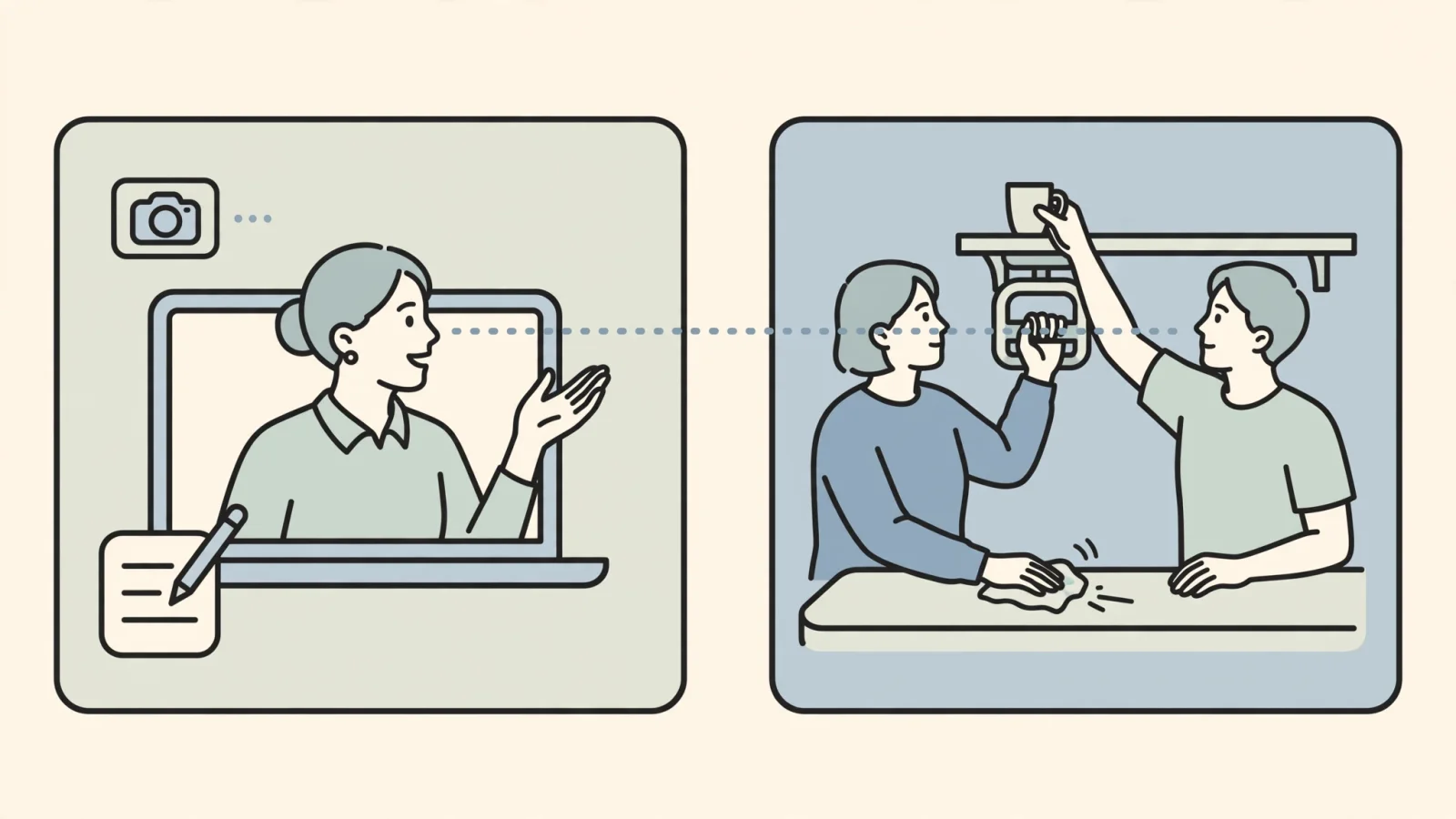
Direct telehealth involves scheduled virtual assessments and treatment sessions. You work from a home office or private space, conducting video visits with clients who remain in their homes, communities, or local clinics. This work requires reliable technology, a HIPAA-compliant physical space, and the ability to adapt therapeutic interventions for a virtual environment.
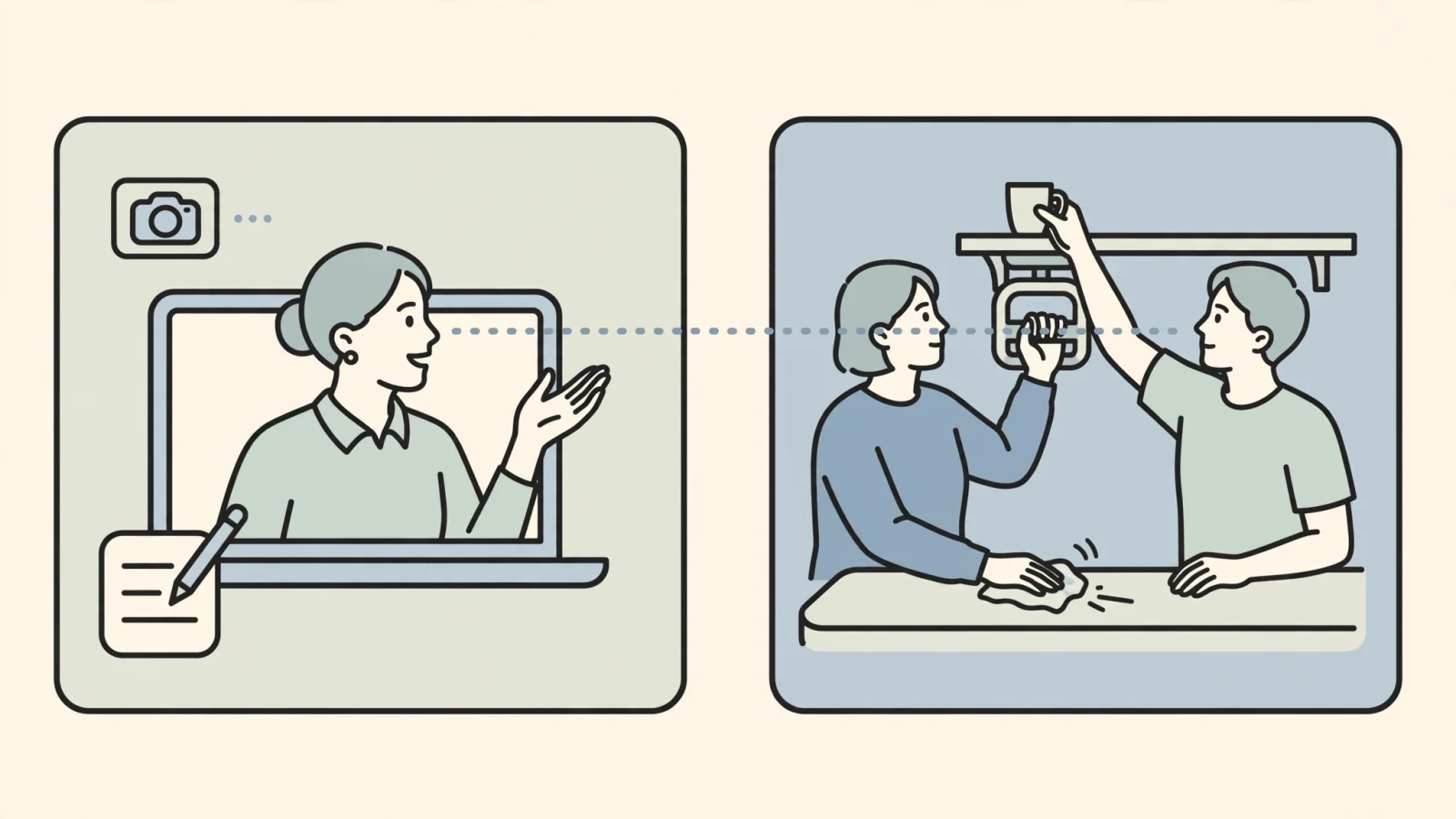
Treating clients through a screen shifts how the hands-on work gets done. Rather than guiding a patient through a task yourself, you coach a caregiver or family member on the other side of the connection. Demonstrating fine motor tasks, evaluating ergonomics remotely, and teaching positioning techniques verbally become your primary tools. This relational and instructional work demands adaptability, because you often rely on household items rather than standard clinic equipment to meet therapy goals.
School-Based and Early-Intervention Telehealth
Many online occupational therapy jobs serve pediatric populations through school districts or early-intervention programs. These roles may be fully virtual or hybrid, requiring significant coordination with educators, speech-language pathologists, and parents. You might observe a student in their classroom via a teacher’s tablet, consult on an Individualized Education Program (IEP), or guide a parent through sensory integration techniques during an early-intervention home video visit.
Because service models in these settings vary widely, AOTA’s telehealth resources offer specific decision guides and materials for school-based and early-intervention practice. These tools can help you assess whether a specific district's technology infrastructure and caregiver involvement support effective virtual care.
Hybrid Clinical Roles
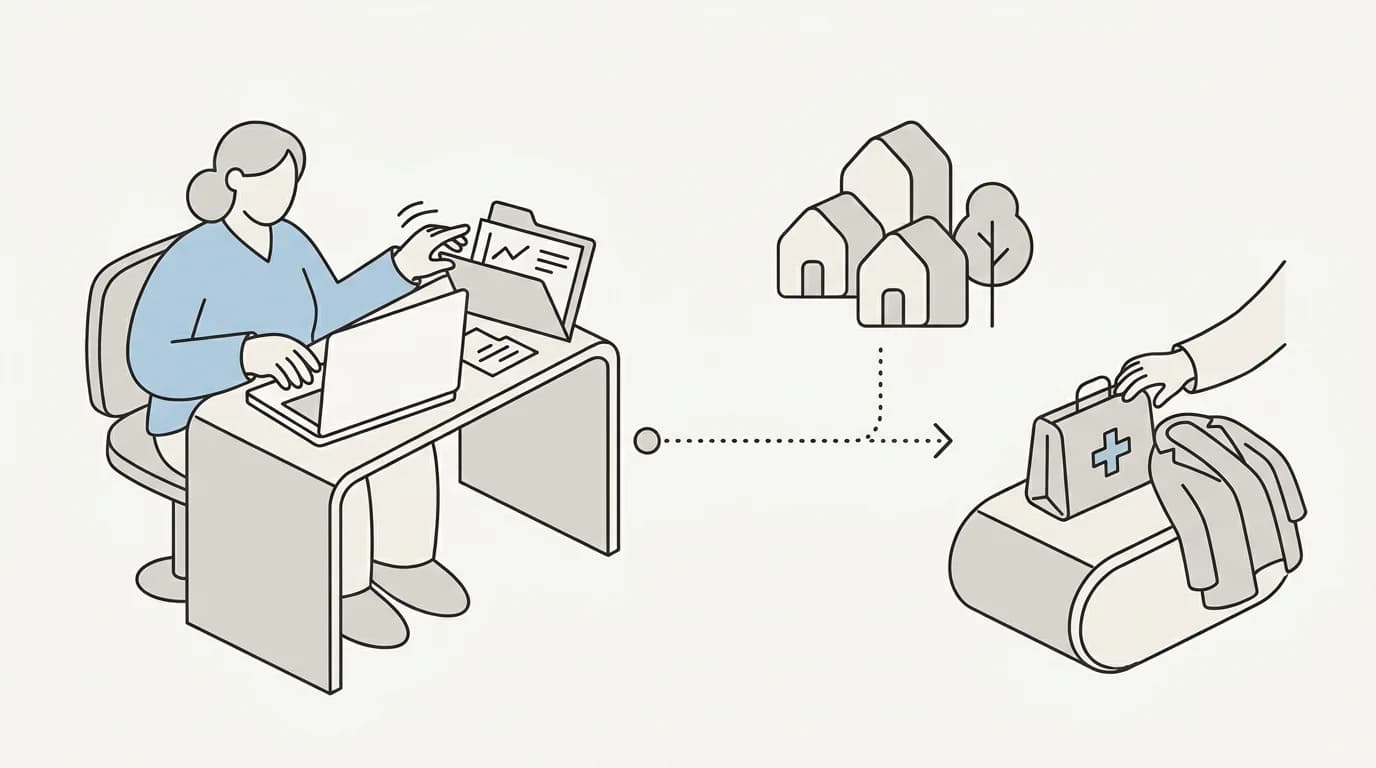
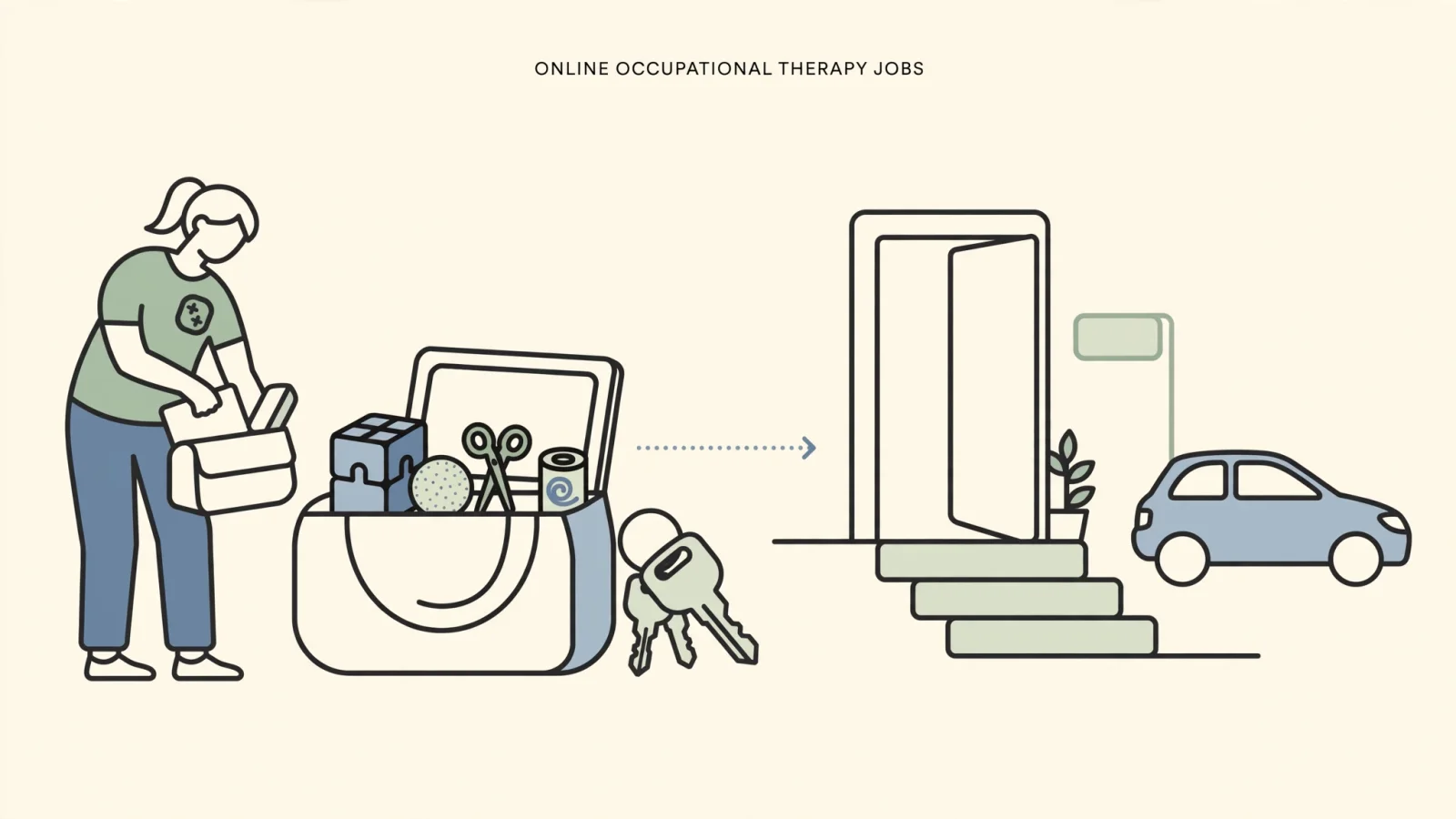
A hybrid position combines virtual care with onsite obligations. You might work from home three days a week completing telehealth sessions and documentation, and then spend two days driving to local schools, clinics, or patients' homes.
These models offer a mix of direct physical interaction and remote flexibility, but they require careful logistical planning. The exact onsite frequency and geographic travel area matter before accepting an offer. A job advertised as remote might still require a two-hour commute for monthly in-person evaluations or quarterly team meetings.
Remote-Adjacent Roles
Clinicians seeking a break from direct patient care can explore remote-adjacent work. These non-visit roles include clinical review, utilization review, care coordination, documentation quality assurance, rehab education, and assistive technology consultation. Much like other allied health professionals who explore work-from-home respiratory therapy jobs or remote nursing roles, occupational therapists can apply their clinical background to administrative or advisory positions.
Titles, licensure requirements, and remote arrangements for these roles vary by employer. An insurance company might hire an OT for utilization review, requiring a valid license but no active clinical hours, while an assistive technology company might look for an OT to train other clinicians remotely. Explore these options without assuming they are abundant or fully remote.
State Licensing Rules for Cross-Border Telehealth
Therapists often assume a telehealth platform allows them to treat patients anywhere in the country. Working from home does not remove state practice rules, because the client’s physical location during the service generally determines which state laws apply.
Requirements vary by state, and some jurisdictions mandate a specific telehealth certification rather than a standard full license. Insurers or healthcare facilities can add their own credentialing requirements on top of state law. If a client travels across state lines for a vacation and logs into a session, their new location can immediately affect your practice authorization. AOTA’s Frequently Asked Questions about State Licensure outlines these client-location rules, emphasizing that practitioners must hold the appropriate authority where the patient sits.
Under the Occupational Therapy Licensure Compact, licensees apply for privileges to practice in participating states and must meet the eligibility requirements. As of October 5, 2026, the OT Compact Commission listed 10 states accepting applications for compact privileges: Arkansas, Indiana, Maryland, Minnesota, Mississippi, Ohio, Tennessee, Virginia, West Virginia, and Wisconsin.
Eligibility requires an unencumbered home-state license in a compact member state and an issued privilege for the target state. A state enacting compact legislation does not grant immediate practice authority, so you must recheck the commission’s current status and apply for the specific privilege before accepting a role covering patients in another jurisdiction. Keep in mind that occupational therapists and occupational therapy assistants have distinct qualification and supervision requirements under state laws, and the OT master’s-degree baseline does not apply to OTAs seeking cross-state authorization.
Compensation Structures for Online OT Roles
Evaluating compensation for an online occupational therapy job requires looking at national benchmarks and understanding how specific pay structures work. The U.S. Bureau of Labor Statistics (BLS) reports occupation and industry wage data, providing a baseline for the profession.
According to the Occupational Outlook Handbook updated in 2026, the May 2025 median annual wages for occupational therapists vary by setting:
| Employment setting | Median annual wage |
|---|---|
| All occupational therapists | $100,330 |
| Home healthcare services | $106,300 |
| Nursing care facilities | $105,850 |
| Hospitals | $102,820 |
| Offices of physical, occupational, and speech therapists, and audiologists | $97,940 |
| Educational services | $87,300 |
These figures represent national occupation and industry benchmarks rather than remote-specific estimates. Telehealth does not automatically pay more or less than onsite work, so offers are best evaluated against your location, experience, and the employer's specific compensation model.
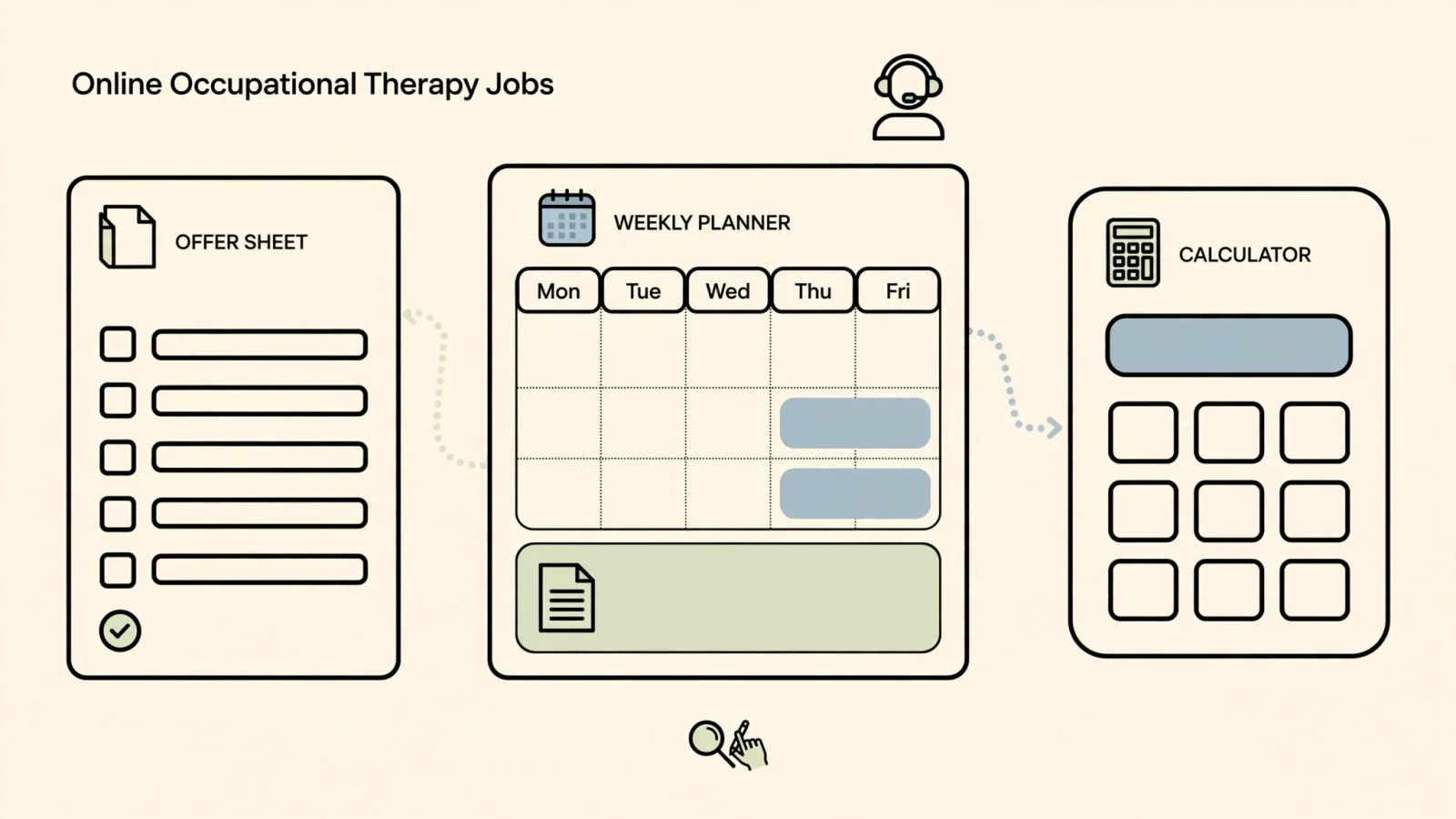
Pay structures for online roles vary heavily. A salaried position offers stable income regardless of daily patient volume, while an hourly or per-visit model shifts the financial risk of cancellations and no-shows to the clinician. If a patient’s internet connection drops ten minutes into a session, you need to know if you will be paid for the attempt, the documentation, or nothing at all.
Clarify whether non-visit tasks generate income. Determine if documentation, team meetings, mandatory training, and caregiver coordination count as paid time. Total compensation includes benefits, paid leave, continuing education stipends, licensure reimbursement, and malpractice coverage. A higher per-visit rate as a 1099 independent contractor might result in lower net income once you account for self-employment taxes, health insurance, and out-of-pocket licensing fees.
Payer policies also dictate the stability of telehealth roles. The CMS Telehealth FAQ, updated October 8, 2026, states that OTs may furnish Medicare telehealth services under the current extended eligibility through December 31, 2027. Beginning January 1, 2028, CMS states that OTs cannot furnish those services under that policy. The FAQ addresses hospital billing through December 31, 2027 for specified outpatient therapy services furnished remotely to beneficiaries at home.
This guidance reflects specific Medicare policy, rather than a blanket ban on tele-OT or a statement about commercial payers, Medicaid, or school-based funding. Ask prospective employers what payer and service mix supports the position, because an over-reliance on a single expiring reimbursement model could affect job security.
Evaluating Schedule Quality and Workload
A home-based work location does not automatically establish predictable hours or a lower workload. The physical convenience of skipping a commute sometimes masks a demanding clinical schedule that spills over into personal time.
The BLS notes that most OTs work full time, while part-time schedules remain common. The agency also points out that some clinicians work nights or weekends to accommodate clients. This schedule variation is common in pediatric telehealth, where families often request sessions after school or in the early evening. A fully remote pediatric role might require you to be on camera from 3:00 PM to 7:00 PM several days a week, leaving mornings open but occupying your evenings.
Assess whether the hours are fixed or flexible. Working across time zones can complicate your schedule or solve a childcare conflict, depending on how the employer manages appointments. Evening or weekend expectations and on-call duties can shape whether the role fits your life.
The visible schedule is only part of the workload, since high productivity targets, short visit lengths, and extensive documentation requirements can extend the workday far beyond your scheduled sessions. If an employer expects an 85% productivity rate while managing IEP meetings and caregiver coordination, the resulting administrative burden will dictate your real work hours. Remote work requires clear boundaries to prevent clinical tasks from consuming the time gained by eliminating a commute.
Finding and Filtering Remote Positions
Finding the right remote position requires targeting your search terms and evaluating the underlying expectations of each listing.
Start by searching separately for OT and OTA roles to filter out unqualified matches. Combine your specific specialty and target locations with terms like remote, work-from-home, telehealth, teletherapy, virtual school-based OT, hybrid, part-time, pediatric telehealth, and remote OTA. You can also test adjacent searches for roles like remote OT clinical reviewer, utilization review, or rehab education.
Tailor your application materials to highlight the skills remote employers value most. Emphasize your relevant populations and settings, prior telehealth experience, and specific technical competencies. Describe how you communicate with caregivers and teams, document efficiently, and name the exact states where you hold active, unencumbered licenses.
Use WeekdayDoc to streamline this evaluation process. The marketplace offers specific filters for role, specialty, location, and remote, telehealth, hybrid, or part-time work.
Each listing features a 0-to-10 work-life score designed to help you compare the operational reality of the job. You can look past the remote label and check the stated hours, schedule flexibility, night or weekend requirements, clinical autonomy, and administrative expectations. The score provides a helpful comparison baseline, though an interview can clarify the specific demands. You can also use the platform's salary and market context tools, set up job alerts, and use AI matching to focus your search on roles that align with your required schedule and compensation.
Screening Questions for Remote Roles
An employment offer only tells part of the story. Use these questions to clarify the trade-offs of remote work before committing to a role.
Work arrangement and location
- Is the position fully remote, hybrid, or does it include field visits?
- Which specific states and client locations does the role cover?
- How often does the company require onsite work, meetings, or clinic coverage?
Schedule and workload
- What are the normal operating hours and the primary time zone for patients?
- Does the employer expect evening, weekend, or after-school sessions?
- What is the expected caseload, and what are the standard visit lengths?
- How does the clinic measure productivity, and which specific tasks count toward that target?
- How does the schedule adjust for cancellations and patient no-shows?
Compensation and employment terms
- Is the pay structure salary, hourly, per-visit, or another model?
- Does the employer guarantee a minimum number of hours or visits per week?
- Are you paid for documentation, meetings, training, and caregiver coordination?
- Is the role classified as a W-2 employee or a 1099 independent contractor?
- What benefits, paid leave, and licensure reimbursement does the package include?
- Who supplies the computer, secure platform, and IT support?
Clinical and operational fit
- What protocols exist when technology fails during a session?
- How does the team handle a situation where telehealth is no longer appropriate for a specific client?
- What training, mentorship, and supervision are provided, particularly regarding OTA roles and state-specific supervision laws?
- For school-based positions, what calendar does the role follow, and what are the specific onsite and team coordination expectations?
Ready to find a remote role that respects your time and expertise? Search targeted listings on WeekdayDoc to compare work-life scores, visible schedules, and market compensation. When you reach the offer stage, use our negotiation scripts and AI contract scanner to flag issues like non-competes or payback provisions before you sign.