Remote Pharmacist Jobs in Georgia: Roles & Pay
Explore remote pharmacist roles in Georgia, check licensing and pay context, and assess schedules, workload, and location rules before applying.
WeekdayDoc is the marketplace for sustainable healthcare careers, helping pharmacists compare work-life scores, visible expectations for calls, weekends, and nights, salary and market benchmarks, and tools for negotiation and contract review. That context helps you judge whether a position is financially fair and operationally livable, rather than relying on the remote label alone.
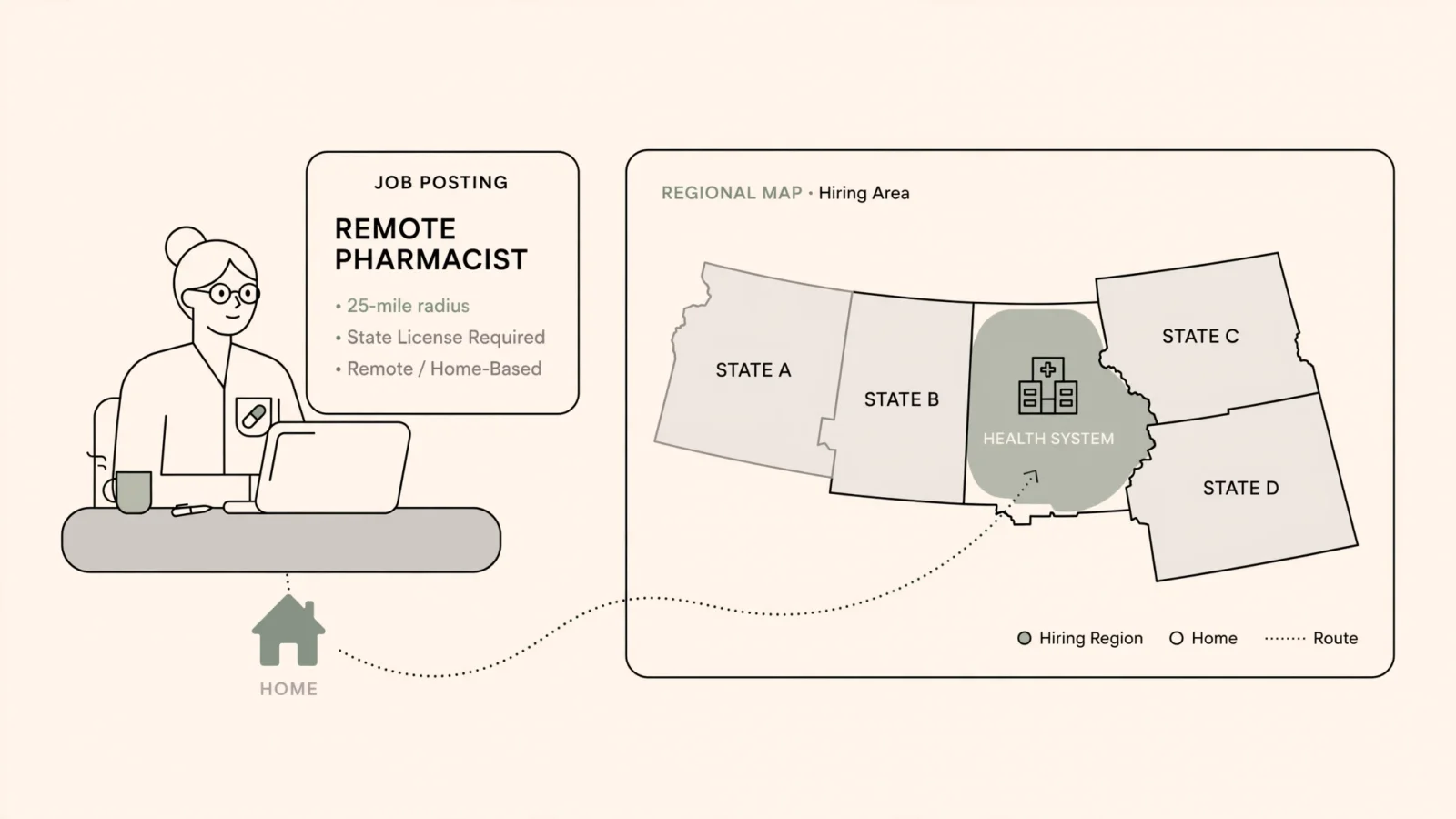
Transitioning to a work-from-home pharmacy position replaces a physical commute with a new set of operational variables. While the desk is in your house, the schedule flexibility and workload remain entirely up to the employer. Companies offering remote pharmacist jobs in Georgia often set specific location boundaries, shift windows, and productivity metrics. A listing might advertise a remote role while limiting eligible residence states for tax or regulatory reasons, or expect hybrid attendance at a regional office. Your actual duties shape the daily experience, from independently reviewing clinical data to managing a continuous queue of incoming patient calls.
Finding the right fit means identifying roles that align with your licensure and career goals. WeekdayDoc lets you filter pharmacist positions by Georgia location requirements and remote work type. Viewing these listings alongside structured data about schedules and workload helps you rule out incompatible offers. Comparing role types, reviewing state processing rules, checking pay context, and evaluating daily expectations will help you determine whether a position offers a sustainable alternative to on-site pharmacy practice.
Remote Pharmacist Roles to Search For
Pharmacy employers hire for distinct remote role families, each carrying different daily responsibilities and varying levels of required interaction. Searching for a broad job title often surfaces a mix of these categories, making it helpful to read the specific duties to understand the work structure. These categories represent distinct career paths rather than a guarantee of current vacancies at any given moment.
Prior authorization and health-plan clinical review roles focus heavily on applying specific formulary guidelines to patient cases. Pharmacists in these positions review clinical notes submitted by prescribers, assess medical necessity, and approve or deny medication requests based on the plan’s established criteria. This work often involves managing a steady queue of electronic cases with strict turnaround times dictated by regulatory standards. The interaction consists primarily of outbound calls to prescriber offices for clarification rather than direct patient counseling.
Mail-order and specialty pharmacy roles handle complex medication regimens, often focusing on high-cost or high-touch therapies. A remote pharmacist in this setting might review detailed clinical profiles, check for drug interactions, and coordinate with nursing teams or shipping departments. Specialty pharmacy work frequently involves detailed documentation of patient education, adherence monitoring, and adverse event tracking.
Remote prescription processing or order review focuses on verifying medication orders before a facility dispenses them. Hospitals and large retail chains use remote pharmacists to manage volume spikes, cover overnight shifts, or provide specialized review. The pharmacist logs into the facility’s pharmacy management system, checks the entered data against the original prescription, verifies dosing, and flags potential interactions. This work requires high concentration and rapid decision-making, tying the pharmacist to a continuous stream of incoming orders.
Medication therapy management, adherence, and population health roles involve direct patient interaction. Pharmacists conduct comprehensive medication reviews, identify gaps in care, and counsel patients on proper administration. These roles often require managing scheduled phone or video appointments, reconciling complex medication lists, and documenting interventions for billing purposes.
Medication safety, drug information, quality, or pharmacy informatics roles remove the pharmacist from the direct dispensing pipeline to focus on system-level improvements. A remote informatics pharmacist might build and test new electronic health record alerts, while a drug information specialist researches complex clinical questions for a health system. These roles typically offer more project-based work and asynchronous communication.
| Role Category | Primary Daily Activities | Typical Interaction Profile |
|---|---|---|
| Prior Authorization | Reviewing clinical notes, applying formulary criteria, managing case queues | Asynchronous review, outbound prescriber calls |
| Specialty Pharmacy | Monitoring complex therapies, documenting adherence, checking interactions | Patient education calls, care team coordination |
| Order Processing | Verifying prescription data, checking dosing, clearing system alerts | High-volume continuous queue, limited direct contact |
| Medication Therapy Management | Conducting comprehensive reviews, reconciling profiles, closing care gaps | Scheduled patient appointments, direct counseling |
| Informatics and Quality | Building system alerts, researching safety events, analyzing data | Project-based work, internal stakeholder meetings |
Title variations often complicate the search process. Employers might list the same basic job as a remote clinical pharmacist, a prior authorization pharmacist, or a telepharmacy pharmacist. Reviewing the job description helps you determine how much of the shift involves managing patient calls versus conducting independent chart reviews. Check whether a posting is still active and review its location terms when you apply, since companies frequently update their hiring parameters.
Georgia Licensure and Processing Rules
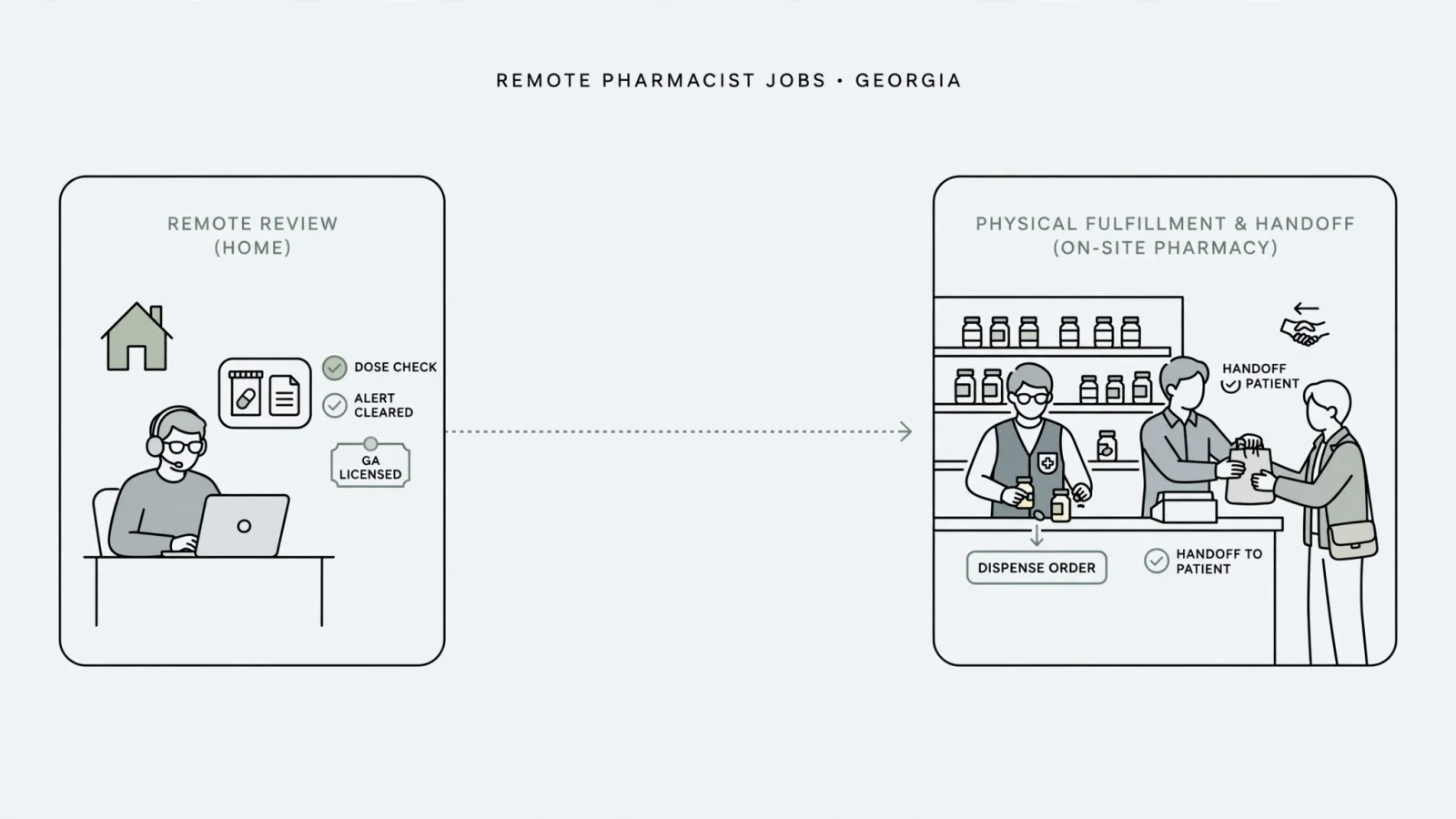
State regulations shape what remote pharmacy practice looks like within their borders. Georgia’s Chapter 480-36 rule establishes a highly defined arrangement for retail remote prescription drug order processing. This regulation does not serve as a blanket authorization for every remote clinical or patient-care job. It governs a specific workflow where off-site pharmacists support a primary dispensing pharmacy.
The Georgia Secretary of State rule defines a secondary remote-entry pharmacist as an individual who processes medication orders without dispensing the medication directly to a patient or caregiver. This arrangement requires the remote pharmacist to hold a valid Georgia license. The regulation permits this secondary pharmacist to be located anywhere in the United States while performing this specific work for a Georgia pharmacy. The rules also require a defined employment or written-contract arrangement for remote processing, establishing accountability and oversight of patient data.
Because this rule applies to a specific retail processing workflow, other types of remote clinical work remain subject to different interpretations of pharmacy practice. Ask potential employers which residence states they accept for a given role and which exact state licenses the position requires. A national pharmacy benefit manager might ask you to hold licenses in multiple states or only accept applicants living in specific tax jurisdictions, regardless of whether you hold a Georgia license.
Pharmacists moving into Georgia or accepting a role that needs a new license face a specific application process. The Georgia Board of Pharmacy FAQ outlines the steps for securing authorization to practice. For license transfers, applicants use the National Association of Boards of Pharmacy process and must pass the Georgia Multistate Pharmacy Jurisprudence Examination. Applicants seeking initial licensure by examination take both the NAPLEX and the Georgia MPJE.
Administrative requirements for licensure update periodically, affecting application timelines. Both initial licensure and license transfer involve background checks, and applicants pay the associated fees. Applications remain incomplete until the Board receives all materials and results. Review the current instructions and fee schedules directly with the Board of Pharmacy before submitting your materials, as missing elements will delay your start date.
Putting Georgia Pharmacist Pay in Context
Evaluating compensation for a remote position requires a solid understanding of the local market rate. The O*NET Georgia wage table reports an annual median of $137,120 for pharmacists in the state, citing Bureau of Labor Statistics wage data. The same data set shows a 10th-to-90th-percentile range of $100,950 to $170,110.
These figures provide a broad benchmark for the profession across the state. They cover pharmacists generally, encompassing retail managers, clinical specialists, and hospital directors. They do not predict what an individual employer will offer for a work-from-home position.
Remote employers approach compensation in several different ways. Some companies tie their base pay to the cost of labor in the employee's residence state, meaning a Georgia resident might receive a different offer than a colleague doing the exact same job in California. Other organizations use national pay bands, offering a flat rate regardless of where the pharmacist lives. Comparing the role-specific base pay against statewide benchmarks helps determine if the offer remains competitive.
Variable compensation and benefits also alter the total value of a package. A remote role might offer a lower base salary but include performance bonuses tied to turnaround times or case completion rates. Employer contributions to health insurance, retirement matches, and paid time off represent significant financial factors. Assess whether the employer covers the costs of maintaining your state licenses, completing continuing education requirements, and outfitting your home office with secure technology. Weighing all these elements against the raw state median clarifies the true financial impact of accepting a remote position.
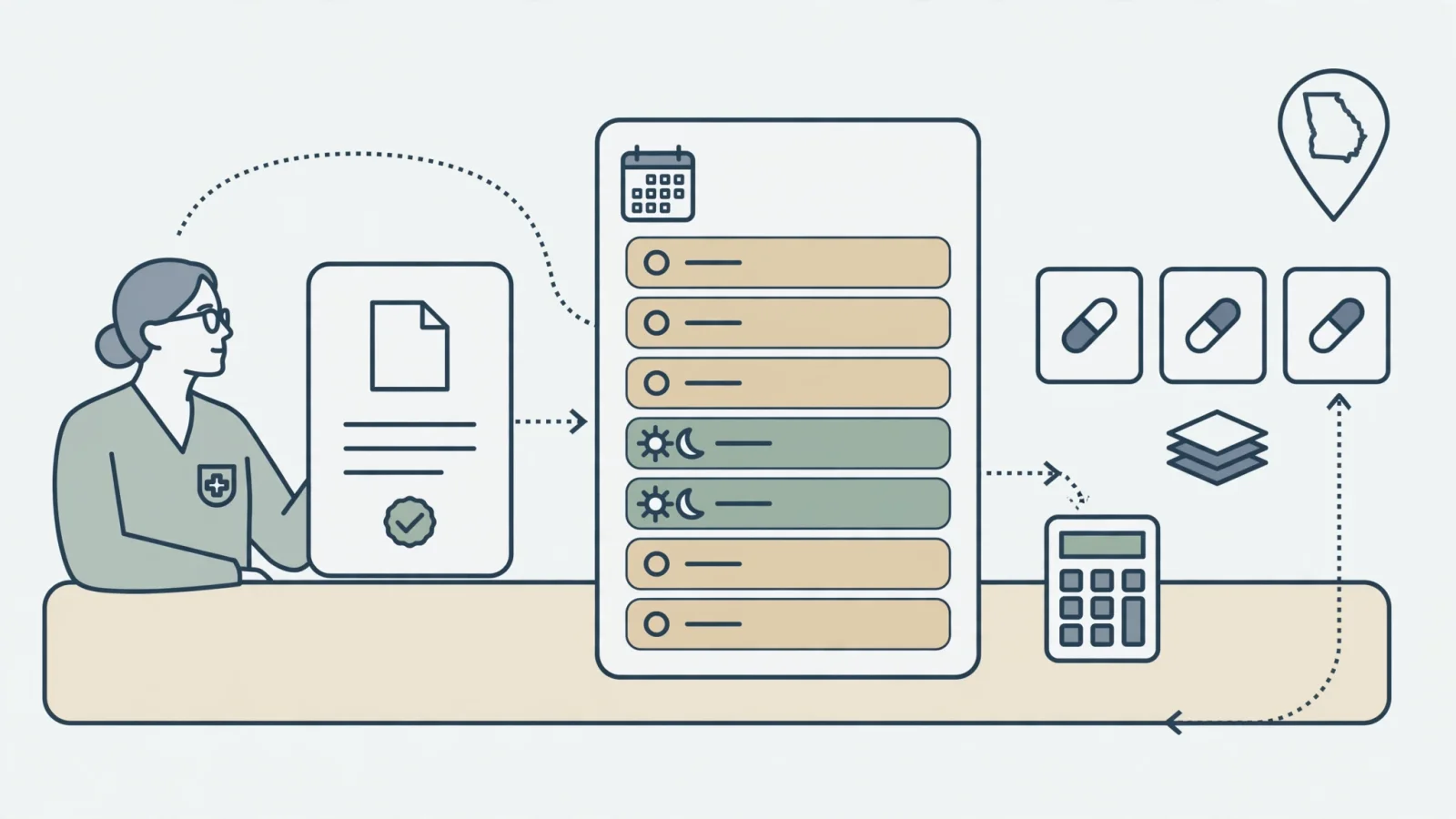
Evaluating the Sustainability of a Remote Role
Trading a commute for a home office solves one specific problem, but it does not guarantee a manageable workload. Assessing the sustainability of a remote pharmacist position requires looking beyond the location to understand how the shift works. Daily expectations determine your quality of life far more than the physical desk you sit at.
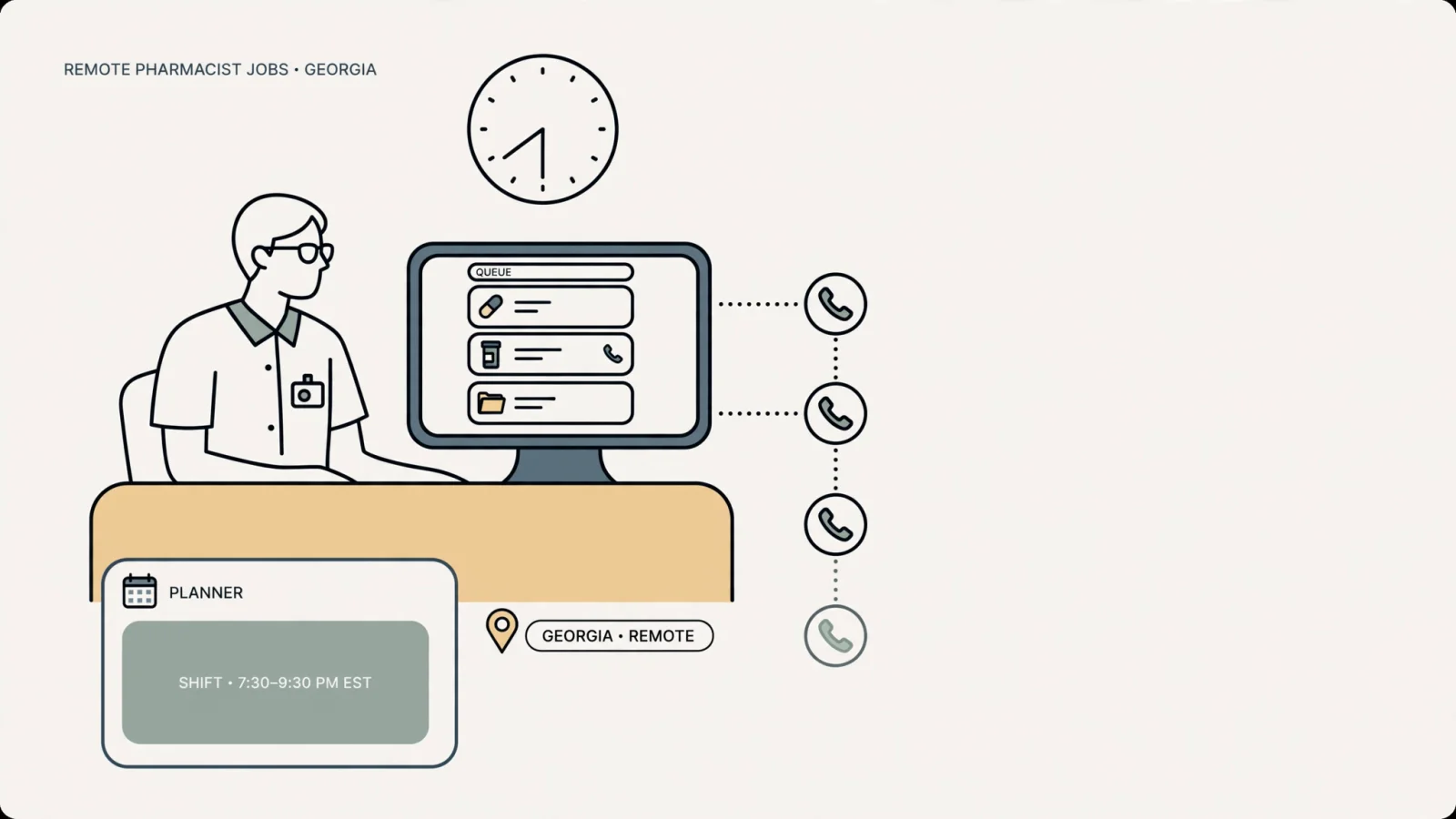
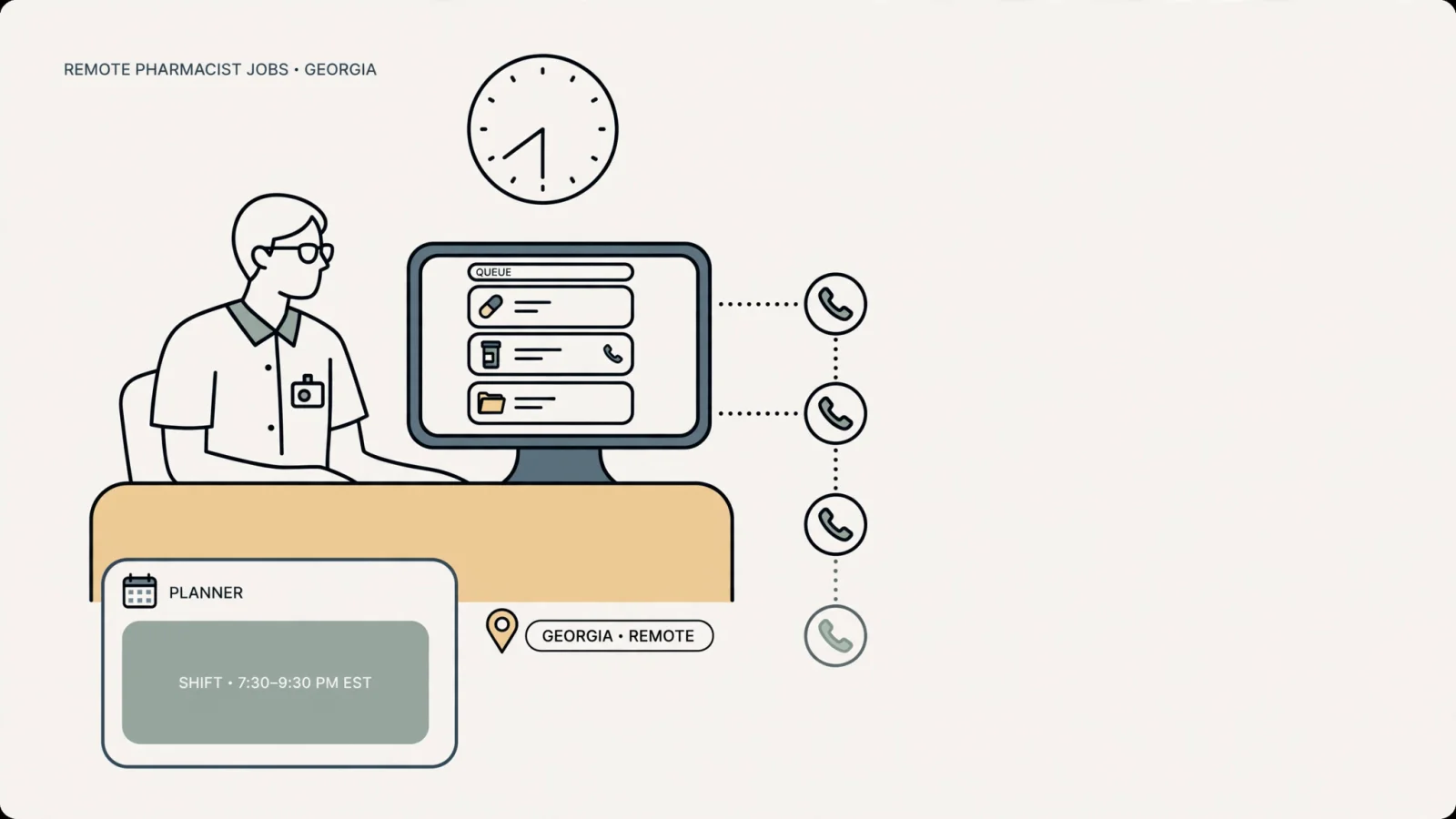
Ask potential employers about exact shift windows and time-zone expectations. A company headquartered on the West Coast might expect a Georgia-based pharmacist to work until eight or nine at night local time to cover their peak volume. Determine whether the role involves nights, weekends, or on-call coverage, because many remote hospital order-entry positions exist specifically to cover the hours that on-site staff avoid.
Investigate the nature of the daily tasks. Work that relies primarily on asynchronous case review allows for quiet concentration and steady progress. A job based entirely on a live phone queue forces you to react constantly to incoming calls from frustrated patients or hurried prescribers. Clarify what case-volume, turnaround-time, or other productivity targets apply to the position, since high hourly quota requirements can make a home office feel stressful. Ask how much direct patient or prescriber contact is expected during a standard shift.
Support structures matter in a remote environment. Find out what staffing or escalation support is available when you encounter a complex clinical issue or a hostile caller. Working alone means you cannot turn to a colleague at the next workstation for a quick second opinion.
Ask how much control the position offers over your schedule. Some roles monitor your active minutes on the system, while others care only that you complete your assigned queue by the end of the day. Ask whether the position classifies you as a W-2 employee or a 1099 independent contractor. As a contractor, you take on responsibility for taxes, benefits, and liability insurance. Ask about compensation structures, benefits, license support, and continuing-education funding, and review the employment contract to see how workload expectations are documented in writing.
WeekdayDoc provides a 0-to-10 work-life or burnout score on its listings to help contextualize these operational factors. Because the scores use the same scale, they offer a common point of comparison across opportunities. This score reflects elements such as call coverage, nights, weekends, schedule flexibility, autonomy, and administrative burden. You can use the score as a starting point, then discuss the details with the hiring manager during the interview and check that the written offer reflects those expectations.
Finding and Comparing Roles
A focused search can help filter out incompatible listings early in the process. Combine your specific clinical background with targeted search terms to narrow the field. Searching for remote pharmacist jobs in Georgia alongside terms like prior authorization or telepharmacy will surface a variety of leads. Then check whether each posting is fully remote or hybrid and requires office visits.
General job boards can help identify which companies are currently hiring, but they often leave critical details buried in long text descriptions. Scanning the fine print reveals which residence states are eligible and which specific state licenses the employer demands before you submit an application. General platforms also struggle to maintain accurate live job counts, meaning a promising listing might already be filled by the time you find it.
WeekdayDoc simplifies this discovery and comparison process by structuring the data you actually need to assess a role’s financial and operational fit. You can filter pharmacist roles specifically by Georgia location parameters and remote work type. Setting up alerts or using the platform's AI matching features helps surface roles that align with your specialized experience and active licenses. Viewing schedule demands, workload expectations, and burnout scores alongside compensation data allows you to evaluate the complete picture of a role before investing time in an application. This makes it easier to compare work-life scores and consider call, weekend, and night expectations alongside salary and market benchmarks, rather than judging an opening by location or pay alone.
The platform also provides resources for the later stages of your job search. Salary-comparison tools and negotiation scripts help you evaluate a pending offer against market realities. The AI contract scanner accepts pasted text, PDF, or DOCX files, flagging potential issues before you sign. This tool can highlight restrictive non-competes, aggressive payback provisions for sign-on bonuses, or terms dictating who pays for tail coverage if the role involves specific liability insurance requirements. Together, these resources can support a closer review of whether an offer is both financially fair and sustainable under its written terms.
Start by shortlisting opportunities based on location eligibility and active licensure. Once you confirm you meet the baseline requirements, compare the shift windows, productivity metrics, and total compensation packages. A remote position works best when it offers financial stability without sacrificing your operational well-being.
Ready to evaluate roles based on actual workload and clear schedule expectations? Visit WeekdayDoc to filter remote pharmacist listings by location, compare work-life scores, and use our contract scanner to review your next offer.