Physical Therapist Utilization Reviewer Jobs
Explore physical therapist utilization reviewer duties, qualifications, pay, remote-work limits, and questions to ask before accepting a role.
A physical therapist utilization reviewer evaluates therapy-related records and service requests against the applicable clinical and coverage criteria. Reviewers document a clinical rationale for each case and then typically approve the request, ask the treating clinic for more information, or refer the file for further review. The specific duties, decision authority, and schedule vary widely by employer and health program.
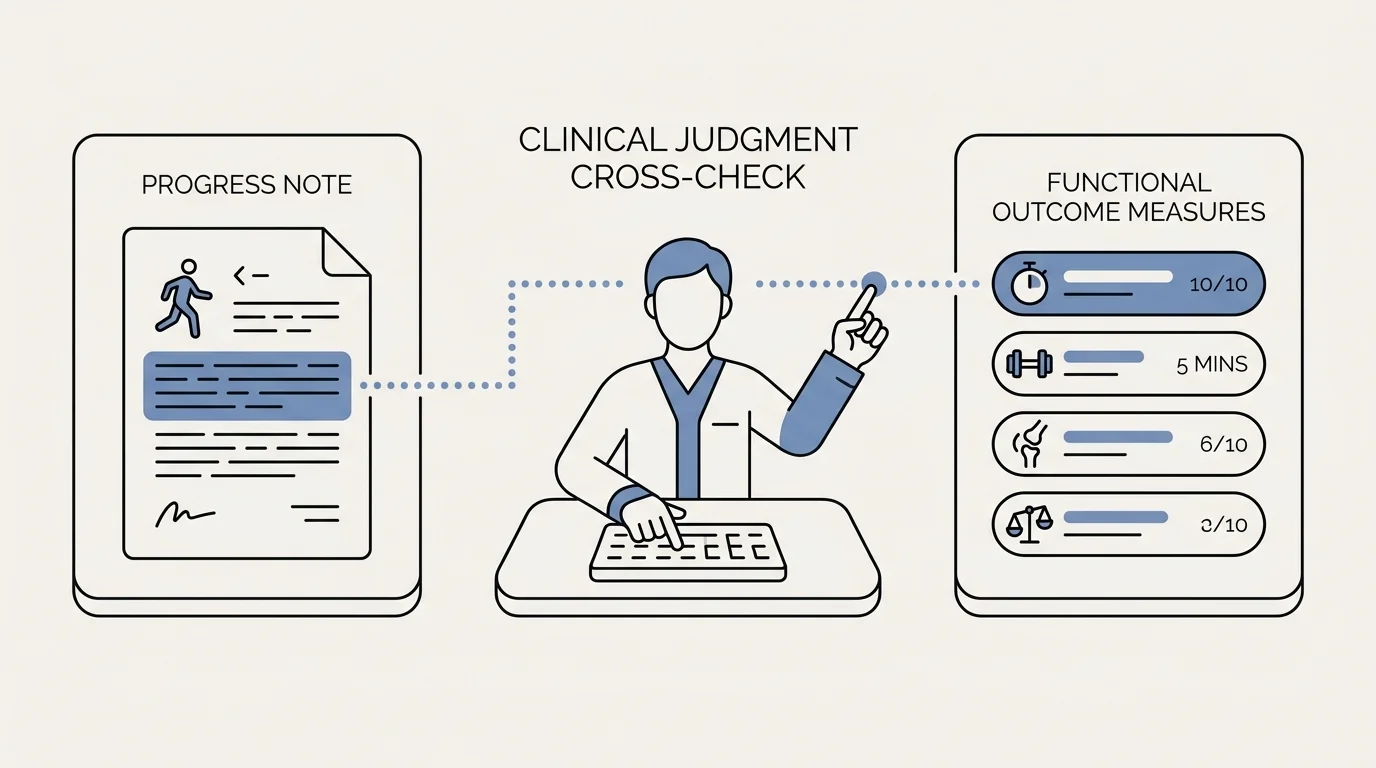
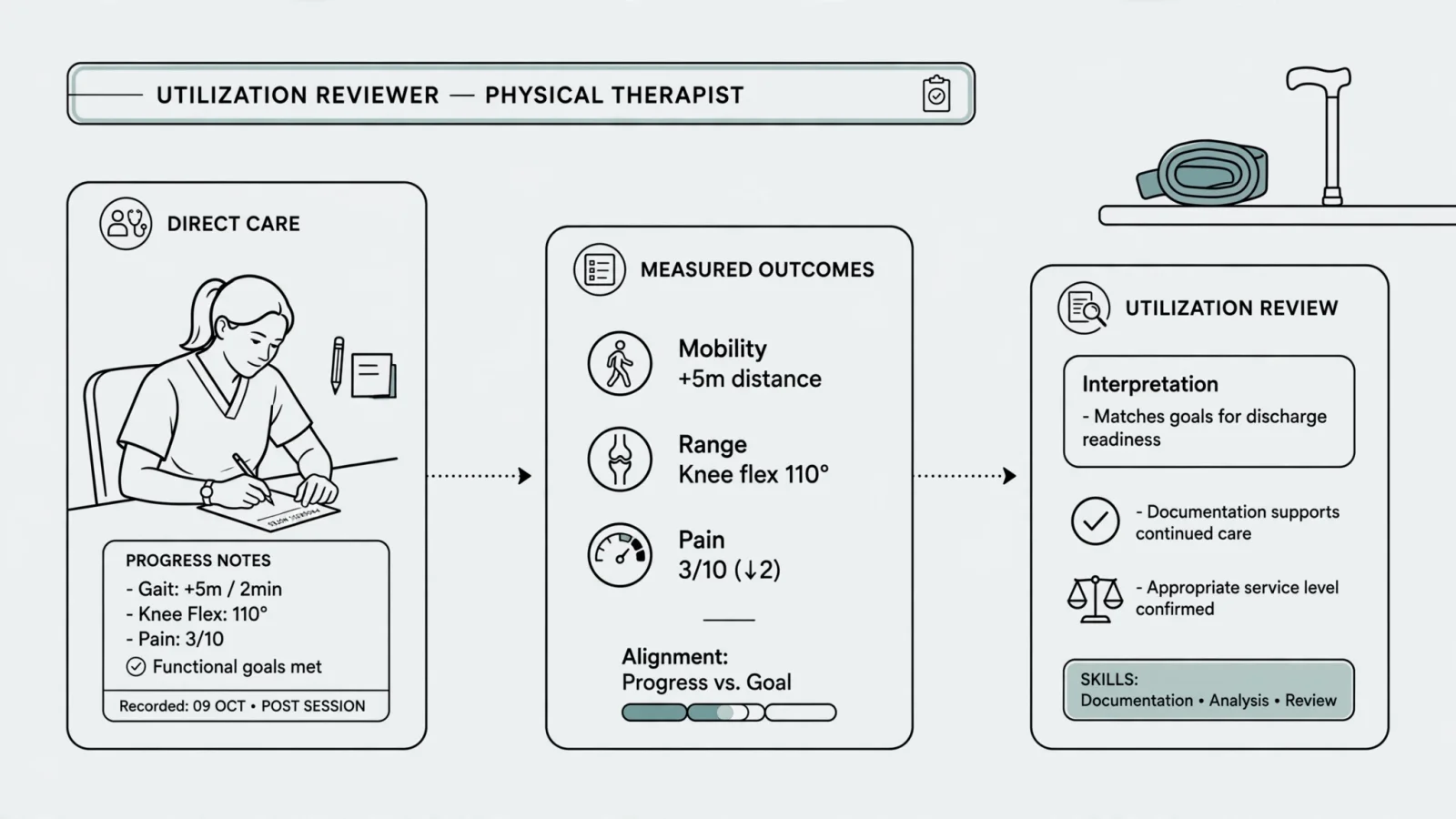
For a Medicare-specific example, the October 2025 revision of the Billing and Coding: Medical Necessity of Therapy Services (A53304) guidance mandates that therapy records support medical necessity and demonstrate the need for a qualified clinician’s skills. Objective or functional measures help show whether the therapy benefits the patient. Reviewers apply similar logic when reading charts, though Medicare rules are not universal across commercial, Medicaid, or workers’ compensation plans. A job title alone does not reveal the workload, authority, or location limits of a specific role. Because these variables shape your daily experience, WeekdayDoc helps clinicians track relevant openings while comparing posted pay against visible work-life factors.
The Utilization Review Workday
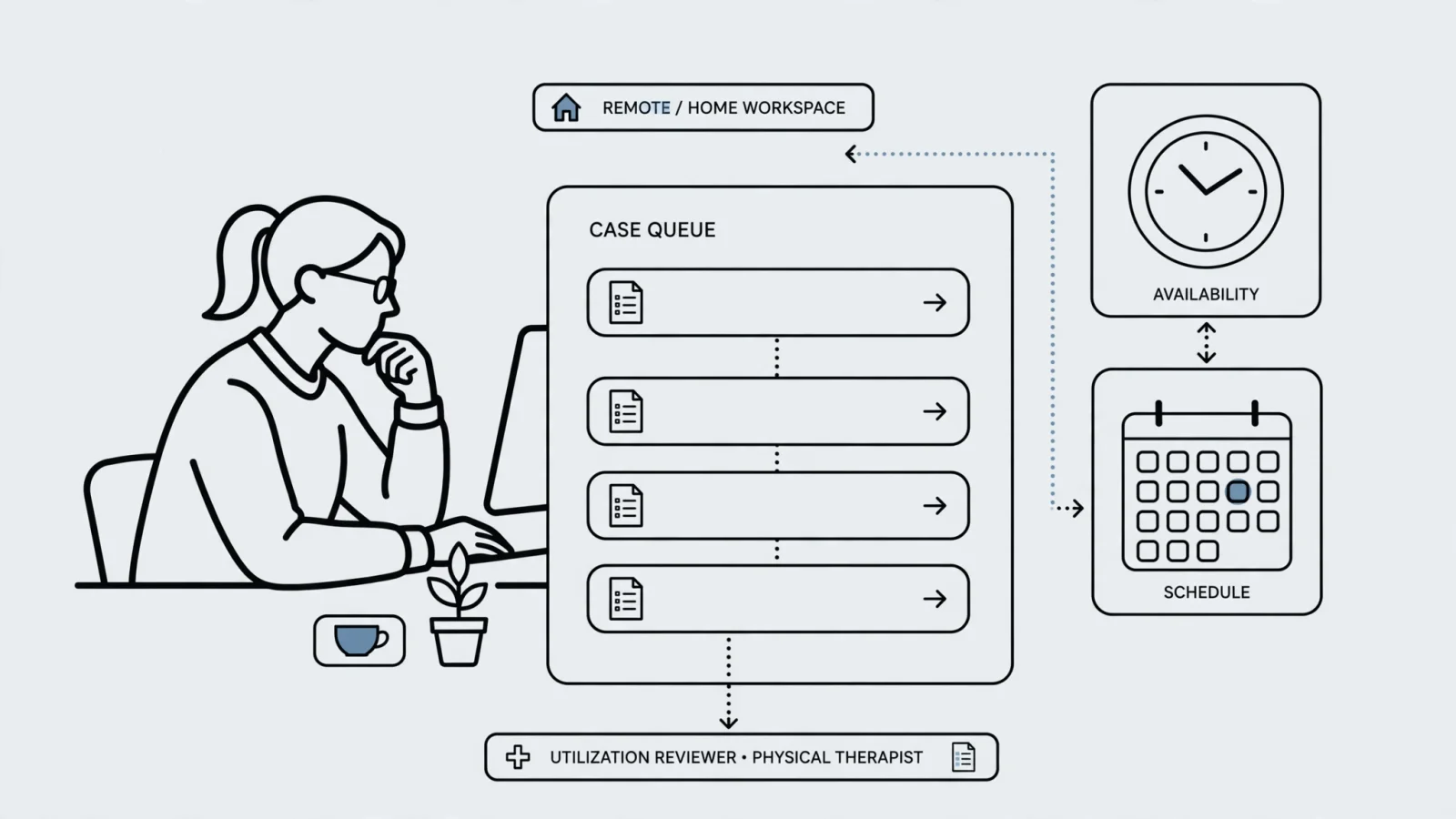
Electronic queue management drives the daily routine for most utilization review professionals. After logging into a portal populated with pre-service authorization requests, concurrent reviews for ongoing care, and retrospective reviews for completed treatments, you open a file. From there, you read the submitted evaluation forms and daily treatment notes, comparing the documented deficits against the specific criteria governing that patient’s plan.
A Comagine Health clinical reviewer posting describes a role in workers' compensation review. The position involves reviewing medical records, applying clinical policies and workers' compensation guidelines, and documenting the resulting decisions. The posting says reviewers approve appropriate cases and refer those requiring additional review to Medical Affairs and physician reviewers. It also asks reviewers to draft a denial summary and recommendation.
When a submitted chart lacks the details needed to authorize a service, the reviewer requests the missing information directly from the treating clinic. This might involve sending an electronic inquiry asking for updated range-of-motion measurements or a recent functional outcome score. If a case is escalated and denied by a physician, the physical therapist reviewer might also help compile the documentation needed for the appeals process or answer questions during quality audits. Every employer structures this workflow differently, so candidates benefit from asking whether a role allows them to approve, pend, recommend, or escalate a case.
Transitioning From Patient Care to Chart Review
The transition from the clinic to a review queue shifts your focus from physical treatment to chart analysis. Your work product becomes a record-based review and a written rationale rather than a restored gait or a hands-on manual therapy session. You no longer lift patients, guard against falls, or manage sudden scheduling cancellations.
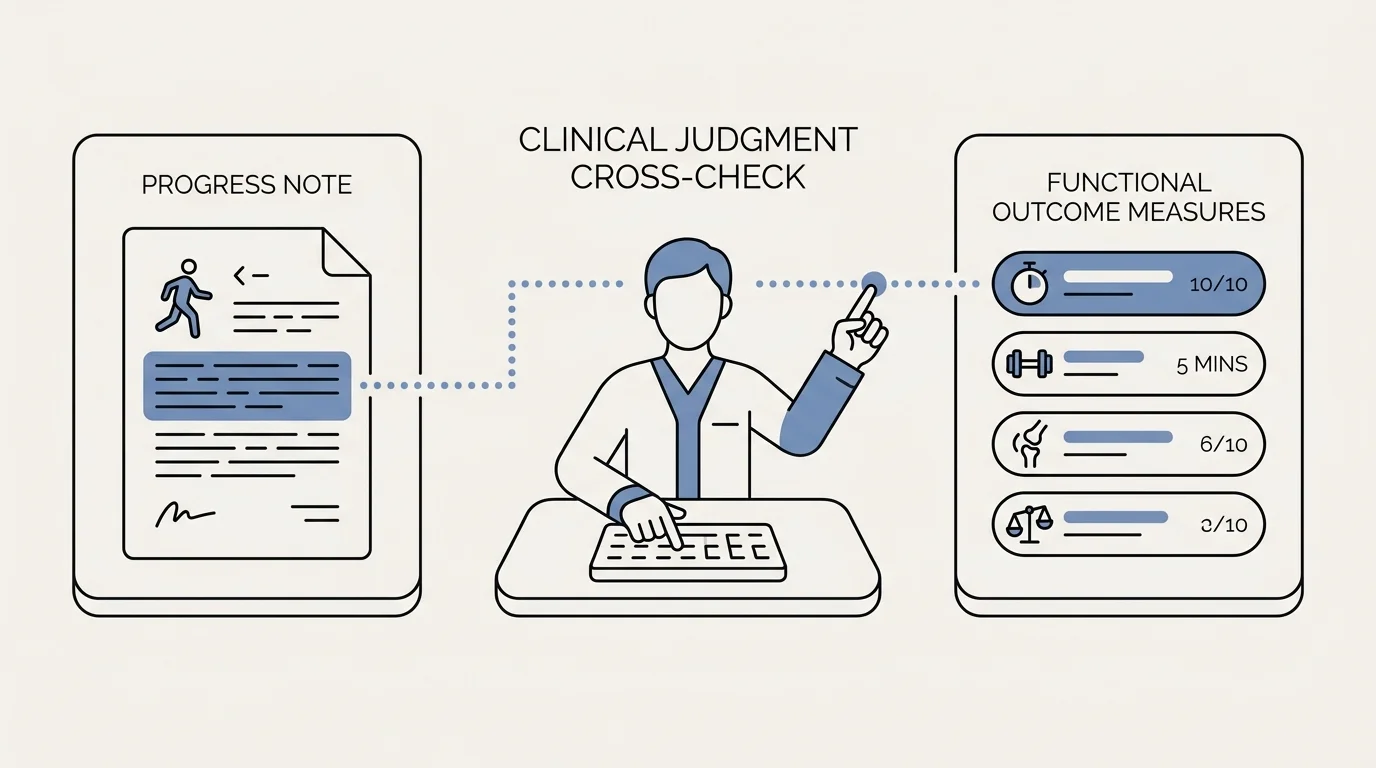
That shift still relies heavily on your clinical judgment. An understanding of anatomy, tissue healing timelines, and rehabilitation protocols remains central to the job, but you apply this reasoning to another provider's documentation instead of a live patient, evaluating whether the treating therapist's notes justify the requested intervention based strictly on the written evidence. A subjective report of feeling better carries less weight than an objective improvement on a standardized assessment tool.
This desk-based work also changes how you interact with other people. Some physical therapists assume a utilization role involves no contact with providers or patients. While you will not perform evaluations, many positions expect you to conduct peer-to-peer discussions, call clinics for missing flowsheets, or explain review-process requirements to other healthcare workers. Other roles focus almost entirely on independent chart review. Determining how much communication you want in your day helps narrow the search before accepting an offer.
Qualifications for a Utilization Reviewer Physical Therapist
The U.S. Bureau of Labor Statistics notes that physical therapists entering the occupation need a Doctor of Physical Therapy degree, and all states require physical therapists to be licensed. The BLS profile covers the occupation generally, so it does not specify qualifications for utilization-review positions.
Employer expectations diverge based on the populations they manage and the state contracts they hold. The Comagine Health posting called for a master's degree in physical therapy or occupational therapy, or applicable education. It also expected an active, unrestricted Washington license to service a specific contract. For experience, the listing sought five years in direct clinical care or an ICU/ER setting, allowing one year of utilization review or medical management experience to substitute for some of that clinical time.
A posting from Trillium Health Resources illustrates a different set of demands. This North Carolina Physical Therapist UM role asked for a master’s degree in PT, active North Carolina licensure, and North Carolina residency. It also expected one year of utilization management or review experience and mentioned possible travel within its specific service area.
Beyond degrees and licenses, successful candidates bring specific administrative skills. Employers look for concise written documentation, the ability to interpret objective functional measures, and a track record of applying clinical guidelines consistently. Familiarity with complex electronic health records and clear communication with physician reviewers also help. The Comagine posting listed familiarity with InterQual and ASAM criteria as desirable qualifications, but these proprietary systems are not universal prerequisites for every opening.
Salary Expectations for PT Utilization Reviewers
Broad professional statistics offer a starting point, but they do not isolate the payer-side job market. The BLS reported a $102,760 median annual wage for physical therapists overall in May 2025. Because this figure includes outpatient clinic directors, hospital staff, and home health therapists, it serves as a profession-wide benchmark rather than a specific utilization-review salary expectation.
Individual employer postings provide narrower, role-specific context. The Comagine Health listing displayed a range of $91,000 to $119,000 per year for a combined PT/OT reviewer supporting workers' compensation claims. The Trillium Health Resources posting listed $80,000 to $113,000 per year for its North Carolina-based UM role. These figures represent individual employer budgets governed by their specific state contracts and program scopes rather than a guaranteed national average.
Comparing offers means looking past the base salary to evaluate the total compensation package. A role paying a flat salary might expect you to process a high daily quota, pushing your actual working hours beyond a standard schedule. Other positions offer productivity incentives for exceeding file-review targets, which can increase your earnings if you work efficiently. Comparing employment classification, overtime rules, health benefits, paid leave, and retirement contributions provides a clearer picture of the job's financial reality.
Availability of Remote Roles
Remote positions exist across the industry, but working from home does not mean you can work from anywhere or set your own hours. Health plans and review organizations operate under strict state regulations, which often dictate where their employees can legally reside and practice.
The Comagine Health listing described a remote U.S. role, yet it expected Washington licensure for the applicable contract. A separate PRN or part-time opening within that same listing called for availability to cover at least two four-hour shifts per week. The Trillium posting allowed remote work within North Carolina but mandated state residency and left open the possibility of local travel. Employers also impose technical demands on home offices, often expecting hardwired internet connections and private workspaces as part of their HIPAA compliance requirements.
The structure of the workday also limits location flexibility. Electronic queues enforce strict turnaround times, so reviewers need to stay available during scheduled hours rather than stepping away for long stretches. Performance metrics track how many cases you clear and how accurately you apply the guidelines. This environment replaces the physical fatigue of patient transfers with the mental fatigue of continuous chart reading and quota management.
When you track a utilization reviewer physical therapist opening on WeekdayDoc, you can evaluate these trade-offs directly. The platform assigns a work-life score based on call coverage, night shifts, weekend expectations, schedule flexibility, and administrative burden. As with remote utilization review nurse jobs, physical therapy roles call for a clear understanding of daily quotas and schedule expectations. A remote label does not automatically guarantee a low-stress environment.
Transitioning Into Utilization Review
Translating clinical experience into the language of insurance authorization and medical necessity helps bridge the gap between patient care and desk work. Employers want to see an understanding of how documentation justifies treatment. If an applicant lists "evaluated and treated patients" on a resume, hiring managers often struggle to see the relevance to a queue-based role.
Highlighting the administrative and analytical parts of your current role strengthens an application. This means focusing on documentation quality, functional-outcome tracking, and the ability to support medical necessity through objective measurements. If a current position involves submitting detailed progress notes for authorization extensions, detailing that process helps. Explaining how plans of care are modified based on patient progress and describing peer-to-peer discussions with medical directors when requesting additional visits also demonstrate relevant skills.
Using natural variations of the job title in application materials, such as PT utilization management reviewer, clinical reviewer PT, or physical therapist utilization reviewer, aligns your background with the target role. While some postings ask for prior UR experience, others allow relevant clinical backgrounds to substitute for it. Mentioning specific review frameworks like InterQual or ASAM only makes sense if you have used them in practice. Allied professionals applying for telehealth respiratory therapist jobs can demonstrate their remote-assessment capabilities, while applicants for utilization review roles can show readiness for chart review by explaining their understanding of relevant documentation standards.
Questions to Ask Before Accepting a Role
An interview for a review position serves as a two-way evaluation. Because daily expectations vary widely among health plans and third-party organizations, uncovering the operational realities of the job before signing a contract can help prevent surprises. This checklist helps structure questions during the interview process:
- Decision authority: Who makes the final determination on a file? Can a physical therapist reviewer approve and pend cases independently, or do you only recommend an outcome for a physician to finalize?
- Workload and metrics: What is the expected daily case volume? What are the turnaround targets for pre-service versus concurrent reviews? How does the company balance productivity measures with quality audits?
- Schedule and availability: What are the fixed working hours, and which time zones apply? Are there mandatory weekend, holiday, or on-call expectations? How does the employer handle overtime when the queue volume spikes?
- Communication expectations: Does the work consist primarily of silent chart review, or will you spend significant time on provider calls, peer-to-peer reviews, and appeals?
- Location and licensure: Which state licenses are necessary, and who pays for their renewal? Must you reside in a specific state, and does the role involve any travel?
- Employment type: Is the position full-time, part-time, PRN, or a 1099 contract arrangement?
Gathering these details clarifies whether a specific opening offers a sustainable career change or a different type of burnout. Weighing the relief of leaving the clinic against the demands of the review queue ensures a well-considered decision.
Finding a non-clinical role that respects your time requires more than searching for a remote label. WeekdayDoc provides the market context you need to evaluate an offer. Search for utilization review and clinical management roles, compare the posted pay against detailed work-life scores, and set alerts for positions that match your specific licensure. If you find an offer worth pursuing, use our AI contract scanner to flag hidden restrictions before you sign. Visit WeekdayDoc to start comparing sustainable healthcare careers today.