Remote PharmD Jobs: Roles, Pay, and Fit
Explore remote PharmD jobs, compare role types, pay, licensing, and schedule demands, and learn how to assess listings before applying.
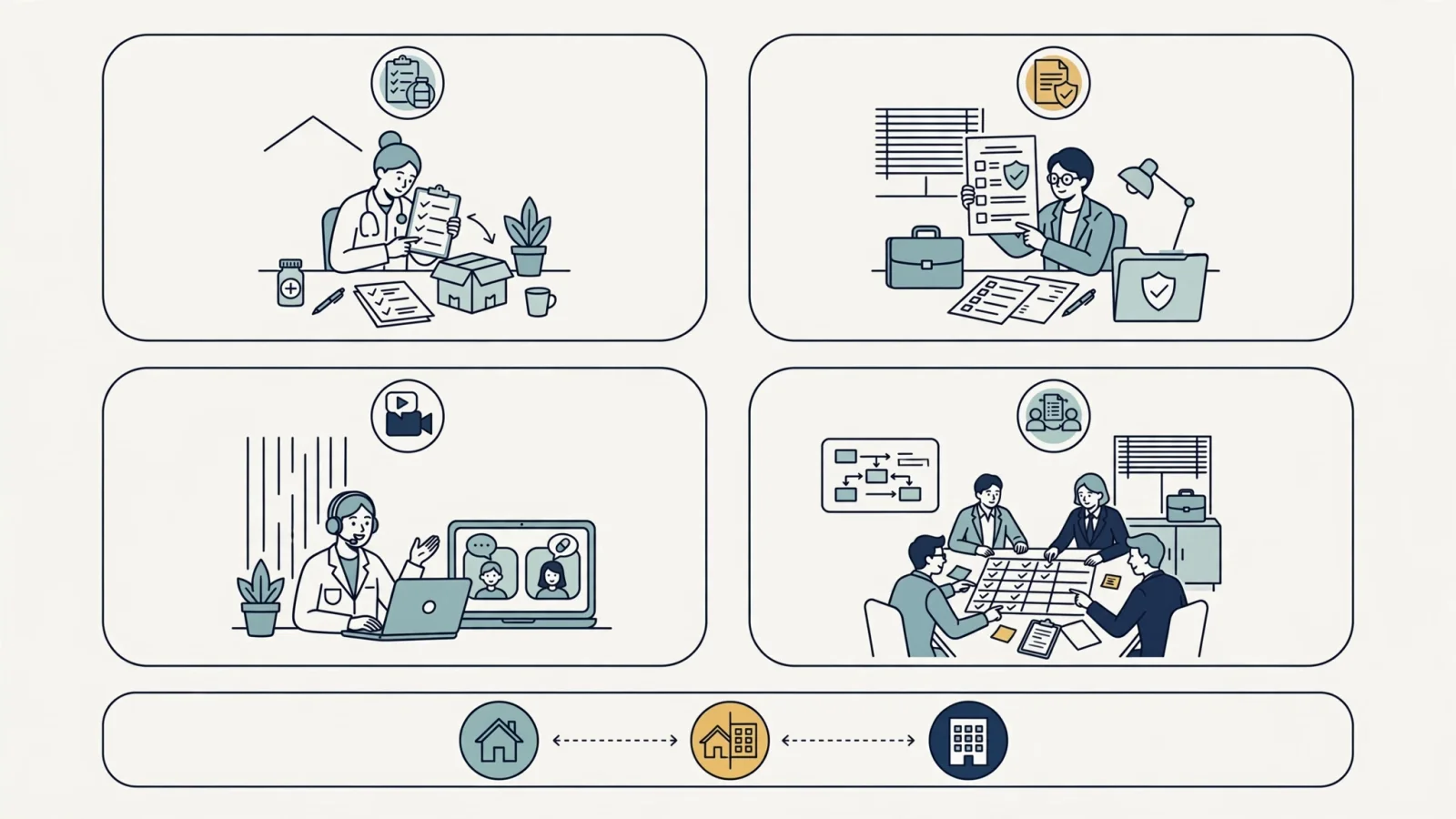
Remote PharmD jobs encompass everything from direct patient interactions via video to asynchronous administrative file reviews, offering an escape from the physical toll of retail counters or the rigid shifts of hospital floors. Because remote work in pharmacy describes a location arrangement rather than a single medical specialty, the day-to-day reality varies widely. Some positions keep you fully home-based, while others require a hybrid schedule or restrict hiring to residents of specific states. Finding the right fit means looking past the location label to understand the daily workflow, legal boundaries, and compensation structure. WeekdayDoc lets you search by work type, location, and specialty so you can match the daily realities of a role to your career goals.
What Counts as a Remote PharmD Job?
A job title alone rarely guarantees a work-from-home schedule. The American Society of Health-System Pharmacists defines telepharmacy as the use of telecommunications technology to oversee pharmacy operations or deliver patient care. Telehealth serves as a broader umbrella for remote care, but a telepharmacy role might still require reporting to a central corporate office or a regional hub. Conversely, payer-side clinical review belongs to an entirely different job family but often supports fully remote setups.
The key is to identify whether a listing describes a permanent remote role, a hybrid requirement, or an on-site job using remote care technology to reach patients. Employers use these terms interchangeably in job postings, leaving the location requirements buried in the fine print. Checking the required daily commute and the specific telecommuting policy saves time before you begin the application process.
Remote PharmD Career Paths
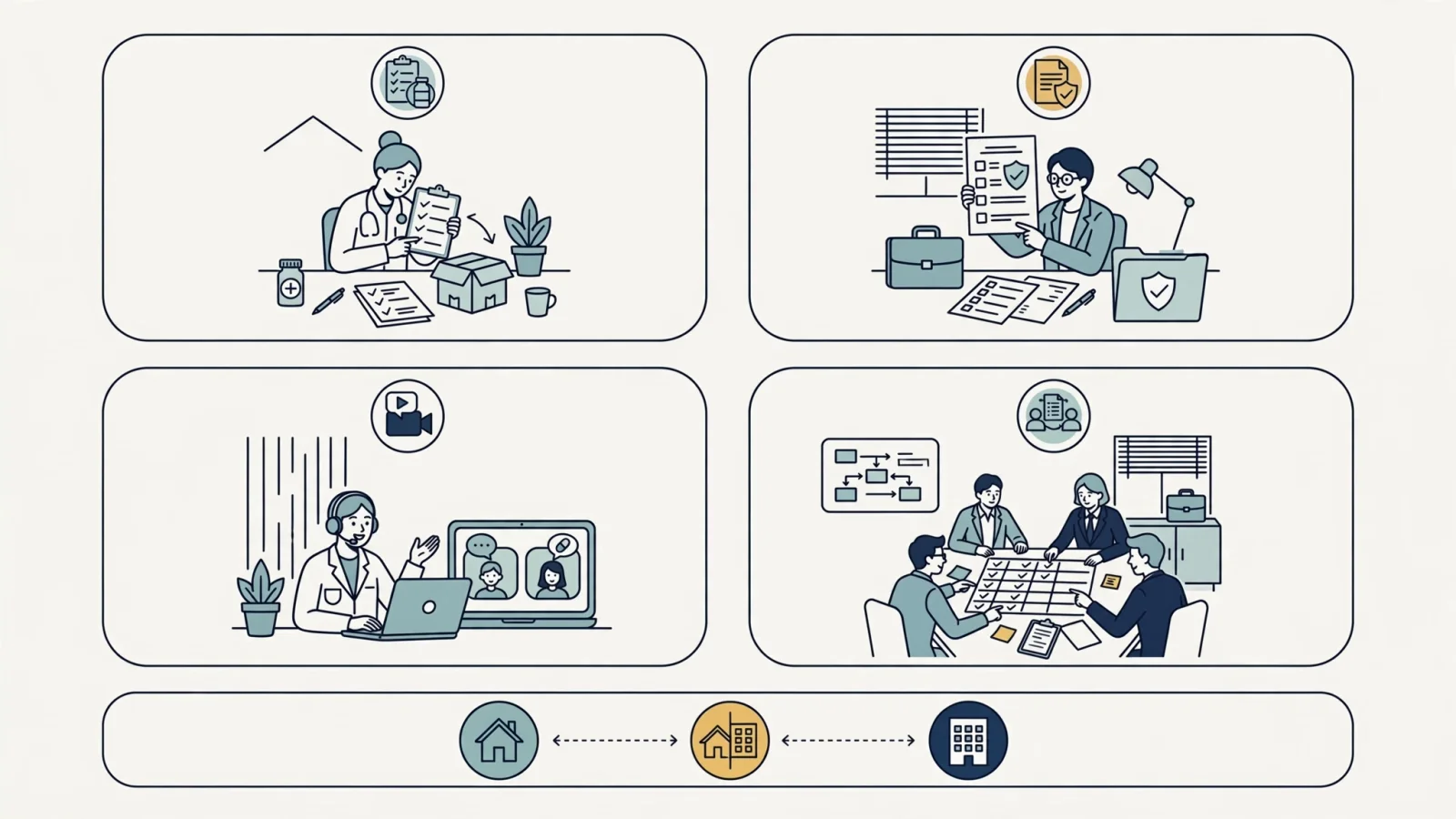
The title "remote pharmacist" covers several distinct clinical and administrative tracks. These role families group common responsibilities together, though employers vary widely in how much remote flexibility they offer. Daily duties, coverage hours, and output expectations reveal more about a role than the title alone.
Telepharmacy and Remote Order Review
Pharmacists in these positions handle order verification, oversee distant operations, and provide patient counseling via video or phone. The workflow closely mirrors traditional hospital or retail environments, though you are geographically separated from the dispensing facility. You will frequently interact with on-site nursing staff, physicians, and pharmacy technicians through electronic health records and computerized provider order entry systems.
Coverage hours and shift expectations vary. Some roles require overnight availability or rotating weekend coverage to support hospitals during off-peak hours. You’ll also want to know which specific state licenses the employer expects you to hold before applying, because verifying orders across state lines triggers complex regulatory requirements for both the facility and the clinician.
Managed Care, Health Plans, and PBMs
In managed care, the Academy of Managed Care Pharmacy describes pharmacists in managed health care organizations as responsible for delivering health care and prescription drug benefits to more than 300 million Americans, as its managed-care pharmacy overview explains.
A hiring manager can clarify how daily workload is measured, including how much time goes toward clinical case review compared to administrative tasks, documentation, or provider phone calls. The escalation process and clinical criteria used for approvals or denials will dictate much of your daily routine. Volume targets in managed care can be demanding, and understanding the expected reviews per hour helps you gauge the realistic pace of the work.
MTM and Patient Support
Medication therapy management and patient support roles center on comprehensive medication reviews, adherence outreach, and post-discharge follow-up. These positions often support mail-order operations, Medicare Part D programs, or online pharmacy services, balancing direct patient interaction with detailed clinical documentation.
The key distinction is whether patient calls are individually scheduled appointments or pulled from an active queue. Queue-based work can feel similar to retail volume pressures, whereas scheduled interactions offer more predictability. The employer’s outreach, follow-up, and documentation targets also help show the expected ratio of successful patient contacts to administrative time, which can help you determine whether the workload aligns with your career expectations.
Clinical Program and Formulary Work
Pharmacists on the policy side evaluate clinical evidence to design formularies, develop clinical guidelines, or manage specialized payer programs. These roles move furthest from traditional dispensing and demand significant cross-functional team collaboration, with remote eligibility varying by company policy rather than clinical necessity.
The balance between individual case review and broader program development shapes the mix of recurring meetings, coverage duties, and long-term project expectations. Professionals in these tracks collaborate with medical directors, data analysts, and health economics teams. Corporate meeting rhythms heavily dictate your daily schedule rather than patient queues, requiring strong project management skills and cross-departmental communication.
Licensure and State Eligibility
Holding a Doctor of Pharmacy degree provides the educational foundation, but your legal authority to practice depends entirely on state-level rules. The U.S. Bureau of Labor Statistics notes that every state requires pharmacists to hold an active license, a standard that applies strictly to remote work as well. No single license automatically authorizes nationwide remote pharmacy practice.
Requirements depend on the specific role and the relevant jurisdiction, as some states mandate licensure where the patient resides while others require it where the dispensing pharmacy is located. The National Association of Boards of Pharmacy Verify credential helps streamline credentialing, though it does not independently authorize pharmacy practice. An employer can clarify which states you are permitted to live in and which jurisdictions' rules apply to your daily work.
Pay attention to which specific state licenses the job posting requires on day one. Maintaining multiple state licenses requires significant administrative upkeep and continuing education hours, so employer support or financial reimbursement for acquiring and maintaining these additional credentials can make a difference.
Compare Pay, Workload, and Schedule
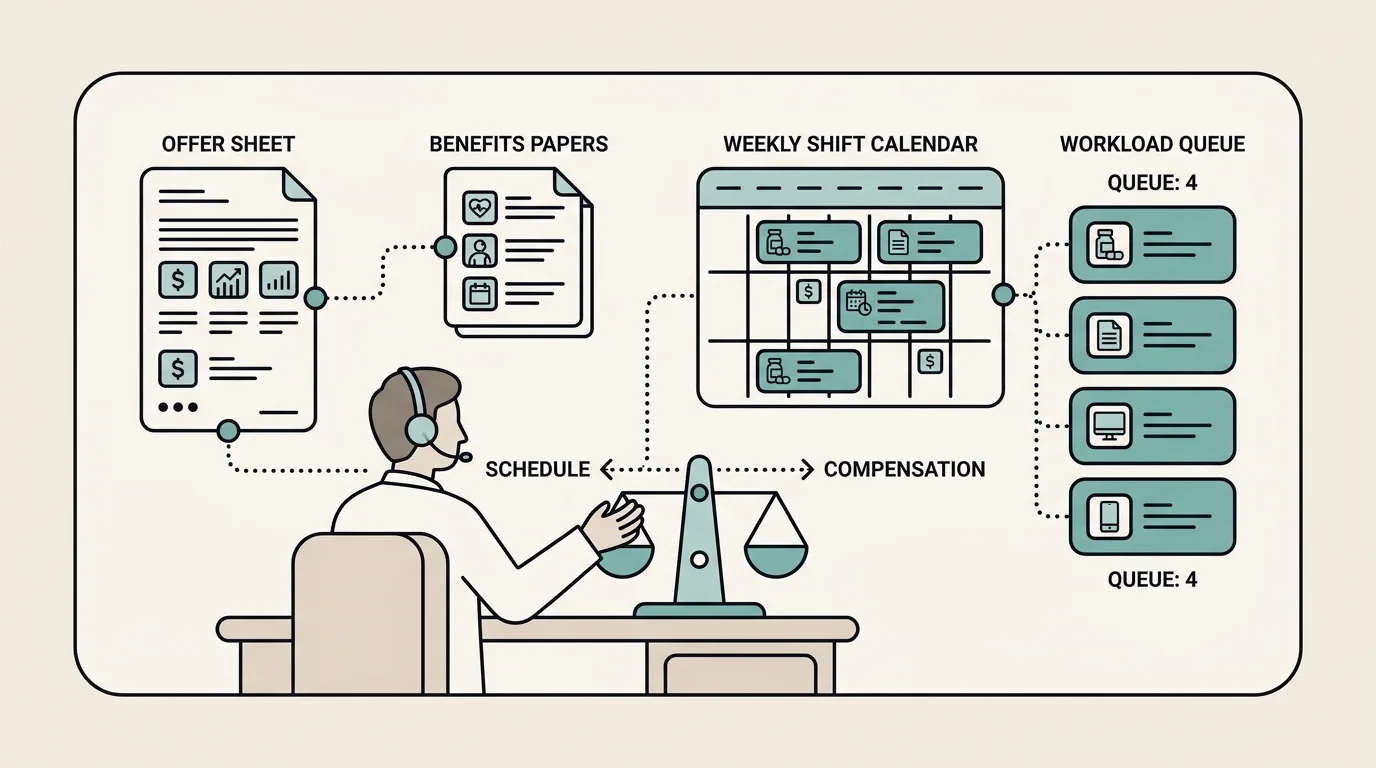
Do not assume a remote label indicates a specific pay tier or a more relaxed schedule. Working from home removes the commute, but it does not reduce patient volume or clinical complexity by default. A structured comparison helps you evaluate the total offer.
Salary Context and Total Compensation
The U.S. Bureau of Labor Statistics reports a $140,910 national median annual wage for pharmacists in May 2025. Selected industry medians for the same month provide further context: pharmacies and drug retailers showed a median of $132,940, ambulatory healthcare services reached $153,920, and state, local, and private hospitals reported a median of $157,290.
When comparing offers, look past the base salary or hourly rate. Identify whether bonuses or incentives are guaranteed or tied strictly to performance metrics, and factor in shift differentials, weekend pay, and holiday compensation. Calculate the value of the benefits package, paid time off, and employer-provided equipment. Continuing education support and license reimbursement add significant value to a compensation package, especially if the role requires maintaining credentials in multiple states. WeekdayDoc provides salary comparisons and market percentiles directly on job listings, allowing you to quickly weigh a specific offer against broader industry context.
Schedule, Workload, and Boundaries
A home office offers no protection from a punishing schedule if the workload exceeds available staffing. The required time zone and hours of operation shape the schedule, including any rotation for nights, weekends, holidays, or on-call escalation responsibilities. Expected volume for cases, calls, reviews, or prescriptions also matters, because employers track turnaround time, quality metrics, and documentation accuracy closely in remote environments.
Clinical autonomy plays a large role in daily satisfaction. Protocols, overrides, and escalation steps for complex cases, along with the boundaries around patient interactions, help define that autonomy. Call windows, queue coverage during administrative time, and what happens to the workflow when call volume spikes or a team member calls in sick are also useful details to clarify.
WeekdayDoc summarizes these factors with a 0-to-10 listing score based on call requirements, nights, weekends, flexibility, autonomy, and administrative burden. This tool provides a structured comparison to help you spot demanding schedules early. It pairs usefully with salary comparisons to show the trade-offs of a position. If you move forward with an offer, WeekdayDoc’s paid negotiation scripts and contract scanner help you prepare questions and flag specific clauses for review. Your contract review should cover compensation language, restrictive covenants, repayment or clawback clauses, professional-liability coverage, and any tail obligations. An automated contract scan serves as an issue-spotting aid to guide your review alongside formal legal counsel.
Search and Apply for Remote Pharmacist Jobs
Finding the right position requires targeted search strategies, as a broad query often returns hundreds of on-site roles. Use specific phrases like remote pharmacist jobs, work-from-home pharmacist jobs, and remote clinical pharmacist jobs. For specific specialties, try telepharmacy jobs, remote utilization management pharmacist, prior authorization pharmacist jobs, remote managed care pharmacist, remote MTM pharmacist, and remote order verification pharmacist.
Examine each posting carefully for location limits, shift schedules, required licenses, and specific experience credentials. A title might say remote, but the fine print often restricts hiring to a handful of approved states due to tax or regulatory constraints.
When updating your resume, prominently list your active license states at the top of the document. Highlight relevant clinical or payer experience, telepharmacy background, or previous MTM work, and include the specific digital systems, pharmacy management software, and electronic health records you know how to use. Quantify your past work volume or quality outcomes when you have reliable, verifiable figures to share.
WeekdayDoc streamlines this process by letting you search by work type, location, and specialty. You can set up matching alerts for new remote roles and apply with one click once you find a strong fit. Employers utilizing the platform frequently disclose eligible states, license requirements, time zones, schedule expectations, and pay ranges upfront. They turn existing job descriptions into formatted listings in about sixty seconds, gaining access to publishing tools, priority placement, and targeted clinician outreach. Higher-tier options offer applicant tracking system imports and analytics for impressions, views, and applications, making the hiring process more transparent for everyone involved.
Remote PharmD Jobs: Common Questions
Reviewing job postings often brings up recurring questions about eligibility and expectations. Job duties, experience requirements, and employer policies vary widely across the industry.
What remote jobs can you get with a PharmD?
Licensed pharmacists can pursue roles in telepharmacy, remote order review, managed care, pharmacy benefit management, medication therapy management, and specialized patient-support programs. The degree of remote flexibility depends entirely on the employer and the specific function, with some tracks requiring extensive payer experience while others hire directly from retail or hospital backgrounds.
Do remote pharmacist jobs require an active state license?
Yes. Earning a PharmD provides your educational credential, but you still need legal authority to practice. Consult the job posting and the relevant state boards of pharmacy to confirm which specific active licenses the employer requires. Administrative roles may have slightly different requirements than dispensing roles, but state laws govern the standard.
Can a remote pharmacist work from any state?
You cannot assume nationwide eligibility. Employers often restrict hiring to specific states due to tax laws, payroll logistics, or regional pharmacy regulations. Verify residency limits and determine which jurisdictions' rules govern the daily clinical work, because living in a compact state does not automatically grant you clearance to practice across all borders.
How much do remote pharmacists make?
The U.S. Bureau of Labor Statistics reports a national median annual wage of $140,910 for the pharmacist occupation overall. This baseline provides a reference point for negotiation, representing the entire profession rather than a remote-specific average. Remote pay depends heavily on the industry, experience level, expected workload, and the specific corporate compensation structure.
Are remote pharmacist jobs lower stress?
Working from home eliminates a physical commute, but it does not guarantee a relaxed workday. Stress levels depend on shift structure, required turnaround times, clinical autonomy, and administrative burden. Evaluating a role's specific workload targets and weekend coverage expectations provides a much clearer picture of daily stress than the location alone.
Can new graduates get remote pharmacist jobs?
Some remote roles welcome new graduates, while others require years of specialized clinical or payer experience. Check the specific credential and experience requirements listed in each job posting to determine if an entry-level candidate is eligible. Payer roles, for example, frequently ask for several years of prior clinical practice.
Finding a remote pharmacist role that improves your schedule requires looking closely at the details. WeekdayDoc helps you see the expectations before you apply. Search by work type, location, and specialty, review 0-to-10 work-life scores and salary percentiles, and use AI-matched alerts to find a career path that fits your life.