Mastering Clinician Employment Agreement Terms 2026
Decode critical employment agreement terms for clinicians. Our 2026 guide covers compensation, non-competes, & negotiation for burnout-friendly jobs.
The offer email looks great until you open the attachment. Base pay looks acceptable. The recruiter said the schedule is light. Someone verbally mentioned “minimal call.” Then the PDF starts. Fifteen pages of dense employment agreement terms, defined terms nested inside other defined terms, and one sentence that subtly allows the employer to change your duties “as needed.”
That's the moment where many clinicians stop reading carefully and start hoping for the best. It's also where burnout often gets baked in before day one.
I've reviewed enough clinician contracts to know the pattern. The biggest problems usually aren't in the headline compensation number. They sit in vague schedule language, weak termination protections, and restrictive covenants that only matter once you want to leave. If you want a job that stays no-call, weekend-light, or remote-friendly, the promise has to live in the contract. Not in a text thread. Not in a recruiter's assurance. Not in your memory of the interview.
The Contract Arrived Now What
A typical scenario looks like this. A physician, NP, PA, psychologist, or pharmacist gets an offer after a long search. The team seems supportive. The hiring manager says the role fits your life. Then the contract arrives and turns all of that into legal language, except the most important part often isn't there with enough precision.
The contract might say you'll work “such hours as reasonably necessary.” It might describe call as “shared equitably.” It might promise a salary but say little about admin time, overtime status, weekend frequency, or what happens if the role changes after you start. Those are not small omissions. They are the difference between a sustainable job and a job that slowly consumes evenings, weekends, and recovery time.
If you're staring at a draft and feeling both grateful for the offer and uneasy about the wording, that reaction is appropriate. Employment agreement terms are where real working conditions get locked in.
A practical first pass is to run the draft through a tool that flags the obvious trouble spots. WeekdayDoc's contract scanner is one example of a tool that can quickly surface issues like vague non-competes and compensation language. After that, if the draft has real stakes attached to it, get a lawyer who regularly handles clinician agreements to review your job offer contract.
Verbal promises are useful only until the people involved change. The written agreement stays.
What to mark up on your first read
- Schedule language: Look for call, weekends, holidays, evenings, admin time, and remote work.
- Pay mechanics: Check how and when you're paid, what triggers bonuses, and what work is excluded.
- Exit terms: Find without-cause notice, for-cause definitions, severance, and post-employment restrictions.
Most contracts are negotiable in at least some respects. The mistake isn't asking. The mistake is signing before you know which clauses control your life.
At-Will Employment Versus A Written Contract
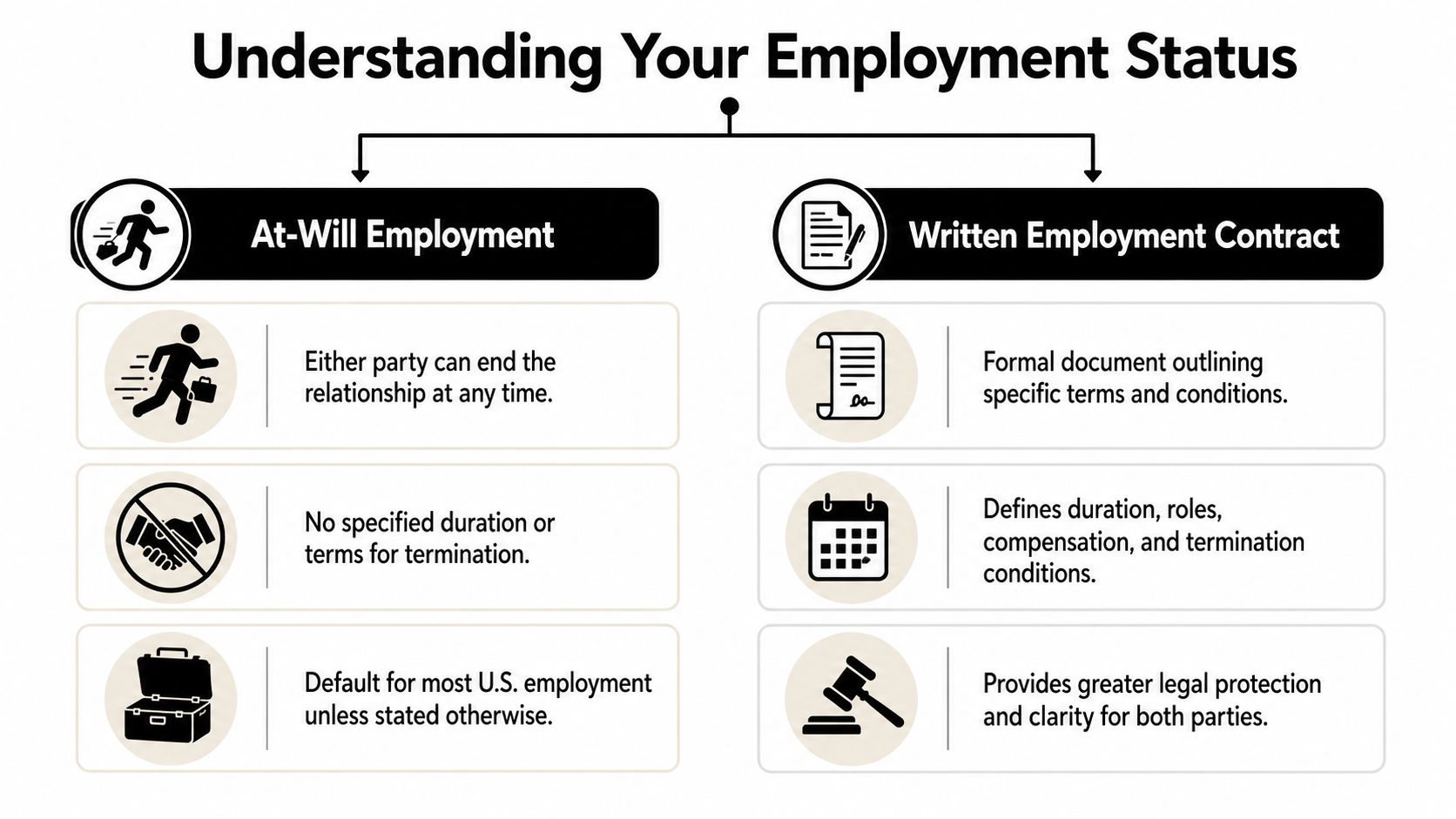
In the U.S., the default rule is not stability. It's at-will employment. According to L&E Global's overview of U.S. employment contracts, employment is legally presumed to be at-will, meaning an employer or employee can terminate the relationship with or without cause or notice unless a written contract explicitly defines a specific term of employment or termination conditions.
That matters more in healthcare than many clinicians realize. If your contract doesn't clearly override that default where it counts, the employer often keeps broad flexibility while you absorb most of the uncertainty.
What at-will means in practice
At-will doesn't just mean you can leave. It also means the employer can make your job less predictable unless the agreement limits that power.
Common examples include:
- Schedule expansion: “No regular call” becomes “temporary coverage needs.”
- Duty expansion: A focused outpatient role grows into inbox triage, cross-coverage, or extra locations.
- Fast termination: A position can end before you've had time to establish a stable patient panel or routine.
For clinicians who want no-call or no-weekend work, that default is a bad place to rely on goodwill alone.
What a written contract actually fixes
A written contract is useful only if it is specific. It should define the role, compensation model, schedule obligations, term, and termination rights. If you want protection, the document needs actual boundaries.
A strong draft usually answers these questions:
- How long is the agreement for? Indefinite, fixed term, or auto-renewing.
- What work are you required to do? Sites, duties, call, admin, supervision.
- How can either side end it? Notice period, cause definition, severance terms.
Practical rule: If the employer wants flexibility, ask for symmetry. If they can change your duties, you should have a defined right to refuse material changes or exit without penalty.
The broad point is simple. At-will is the legal baseline. A written contract is the only place you can build a different reality.
Decoding Compensation and Scheduling Terms
Compensation clauses tell you how money moves. Scheduling clauses tell you how your life moves. In clinician contracts, those two sections should be read together, because employers often draft them separately while the burden lands on you as one combined workload problem.
A salary can look generous until you realize it includes unpaid call, administrative sprawl, mandatory meetings, and coverage that effectively extends your week. A productivity model can work well if panel expectations, staffing support, and schedule limits are defined. Without those details, “upside” often means “work more to preserve the same income.”
Start with status and pay mechanics
For NPs, PAs, and psychiatrists in particular, exempt versus non-exempt status isn't a technical footnote. As noted in this overview of key employment contract terms, contracts must clearly state whether employment is exempt or non-exempt because that affects overtime eligibility, frequency of pay, and dispute risk, especially in telehealth and part-time roles.
That clause changes how extra work gets compensated. If the agreement is fuzzy about hours, overtime, or after-hours tasks, the employer has room to benefit from your unpaid labor.
Compensation model comparison
| Model | Income Stability | Upside Potential | Burnout Risk |
|---|---|---|---|
| Straight salary | High if duties and schedule are tightly defined | Lower unless bonuses are clear | Lower when panel size, call, and admin time are capped |
| RVU or productivity-based | Lower if patient volume fluctuates or support is weak | Higher if throughput is realistic and measured fairly | Higher when clinicians absorb no-shows, staffing gaps, and inbox load |
| Hybrid base plus productivity | Moderate to high, depending on base protection | Moderate to high | Moderate if the contract separates core duties from bonus-generating work |
The model itself isn't the whole story. The language around it determines whether it's fair.
The schedule clauses that matter most
Most burnout problems come from terms that sound harmless on first read.
Watch for phrases like:
- “As reasonably required” for hours or duties
- “Shared call responsibilities” with no cap
- “Occasional weekends” without a defined frequency
- “Administrative duties as assigned” without protected time
- “Remote work subject to operational needs” without guaranteed days
Those phrases allow schedule creep. The employer may not intend to abuse them on day one. But they create permission for the schedule to worsen when staffing gets tight.
If call matters to you, “not expected” is weak language. “Employee shall have no call responsibilities” is much stronger.
Tie compensation to actual duties
The cleanest contracts connect work obligations to compensation. If the role includes call, it should say how often, whether it's phone or in-person, how it's assigned, and whether it carries extra pay or reduced clinic load. If the role includes admin work, the agreement should state how that time is protected.
A few terms I push clinicians to pin down:
- Protected admin time: Not just “available as needed,” but scheduled and non-patient-facing.
- Patient-facing expectations: Sessions, visits, encounters, or clinic templates should be realistic and written down.
- Location limits: If you're expected to float, the contract should identify sites and mileage rules.
- Remote work terms: If telehealth matters, treat it as an entitlement or a scheduled arrangement, not a revocable perk.
If you're trying to benchmark whether the compensation aligns with workload, compare the offer against WeekdayDoc's market pulse pages and model different structures with the salary calculator or RVU calculator. Those tools won't replace legal review, but they help you see whether the economics still make sense once the schedule language is factored in.
Termination Clauses and Restrictive Covenants
Most clinicians focus on getting hired. The contract's most expensive language often concerns how you leave.
Termination terms decide whether you get notice, severance, and time to transition. Restrictive covenants decide whether you can work nearby, contact referral sources, or continue practicing in the same community. The problem is that these clauses are often tied together in a way that looks reasonable until you resign or get terminated.
For cause versus without cause
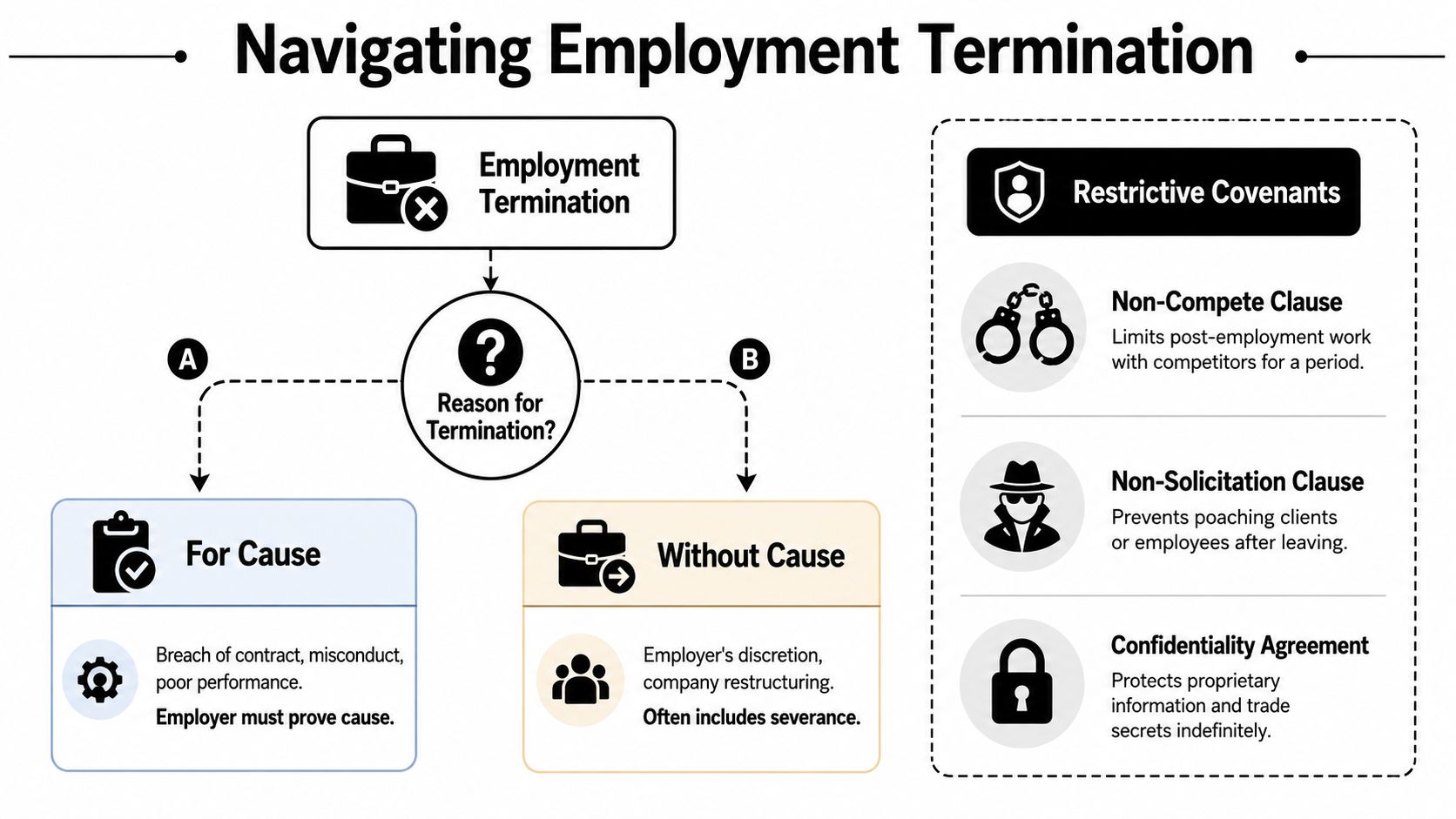
A without-cause clause gives either side a clean exit with notice. In many clinician contracts, that's the most important practical protection because employment relationships change. Leadership changes. Staffing changes. Your tolerance for call changes.
The more dangerous clause is for cause when it's drafted broadly. Verified benchmark data states that 85% of U.S. employment disputes involving severance arise from ambiguous cause definitions. If “cause” includes vague standards like failure to meet expectations, the employer has room to terminate you, deny severance, and frame normal conflict as misconduct.
Cause should be narrow and concrete. Think loss of license, exclusion from federal programs, serious misconduct, material breach, or gross negligence after notice where appropriate. It should not read like a performance management memo.
The severance and non-compete trap
Recent verified data states that 68% of healthcare employment contracts condition severance pay on compliance with restrictive covenants, often without clear definitions of cause or compliance. The same verified data notes that 29% of clinicians plan to retire early by 2030, making clear exit terms part of a real financial strategy rather than a theoretical legal issue.
That combination creates a common trap. You leave a job. You think you're owed severance. The employer then argues you violated a vague non-compete or non-solicit and withholds payment.
Another verified benchmark is even more concerning. 70% of U.S. healthcare severance disputes involve invalid non-compete clauses, which means employers sometimes condition severance on restrictions that may not even be enforceable in the relevant jurisdiction.
What actually works in negotiation
Don't argue in generalities. Ask for edits that reduce ambiguity.
- Narrow cause definitions: Use specific events, not broad judgments.
- Separate severance from questionable covenants: If the non-compete is unenforceable, severance shouldn't disappear with it.
- Add a cure period where appropriate: For some alleged breaches, you should have time to fix the issue.
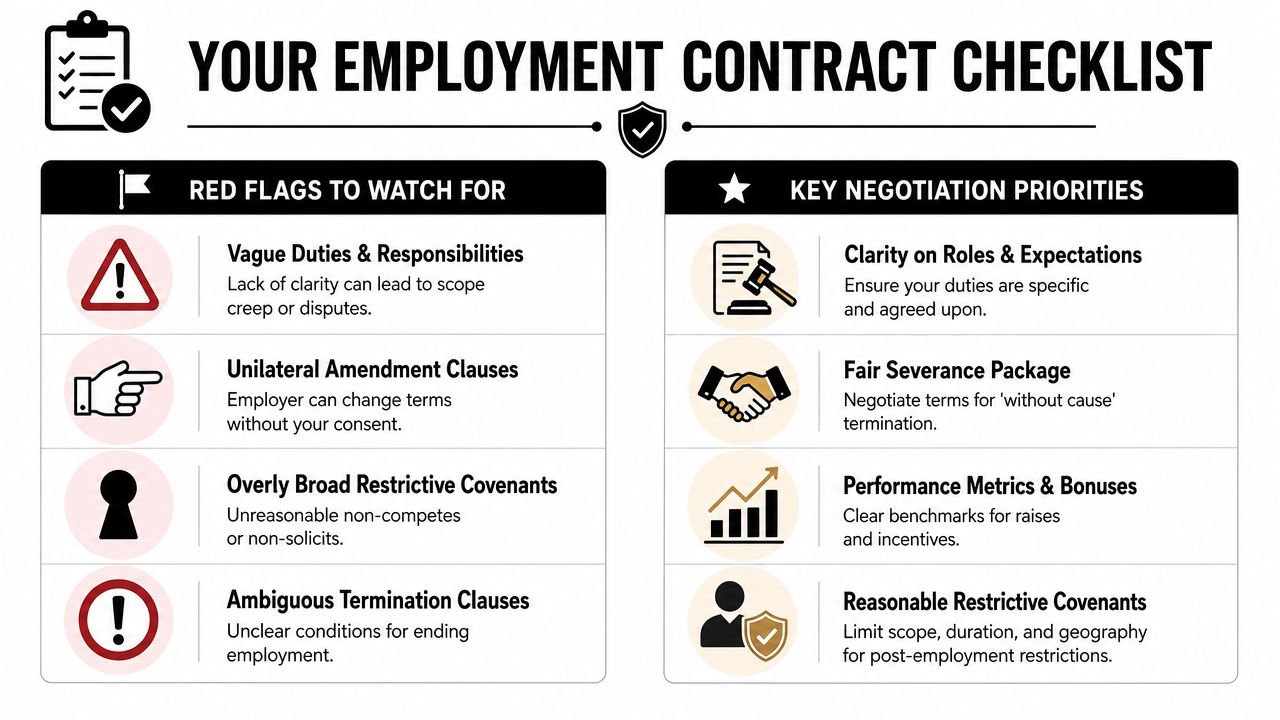
- Limit restrictive covenants: Geography, duration, and scope should reflect your real role.
For clinicians employed through layered entities or management structures, it's also worth reviewing broader operational risk patterns. PEO Metrics has a useful primer on expert advice on PEO contract risks that helps explain how termination language can become harder to interpret when multiple organizations are involved.
If you need a plain-English overview of how these clauses function, this explainer on restrictive covenant agreements for clinicians is a good starting point before counsel marks up the final draft.
A severance clause isn't protection if the employer can erase it by alleging you breached a restriction that was never drafted clearly in the first place.
Contract Red Flags and Negotiation Priorities
Most clinicians don't need to negotiate every line. They do need to negotiate the lines that control workload, autonomy, and exit.
The greatest advantage comes before you sign, while the employer still wants you and before you've emotionally committed to the job. At this stage, many clinicians hold back because they don't want to seem difficult. That instinct is understandable and expensive.
The burnout terms that are usually missing
Verified data shows that 43% of physicians cite scheduling and lack of control as primary drivers of burnout, while only 12% of healthcare employment contracts explicitly codify no-call or weekend-free guarantees as enforceable terms. That gap explains why so many “lifestyle” jobs stop feeling like lifestyle jobs after a few quarters.
The issue isn't that clinicians want too much. It's that employers often market schedule flexibility informally while drafting maximum flexibility for themselves.
Here's a useful walkthrough before you raise edits: how to evaluate job offers as a clinician.
A short primer can also help frame the conversation with a recruiter or medical director:
Red flags worth pushing on
- Vague duties clause: If the contract says duties may change as assigned, ask for role limits, site limits, and clear call expectations.
- Unilateral amendment language: If the employer can change compensation plans, policies, or schedules without your consent, that's a major risk.
- Weak malpractice language: Tail coverage, who pays, and when it applies should be explicit.
- Bad termination drafting: Broad cause language and short employer obligations create one-sided exits.
Prioritize asks by what will matter in six months
A lot of negotiation fails because clinicians focus first on the easiest issue to discuss, usually salary. Salary matters. But once you're in the job, schedule control often matters more.
A practical order of priorities:
- Call and weekend protections
- Without-cause notice and severance
- Duties, location, and admin time
- Compensation formula and bonus definitions
- Restrictive covenant scope
The strongest negotiation position is calm specificity. “I need my no-call status written into the agreement” is easier to answer than “I'm worried about burnout.”
You're not being adversarial by asking for terms that match the job you were sold. You're documenting the actual deal.
Sample Language for Burnout-Proof Clauses
The best employment agreement terms are precise enough that neither side has to guess later. These examples aren't legal advice, but they show the level of clarity clinicians should push for.
One clause deserves special attention from the start. According to Miller Johnson's guidance on key employment agreement provisions, an effective contract for physicians, psychologists, and pharmacists must explicitly define the term of the agreement, including whether it is indefinite, fixed-duration, or automatically extended.
No-call and weekend limits
Guaranteed No-Call Provision
Employee shall have no mandatory call responsibilities, including overnight, weekend, or holiday call, unless Employee provides prior written consent for a specific coverage period. Any such agreed coverage shall be separately compensated under a written addendum signed by both parties.
That language is stronger than “call is not currently anticipated.” It prevents the employer from treating call as an informal operational fix.
Weekend Coverage Limitation
Employee shall not be scheduled for routine weekend clinical duties. If weekend coverage is requested and accepted by Employee, such coverage shall be limited to mutually agreed dates and compensated pursuant to the Employer's written coverage schedule in effect at the time of acceptance.
Protected time and agreement term
Protected Administrative Time
Employer shall schedule and preserve dedicated non-patient-facing administrative time each workweek for charting, care coordination, and required meetings. Such time shall not be converted to patient appointments without Employee's written agreement.
In practice, admin work is where “salary” often becomes unpaid overtime.
Term of Agreement
The initial term of this Agreement shall begin on the Effective Date and continue for [fixed term] unless earlier terminated in accordance with this Agreement. Any renewal must be in writing. If the parties intend an indefinite term, the Agreement shall expressly state that employment is indefinite and subject only to the termination provisions set forth herein.
One drafting rule to remember
Avoid soft modifiers. Words like “usually,” “generally,” “as needed,” and “subject to operational demands” are invitations to dispute.
When you propose edits, ask yourself one question: if leadership changed next month, would this sentence still protect me? If the answer is no, the clause is too weak.
Finalizing Your Agreement with Confidence
A clinician contract isn't just a legal form. It's an operating manual for your future schedule, income, influence, and exit.
The strongest employment agreement terms do something simple. They reduce the number of assumptions both sides are making. That's good for you, and it's good for the employer. Groups that are confident in the role they're offering usually have less trouble putting actual expectations in writing.
Before you sign, do one final read focused only on mismatch. Not whether the contract sounds professional. Whether it matches the job as described in interviews. If the recruiter said no call, the contract should say no call. If the medical director said two remote days, the contract should say that. If severance exists, the triggers and exclusions should be understandable without interpretation.
This article is educational, not legal advice. For any agreement with real compensation, restrictive covenants, malpractice exposure, or schedule concerns, get a healthcare-specific attorney to review the draft before signing. A good review usually identifies what's standard, what's risky, and what's worth pushing on now rather than litigating later.
If you're still comparing opportunities, it also helps to look at jobs where the schedule fit is already visible up front, including physician roles, nurse practitioner jobs, and physician assistant jobs. Then use the contract review process to confirm that the written terms match the listing.
A strong contract won't eliminate every workplace problem, but it can prevent the most predictable ones. If you're evaluating burnout-friendly roles and want better visibility into pay, schedule fit, and contract risk, explore WeekdayDoc.