Remote Pharmacy Jobs: Roles, Pay, and Fit
Compare remote pharmacist roles, state licensing, pay, schedules, and workload before deciding which openings fit your practice.
A remote work arrangement changes where you log in without dictating your duties, schedule, or workload. That distinction is central to WeekdayDoc, a marketplace for sustainable healthcare careers that helps clinicians judge whether remote, flexible, leadership, and alternative-career roles are financially fair and operationally livable. To support that comparison, WeekdayDoc presents comparable work-life scores, visible call, weekend, and night expectations, salary and market benchmarks, and tools for negotiation and contract review. A pharmacist working from a home office might review prior authorizations on a predictable weekday schedule, or they might verify orders for a 24-hour hospital system during an overnight weekend shift. Evaluating remote pharmacy jobs requires separating the location from the daily reality of the role.
If you want to leave the traditional pharmacy counter, exploring alternative pharmacist careers often leads directly to remote opportunities. A successful transition means comparing the employer's operating model, state licensing requirements, base compensation, and shift expectations. WeekdayDoc helps with this comparison by attaching a 0-to-10 work-life or burnout score to each listing. This score gives you an initial signal based on call coverage, nights, weekends, and administrative burden so you can identify roles that fit your life before applying.
What Counts as a Remote Pharmacy Job?
The word remote describes the physical distance between you and the employer, the patient, or the medication. Healthcare organizations use several different models to distribute pharmacy services, and a remote title might place you in your living room, a corporate command center, or a regional hub.
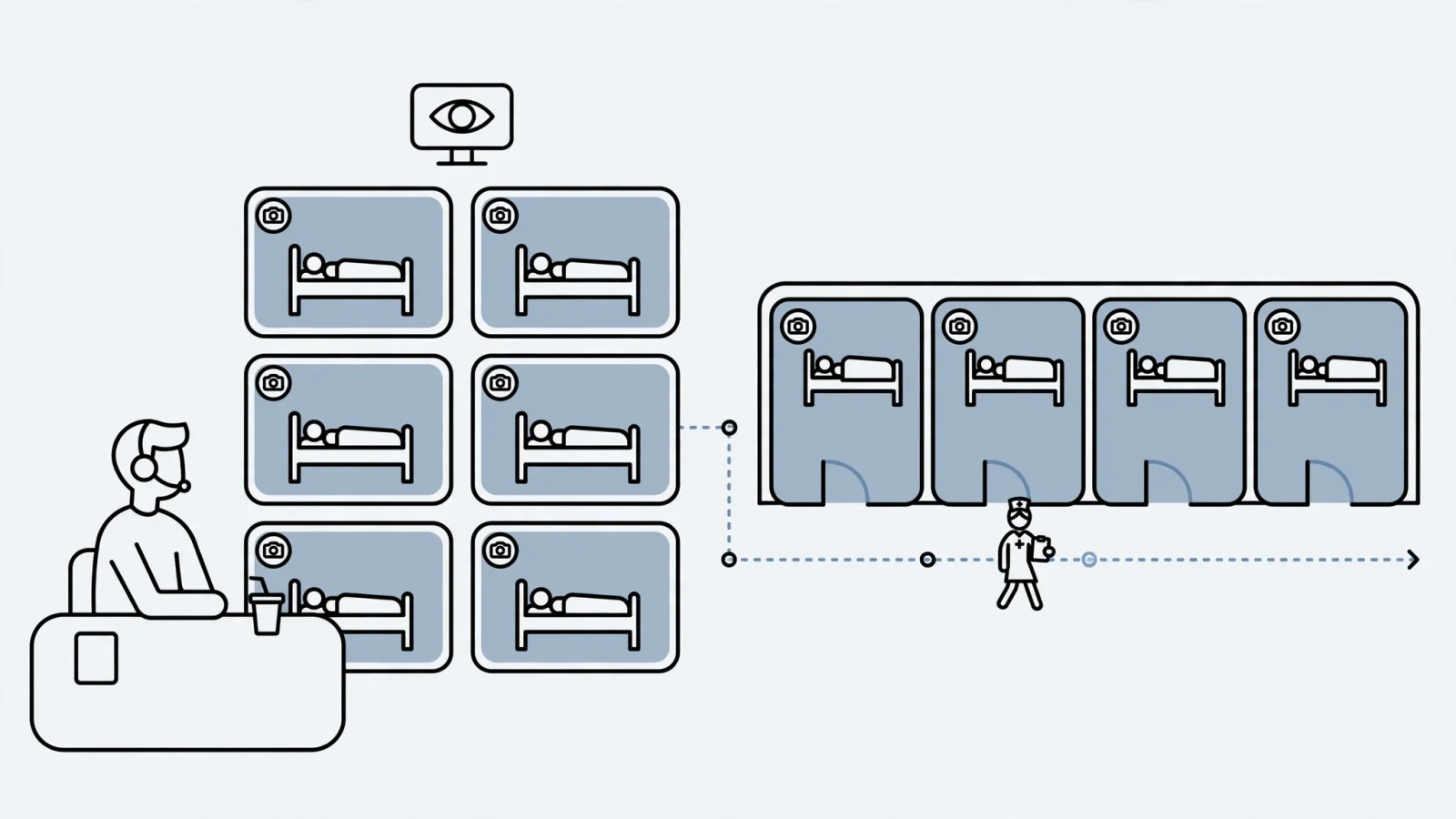
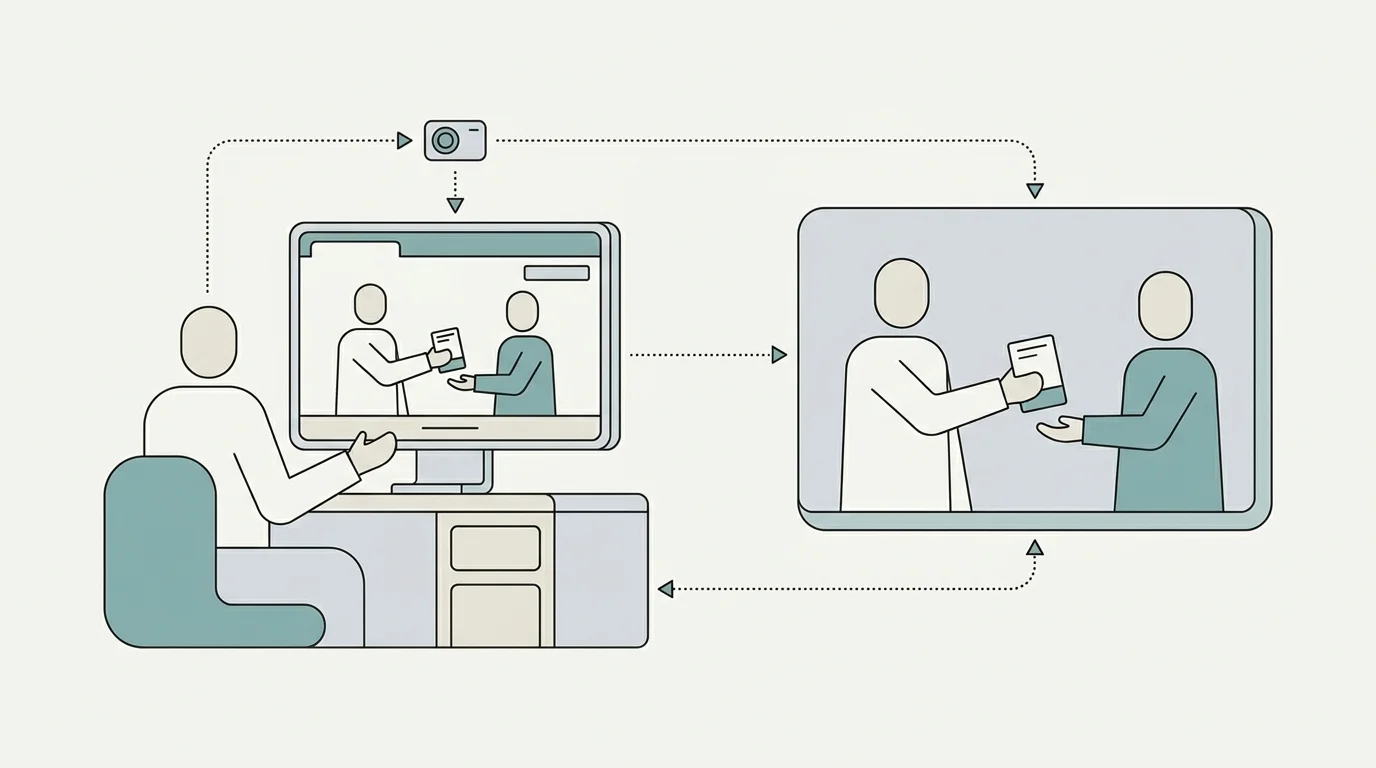
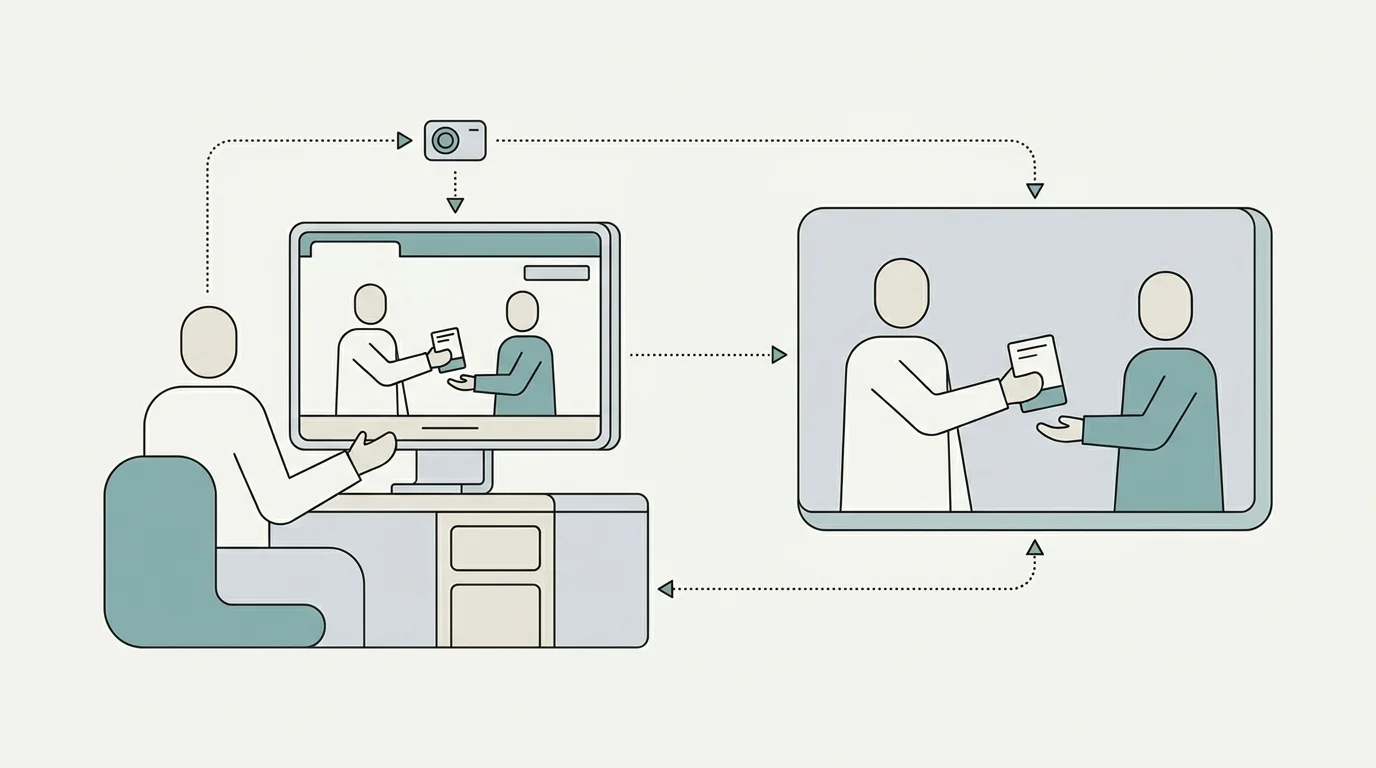
Telepharmacy represents one specific operational model that differs from standard work-from-home arrangements. The Texas State Board of Pharmacy defines telepharmacy as the electronic monitoring of dispensing, drug-use review, and patient counseling for remote pharmacy services. Their framework relies on audio, video, image capture, or store-and-forward technology to connect a pharmacist to a separate dispensing site where technicians handle the physical medications. Because state regulations vary, telepharmacy duties may require you to work from a central corporate facility rather than your house.
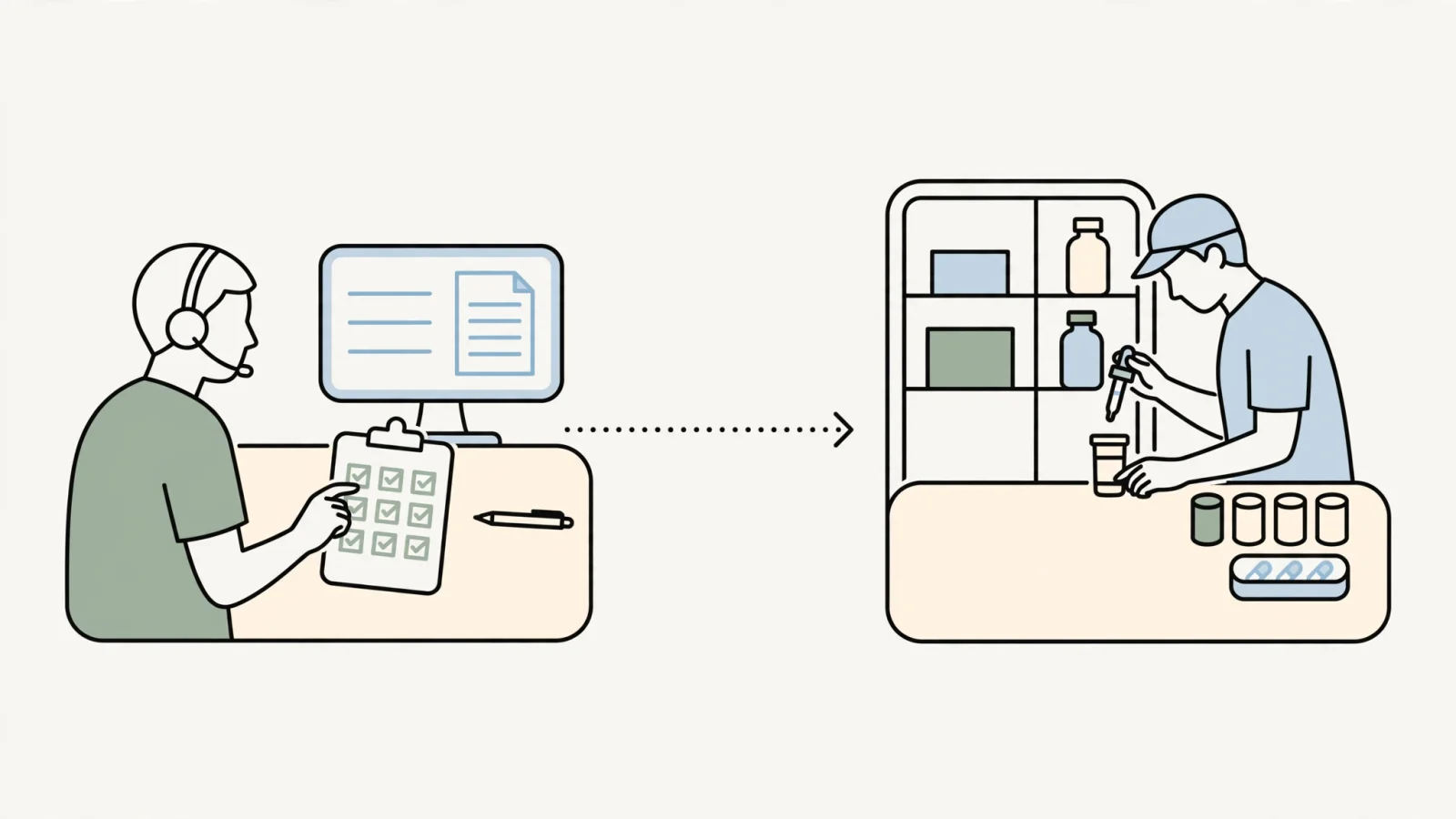
Centralized prescription review presents another common model. Hospital systems and large retail chains often route order verification to a central queue, where you log into the system to check interactions, dosing, and appropriateness. After verifying the clinical details, you release the order to an on-site automated dispensing cabinet or local pharmacy team. Depending on the employer's security and privacy policies, this work might happen at home or in a dedicated off-site office.
Types of Remote Pharmacist Jobs
A job title or employer type alone tells you little about the exact work location. The following categories represent role families that frequently offer remote or hybrid options, but the specific employer, their technology infrastructure, and the position itself determine whether you can do the work from a home office.
Managed Care, Payer, and PBM Roles
Pharmacy benefit managers manage pharmacy benefits for managed care organizations, other medical providers, or employers, and the Academy of Managed Care Pharmacy says their activities can include claims processing and managed prescription drug care services such as drug utilization review, formulary management, prior authorization, and disease management.
A prior authorization pharmacist spends the shift evaluating coverage requests submitted by prescribers. You review patient chart notes, lab values, and medication histories against the health plan's specific clinical criteria. If the request meets the guidelines, you approve it, and if it falls outside the criteria, you route it to a medical director for further review or issue a denial. This role requires rapid decision-making and a strong understanding of evidence-based medicine. Search for these positions using terms like remote clinical pharmacist, PBM pharmacist, and managed care pharmacist.
MTM and Patient Medication Management
Medication therapy management focuses on direct patient interaction to improve adherence and optimize drug regimens. A remote MTM pharmacist contacts patients to conduct comprehensive medication reviews, reconcile discharge lists, and identify therapy gaps. You might call a Medicare Part D beneficiary to discuss their blood pressure medications, discover they stopped taking a statin due to muscle pain, and contact their prescriber to recommend an alternative.
You document these conversations and generate a patient-facing medication action plan using a proprietary platform. Evaluate how much of the role requires live phone or video conversations versus asynchronous chart review, as some positions involve hybrid schedules. Search terms include remote MTM pharmacist, medication therapy management pharmacist, and medication management pharmacist.
Centralized Review and Remote Verification
Health systems, mail-order pharmacies, and central-fill operations require constant order verification. A remote prescription verification pharmacist handles the clinical checks so on-site staff can focus on physical dispensing, compounding, or direct patient care. When a provider enters a medication order into the electronic health record, it appears in your remote queue.
This role family demands strict shift coverage and high processing speeds. Mail-order pharmacies process thousands of routine maintenance medications daily, so pharmacists who verify those orders need to maintain a steady pace. In a health-system setting, you might monitor incoming orders for a 500-bed hospital during the overnight shift, checking renal dosing for antibiotics and verifying high-risk intravenous drips. Search for remote prescription verification pharmacist, central fill pharmacist, and mail order pharmacist. Confirm the shift expectations and required state authorizations for these listings.
Pharmacy Informatics
Pharmacy informatics bridges the gap between clinical practice and information technology. Informatics pharmacists design, build, and maintain medication-use systems, clinical decision support alerts, and order sets within the electronic health record. The American Society of Health-System Pharmacists notes that these responsibilities involve automation, data analysis, and medication-safety initiatives.
Because EHR maintenance and ticket resolution happen digitally, many informatics positions operate remotely. You might spend a day testing a new chemotherapy order set in a sandbox environment, meeting with oncology providers via video call, and writing logic for a new drug-interaction alert. However, hardware deployments, system go-lives, and workflow shadowing often require on-site presence. Search for pharmacy informatics pharmacist, clinical informatics pharmacist, and EHR pharmacist, and ask whether the role requires hybrid travel during implementation phases.
What Licenses and Qualifications Might You Need?
Pharmacy practice remains regulated at the state level, and working remotely offers no automatic interstate shortcut. Requirements depend on the job's daily duties, the employer's geographic footprint, and the states where the patients reside. An active license in your home state rarely authorizes you to review prescriptions or counsel patients across state lines.
The National Association of Boards of Pharmacy identifies license transfer as the standard route to full licensure in additional states. While the NABP is developing an interstate practice option as part of a 2026-27 initiative, participation remains voluntary and subject to individual state laws. Until a uniform national framework exists, check the current requirements with the relevant boards and your prospective employer.
When evaluating a listing, ask the recruiter which specific states residents may work from. A company might post a remote job but restrict hiring to a handful of states where they have established tax and payroll entities. Next, determine which state pharmacy licenses, registrations, or specialized authorizations the role requires on day one. A national mail-order pharmacy might expect you to hold active licenses in multiple specific states before extending an offer.
Clarify who pays for these credentials. Holding multiple state licenses requires paying initial application fees, covering biennial renewals, tracking varying continuing education requirements, and funding background checks. Ask whether the employer pays for initial license transfers, covers ongoing renewals, provides paid time to complete continuing education, and handles the administrative burden of tracking expiration dates.
How Much Do Remote Pharmacists Earn?
The U.S. Bureau of Labor Statistics reports a $137,480 median annual wage for pharmacists in May 2024. This figure is an occupation-wide benchmark for pharmacists in settings that include retail, hospitals, and clinical care, rather than a remote-specific salary figure. Because broad occupational figures can't show whether a particular offer is competitive, WeekdayDoc's salary and market benchmarks can provide another reference point as you compare roles and compensation structures.
Compare offers by looking at the total compensation package alongside the specific role and setting. Base salary or hourly pay forms the foundation, and remote roles often include different structural elements than traditional pharmacy jobs. Evaluate shift differentials for evening, overnight, or weekend coverage. Review the benefits package, including health insurance premiums, retirement matching, and paid time off accrual rates. Note any specific reimbursement for home office equipment, internet stipends, or licensing fees.
For clinical or project-based roles like informatics and managed care, compensation often takes the form of a flat annual salary. Order verification and mail-order roles frequently utilize an hourly model. Avoid placing weight on relative value unit benchmarks unless the employer uses an RVU-based compensation model for clinical pharmacy services, a practice that remains uncommon outside of specialized ambulatory care clinics.
Check the Schedule, Workload, and Fit
A remote label identifies the work location without promising flexible hours, low stress, or a Monday-through-Friday daytime schedule. Protecting your career from burnout requires investigating the operational reality of the position as thoroughly as you would an on-site hospital or retail role.
Schedule, Work Location, and Coverage
Start by confirming the exact location expectations. A fully remote job allows you to work from home every day, provided you reside in an eligible state. A hybrid arrangement might require commuting to a corporate office two days a week or traveling to regional sites once a quarter for team meetings. If the role requires any on-site presence, factor the commute time and travel costs into your decision.
Next, map out the required shift windows and time zones. Pharmacists in hospitals and other facilities open 24 hours often work nights, weekends, and holidays. If you take a remote verification job for a hospital system located three time zones away, your scheduled daytime shift might begin at 4:00 AM local time. Ask about weekend rotation requirements, holiday coverage expectations, and whether the team utilizes an on-call system for after-hours support.
Workload, Autonomy, and Support
Day-to-day workload determines your stress level far more than the physical location of your desk. Ask the hiring manager about the balance of patient contact, asynchronous prescription review, documentation, and project work. If the role involves prior authorizations or order verification, find out what the average daily case or prescription volume looks like. Frame productivity measures as questions rather than assuming every job relies on a strict quota. Discuss how the team measures success, whether they track keystrokes or time-in-queue, and what happens when volume spikes unexpectedly.
For patient-facing MTM or clinical roles, ask about the phone queues. Determine how much time is allotted for a comprehensive medication review versus a targeted intervention, and understand the escalation support available to you. If you encounter a complex clinical dilemma or a hostile patient on the phone, you need to know whether a supervisor or collaborating physician is immediately available to assist.
WeekdayDoc incorporates these details into its listing-level work-life scores. The platform evaluates factors such as required call coverage, night and weekend expectations, schedule flexibility, clinical autonomy, and administrative burden. You can use these scores to compare listed factors across multiple jobs as a starting point, though you still need to confirm the specific workload expectations and your license eligibility directly with the employer.
Find and Compare Remote Pharmacy Jobs
Finding the right position requires combining work-arrangement terms with specific role titles, since searching generic terms yields thousands of mismatched results. Instead, pair your preferred setting with location modifiers: remote clinical pharmacist jobs, work from home pharmacist jobs, remote MTM pharmacist jobs, managed care pharmacist jobs, PBM pharmacist jobs, remote prescription verification pharmacist jobs, telepharmacy jobs, and pharmacy informatics pharmacist jobs.
When evaluating a listing, remember that the remote label only defines the work site. You still need to compare the daily duties, the eligible home states, the specific shift schedule, the expected workload, the available clinical support, and the total compensation package.
WeekdayDoc streamlines this process for healthcare professionals. The marketplace filters permanent, part-time, and locum roles by profession and work type, allowing you to isolate remote, telehealth, and hybrid pharmacist listings. The platform provides visible salary comparisons, market percentiles, and targeted job alerts matched to your specific background. Once you reach the offer stage, you can utilize WeekdayDoc's negotiation scripts and an AI contract scanner that accepts pasted text or PDFs to flag concerning clauses regarding non-competes or payback periods.
Ready to evaluate roles based on actual workload, transparent compensation, and schedule quality? Explore open positions, set up AI-matched alerts, and compare work-life scores on WeekdayDoc to find a remote pharmacy career that fits your life.