Remote Genetic Counselor Jobs: Roles, Pay & Licensure
Compare remote genetic counseling roles, U.S. pay benchmarks, licensing requirements, and schedule realities before applying.
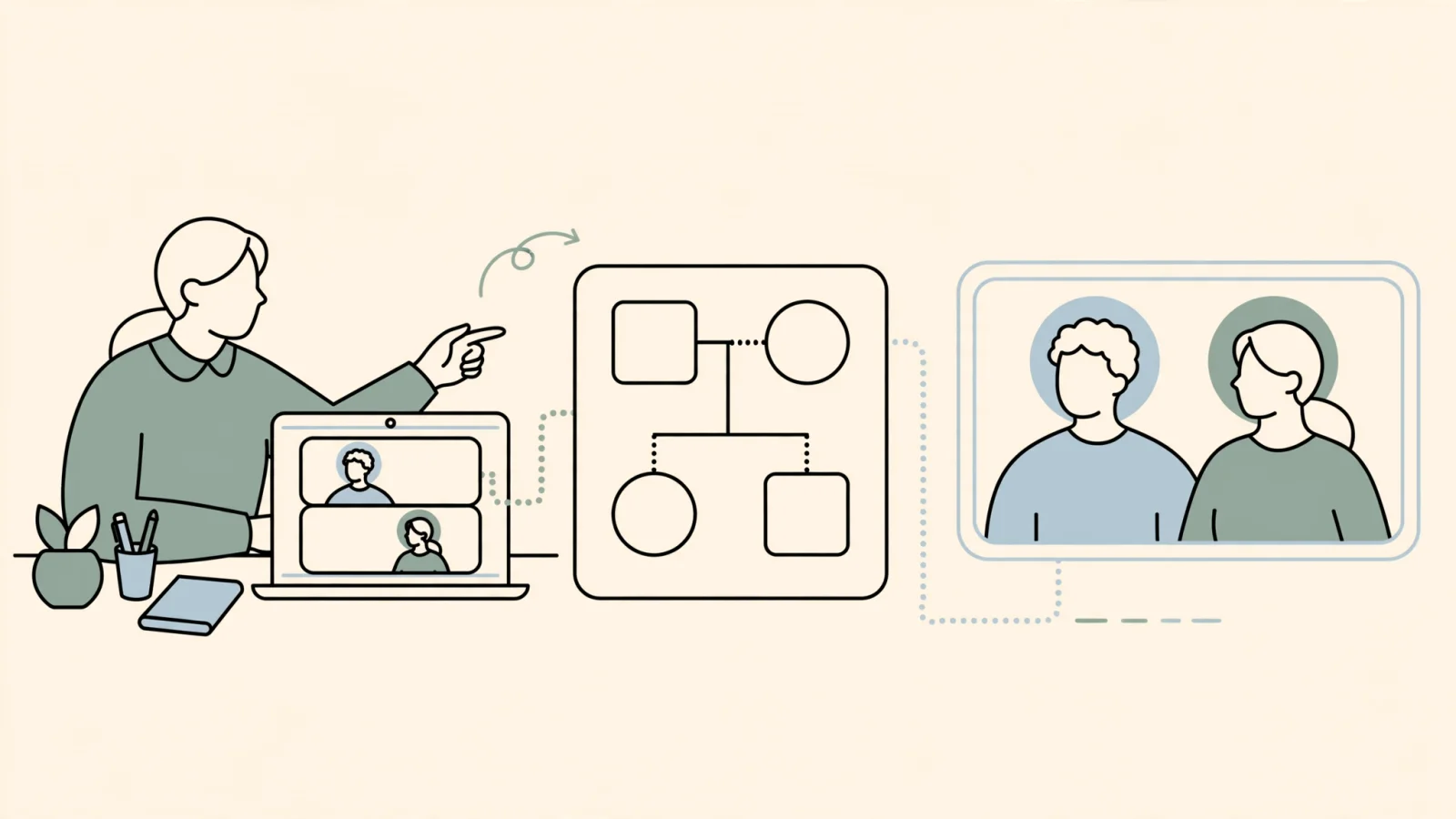
Working remotely changes your daily environment, but the specific duties have a greater effect on your quality of life. Evaluating remote genetic counselor jobs requires looking past the home office to understand the work itself. A position offering telecommuting might still demand high patient volumes, complex cross-state licensing, and rigid hours. WeekdayDoc helps you filter these roles by work type, specialty, and location, providing the transparency to compare schedule realities, pay benchmarks, and licensing requirements before you apply.
The landscape of genetic counseling has expanded beyond traditional hospital clinics and academic medical centers. Genomic medicine now intersects with digital health platforms, specialized diagnostic laboratories, and biotechnology startups, creating distinct remote career paths. The day-to-day rhythm of a telehealth counselor managing back-to-back virtual appointments differs from that of an industry specialist interpreting variant data, so understanding each setting can help you decide where to apply.
What Remote Genetic Counselor Jobs Involve
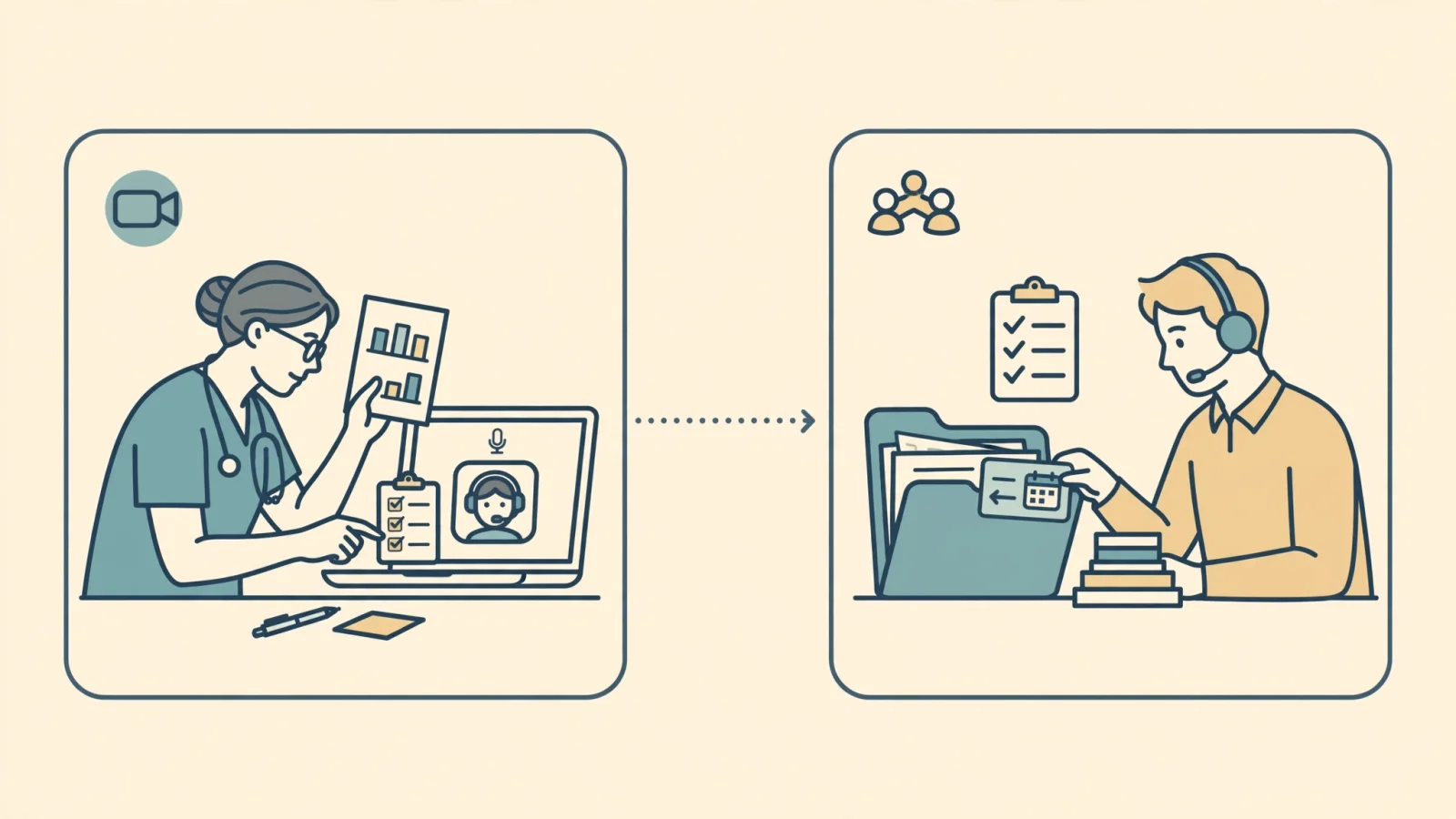
Many clinicians assume remote work automatically means conducting video visits from a home office. While telehealth represents a major component of the field, working from home can also involve supporting laboratories or medical technology companies without ever seeing a patient. The work environment is remote, but the daily tasks, performance metrics, and clinical expectations split into two distinct paths.
Choosing the right path depends on how much direct human interaction you want in your day, what types of clinical puzzles you enjoy solving, and how you prefer your productivity to be evaluated. Both paths require advanced training in human genetics and counseling theory, but they apply those core competencies in completely different operational environments.
Patient-Facing Telehealth
For an overview of genetic counselors’ duties, the U.S. Bureau of Labor Statistics lists assessing inherited risk, discussing testing options, reviewing test results, documenting information from counseling sessions, educating clients, and providing emotional support to clients distressed by test results.
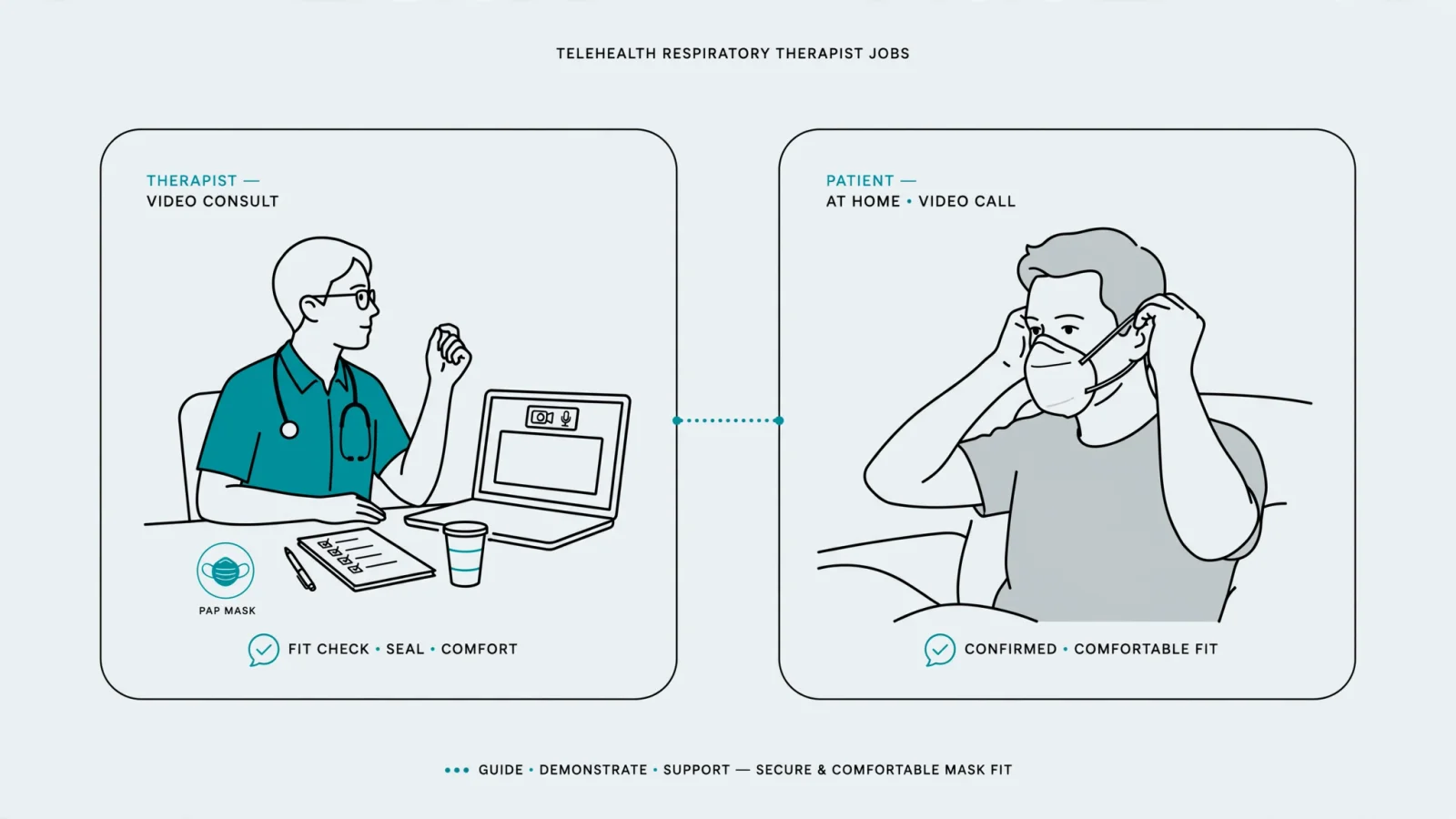
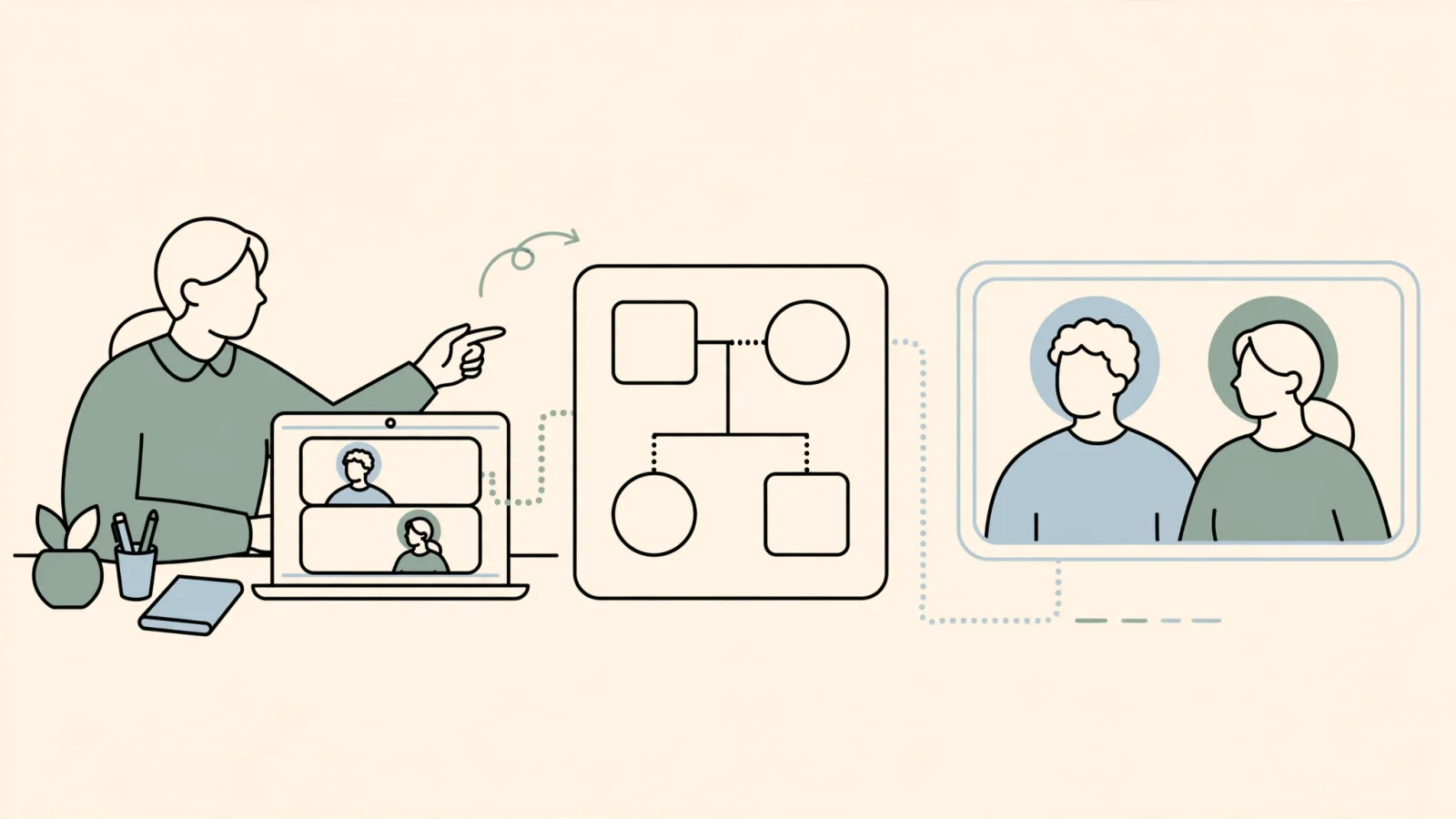
Specialties such as prenatal, cancer, and pediatric genetics frequently utilize telehealth models to reach broader patient populations, yet seeing patients remotely does not guarantee a flexible schedule. You still manage a calendar of fixed appointments, write detailed clinical notes, and coordinate with local providers to facilitate testing. The screen changes the medium of patient contact while the clinical intensity remains high. You project empathy, explain complex inheritance patterns using digital visual aids, and manage the emotional weight of difficult diagnoses from your desk.
A typical day in a cancer telehealth role might involve counseling an individual with a strong family history of early-onset breast and ovarian malignancies, evaluating a three-generation pedigree collected through a digital intake form, and helping the patient weigh the implications of multigene panel testing. In a prenatal setting, you might guide an anxious couple through unexpected cell-free DNA screening results, walking them through the differences between screening probabilities and diagnostic testing options.
These clinical interactions require sharp communication skills tailored to virtual platforms. You must gauge non-verbal cues over video feeds, manage technical disruptions calmly, and provide comforting psychosocial support when delivering life-altering results to a patient sitting alone in their living room. Beyond the appointment itself, you handle the logistical follow-through: coordinating buccal swab or blood collection kits sent directly to the patient's home, tracking laboratory specimens, communicating with referring physicians, and drafting comprehensive consultation letters.
Lab and Industry Work
The alternative to patient-facing counseling involves indirect care or commercial support. The National Society of Genetic Counselors outlines several non-clinical job families through its Laboratory/Industry Special Interest Group, including test-utilization management, product and service support, technology development, policy drafting, business affairs, clinical research, and education.
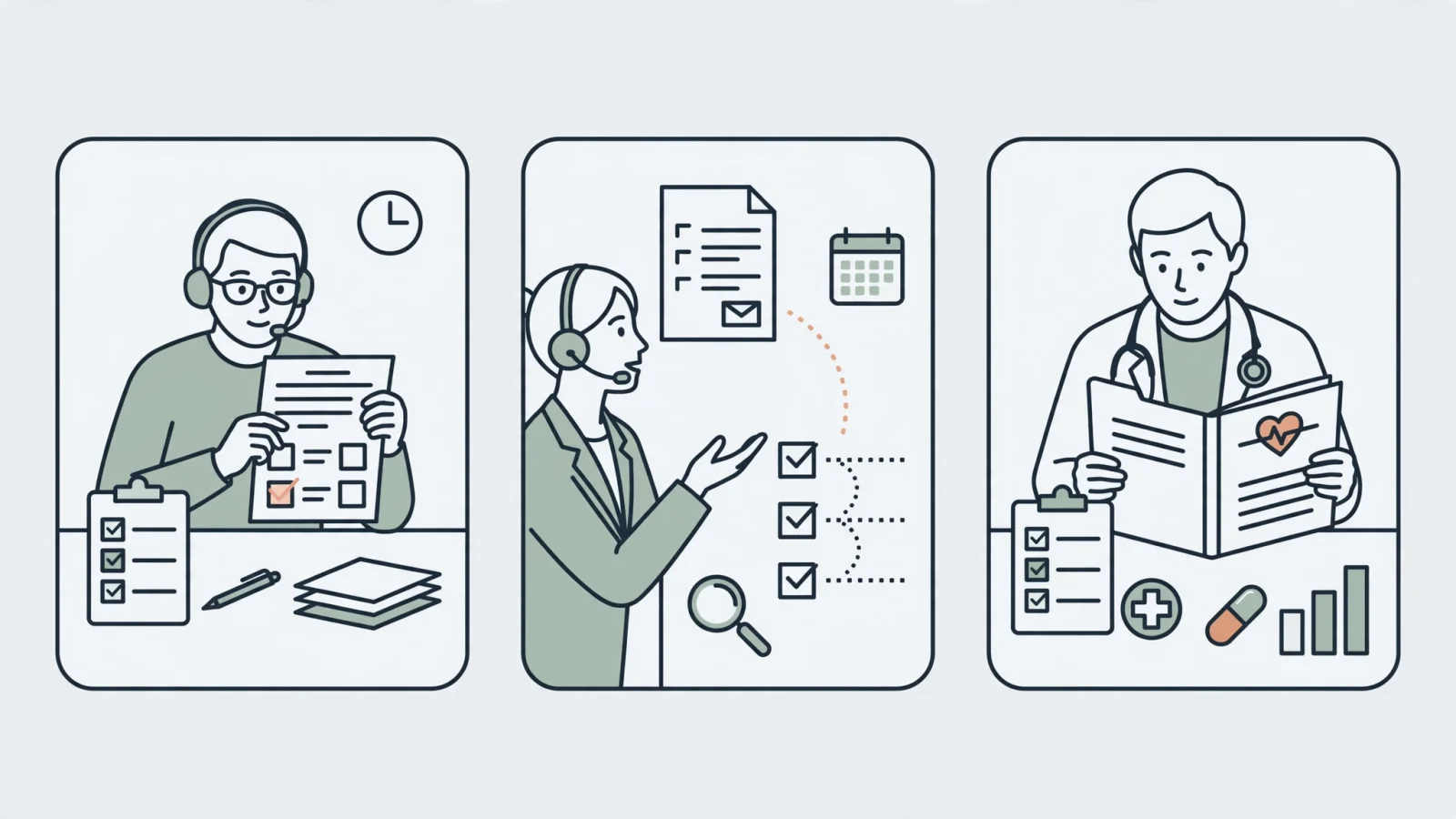
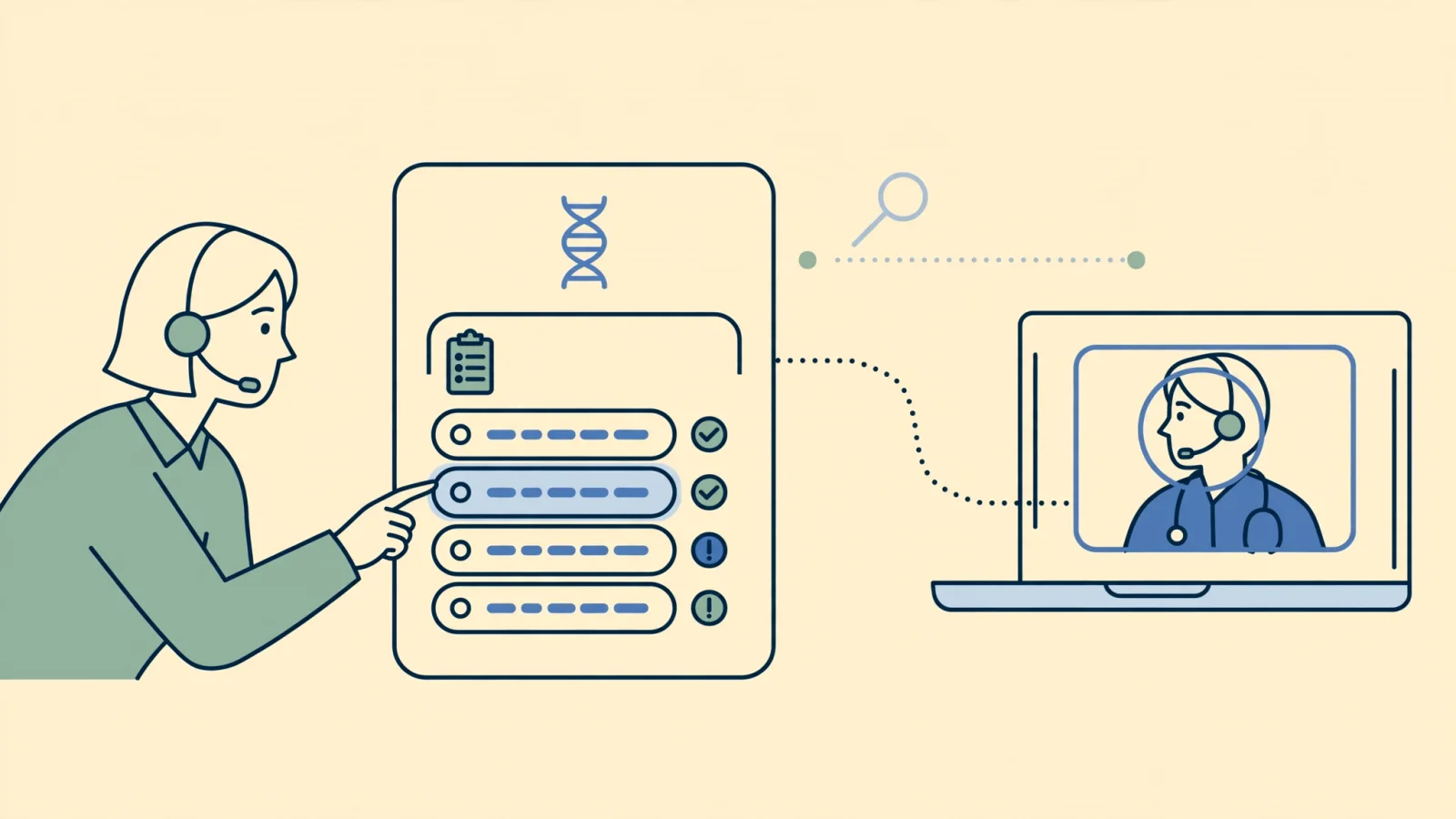
In a remote lab position, you might spend the day reviewing incoming genetic test orders from physicians to verify medical necessity. Alternatively, you might contact the ordering provider to suggest a more appropriate targeted panel, write summary reports for complex findings, or act as a subject matter expert for a company developing screening technologies.
Test-utilization management represents a substantial area within laboratory operations. In these positions, counselors serve as clinical gatekeepers, reviewing complex exome or comprehensive panel requests sent by non-genetics physicians. When an order appears mismatched with the documented clinical indications, you contact the ordering clinician, explain the nuances of testing limitations, and recommend a targeted, cost-effective testing strategy that yields actionable diagnostic information.
Other industry positions focus on medical affairs, clinical variant interpretation, or software development. Counselors working in variant curation analyze literature and population databases to classify variants of uncertain significance according to established professional guidelines. Those working on technology teams help product engineers design electronic medical record integrations, automated pedigree tools, or clinical decision support systems.
These broad job families offer remote variants, though not every industry position allows work from home. Patient contact varies heavily across the sector. Some lab counselors speak directly to patients to explain confusing results, while others only interact with physicians, laboratory technicians, and corporate teams. When evaluating an industry role, ask whom the position serves and how the employer measures performance.
Evaluating Certification and State Licensing
Securing a remote position requires confirming two distinct credentials. Professional certification proves your clinical competence, while state licensure grants you the legal right to practice within a specific jurisdiction. Working from a home office does not create a universal license that overrides state borders, so your applications need to align with your active credentials.
Licensing requirements can represent the single largest administrative challenge for remote practitioners. While hospital-based clinicians generally maintain a single state license where their physical facility operates, remote telehealth counselors frequently need to hold and maintain dozens of active state credentials to serve distributed patient populations.
CGC Certification and Education
For exam eligibility, the ACGC states that graduating from a program it accredited at the time of matriculation is required to qualify for the ABGC certification examination.
The CGC credential is a baseline qualification in nearly all remote postings, though requirements vary. Check each job description, as some employers hire new graduates provisionally and give them a window to pass the certification exam, while others require active certification on the first day.
Maintaining the CGC credential involves documenting continuing education units across five-year recertification cycles or sitting for the board examination again. In remote laboratory and industry roles, employers also value active certification because it demonstrates up-to-date knowledge in rapidly evolving genomic technologies and clinical guidelines, even when the role does not involve diagnosing patients directly.
State Rules for Telehealth
Licensure presents a complicated barrier for remote telehealth work because each U.S. state sets its own rules governing the practice of genetic counseling. According to a National Society of Genetic Counselors state licensure update, counselors must be licensed in the state where the patient is physically located during the appointment if that state offers a license. The organization also recommends holding a license in the state where you are physically located while providing the service.
The NSGC maintains a state licensure map, which was last updated in June 2026, summarizing individual state laws and active licensing boards. Because statutory requirements evolve, the map is helpful guidance rather than a replacement for checking directly with state boards.
This creates a complex web for multistate telehealth providers, especially since a patient's physical location can differ from their permanent address. If a patient travels across state lines for college or vacation, their location at the exact time of the appointment dictates the licensing requirement. Some states offer limited exemptions or temporary-license processes, though these rules vary widely and change frequently.
Managing an interstate caseload introduces substantial administrative overhead. A remote counselor assigned to a nationwide telehealth queue might need active licenses in twenty or more individual states. Each state board requires separate application packets, official graduate transcripts, verification of board certification, background checks, fingerprint cards, and recurring renewal fees.
During interviews, ask which states the employer serves, who pays application fees, whether licenses are needed before applying or the company provides a credentialing grace period, and whether dedicated coordinators manage paperwork and renewal deadlines. Managing multiple state renewals independently can quickly become a second job.
Compensation for Remote Genetic Counselors
Compensation varies by employer type, experience, and specific job duties. Recent BLS data reported a U.S. median annual wage of $100,040 for the profession, with distinct differences across employment settings.
| Industry Setting | Median Annual Wage |
|---|---|
| Offices of physicians | $94,380 |
| Hospitals | $102,140 |
| Private colleges and universities | $106,710 |
| Medical and diagnostic laboratories | $108,640 |
| Outpatient care centers | $143,620 |
These figures represent occupation-wide, industry-specific medians rather than remote-only estimates, guaranteed starting salaries, or proof of a remote pay premium. The BLS data does not separate remote professionals from those working on-site, which means you can use these numbers as a broad professional baseline rather than a specific remote benchmark.
The higher median wages seen in outpatient care centers and diagnostic laboratories reflect different funding models, commercial revenue structures, and specialized technical expectations compared to traditional physician practices. In commercial diagnostic laboratories and digital health startups, compensation packages often feature components rarely found in standard hospital positions, including annual performance bonuses, stock options, or restricted stock units.
When looking at an offer, compare the base salary against the total compensation package since remote roles shift some costs to the employee. Evaluate whether the employer provides a home office stipend, covers internet and phone expenses, or pays for continuing education. A remote position that pays all state licensing fees, provides modern computer hardware, covers annual NSGC membership dues, and supplies an educational budget can offer greater net value than a slightly higher base salary that requires you to shoulder those professional costs out of pocket.
Employers also utilize different geographic pay policies. Some companies offer localized compensation based on your home address, adjusting your salary downward if you live in a region with a lower cost of living, while others pay a flat national rate regardless of location. Understanding an employer's geographic compensation philosophy prevents unpleasant surprises during the offer stage, especially if you plan to relocate in the future. WeekdayDoc's salary comparisons and market percentiles add context to specific job listings, helping you understand how a specific offer stacks up against similar roles before beginning negotiations.
Assessing Schedule and Workload Demands
Trading a hospital commute for a home office eliminates travel time without automatically resolving clinical burnout. A remote job can feature heavy hours, high stress, and inflexible demands if the underlying workload is poorly managed, so assessing the daily schedule requires asking targeted questions during the interview process.
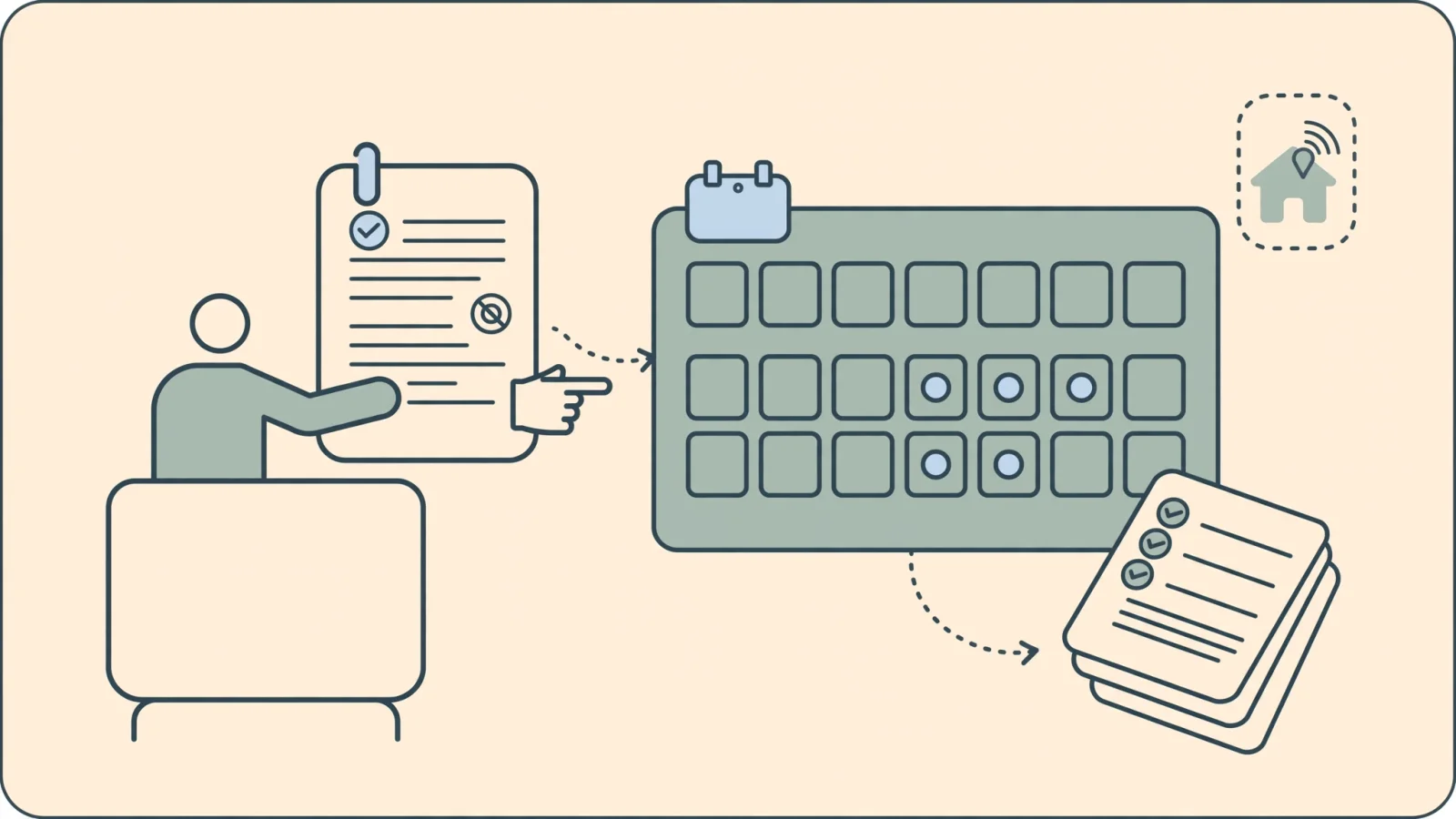
For patient-facing positions, clarify the expected hours and the required time zone. A remote role based in New York might expect a California-based counselor to log on at 5:00 AM Pacific Time. Ask about the target appointment volume and the length of each scheduled visit, because high appointment volumes limit the time available for documentation, coordinating testing, and calling patients with difficult results.
In telehealth, appointment pacing is the single biggest predictor of day-to-day strain. A schedule requiring seven or eight 45-minute patient visits every day leaves practically no buffer for unexpected technical issues, complicated disclosures, or detailed chart prep. Clarify whether new patient consults and follow-up result sessions are allocated different time blocks, and confirm how much time is reserved on your calendar for asynchronous patient communication, insurance prior authorizations, and peer-to-peer discussions.
Understanding the expectations around protected administrative time prevents schedule creep. Ask the hiring manager how much of the week is blocked off for writing notes and reviewing charts, and clarify the policies for after-hours escalation, weekend coverage, and any occasional travel requirements for team meetings or conferences. When working from home, the boundary between professional duties and personal time easily blurs, making clear institutional policies around message response times and off-hours coverage essential.
For laboratory and industry roles, the pressure points look different. Ask about inquiry queues, daily review targets, and the expected turnaround time for reviewing an order if the role involves test-utilization management. Find out how the company measures service-level expectations and what happens when the queue backs up.
In a high-throughput diagnostic laboratory, service-level agreements might dictate that all provider inquiries receive a response within two to four hours. Understanding whether you work from a shared team ticketing system or manage an individual queue helps you evaluate how much autonomy you will have over your workday. You should also ask whether industry roles require travel for client presentations, laboratory inspections, or scientific conferences, and how frequently those trips occur throughout the year.
Across all models, determine exactly how the employer measures your workload and productivity. WeekdayDoc calculates a 0 to 10 Work-Life/Burnout score for job listings based on call coverage, nights, weekends, schedule flexibility, autonomy, and administrative burden. Use this score alongside the specific listing details as a comparison aid: a high work-life score indicates a role structured for sustainability and genuine flexibility.
Finding and Vetting Remote Job Listings
Employers use inconsistent language when posting work-from-home positions, and relying on a single search term causes you to miss relevant opportunities. Job boards feature a mix of straightforward and highly corporate job titles, so using natural search variants casts a wider net. Look for remote genetic counselor jobs, work-from-home roles, telehealth openings, and virtual genetic counseling positions. Industry positions may have titles that do not immediately sound like counseling roles. Searching for terms like lab genetic counselor, clinical inquiry specialist, genetic testing SME, or laboratory subject matter expert expands your options, even if the role involves indirect patient contact.
Broadening your search terms across specific subspecialties can also uncover unlisted or niche remote postings. Searching for remote cancer genetic counselor, virtual prenatal genetics, or remote pediatric genomic analyst can connect you with specialized teams within larger hospital networks that do not label their positions under generic remote tags.
A listing labeled remote does not mean you can work from anywhere. Many employers restrict hiring to specific states due to tax regulations, payroll processing limits, or clinical licensing requirements. Check each listing for eligible states, the required time zone, hidden hybrid requirements that involve occasional office visits, and the level of patient contact. WeekdayDoc allows you to filter listings by remote work type, specialty, and location. Setting up matched alerts helps you follow suitable roles, ensuring you see positions that fit your specific licensing footprint and clinical interests.
Tax nexus constraints mean that a company might be registered to employ workers in ten specific states but legally unable to hire a counselor living in an adjacent state, regardless of that counselor's credentials. Furthermore, some positions advertised as virtual still require quarterly or monthly visits to a physical clinic or regional office for multidisciplinary team meetings, tumor boards, or training sessions.
Verifying the Offer Details
Before accepting an attractive offer, compare its formal terms with what you discussed during the interview process. The offer should specify your authorized work locations, patient-facing duties, fixed hours, and operating time zone, along with caseload expectations, queue targets, documentation requirements, call coverage, weekend shifts, and any required travel.
The offer process is also a chance to understand the remote infrastructure. Ask about the electronic health record system, video conferencing software, specialized digital pedigree drawing tools, and technical support availability. Working remotely without adequate IT infrastructure or administrative support for specimen tracking creates severe daily friction that can quickly undermine the benefits of working from home.
Have all material terms put in writing, then compare the salary and benefits against national benchmarks. If the contract contains restrictive clauses, WeekdayDoc's contract scanner flags issues such as non-competes, tail coverage terms, and payback clauses. Non-compete covenants can be particularly problematic in remote industry and telehealth roles, where broad geographic restrictions might attempt to bar you from working for other virtual providers nationwide if you decide to leave the company.
For patient-facing contracts, review the malpractice insurance provisions. Ensure the policy covers virtual care delivered across state lines, confirm who pays the premiums, and verify whether the policy includes claims-made coverage with an employer-funded tail policy or an occurrence-based policy that protects you indefinitely after your employment ends. The platform's negotiation scripts also help you address specific offer terms professionally.
A shortlist of vetted roles makes it easier to compare location and workload details and decide based on the full picture. A well-vetted remote position can offer sustainable practice and professional growth, provided you check the requirements before signing.
Find sustainable clinical and industry roles matched to your license, specialty, and lifestyle. Search open positions, check work-life scores, and set up customized job alerts at WeekdayDoc.