Telehealth Physician Assistant Jobs: Pay and Fit
Explore telehealth physician assistant jobs, compare remote-work expectations and pay, and learn what to verify before accepting an offer.
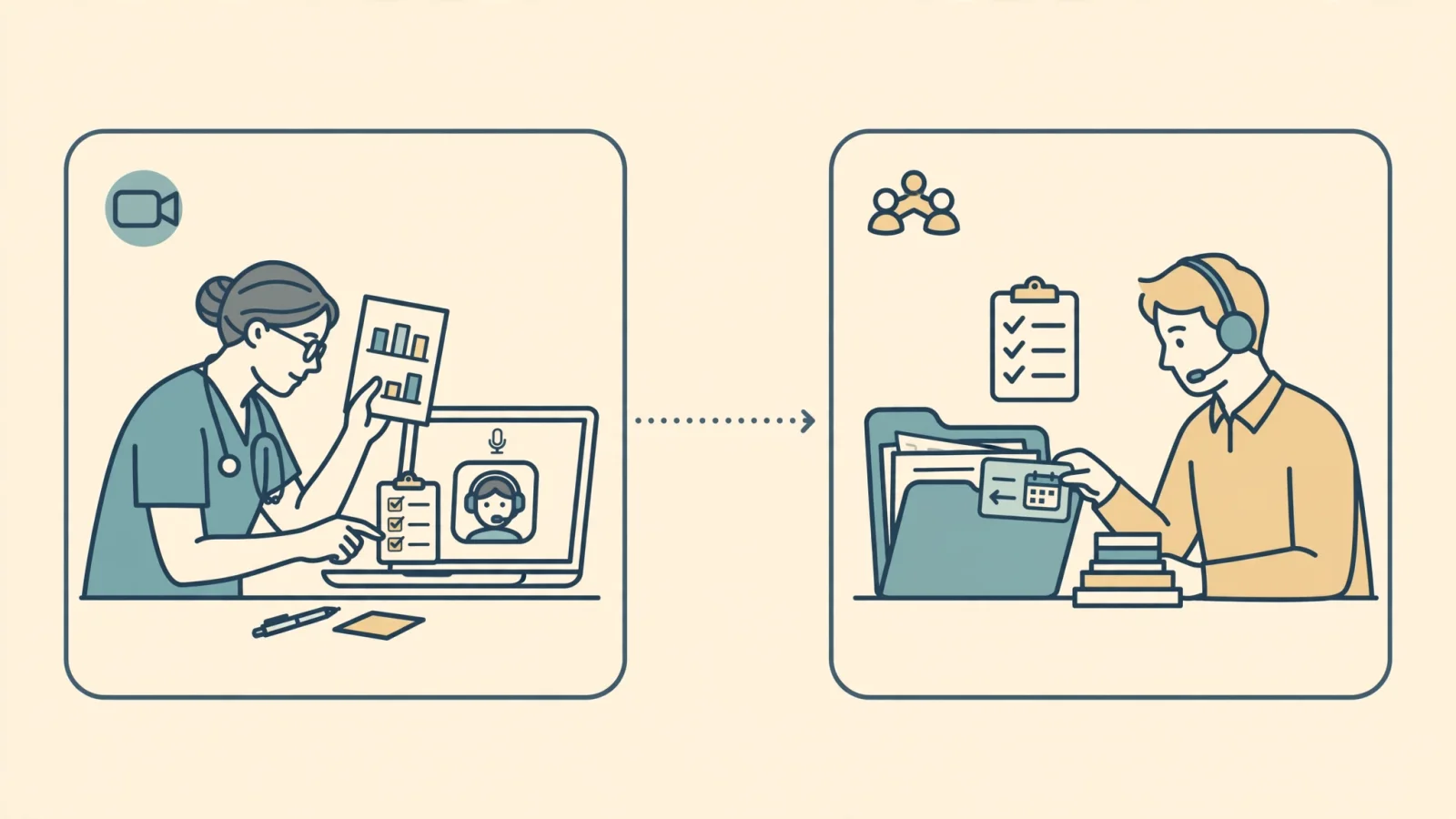
Telehealth is a method of delivering care with its own specific schedules and location requirements. When searching for telehealth physician assistant jobs, the title alone reveals very little about the daily workflow, patient volume, or administrative burden. A position might require back-to-back video visits, asynchronous chart reviews, or coordination with on-site staff at a distant clinic. Evaluating these roles requires looking past the remote label to understand the specific clinical expectations, compensation structure, and required state licenses. To help clinicians weigh these trade-offs before applying, WeekdayDoc provides listings with a 0-to-10 work-life score, visible call expectations, and salary context.
What Telehealth Physician Assistant Jobs Involve
Defining the practice model is the first step in evaluating a virtual role. The American Academy of PAs (AAPA) Areas of Practice Guide describes telemedicine as a practice mode that can be pursued full time or part time. Because this care delivery method spans numerous specialties, the daily duties vary depending on the employer's operational setup.
Direct-to-consumer and app-based care often involve high-volume, lower-acuity encounters where you manage prescription refills, treat minor urgent care complaints, or handle basic behavioral health check-ins. These models frequently rely on asynchronous communication. You evaluate patient-submitted questionnaires and photos, send a message, and route a prescription without a live video feed, which requires rapid decision-making and efficient typing skills.
Video visits closely mirror a traditional clinic workflow, minus the physical examination. You review the chart, conduct a face-to-face interview over a secure connection, formulate a treatment plan, and write a standard progress note. This model frequently appears in specialties like psychiatry, primary care, and endocrinology, because visual assessment and detailed history-taking carry the most diagnostic weight.
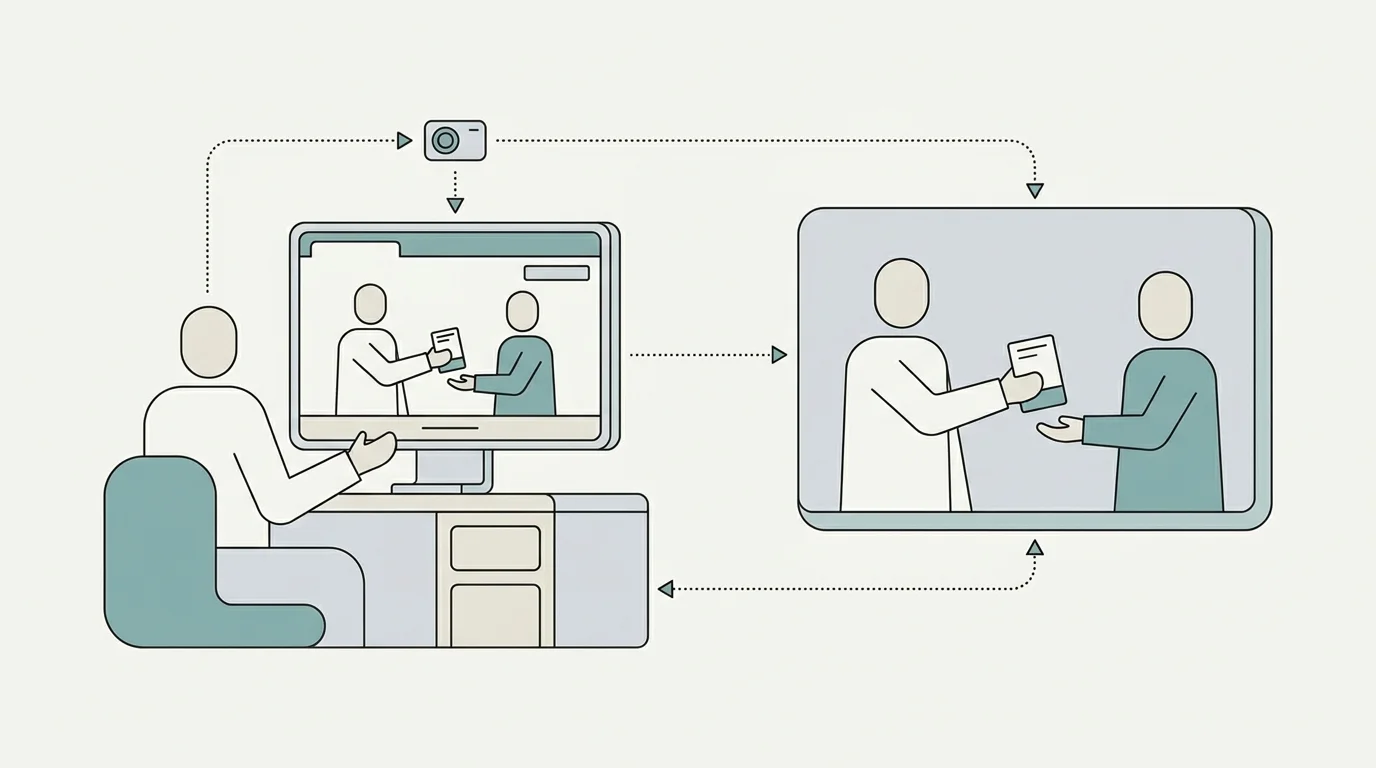
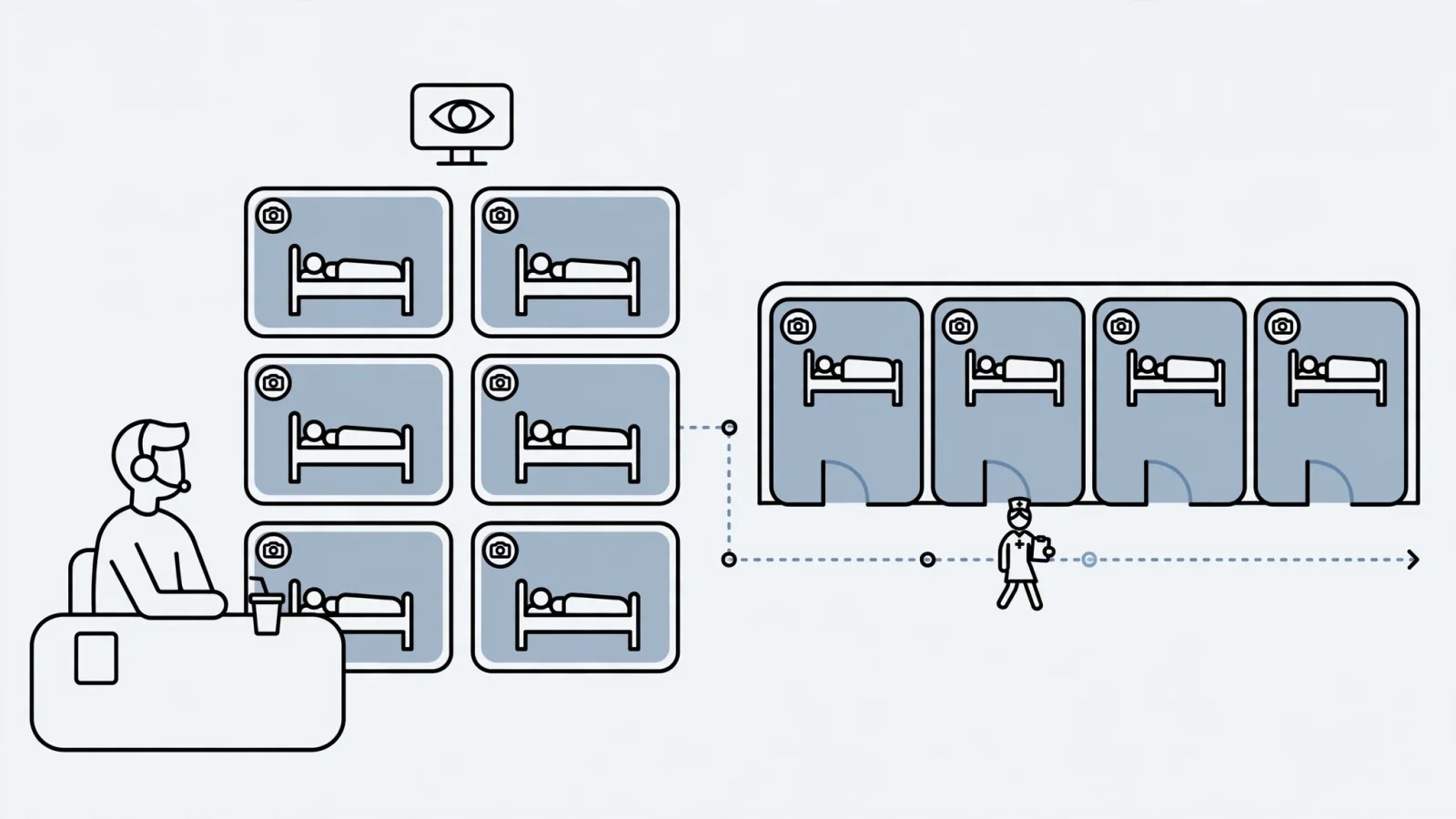
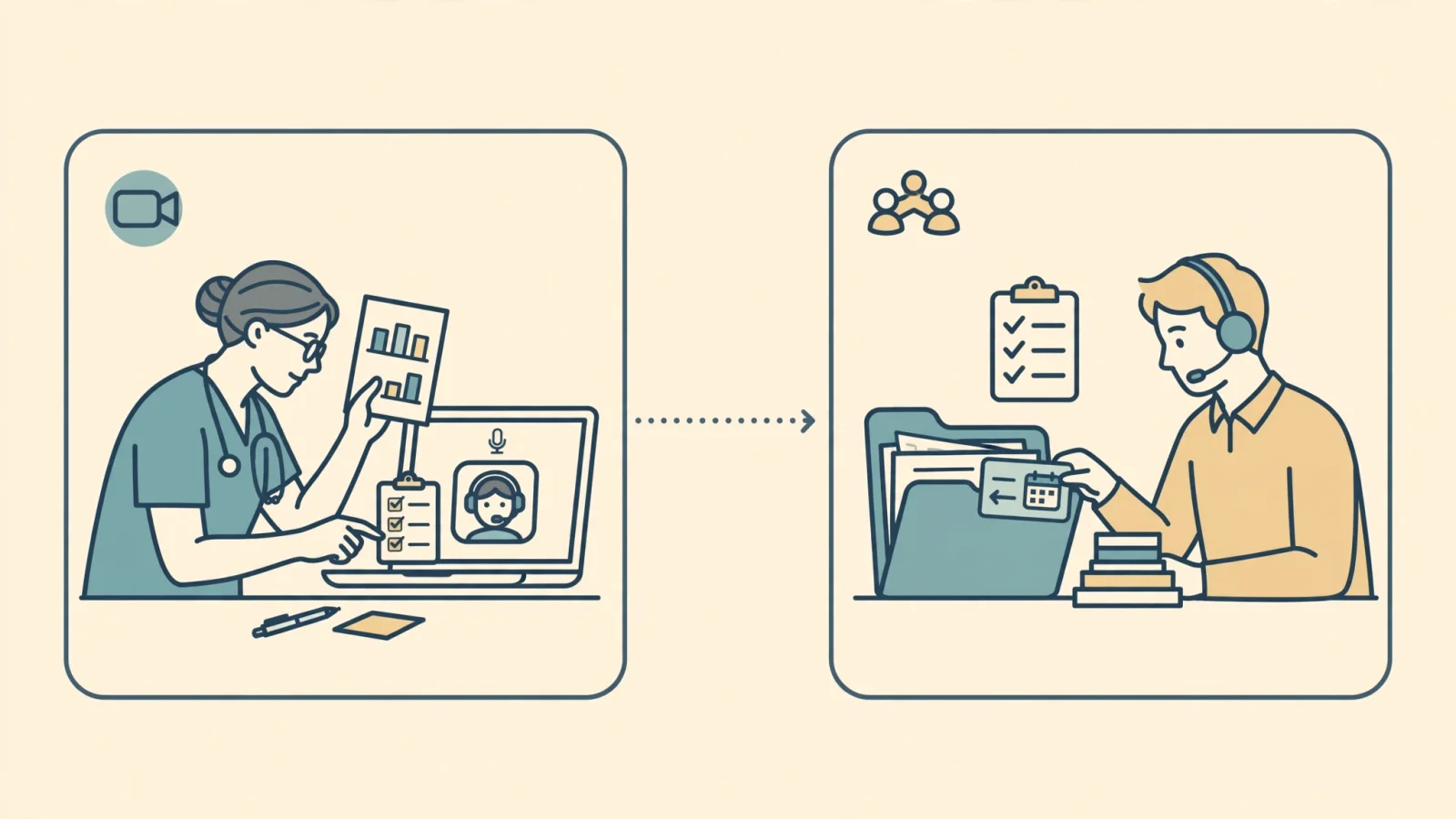
Other virtual roles involve peer-to-peer consultations or hub-and-spoke care. In a peer-to-peer setup, you review cases and provide specialty recommendations to another clinician rather than speaking directly to the patient. A hub-and-spoke model places you at a central location while you guide medical assistants or nurses stationed at rural clinics. By directing the on-site staff to perform specific physical exam maneuvers, capture images, or run point-of-care tests, you manage complex cases from a distance. Each format demands different technical skills and paces of work.
Location and Schedule Requirements for Virtual Roles
A telemedicine position does not automatically grant you the ability to work from anywhere. Employers structure these roles along a spectrum ranging from entirely location-independent to strict regional requirements. Distinguishing fully remote opportunities from hybrid jobs helps narrow your search before you commit to an interview process.
Hybrid arrangements combine virtual visits with in-person clinical duties. An employer might schedule you for three days of remote patient care and two days inside a brick-and-mortar clinic. This setup requires you to live within commuting distance of the facility, removing the geographic freedom typically associated with telehealth. Even roles advertised as entirely virtual may require occasional on-site presence for quarterly staff meetings, training sessions, or equipment maintenance.
Schedule variability is worth considering for remote PA roles. The U.S. Bureau of Labor Statistics reports that PA work schedules vary and may include nights, weekends, or holidays, and that PAs may be on call. Its profile covers the profession as a whole, not telehealth schedules specifically.
Time zone requirements also dictate your daily routine. If you live in New York but accept a role treating patients in California, your shift might not begin until late morning and could stretch into the evening. Geographic eligibility frequently depends on where the company is registered to do business. An employer might only hire PAs who maintain a permanent residence in approved states, regardless of where the work takes place.
Comparing Telehealth Pay and Compensation Models
Compensation models in virtual care differ from traditional salaried clinic roles. National reporting has not established a reliable pay range specific to telehealth-only PA roles, so candidates use profession-wide data as a baseline.
The AAPA Salary Report places median PA compensation at $140,000 for 2025. Similarly, the BLS reports a $135,880 median annual wage for PAs in May 2025. Because these organizations use different survey populations and measurement criteria, the figures are not directly interchangeable. They represent the entire PA profession across all specialties and settings rather than a specific rate for remote work.
Evaluating an offer requires breaking down the exact payment structure rather than looking solely at an estimated annual total, as employers use several distinct methods to calculate telehealth earnings.
| Compensation Model | How It Works | Key Considerations for PAs |
|---|---|---|
| Base Salary | A fixed annual amount paid regardless of patient volume. | Provides income stability. Check if the salary includes expected overtime, on-call hours, or weekend coverage without extra pay. |
| Hourly Rate | Paid for the exact time logged into the system or scheduled for a shift. | Clarify whether chart completion time after the shift ends is compensated. |
| Per-Encounter | A flat fee paid for every completed patient visit or chart review. | High earning potential if volume is high. Determine if you receive payment for patient no-shows or late cancellations. |
| Productivity (RVU) | Compensation tied to Relative Value Units generated by billed services. | Requires understanding the base threshold. Check the dollar-per-RVU conversion factor and how non-billable tasks are handled. |
Variable pay structures require careful scrutiny. If an employer offers a per-encounter rate, ask how the system accounts for administrative work. Managing an overflowing inbox, calling pharmacies, reviewing external lab results, and participating in required team meetings take time away from generating billable visits. If those tasks go unpaid, your effective hourly rate drops.
Productivity-based models using RVUs present specific challenges in telemedicine. Virtual visits often generate lower RVUs than in-person evaluations because certain complex procedures cannot occur over video. Examine the base threshold you must hit before receiving a bonus, and confirm how the dollar-per-RVU conversion factor compares to national benchmarks. WeekdayDoc provides market percentiles and salary context directly on job listings to help you evaluate whether a proposed compensation package aligns with standard rates for your specialty and experience level.

Licensing, Scope, and Medicare Considerations
Practicing medicine across state lines introduces complex administrative and legal responsibilities. The physical location of the patient at the time of the encounter dictates which state's laws govern the visit. You cannot use your home state license to treat patients nationwide.
Professional guidelines dictate that a provider must be licensed or otherwise authorized in the state where the patient is located. You must also follow that specific state's applicable collaboration, supervision, and prescribing requirements. PA practice laws remain established at the state level, creating a patchwork of varying regulations. One state might require a specific chart review percentage by a collaborating physician, while a neighboring state allows autonomous practice. Holding licenses in five different states means managing five sets of continuing medical education requirements, renewal deadlines, and collaborative agreements.
For Medicare billing, the CMS list of telehealth services identifies services payable under the Medicare Physician Fee Schedule when furnished via telehealth, and CMS provides a list for Calendar Year 2026.
CMS guidance conditions Medicare-covered PA services on state authorization and applicable supervision requirements. Commercial insurance carriers maintain their own distinct payment policies. Some private payers reimburse video visits at parity with in-person care, while others pay a reduced rate or refuse to cover audio-only telephone visits. Understanding which states an employer serves helps clarify the licensing burden you will carry. For specific authorization questions, contact the relevant state medical boards, and check current compact implementation status before treating patients in a new jurisdiction.
Questions to Ask Before Applying or Accepting
Treating the interview process as a due-diligence exercise prevents you from accepting a role that looks ideal on paper but leads to rapid burnout. Because the telehealth label obscures the daily workflow, you need to ask specific questions about operational mechanics.
Start by clarifying the scheduling and location parameters. Ask whether the role is entirely remote, hybrid, or requires occasional in-person clinic days. Determine the exact shift expectations, including required time zones, weekend rotations, holiday coverage, and on-call duties. A job offering complete schedule autonomy differs from one requiring you to remain tethered to a webcam for an unbroken twelve-hour shift.
Patient volume and administrative support define your daily workload. Ask how many scheduled patient encounters the employer expects per hour or per shift, and inquire about the time blocked off for documentation, follow-up calls, and care coordination. Find out whether responding to patient portal messages, handling asynchronous requests, and managing callbacks count toward your productivity targets or if the employer considers them unpaid supplementary tasks.
Clinical safety and escalation protocols require careful review because virtual care limits diagnostic capabilities. Ask what clinical escalation process exists when a patient requires an immediate in-person evaluation. You need to know if the employer maintains relationships with local urgent care centers, provides a streamlined emergency room referral process, or leaves you to manage acute destabilizations independently.
Address the financial responsibilities of multi-state practice by asking which specific states the patient panel covers. Determine who pays the initial application fees, background check costs, and ongoing renewal fees for each required state license. Clarify who handles the credentialing paperwork, as securing hospital privileges or insurance paneling across multiple states consumes weeks of administrative time.
Before discussing these details in an interview, you can use WeekdayDoc to screen opportunities. The platform assigns each listing a 0-to-10 work-life score based on visible schedule expectations, evaluating factors such as call coverage, weekend requirements, schedule flexibility, autonomy, and administrative burden. While a high score does not guarantee a stress-free job, it serves as a screening aid to help you filter out roles with demanding on-call expectations or rigid hours before you invest time in the application process.
How to Find a Telehealth PA Role That Fits
Finding a sustainable virtual position requires broadening your search strategy beyond a single keyword. Employers use various terms to describe similar arrangements, so incorporate phrases such as remote physician assistant jobs, telemedicine PA jobs, virtual PA positions, and part-time telehealth roles into your search.
Focus your comparison on daily duties, location eligibility, required specialty experience, and clinical support rather than relying on the job title. New graduates face distinct challenges in remote settings. Because the availability of telehealth roles for new graduates remains unclear, check the experience requirements on each posting. If an employer accepts recent graduates, assess their onboarding process. Because you can't walk down the hallway for a quick second opinion, a safe remote role needs to provide structured mentorship, dedicated chart review time, and an immediate digital escalation pathway for complex cases.
WeekdayDoc helps clinicians evaluate this market by making the operational realities of a job visible. You can browse remote PA listings, compare schedule expectations, and set up AI-matched alerts to notify you when a role fits your specific criteria.
When you receive an offer, the platform provides negotiation scripts to help you advocate for fair compensation, dedicated administrative time, or licensing stipends. You can also paste the proposed agreement into the AI contract scanner, which flags potential issues such as restrictive non-competes, complex tail coverage requirements, and hidden payback clauses for sign-on bonuses. Treat these flags as prompts for further review with a healthcare attorney.
Find a role that supports both your financial goals and your well-being. Browse listings with visible work-life scores, compare salary context, and set up personalized job alerts at WeekdayDoc.