Remote EAP Jobs: Roles and Requirements
Explore remote Employee Assistance Program (EAP) jobs, qualifications, state and schedule limits, workload, and questions to ask before accepting.
Remote EAP jobs appeal to behavioral health clinicians seeking relief from the heavy emotional and administrative burdens of ongoing psychotherapy. While moving away from a traditional clinic looks like an immediate reduction in burnout, remote status alone does not guarantee a sustainable schedule. Because Employee Assistance Programs involve a specific blend of clinical assessment, intake, referrals, and organizational consultation, these positions require unique skill sets and operate under structural constraints that differ entirely from private practice or hospital work.
Understanding the realities of these roles prevents you from trading one high-stress environment for another. You need to evaluate state licensing rules, call queue volumes, and shift expectations before accepting an offer, which is where WeekdayDoc helps. By adding a 0-to-10 work-life score to healthcare listings, the platform lets you compare schedule flexibility, administrative burden, and call expectations alongside compensation.
The Daily Structure of a Remote EAP Role
An Employee Assistance Program exists to help workers resolve personal and work-related problems that might impact their job performance, health, or well-being. Because these programs vary by the employer providing them and the vendor staffing them, the daily work of an EAP professional takes many forms.
Balancing Two Distinct Client Needs
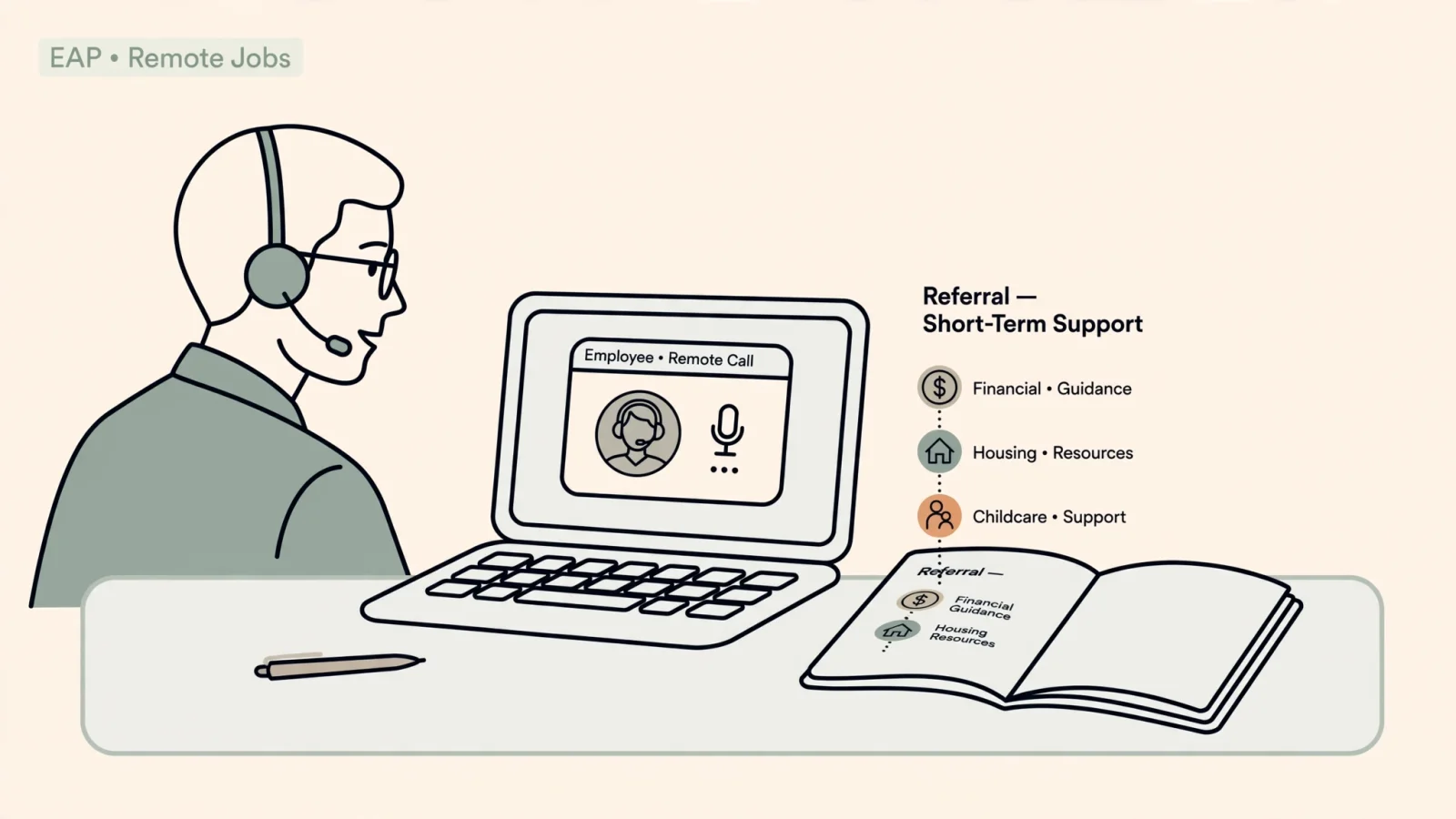
These programs address both employees' personal concerns and organizational productivity issues. The Employee Assistance Professionals Association outlines a core technology for these programs, which includes confidential assessment, short-term intervention, referrals, and leadership consultation.
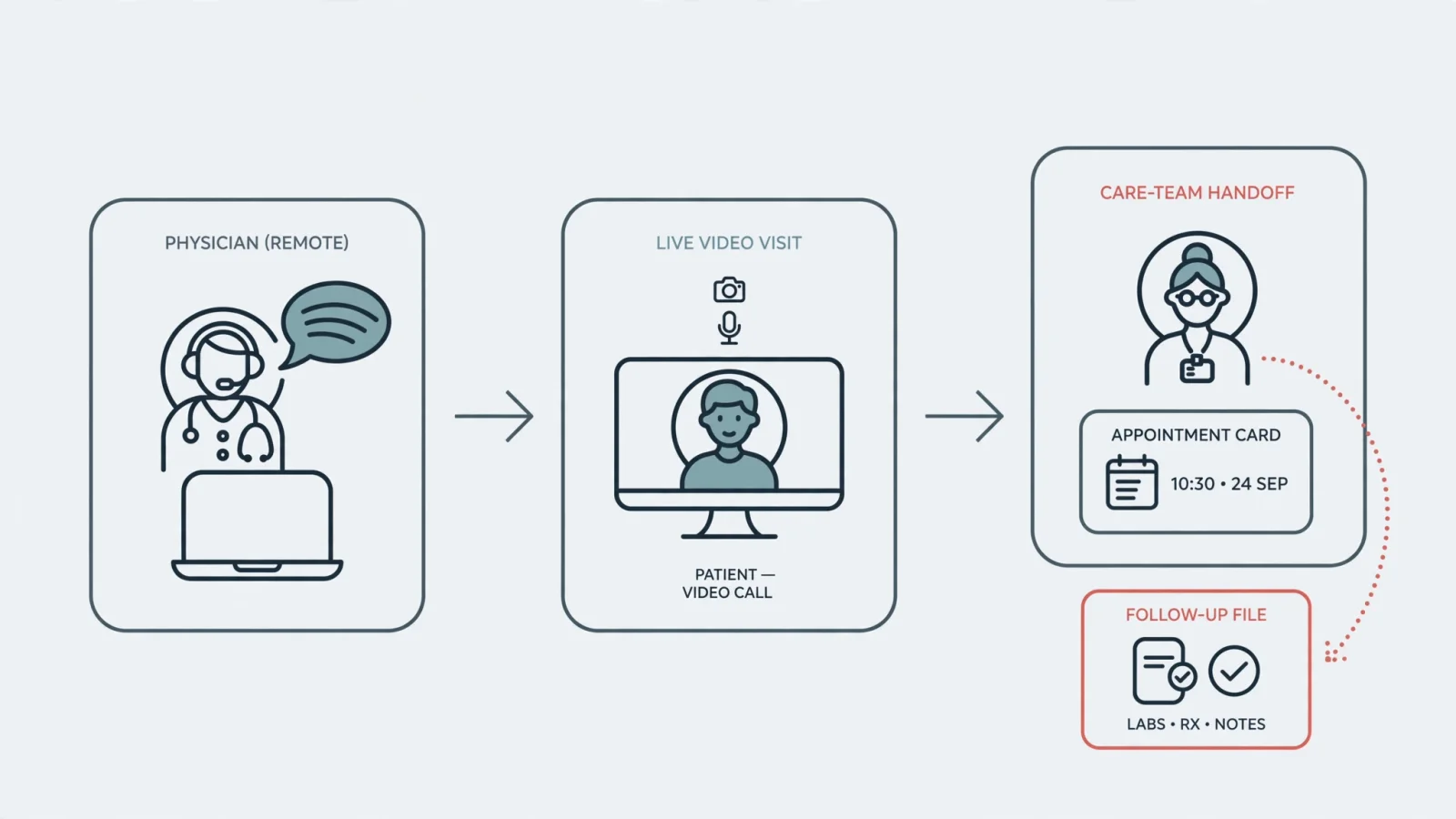
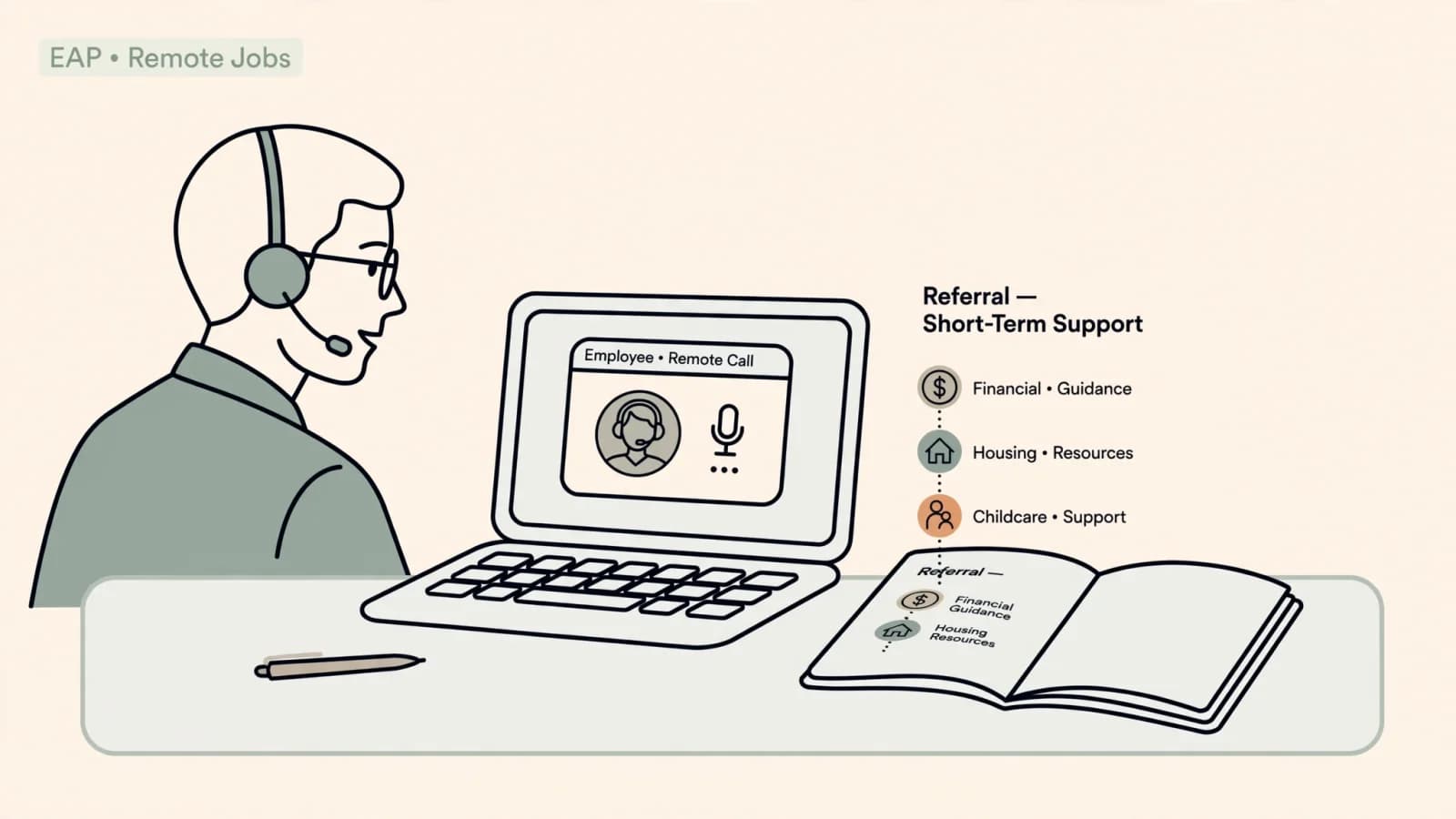
Working in an EAP differs from providing ongoing psychotherapy. While clinical therapy focuses on long-term treatment plans, diagnosis, and deep psychological work, employee assistance prioritizes immediate stabilization, problem identification, short-term solution building, and warm handoffs to long-term providers. You assess the severity of the issue, offer a few sessions of focused support, and direct the caller to specialized care or community resources.
Work Can Be Clinical or Organization-Facing
In the federal sector, the U.S. Office of Personnel Management's handbook covers EAP services, administrative options, and staffing.
Private employers and specialized EAP vendors use similar structures. You might spend your day responding to a crisis hotline, delivering virtual resilience training to a corporate management team, or evaluating utilization metrics to prove program value. Confirming the primary focus of the role prevents surprises during onboarding and ensures the job matches your professional goals.
Job Titles and Role Clusters to Search
Employers do not use a standardized taxonomy for EAP titles. Searching for "remote eap jobs" returns a cluster of different responsibilities grouped under varying names. Treating these as functional categories rather than strict job titles helps clarify what the employer expects.
EAP Counselor and Clinical Counselor
These postings describe the most traditional EAP work, where a clinical counselor handles direct, short-term interventions with employees or their eligible family members. You receive a case, conduct a psychosocial assessment, and provide brief solution-focused counseling. If the client requires support beyond the program's defined session limit, you facilitate a referral to their health insurance network or community services. This role demands strong crisis intervention skills and a high tolerance for varied, unpredictable case presentations.
Intake, Triage, and Guidance
Many EAP vendors centralize their initial contact process, designating intake and triage roles to manage the front door of the program. You answer incoming calls, conduct immediate risk assessments, de-escalate crises, and route the client to the appropriate service tier.
A ComPsych remote Guidance Consultant posting uses an intake-and-triage title and describes telephonic clinical intakes, referrals to appropriate resources such as therapists or counselors, and quick issue resolution. That role suits clinicians who prefer assessment and resource referral.
Consulting, Coordination, and Resource Navigation
Organizational roles shift the focus away from the individual worker and toward the company itself. EAP consultants advise managers on handling behavioral issues, intervene during critical workplace incidents, and deliver management training.
Resource navigation roles handle the practical, non-clinical side of employee assistance. These workers locate childcare providers, research eldercare facilities, coordinate financial counseling, and connect callers with legal assistance. Because titles overlap, reading the specific duties in the job description remains the only way to know whether a "consultant" or "coordinator" requires clinical licensure or focuses purely on work-life resource gathering.
| Role Cluster | Primary Focus | Typical Audience |
|---|---|---|
| Clinical Counselor | Short-term assessment, brief intervention, and referral | Individual employees and dependents |
| Intake and Triage | Immediate risk assessment, crisis de-escalation, routing | Individual callers |
| EAP Consultant | Leadership coaching, incident response, program training | Managers and corporate leadership |
| Resource Navigator | Non-clinical support, legal/financial/family referrals | Individual employees |
License and Degree Requirements for Remote Roles
Educational requirements and legal practice authority are separate hurdles. A master's degree might satisfy an employer's internal hiring policy, but state law dictates whether you hold the legal authority to perform the duties described in the job offer.
Match Credentials to the Role's Clinical Scope
Employer requirements vary based on how they structure their services. Some vendors hire master's-level professionals without independent licensure for specific intake or non-clinical coordination roles. The previously mentioned ComPsych intake posting requires a master's degree in social work, counseling, or psychology, focusing heavily on the educational background necessary to assess risk accurately.
An Acentra Health remote EAP Consultant listing identifies a role for a licensed consultant living in Texas. So compare your qualifications with the licensure and location requirements in each posting.
Check State Rules for Telehealth
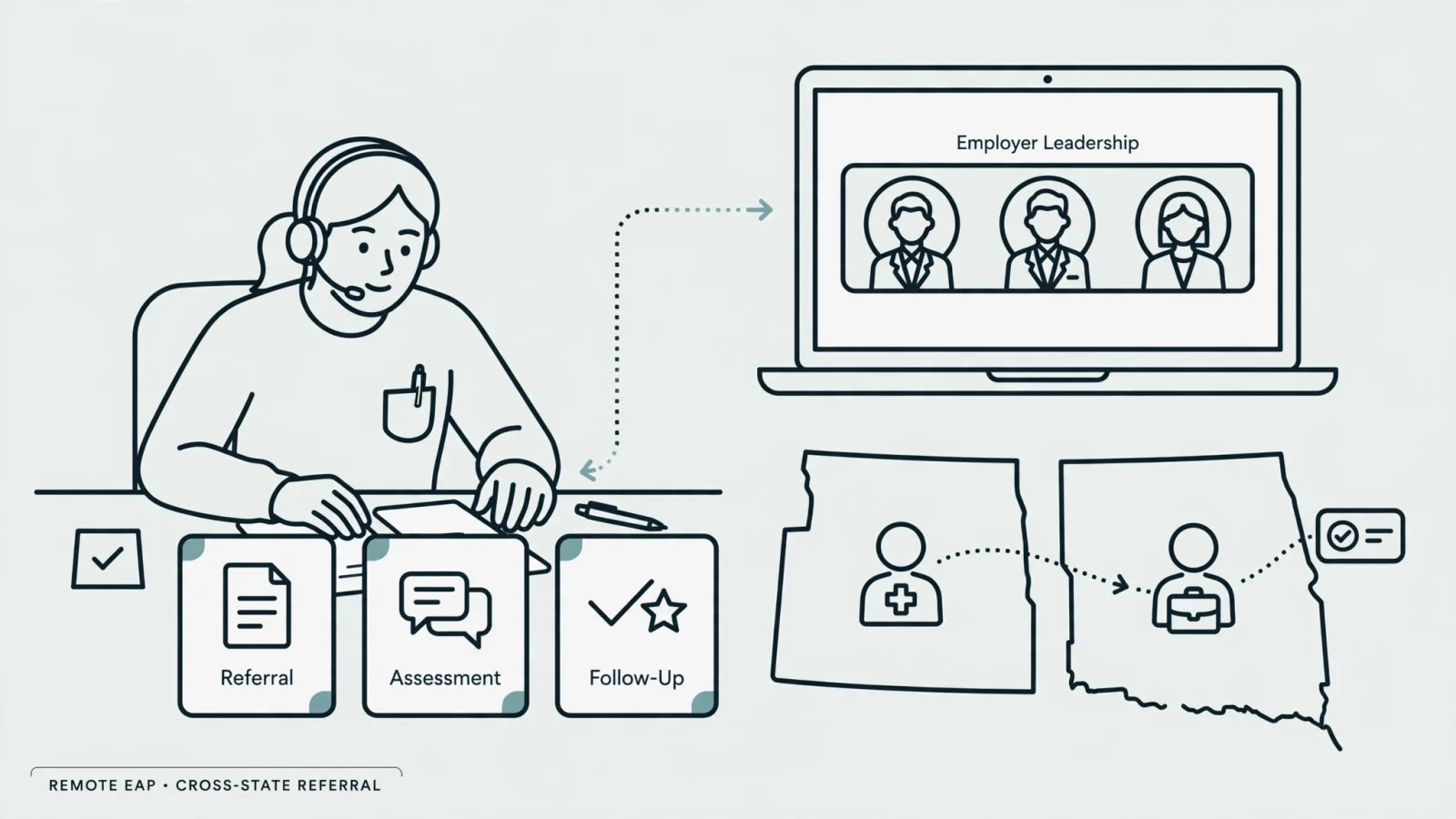
Working remotely introduces complex geographic compliance issues, as telebehavioral health does not erase state borders. Current HHS telebehavioral health guidance outlines the primary regulatory standard for clinical practice across state lines. Providers must meet licensure requirements in the state where they physically sit and hold permission to practice in the state where the patient is located.
If an EAP vendor services a nationwide corporate client, a remote counselor in Ohio might receive a call from an employee standing in a warehouse in California. When the call involves clinical assessment or counseling, the counselor's legal ability to provide that service depends on California's specific telehealth regulations and reciprocity agreements. Employers handle this complexity differently: some build sophisticated routing software to match callers with appropriately licensed clinicians, while others simplify their operations by only hiring clinicians licensed in states with high employee concentrations. This practice explains why a remote job might be restricted to residents of a single state.
Operational Constraints of “Remote” EAP Work
A remote designation signifies that you avoid commuting to a corporate office. It does not guarantee you can live anywhere, set your own hours, or avoid travel entirely, and assuming it offers total autonomy often leads to frustration during the onboarding process.
Confirm Location and Travel Requirements
Employers face tax, payroll, and labor law liabilities when they hire in new states. Because a company must establish a business entity and comply with local regulations in every state where its employees reside, many vendors restrict remote hiring to a predefined list of approved states to control administrative costs. You will frequently see job descriptions explicitly detailing the twenty or thirty states eligible for consideration.
Travel requirements also attach to remote EAP roles. While you conduct daily counseling from a home office, an employer might require you to visit corporate client sites. Critical incident stress management often demands an in-person presence, which means that if a client company experiences a workplace accident, a natural disaster, or an employee death, the EAP vendor may deploy remote consultants to the physical site for immediate group support.
Understand Hours and Work Structure
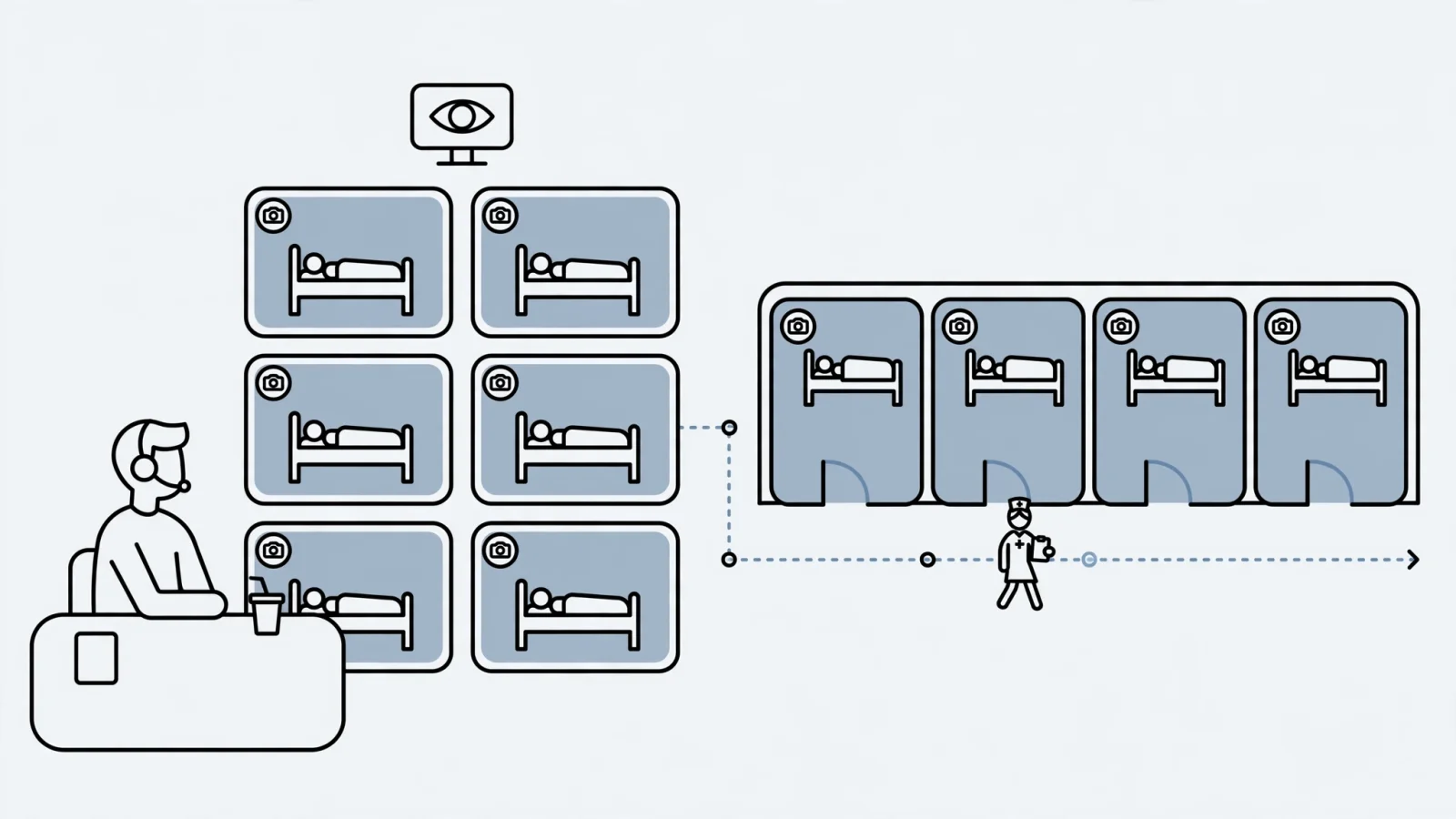
Remote behavioral health work divides into two distinct operational models: scheduled appointments and call queues. Scheduled roles resemble traditional outpatient clinics where you manage a calendar, meet with employees via video for predetermined blocks of time, and organize your documentation between sessions.
Queue-based roles operate more like a clinical contact center. You log into a routing system, mark yourself available, and take calls as they arrive. A Mutual of Omaha EAP Counselor I listing provides a clear example of this structure, describing a call-queue environment with a consistent weekday schedule. In this model, your time belongs to the routing system, so you cannot leave your desk to run an errand or schedule personal appointments during your shift. Shift work also introduces time zone requirements. A vendor based in New York might require a Pacific Time employee to start their day at 5:00 AM local time to cover East Coast morning volume.
Evaluating EAP Workload and Compensation
Accepting a remote position based solely on the appeal of working from home obscures the true quality of the job. You need to measure the financial package against the operational demands to gauge its sustainability.
Compare the Full Compensation Package
Because EAP roles span triage, clinical counseling, and management consulting, a single national average salary does not exist. A non-clinical resource navigator earns a different wage than an independently licensed crisis counselor, and employment types vary significantly. Some vendors hire full-time W-2 employees with comprehensive benefits, while others rely on 1099 independent contractors paid per call or per counseling hour.
When evaluating an offer, isolate the base pay from shift differentials, as companies often pay a premium for evening, overnight, or weekend coverage. Review the cost of health insurance, retirement matching, and paid time off. Calculate the value of employer-provided clinical supervision, continuing education stipends, and licensure renewal support. A slightly lower hourly rate becomes competitive if the employer pays for licenses in multiple states and provides free access to required CEUs. Relative Value Units apply to these roles only if the specific vendor uses an RVU-based compensation model for scheduled clinical sessions, since most queue-based intake roles use straight hourly or salaried models.
Look Beyond the Remote Label
A home office does not protect you from a crushing workload. Burnout happens remotely when call volume outpaces your ability to document, or when back-to-back crisis interventions leave no time for nervous system regulation. High-volume triage roles demand rapid context switching, which easily exhausts clinicians accustomed to fifty-minute therapy hours.
WeekdayDoc addresses this specific evaluation challenge by assigning clinical listings a 0-to-10 work-life score. This metric incorporates hidden operational realities by evaluating call coverage requirements, night and weekend mandates, schedule flexibility, clinical autonomy, and expected administrative burden. Instead of guessing how a remote queue operates, you use the platform's remote and telehealth searches to find roles that align with your sustainability limits. AI-matched alerts then notify you when positions matching your profession, specialty, and desired schedule enter the live inventory.
Questions to Ask Before Accepting an EAP Job
The interview phase provides an opportunity to define the boundaries of a remote role. EAP vendors need capable clinicians and respect applicants who understand the structural realities of the work, so asking specific, operational questions prevents mismatched expectations.
Workload, Queue, and Documentation
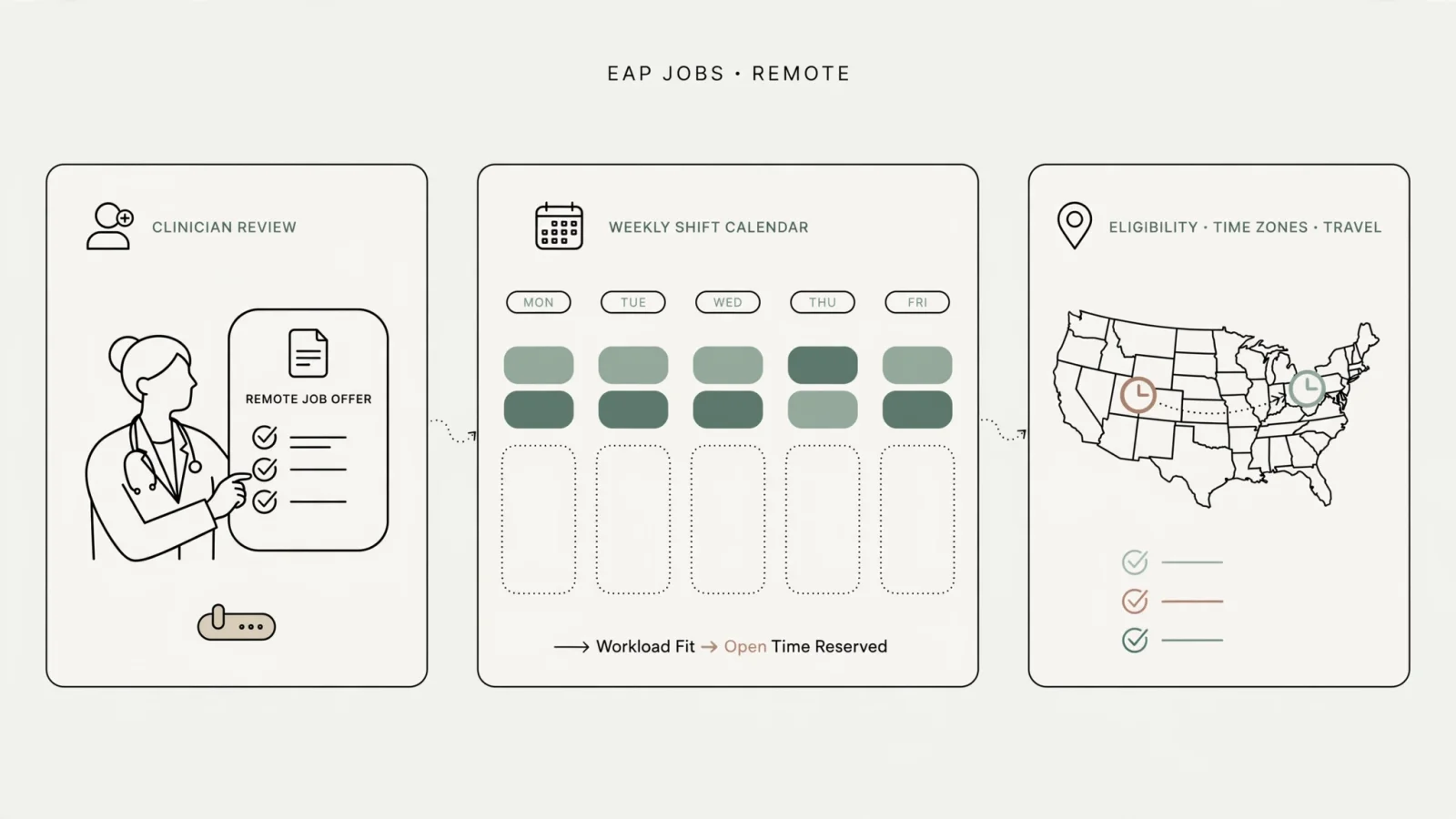
Clarify how the employer measures a successful workday. For a role involving a call queue, ask about the expected volume and request specific numbers for the average calls per shift and the targeted handle time per call. Ask how much administrative time the system allocates for documentation after a crisis intervention. If the role involves scheduled counseling instead, ask about the expected caseload, the session limit per employee, and the policy for handling no-shows.
Schedule, Location, and Support
Pin down the exact hours by confirming the required time zone and asking how the company handles daylight saving time shifts if you live in a non-observing state. Also ask whether the role requires mandatory overtime, holiday coverage, or rotating on-call weekends.
Address the clinical support structure, since working remotely isolates you during difficult cases. Ask who you call when an employee needs emergency intervention during a suicidal crisis. Confirm that a clinical supervisor or escalation team remains available during your specific shift hours, especially if you cover nights or weekends. Verify the policy on travel and ask how the company reimburses mileage or flights for mandatory critical incident deployments.
Confidentiality and Contract Terms
Employee assistance programs balance employee confidentiality with corporate reporting requirements. Ask how the vendor aggregates utilization data and what information gets reported back to the employer. You should also understand the software used to secure case notes in a home office environment.
If the offer involves a 1099 independent contractor agreement, scrutinize the terms. Review the pay basis to determine whether you earn money for being available or only for active counseling minutes, and check the contract for mandatory availability minimums. Use WeekdayDoc's AI contract scanner to evaluate the agreement. By pasting the text or uploading a PDF, the tool flags restrictive covenants, non-competes, confusing payback clauses, and tail coverage requirements before you sign.
Common Questions About Remote EAP Roles
Evaluating EAP jobs requires separating clinical assumptions from business realities, as the answers to common questions depend heavily on the employer's specific service model.
What does EAP stand for?
EAP stands for Employee Assistance Program. These employer-sponsored services help workers address personal, financial, and behavioral health challenges that affect their well-being and job performance.
What does an EAP counselor do?
An EAP counselor conducts initial psychosocial assessments, provides short-term, solution-focused interventions, and refers employees to long-term care or community resources. They focus on immediate stabilization over long-term psychotherapy.
Do remote EAP jobs require a license?
Roles involving independent clinical assessment and short-term counseling generally require full, unrestricted licensure. Intake, triage, or resource navigation roles might accept master's-level professionals without independent licensure, depending on the employer's scope of practice.
Can you work remotely for an EAP from any state?
Employers typically restrict hiring based on corporate tax nexus rules, payroll administration limits, and state telehealth regulations. Job postings usually specify a list of eligible states or require residence in a single, specific state.
Are remote EAP jobs always flexible?
Many remote EAP positions require adherence to a strict call-queue schedule, fixed shifts, specific time zones, and potential evening or weekend coverage. Flexibility depends entirely on the operational structure of the specific vendor.
Find a Role That Fits Your Practice
Transitioning to an employee assistance role changes your clinical focus, your daily schedule, and your administrative responsibilities. Remote work offers geographical flexibility, but it requires careful screening to ensure the workload remains sustainable. Comparing compensation packages, asking direct questions about queue metrics, and understanding state licensing constraints can help you sustain your career.
Ready to explore remote behavioral health and employee assistance roles? Visit WeekdayDoc to search clinician jobs by profession, specialty, location, and work type. Check the live inventory for active remote and telehealth openings, compare salaries, and review each listing's 0-to-10 work-life score. Set up AI-matched alerts to hear about new positions fitting your criteria, and run your next offer through the AI contract scanner to negotiate terms with confidence.