How to Build Emergency Fund: A 2026 Guide
Learn how to build emergency fund with practical steps for sizing, automating, and protecting your financial cushion in 2026.

You're not short on income. You're short on liquidity when the wrong thing breaks at the wrong time. I've sat with burned-out clinicians who could clear six figures on paper and still panic when a contract ended, a credentialing delay hit, or a family medical bill landed in the same month as tuition, childcare, and malpractice renewals.
The generic “save three to six months” advice isn't wrong, it's just incomplete for physicians, NPs, PAs, psychologists, and pharmacists. Your risk isn't just unemployment, it's the lag between jobs, the cost of maintaining licensure and coverage, and the fact that your calendar can disappear faster than your paycheck.
Why Most Emergency Fund Advice Fails Clinicians
A nocturnist gets notice that a contract will not renew. A private practice psychologist loses a referral stream after an insurer change. A pharmacist cuts hours to care for a parent, then finds the budget was built on full-time pay. That is the emergency fund problem for clinicians. The shock is rarely one repair bill, it is an income interruption layered on top of fixed obligations.
Standard advice assumes a stable W-2 job, predictable payroll, and a clean handoff from one employer to the next. Clinicians work with more moving parts. Malpractice tail exposure, credentialing delays, moonlighting gaps, and delayed start dates can stretch a simple job change into a cash flow problem that lasts longer than people admit.
The baseline target still matters. A widely used benchmark is three to six months of living expenses, and the numbers are bad enough to justify taking this seriously. Bankrate's Emergency Savings Report found that only 46% of Americans had enough saved to cover three months of expenses, while 24% had no emergency savings at all. Federal Reserve-based data summarized by MoneyCrunchLab show 63% of adults could cover a $400 emergency with cash or its equivalent, which means 37% would need to borrow, sell something, or could not cover it at all.
Your emergency fund isn't a wealth-building tool. It's a career-protection tool.
Income matters too. The 2024 National Financial Capability Study from the FINRA Foundation found that only 22% of households earning under $25,000 had a three-month emergency fund, compared with 66% of households earning above $75,000. That income gap is why clinicians should not copy a generic personal-finance template. Your fund has to match your actual employment structure, not your LinkedIn headline.
Sizing Your Fund by Role, Income, and Family Status
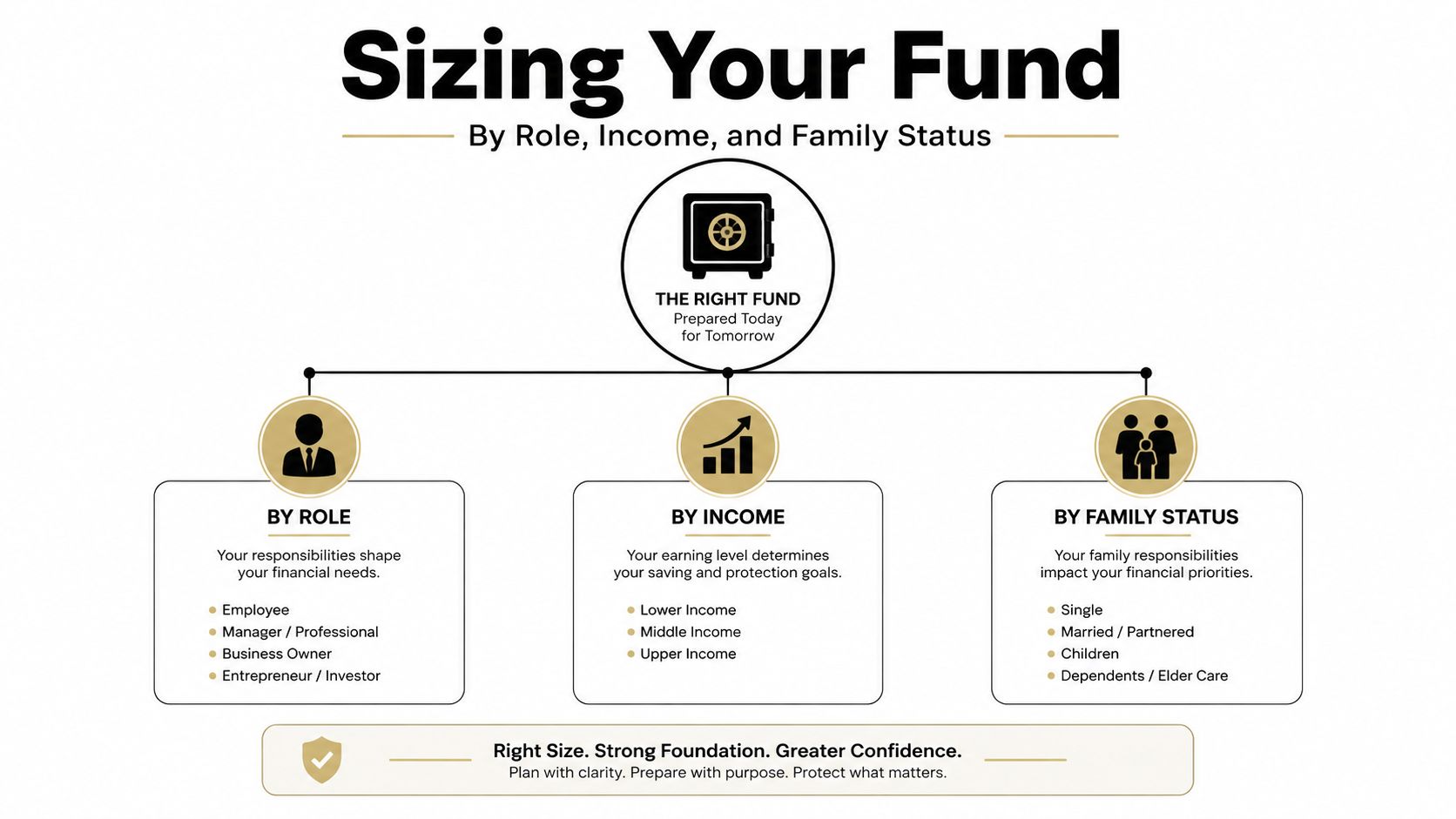
Start with essential monthly expenses, not gross income. The Federal Reserve Bank of St. Louis recommends building the target from the expenses you must cover if income stops, then using that as the baseline for your fund (St. Louis Fed guidance). That is the right anchor because it forces a better question, what does your life cost when the paycheck disappears?
For clinicians, I split the target into two layers. First, build a starter buffer of about $500 to $1,000. That covers a deductible, a car repair, or a short payroll hiccup without forcing you to use a credit card. Then build toward 3 to 6 months of essential expenses once high-interest debt is under control, which fits CFPB guidance and the way income shocks hit working professionals (CFPB emergency fund guide; Vanguard emergency fund guidance).
A physician with a spouse and two kids usually belongs at the higher end of that range because the premiums, dependent costs, and recurring bills are larger. A solo psychiatrist in a stable salaried role with low fixed overhead can usually justify the lower end. A PA in telehealth with variable hours should focus less on an average month and more on the next contract gap.
Use this simple logic.
- If your income is stable and your role is salaried, aim closer to 3 months of essentials.
- If you're locums, 1099, moonlighting, or changing jobs, push toward 6 months of essentials.
- If you support dependents, raise the target before you raise investing contributions.
- If your role has credentialing or onboarding delays, count those weeks in the fund calculation instead of treating them as an afterthought.
A clinician with shaky reimbursement, unpaid admin time, or a long gap between jobs needs more cash than a household with one predictable W-2 paycheck. A contractor who gets paid late needs more than someone with direct deposit on autopilot. A family that depends on two incomes also needs a bigger cushion if one paycheck carries the mortgage, childcare, or health insurance.
For a more complete budgeting framework tied to clinician finances, I'd pair this with WeekdayDoc's financial planning guide for medical professionals. That keeps the target grounded in your real career path instead of a generic household worksheet.
Choosing the Right Account for Liquidity and Yield
An emergency fund should be boring, liquid, and separate. Morgan Stanley is right that it belongs in a basic savings or money market account that you can reach quickly, not in stocks or bonds that may be down the moment you need the cash (Morgan Stanley emergency fund guidance). The account choice comes down to one question, how fast can you get the money without creating a new problem? For a clinician with a packed schedule, that answer matters more than chasing a slightly better rate.
If you're sorting emergency cash alongside the rest of your clinician finances, I'd pair this decision with WeekdayDoc's financial planning guide for medical professionals. That keeps the fund tied to your actual income structure, not a generic household template.
Vanguard makes the same core point, hold the fund where you can access it quickly and keep it sized for the shock you want to absorb (Vanguard emergency fund guidance). I agree with that. A reserve that takes days to free up is not a reserve you can count on when a car repair, dental bill, or delayed paycheck hits.
| Account Type | Access Speed | Typical 2026 Yield | Best Use |
|---|---|---|---|
| High-yield savings account | Same day to next business day | Varies by institution | Core emergency fund for most clinicians |
| Money market account | Same day to next business day | Varies by institution | Reserve that needs liquidity and a cleaner yield than checking |
| Treasury bill ladder | Usually slower than cash accounts | Varies by maturity | Secondary reserve for money beyond the starter buffer |
| Brokerage cash sweep | Fast, but psychologically weak | Varies by platform | Only if you can keep strict boundaries |
| Checking account | Immediate | Usually low | Temporary parking spot, not a home for the fund |
Checking accounts fail for behavioral reasons as much as financial ones. Money sitting next to bill pay, debit cards, and autopay gets treated like spending money. Brokerage cash sweeps create the same blur, especially when the account also holds investments you do not want to touch.
Use the highest-yield option that still gives you fast access, and keep the fund visibly separate from spending. If you are choosing between a slightly better rate and a slower transfer, pick speed. The point is to have cash that works under pressure, not a theoretical asset you cannot use when real life breaks. For a broader framework on building a financial cushion with a clinician's cash flow in mind, see strategies for a financial safety net.
Automating Contributions and Trimming Expenses Without Burning Out
Build the fund by removing willpower from the process. Set a target, automate recurring transfers, and track the balance until the habit runs on its own. That is the same core advice used in strategies for a financial safety net, and it fits clinicians because the transfer happens before the month can swallow the cash. Put it on payday. If the money waits in checking, it will find a job.
Treat every signing bonus, productivity bonus, tax refund, and moonlighting check as emergency-fund money until the reserve is in place. Lifestyle inflation loves bonus season. Move the money the same day, before it gets absorbed into nicer dinners, a bigger apartment, or another subscription you do not need.
JPMorgan Chase Institute research showed that a typical low-income household with $500 in savings could double its total savings by reducing discretionary spending for 48 days, and redirecting three-quarters of leisure spending could help a household with $500–$600 in cash savings and about $30,000 in take-home income reach $1,000 in savings in 48 days (JPMorgan Chase Institute research). That is plain, practical behavior change. Cut the soft spending first, and the account starts moving faster than many people expect.
Do not build the fund by adding more clinical shifts if the whole point is to reduce fragility.
Clinicians get this wrong all the time. Piling on punishing extra shifts can recreate the burnout that made the fund necessary in the first place. Cut the quiet leaks first, subscriptions, unused memberships, overpriced insurance, duplicated services, and any spending that does not improve your actual life. If your budget needs a hard reset, the financial planning resources for medical professionals page is a useful place to start thinking about how the cushion fits into a real clinician budget.
Small cuts beat heroic suffering.
When you are tired, the goal is not perfect frugality. It is a repeatable system that keeps cash moving into the reserve without asking you to become a different person. Automate the transfer, trim the waste, and keep the plan simple enough to survive a rough month.
Integrating the Fund With Insurance and FIRE Planning
An emergency fund is the floor under the rest of your financial life. Without it, every other decision gets shakier, including insurance choices, retirement investing, and job negotiations. That is why I tell clinicians to build the cushion before they chase aggressive portfolio moves.
A high-deductible health plan paired with an HSA only works cleanly if you already have cash on hand to absorb the deductible. The same applies to disability coverage and career flexibility. A clinician with reserves can negotiate harder, walk away from a toxic environment, or leave a bad fit without taking the first offer that shows up in the inbox.
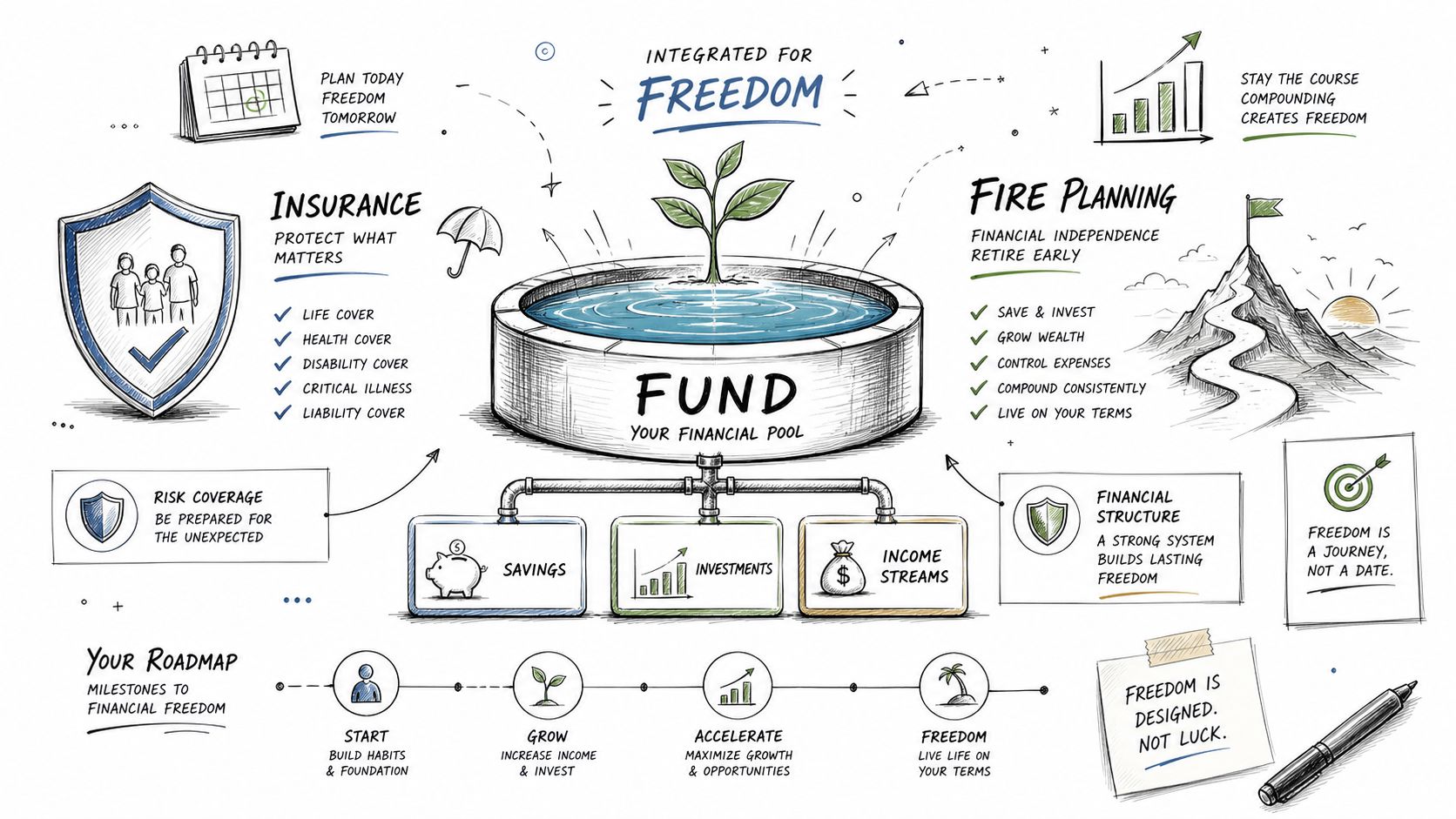
For FIRE-minded clinicians, the emergency fund keeps the whole plan honest. If you are investing aggressively while your cash reserve is thin, you are asking your long-term portfolio to solve a short-term problem. That is a bad trade. Selling taxable investments during a market drop to cover a surprise expense can derail a disciplined plan fast.
A liquid buffer also matters because FIRE does not remove emergencies, it just changes how expensive a mistake becomes. The St. Louis Fed guidance on being ready for the unexpected makes the same point in plain terms, keep liquid money available before life forces you to sell investments at the wrong time. A stronger reserve lets you keep investing through volatility instead of interrupting the plan every time a bill lands out of nowhere (St. Louis Fed guidance).
I treat the fund as a prerequisite, not a competitor, to financial independence. If you want the career optionality that FIRE promises, cash has to come first. For clinicians mapping that path, the WeekdayDoc financial independence retire early calculator keeps the conversation tied to actual work schedules and real exit timing, not wishful thinking.
Clinician-Side Income Tactics That Speed Up the Timeline
Some clinicians try to save their way to safety and stall out. The better move is to use your earning power strategically, not endlessly. If you're a hospitalist, an extra locums weekend or a single predictable moonlighting shift each month can change the timeline faster than a dozen tiny expense cuts.
The point isn't to work yourself into the ground. It's to use the highest-value hours available to you, then stop. A part-time psychiatrist with telehealth access may be able to route extra clinical hours into the fund faster than a full-time clinician tied to a rigid schedule. A pharmacist with overtime access may have a cleaner path than someone trapped in a fixed salary with no side options.
A rough mental model works like this. A clinician who automates a modest monthly transfer, trims a few recurring expenses, and adds one additional paid shift or coverage block each month can often move from starter buffer to real reserve much faster than they expected. The exact pace depends on pay structure and tax treatment, but the principle is simple, build the fund with a blend of automatic saving and targeted income, not with exhaustion.
The PTO angle gets overlooked. Some employers will let you monetize unused paid time off, and that cash can go straight into the fund instead of disappearing into a vacation you can't afford to take. When you're evaluating a contract, that matters as much as the headline base pay because PTO rules affect how fast you can build resilience.
For readers balancing student debt with cash-flow stress, this resource on student loan repayment options helps you decide what deserves extra dollars first. Don't let loan anxiety crowd out the emergency fund if your balance sheet is still brittle.
Use clinical income to buy stability first. Use extra investing later.
When to Tap the Fund and How to Maintain It
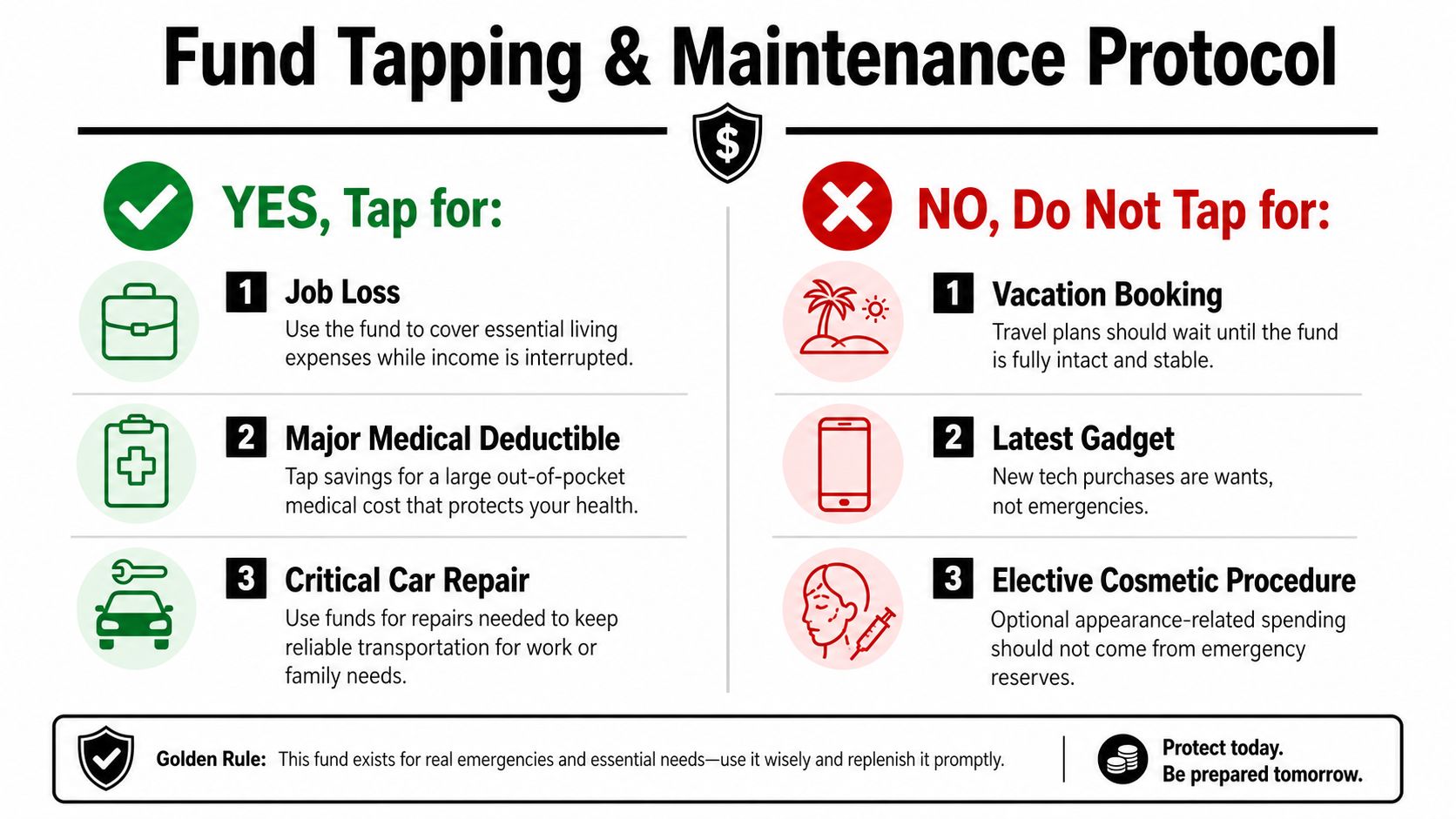
A real emergency fund has rules. If you don't define them now, you'll end up rationalizing every purchase later. I tell clinicians to reserve the fund for true income shocks and true essential disruptions, not convenience spending or lifestyle upgrades.
Use it for job loss, reduced hours, a major medical deductible, a critical car repair, or a genuine lapse in income that threatens bills. For clinicians, that can also include a credentialing gap that delays re-entry into practice or an unexpected malpractice coverage problem that interrupts your ability to work. Those are real emergencies because they threaten the cash flow that keeps your household intact.
Don't touch it for vacations, gadgets, elective procedures, or “I deserve this” spending. That stuff belongs in a separate savings bucket. If you keep breaking the boundary, the fund stops functioning as a safety net and becomes a sloppy checking account with a nicer name.
After a withdrawal, refill the fund before you go back to aggressive investing. That's the sequence. Rebuild the cushion first, then resume retirement contributions and extra principal payments. Anything else is just pretending you're protected when you're not.
For unemployment planning, My Policy Quote's unemployment advice is worth reading because it reinforces the same hard truth, job loss is easier to survive when you've already prepared the cash side of the equation. I'd also run an annual maintenance check on the fund itself.
Use this checklist once a year:
- Recalculate essentials: Update rent, mortgage, groceries, transportation, insurance, and minimum debt payments.
- Reassess your role: If you changed from W-2 to 1099, moved into locums, or cut back hours, raise the target.
- Review family changes: Marriage, children, caregiving, or a move can shift the number fast.
- Check the account: If rates changed or access got clumsy, move the fund to a better home.
- Refill after use: Treat replenishment as a priority, not an afterthought.
That's the cleanest version of how to build emergency fund money that protects a clinician's life. Not by chasing perfection, but by giving yourself enough liquid runway to survive bad timing without making a bad decision.
WeekdayDoc helps clinicians evaluate roles with burnout in mind, including jobs with clearer schedules, no-call filters, and financial context that makes the next move easier to judge. If you want to compare flexible openings and think through what a safer job means for your cash reserve, visit WeekdayDoc and use the tools there as part of your planning.