Physician Administrative Burden: Audit the Hidden Work
Measure physician administrative burden across inboxes, prior authorizations, charting, meetings, care coordination, and after-hours work.
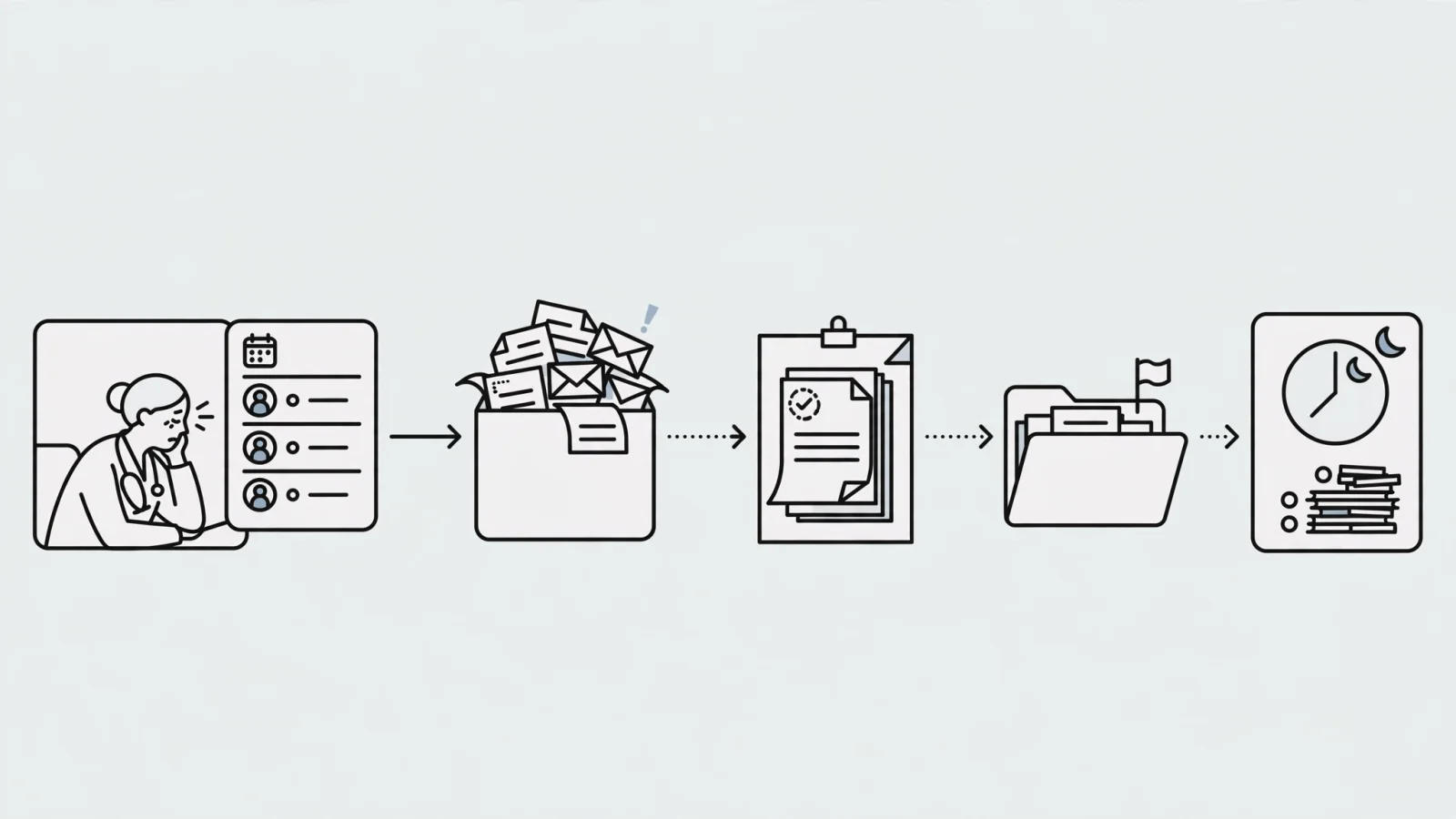
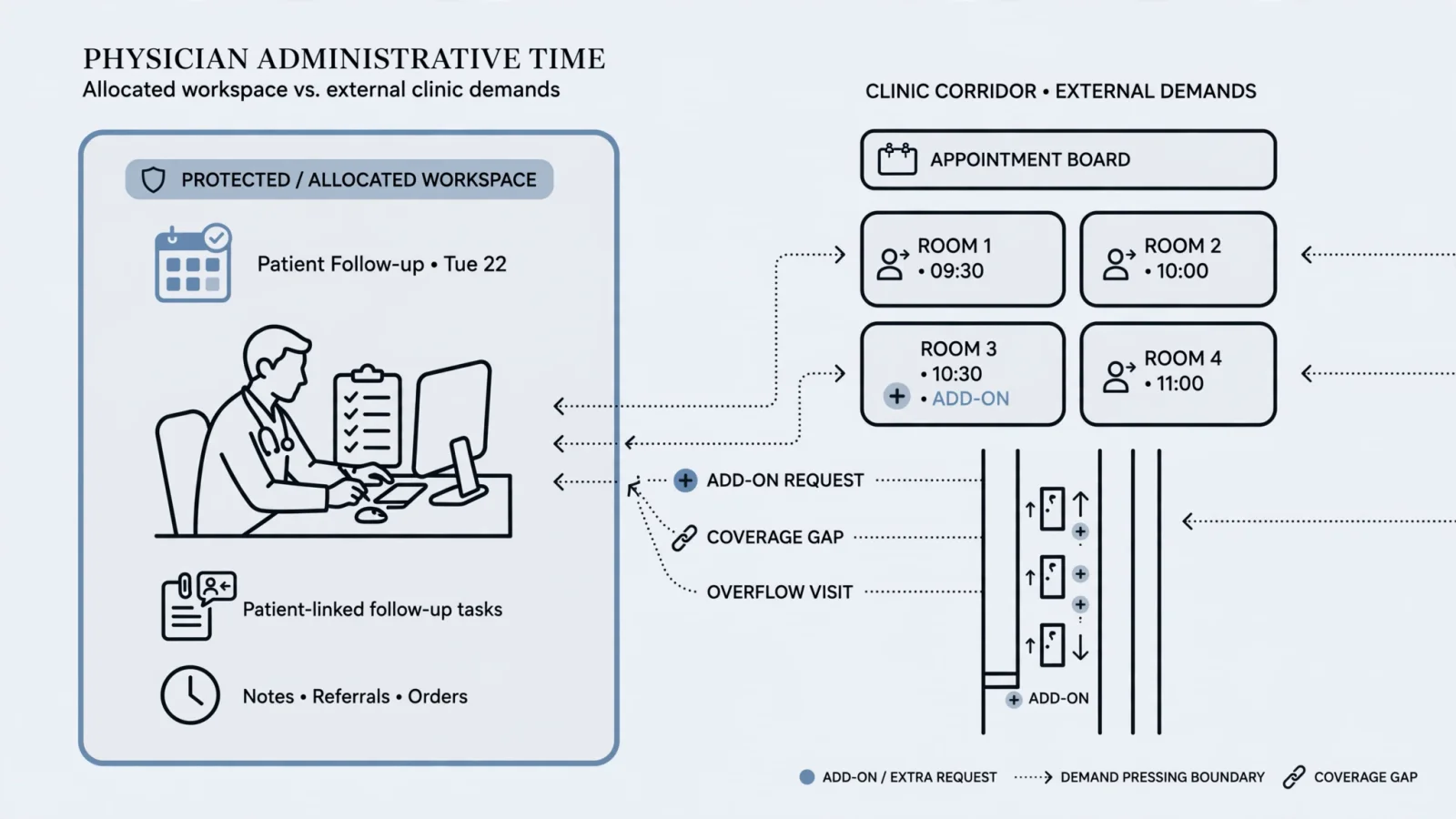
A clinical schedule shows patients, rooms, and appointment slots, but it rarely shows the real job. Scheduled visits represent only the visible layer of a healthcare role, while a secondary stream of work continues before, between, and after those appointments. Tasks like portal messages, lab results, medication refills, prior authorizations, documentation, forms, referrals, and care coordination form a continuous background workload that demands time and attention. Measuring physician administrative burden gives you a clear picture of this hidden work.
Define the Hidden Work in a Clinical Job
Every medical role involves tasks completed away from the patient, so you cannot accurately evaluate a practice opportunity by grouping all non-visit work into one generic bucket of paperwork. The workload falls into distinct categories based on who performs it and why it exists.
The Work Beyond the Visit
Administrative burden serves as an umbrella term for work required to operate a clinic or coordinate care outside of direct face-to-face clinical time. Not every click in an electronic health record falls into this category, because chart review, order entry, and clinical decision-making remain medically necessary even when they occur at a desk. The problem arises when workflows force clinicians to act as data clerks, insurance negotiators, and operational problem-solvers.
Three Layers of Burden
You can separate non-visit workload into three distinct layers. Indirect clinical work includes chart review, result and order management, patient portal messages, medication refills, care coordination, and clinical documentation. Administrative and operational work covers prior authorizations, appeals, forms, coding queries, quality reporting, scheduling logistics, and committee meetings.
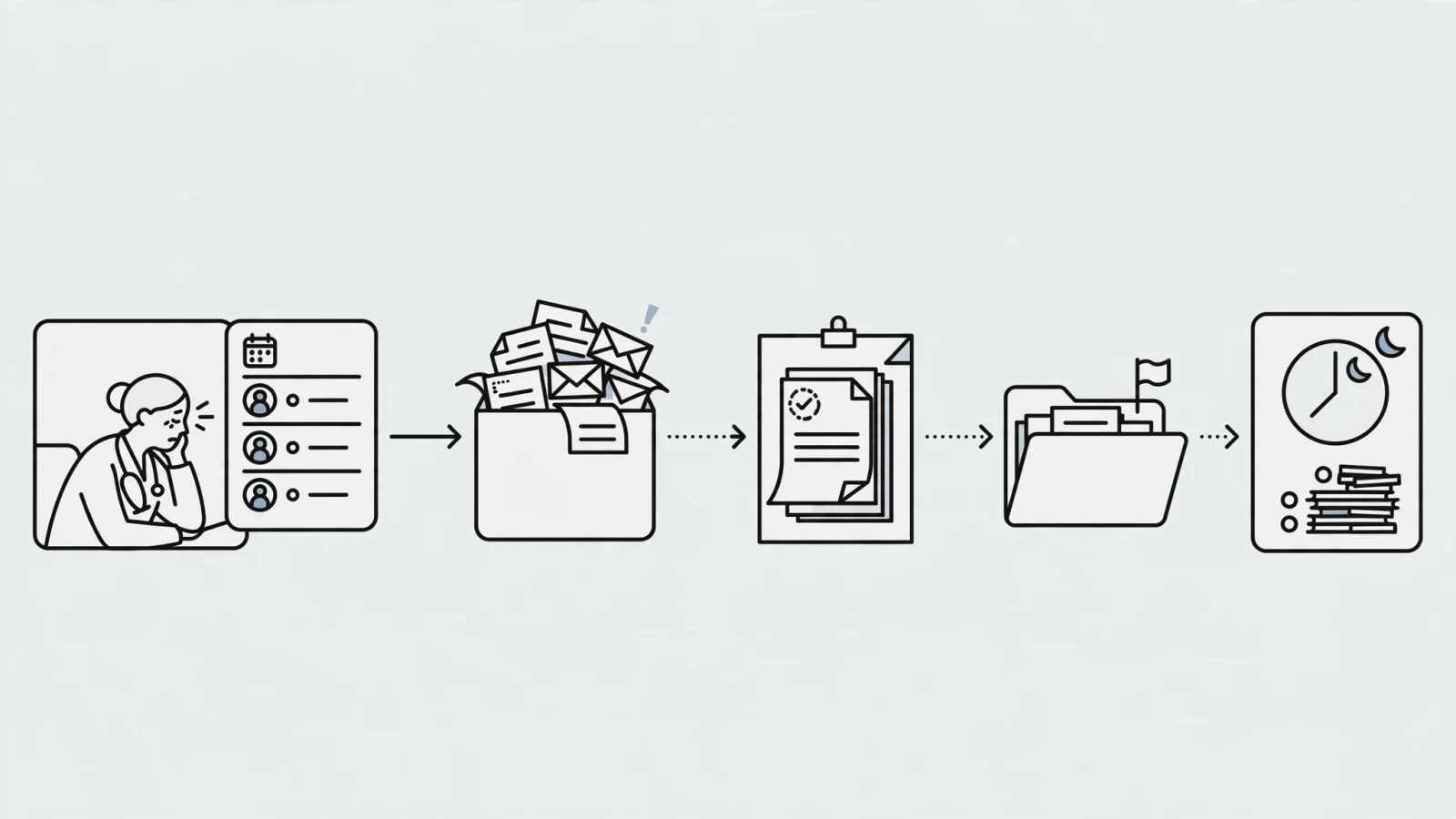
System friction forms the third layer, encompassing duplicate data entry, unclear task ownership, repeated payer follow-up, and disconnected software systems. Rework caused by incomplete information or poorly routed messages adds unnecessary minutes to the day, while structural failures cause work to spill into evenings, weekends, or scheduled time off.
Why the Definition Matters
Framing administrative workload as a job-design variable changes how you evaluate employers. A chaotic inbox points to a poorly designed workflow rather than a clinician who lacks individual resilience. At WeekdayDoc, we built a marketplace that treats this work as a visible job factor alongside call schedules, nights, weekends, flexibility, and compensation. A structured work-life score helps candidates compare jobs objectively, acting as a comparison aid rather than a validated clinical instrument for diagnosing burnout.
Why Patient Volume Misses the Real Workload
Employers often describe jobs using a daily patient-volume target, but that single number fails to describe the entire scope of the work. Understanding the role requires knowing what happens between those visits.
What the EHR Evidence Shows
Electronic health record audit logs reveal exactly where time goes. A primary care study published in the Annals of Family Medicine tracked logged-in system time, observing 355 minutes of EHR activity during an 11.4-hour weekday per clinical full-time equivalent. Clinicians spent 269 of those minutes working during clinic hours and 86 minutes working afterward.
The authors further broke this data down into specific task types. Clerical and administrative activity accounted for 157 minutes, representing 44.2% of total EHR time, while inbox management took up 85 minutes. These figures describe EHR time in a primary care setting, meaning they do not represent a universal baseline for every physician's total workday across all specialties.
Why Task Count Misleads
Time matters more than raw volume, as ten routine messages asking for standard scheduling updates might take three minutes to resolve, while one complex appeal or family coordination task can consume half an hour of phone calls and chart searches. If employers evaluate the number of tasks completed without measuring time, they can miss the true weight of the work.
Prior authorization provides a clear example of time-intensive work. An American Medical Association survey of practicing physicians found that respondents and their staff spent 13 hours per week completing prior authorizations. In that same survey, 94% of physicians reported that prior authorization somewhat or significantly increased professional burnout.
Keep the Denominator and Owner Visible
Evaluating workload statistics requires keeping the denominator visible. A study reporting that 44% of time goes to clerical work refers to 44% of EHR time, which differs entirely from 44% of total awake hours.
Readers evaluating a job must ask who owns the work rather than measuring the total volume. The 13 hours of prior authorization time reported in the AMA survey combines physician and staff time, meaning it does not represent a physician-only benchmark. A practice might spend 20 hours a week on authorizations, yet the physician might spend two hours handling clinical justifications and peer-to-peer escalations.

Build a Two-Week Workload Audit
Fixing or negotiating a workload requires measuring it first. Tracking tasks for a set period reveals the hidden workstreams draining capacity.
Choose a Representative Audit Window
Tracking one ordinary workweek provides a baseline, though two consecutive weeks yield better data. Extending the observation period makes sense if the role includes variable call, rotating meetings, procedure days, inpatient coverage, or seasonal volume spikes. A longer window captures tasks that occur once a month but take hours to resolve.
Capture Every Task, Including Spillover
Creating a detailed log helps capture the operational reality. Set up columns for the date, time, specific workstream, task type, item count, and total minutes required to complete the work.
Breaking the time down by owner separates clinician minutes from team minutes. Tracking after-hours time captures work spilling past the scheduled shift, while noting interruptions and clinical judgment requirements adds necessary context. The log can also track the number of systems involved, waiting time, primary task owners, and whether the work was protected, scheduled, paid, or uncompensated. Identifying whether a task could be eliminated, automated, delegated, or collaboratively covered provides a roadmap for future redesign.
Combine Logs With Human Context
Gathering data from multiple sources builds a complete picture. Self-timing works well for phone calls, meetings, forms, care coordination, and tasks outside the EHR. EHR audit logs measure inbox activity, documentation, order entry, result review, prescribing, and after-hours system use.
Calendar records show time spent in meetings, huddles, committee work, and protected administrative blocks, while practice manager reports reveal total team workload. Comparing the actual work log against contract or productivity documents highlights the gap between what the role pays for and what it requires.
Measure the Workstreams That Hide Between Visits
Categorizing tasks without recording patient-identifying details helps spot patterns and identify workflows needing redesign.
Inbox, Results, Refills, and Prior Authorizations
| Workstream | Include | What to measure | Key question |
|---|---|---|---|
| Inbox and messaging | Portal messages, telephone tasks, EHR tasks, pharmacy messages, result questions | Volume, minutes per item, clinician-handled percentage, response expectations, interruptions, after-hours work | Does every message route to the clinician, or is there a functioning team pool? |
| Prior authorization | New requests, renewals, appeals, peer-to-peer calls, formulary substitutions, payer follow-up | Requests, waiting time, clinician minutes, staff minutes | Who gathers records, tracks denials, and handles appeals? |
| Results and orders | Lab review, imaging review, abnormal-result follow-up, patient notification, unresolved carryover, order signing | Number of results, clinical review time, notification time | Are normal results released or handled through protocols? |
| Refills | Routine renewals, medication questions, pharmacy changes, refill denials | Requests, protocol-eligible items, clinician escalations, time per item | Which refills can be handled under standing protocols? |
Charting, Forms, Meetings, and Care Coordination
| Workstream | Include | What to measure | Key question |
|---|---|---|---|
| Charting and documentation | Notes, addenda, chart closure, coding queries, attestations, template rework | Minutes during clinic, minutes after clinic, rework, unsigned notes | Is documentation completed during protected work time? |
| Care coordination | Referrals, records requests, discharge follow-up, family communication, handoffs | Contacts, minutes, number of organizations involved, closed-loop completion | Is the clinician coordinating the process or making the clinical decision? |
| Forms and letters | Disability, FMLA, work, school, insurance requests | Forms per week, minutes per form, repeat information requests | Are forms included in the compensation model? |
| Meetings and leadership | Huddles, committees, quality meetings, utilization review, peer review | Meeting minutes, preparation time, protected status | Are meetings replacing clinical capacity without protected time? |
Setting-Specific Audit Priorities
Different practice settings generate distinct administrative pressures. Outpatient primary care roles require tracking portal messages, refill requests, results, referrals, prior authorizations, forms, and chart closure. Specialty and procedural practices rely more on tracking imaging review, medication management, procedure scheduling, preoperative record gathering, and postoperative communication.
Inpatient and emergency roles face different schedules, making it necessary to measure discharge work, handoffs, utilization review, family communication, and coding queries. Telehealth and remote roles call for tracking asynchronous work, platform transitions, and response-time expectations. Remote work does not guarantee a lower administrative burden, as a virtual job with high asynchronous message volume can easily outpace an in-person role supported by a dedicated team.
Turn Task Counts Into Useful Workload Metrics
Raw data needs context before it becomes useful. Converting the audit log into metrics helps evaluate a current job or compare a new offer, providing practical workload measures rather than validated clinical burnout scales.
Calculate Clinician-Owned Time
Start by defining total administrative minutes as all measured administrative and indirect-care minutes. Reporting this total separately for clinician time, team time, after-hours time, and waiting or rework provides clarity.
Focusing on clinician-owned burden measures the minutes requiring the clinician to act, review, approve, or communicate. Knowing the practice spends 40 hours a week on prior authorizations offers little insight, whereas knowing the clinician spends four hours a week on peer-to-peer reviews reveals exactly what the job requires. To understand the ratio of clinical to non-clinical time, calculate administrative workload per clinical hour by dividing administrative minutes by direct clinical hours.
Expose Spillover and Rework
Calculating after-hours spillover involves tracking administrative minutes worked outside scheduled hours, including both total minutes and the number of days affected. A role requiring 30 minutes of charting every night creates a different work-life burden than a role requiring one three-hour block on Sunday.
Identifying broken processes requires calculating rework share by dividing duplicate-entry, follow-up, waiting, correction, or unclear-ownership minutes by total administrative minutes. High rework numbers indicate software friction or missing staff support.
For financial context, estimate your effective hourly compensation by dividing annual compensation by total expected work hours. Including scheduled clinical hours, protected administrative time, meetings, call coverage, and expected after-hours work reveals the true financial value of a contract.
Interpret the Pattern
Audit data usually falls into one of four patterns. The first is high-volume, low-time work, such as routine refills and normal result notifications. These tasks are suitable for elimination, automation, or standing protocols. Low-volume, high-time work includes complex patient messages, appeals, and family coordination, and it requires clear ownership, escalation rules, and protected clinician time.
High-rework patterns point to duplicate systems, incomplete referrals, or unclear routing. Teams can address them by consolidating software or training staff to gather complete information before routing a chart. Finally, high-spillover work occurs when notes and messages push into evenings. This pattern requires cross-coverage, lower patient volume, protected blocks, or a revised productivity model.
Compare Roles Before You Accept One
An audit framework gives you a practical way to evaluate a job. Asking specific questions about workflow design during interviews prevents accepting a poorly supported role.
Questions to Ask About Inbox and Prior Authorization Work
Investigate how many messages, phone tasks, and EHR tasks the average clinician handles each week. Determine who owns routine messages, refills, scheduling requests, and normal results, while clarifying what percentage must be handled personally by the clinician and what response times apply. Ask exactly who covers the inbox during vacation, illness, parental leave, or conferences.
For prior authorization and referrals, establish who gathers records, completes forms, tracks denials, and handles renewals. Clarify whether clinicians handle appeals or peer-to-peer calls themselves, and identify who coordinates outside records.
Compare Workload With Compensation and Coverage
Evaluate how much protected administrative time exists in the weekly schedule. Check whether meeting preparation is included in paid time, whether charting is expected to finish during the scheduled shift, and what happens when work exceeds the protected block.
Compare the compensation model with the workload by asking how inboxes, forms, care coordination, asynchronous visits, meetings, and documentation affect salary, RVU expectations, quality incentives, or panel-size targets. Count how many different EHRs and payer portals the role requires, and request representative workload data rather than accepting a generic daily patient-volume target.
Use WeekdayDoc to Compare Sustainable Careers
Evaluating a job offer requires connecting salary data to operational reality, and WeekdayDoc makes job-level factors easier to evaluate together. Our marketplace displays work-life scores alongside call coverage, nights and weekends, schedule flexibility, autonomy, and administrative burden. We also provide salary comparisons, market percentiles, and dollar-per-RVU benchmarks. By combining AI-matched job alerts, negotiation scripts, and contract-review tools, you can evaluate remote, telehealth, part-time, locum, hybrid, and leadership roles based on their operational demands.
What Employers Can Change and What Readers Should Ask
Workflow redesign offers a practical way to address administrative overload. The AMA STEPS Forward toolkit on reducing inbox burden outlines a four-part framework for employers: eliminate, automate, delegate, and collaborate.
Eliminate, Automate, Delegate, and Collaborate
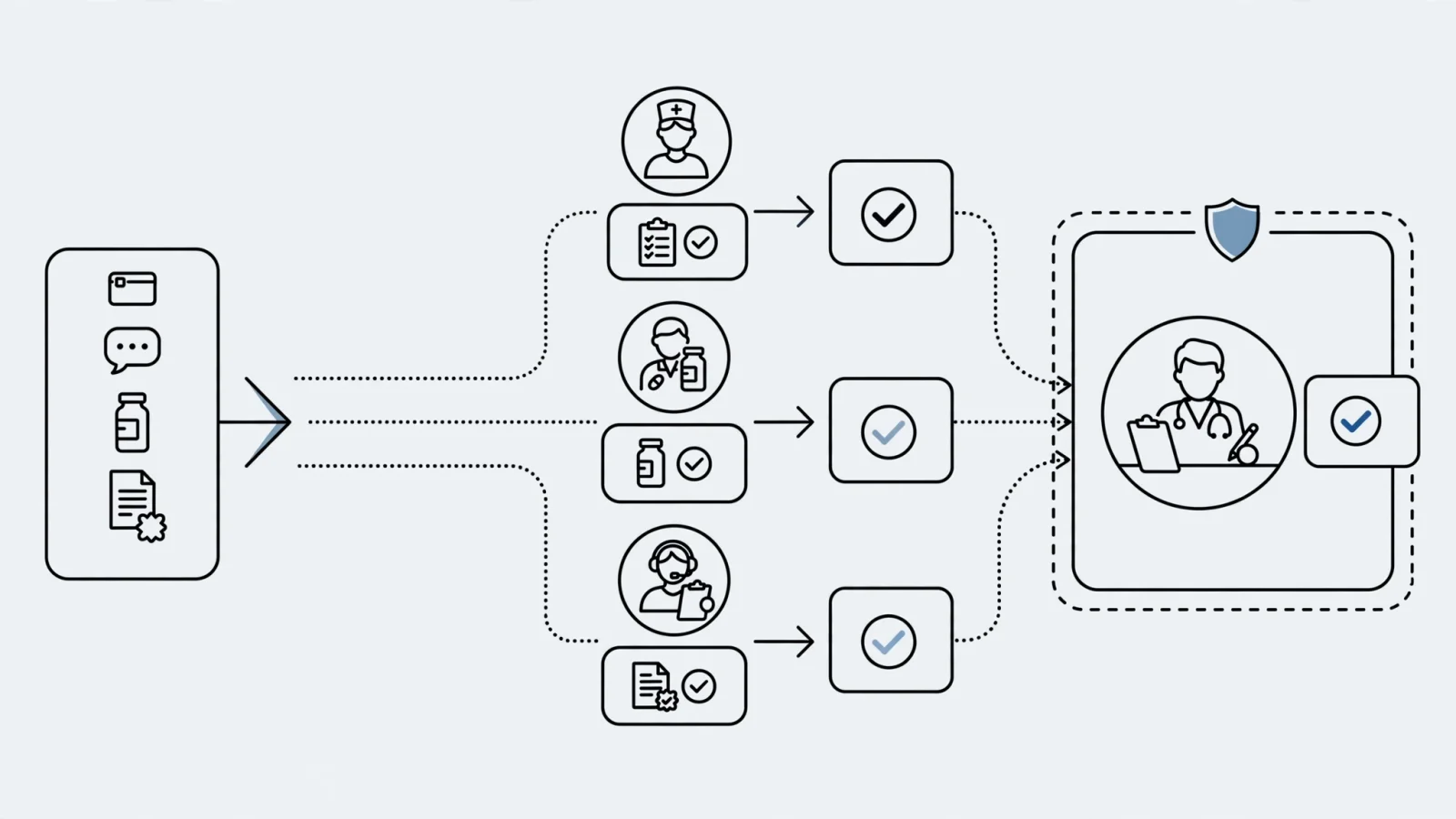
Employers can start by eliminating duplicate notifications, unnecessary routing, and low-value messages before adding staff. Once unnecessary work disappears, practices can automate appropriate routine refills, normal-result communication, scheduling, and standard follow-up through safe protocols.
Practices can then delegate work to trained staff with defined roles, escalation rules, and clinical safeguards. Finally, teams collaborate through shared task pools, cross-coverage, and coverage plans that do not require clinicians to check inboxes during time off.
Publish the Workload Candidates Need to See
Employers can support these workflows by measuring time as well as volume. Practices can protect administrative blocks, adjust patient volume expectations, and review workload by specialty rather than apply unsupported universal staffing ratios. Planning also needs to include meetings, documentation, forms, and asynchronous work.
Healthcare employers seeking candidates should publish the patient-facing schedule, call and weekend requirements, protected administrative time, inbox ownership, documentation expectations, meeting load, and team-support model directly in the job listing.
Quick Answers to Common Questions
What counts as physician administrative burden?
Physician administrative burden encompasses tasks required to operate a clinic or coordinate care outside of direct face-to-face clinical time. It includes indirect clinical work like chart review and refills, operational work like prior authorizations and forms, and system friction like duplicate data entry and unclear task ownership.
How do you measure physician administrative workload?
Measure this workload by running a two-week audit covering both scheduled hours and after-hours spillover. Tracking task types, item counts, total minutes, and whether the task required active clinical judgment provides a clear picture. Use EHR audit logs, calendar data, and self-timing to separate clinician-owned minutes from total team minutes.
How much time do physicians spend on prior authorization?
According to American Medical Association survey data, respondents reported that physicians and their staff spent 13 hours per week completing prior authorizations. This figure represents combined team time rather than a universal physician-only metric.
Are remote physician jobs automatically lower in administrative burden?
No. Remote roles often involve high volumes of asynchronous messages, platform transitions, and follow-up coordination. The workload depends on the employer's team support model, response-time expectations, and whether asynchronous work is included in the productivity schedule.
Does salary account for documentation and care coordination time?
Compensation models vary widely. Some roles provide protected, paid administrative time or include indirect work in quality incentives, while other contracts pay strictly for face-to-face patient volume or RVUs, leaving documentation and care coordination as uncompensated after-hours work.
Before applying for your next role, compare more than the salary. Look for visible call expectations, weekend requirements, schedule flexibility, autonomy, and administrative-burden details so you can evaluate whether a job is operationally livable. Visit WeekdayDoc to search clinician jobs, review contract data, and build a sustainable healthcare career.