Telehealth Jobs for Psychologists: What to Check
Evaluate telehealth psychology roles by licensure, caseload, no-show pay, crisis coverage, documentation, supervision, and schedule control.

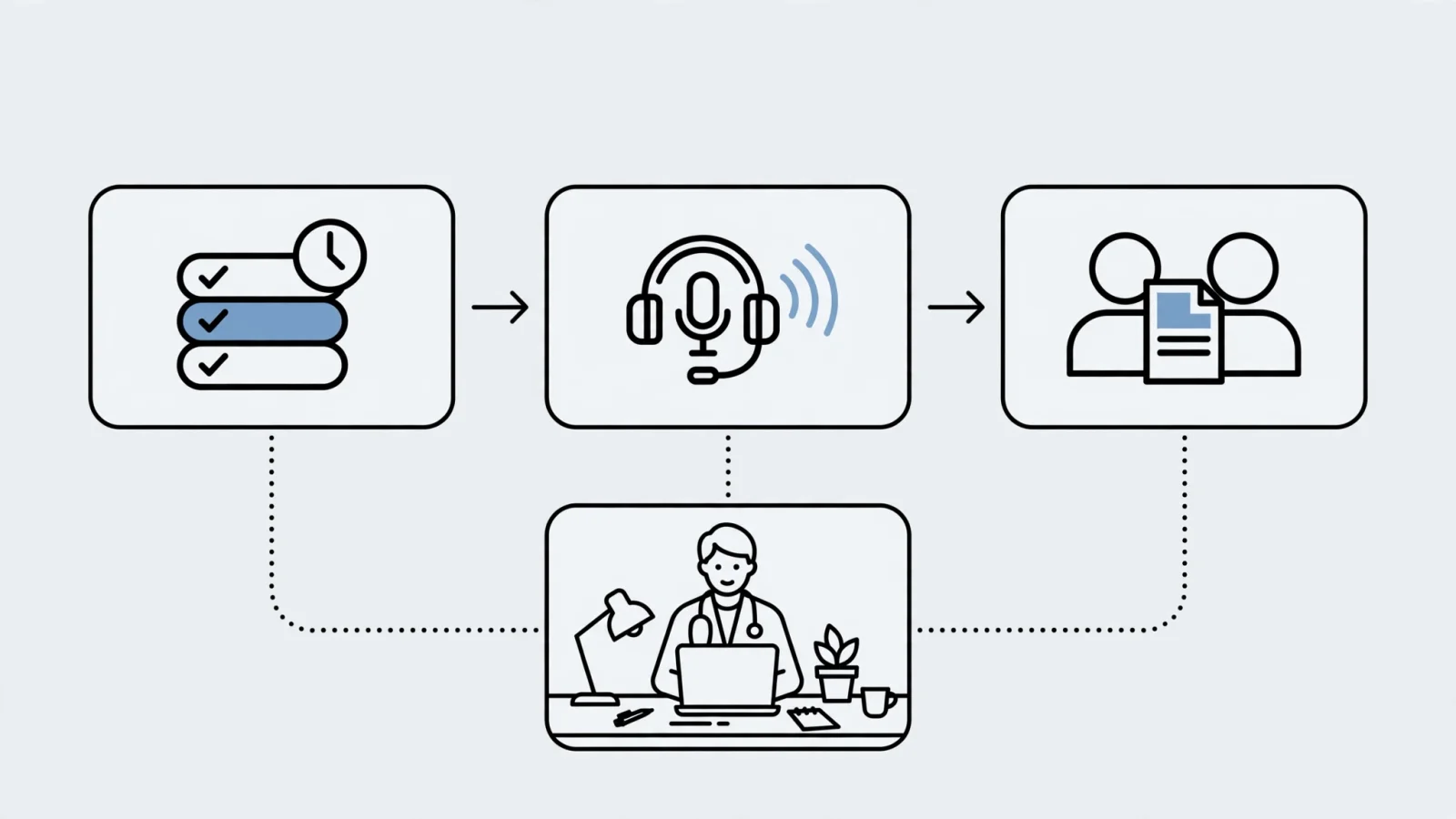
Telepsychology roles involve video or phone therapy, structured behavioral assessments, interdisciplinary consultation, clinical supervision, integrated care, or a hybrid of these services. The term "remote work" describes only the physical care setting where this happens, so it tells you nothing about the workload, the burnout risk, or the amount of schedule control you will have.
Evaluating telehealth jobs for psychologists means assessing a complete care-delivery system where physical location is only the first variable. Rather than applying based on a headline salary and a "remote" tag, weigh the operational realities of the role against your professional boundaries.
WeekdayDoc lets you find remote psychologist jobs and compare these factors. Before submitting an application, you can review work-life scores, call coverage, schedule flexibility, autonomy, and administrative burden. Comparing jobs by their structural demands helps you avoid trading a demanding on-site schedule for an equally exhausting remote one.

Review Licensure and Patient Location Requirements
Before comparing compensation or flexibility, confirm where you may legally provide care. You need to know your own physical location, the patient's location during the visit, the required state license or compact credential, and who verifies that information.
According to HHS rules for behavioral health, professionals must meet the licensure requirements of the state where they are located and be licensed or legally permitted to practice in the state where the patient is located.
Ask prospective employers which patient states are currently open to the role, because a listing advertising a "nationwide" practice without state-specific details leaves an important question unanswered. Interstate practice relies on specific legal pathways like a full state license, temporary practice rules, reciprocity agreements, or telehealth registration.
One pathway is the Psychology Interjurisdictional Compact. The ASPPB outlines the PSYPACT process, requiring eligible psychologists to obtain an E.Passport and an Authorization to Practice Interjurisdictional Telepsychology. These credentials apply in PSYPACT-participating jurisdictions, so they do not provide nationwide authorization.
Review your own license status, your physical location, and the employer’s compliance process before proceeding to an interview.
Ask the hiring manager these questions:
- Who verifies patient location at the start of each session?
- Who handles informed consent workflows for out-of-state patients?
- Does the employer pay for additional state licenses or PSYPACT credentialing?
- Can you work temporarily from another state, or do you need to remain in one approved location?
- Does the employer’s malpractice policy cover every state in which patients are located?
Evaluate Caseload and No-Show Policies
Evaluate total workload rather than a headline patient count. No universal safe number of visits per day exists because clinical complexity varies by specialty, patient acuity, and session length. Ask the employer to define their expectations in operational terms to get an accurate picture.
Clarify whether the stated caseload refers to scheduled visits or expected completed visits. Request definitions for standard session length, new-intake volume, assessment obligations, and expected patient messaging. Because an intake assessment requires more preparation and documentation than a standard follow-up, a schedule heavily weighted toward new patients carries a higher administrative burden.
No-show and late-cancellation policies alter your income and the shape of your workday. Clarify whether canceled appointments are paid, whether the employer backfills the slot with a waitlist patient, and whether you can use that empty time for notes or leaving early. Find out which productivity denominator applies to your performance metrics, whether that means scheduled sessions, completed sessions, billed sessions, or collected revenue.
Consider a hypothetical comparison between two roles that schedule thirty appointments per week. Role A pays a flat salary, guarantees protected administrative time for notes, and absorbs the financial impact of cancellations. Role B pays only for completed sessions, expects clinicians to maintain an open calendar for backfill, and requires patient portal messages to be answered between sessions. Though the scheduled caseload looks identical on a calendar, Role B produces a higher effective workload and shifts the income risk of no-shows entirely to the psychologist.
Audit Crisis Coverage, Documentation, and Supervision
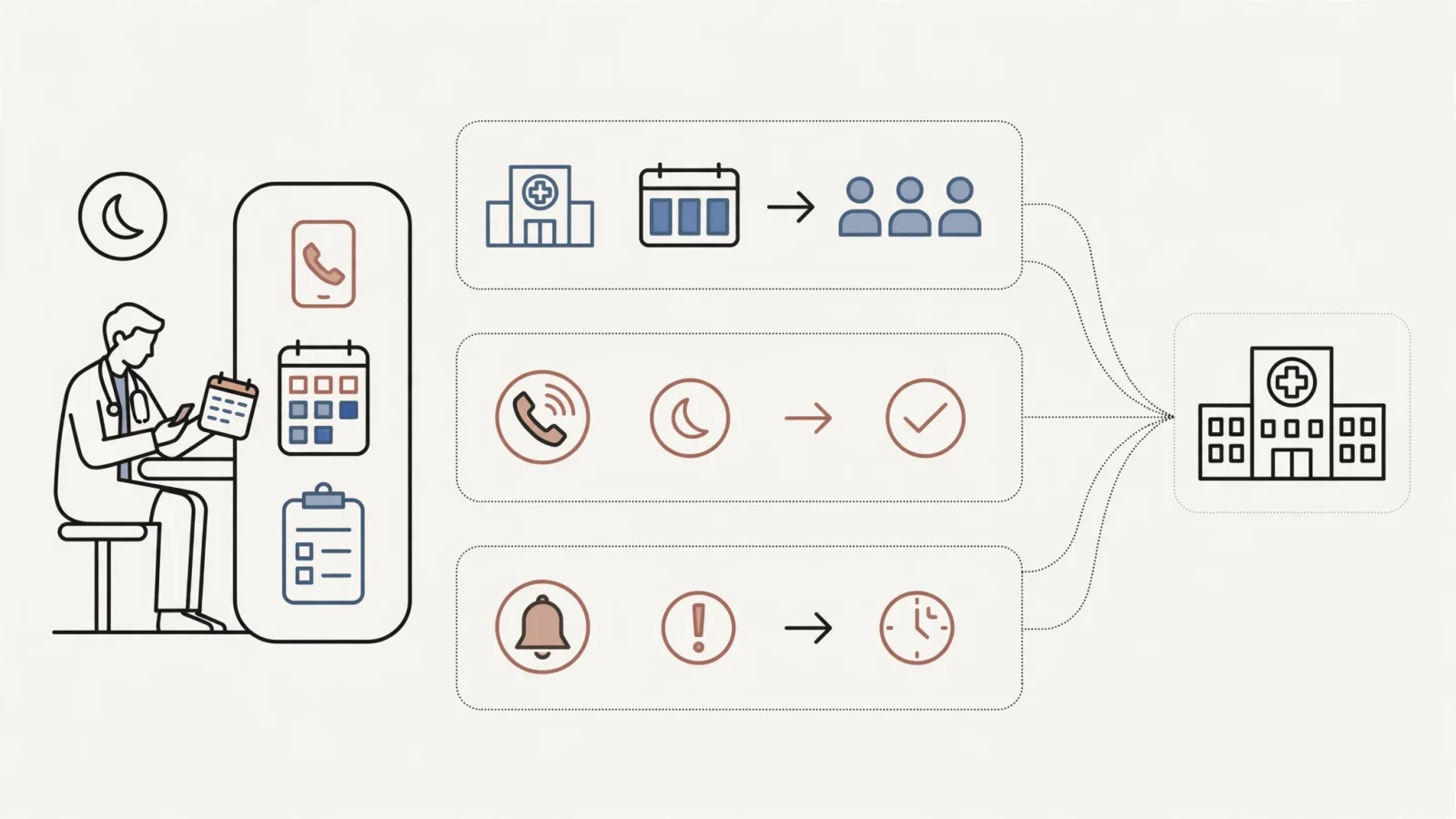
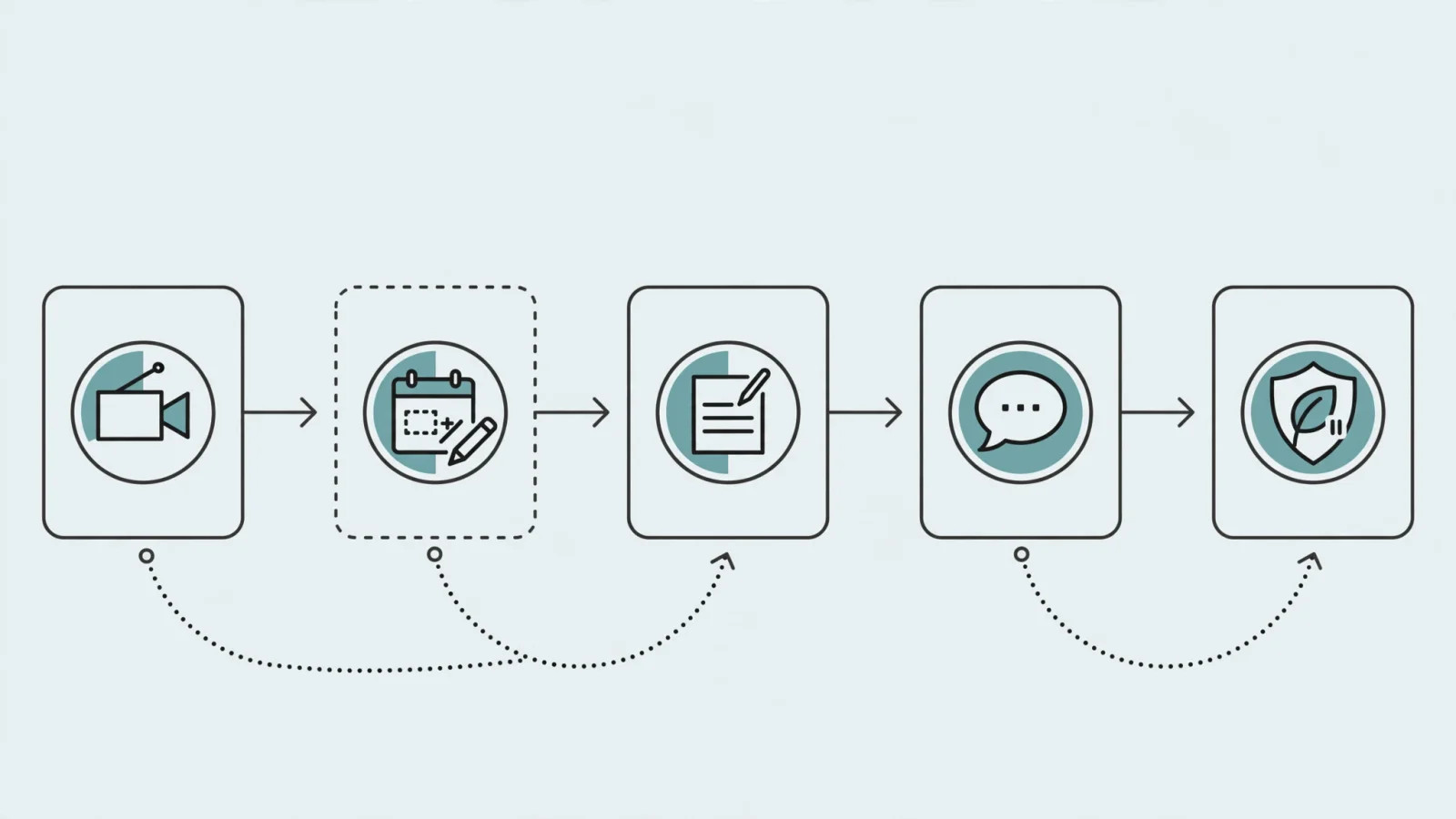
Separate routine risk assessment during scheduled care from business-hours crisis escalation and after-hours on-call work. A fully remote role can still carry significant crisis responsibility, so ask about patient acuity and who handles emergency escalation. Find out whether the practice expects you to provide after-hours coverage, work weekends, or manage callback duties after a patient disconnects during a safety assessment.
HHS emphasizes emergency planning for out-of-state telehealth practice. You need to understand how local emergency resources are identified when the patient is in another state, as well as who makes the final escalation decision.
Treat notes, treatment plans, messages, forms, utilization reviews, and care coordination as part of the job. Ask whether these administrative tasks are scheduled, paid, and included in the stated workweek. If an employer expects progress notes and portal messages to be completed after the last appointment of the day, that unpaid time extends your working hours.
Supervision arrangements vary by license status, training level, jurisdiction, and employment model. Ask who provides supervision, whether it is scheduled and paid, and whether the supervisor holds the appropriate license. For independently licensed psychologists, consultation access often determines whether a high-acuity role is clinically sustainable, so confirm who is available for urgent consultation and whether the employer provides peer consultation for complex cases.
The APA guidelines for telepsychology practice frame these structural supports around competence, informed consent, privacy, emergency procedures, and liability. A sustainable role provides the infrastructure to meet these professional standards without forcing the clinician to absorb the administrative overflow on weekends.
Evaluate Schedule Control and Operational Fit
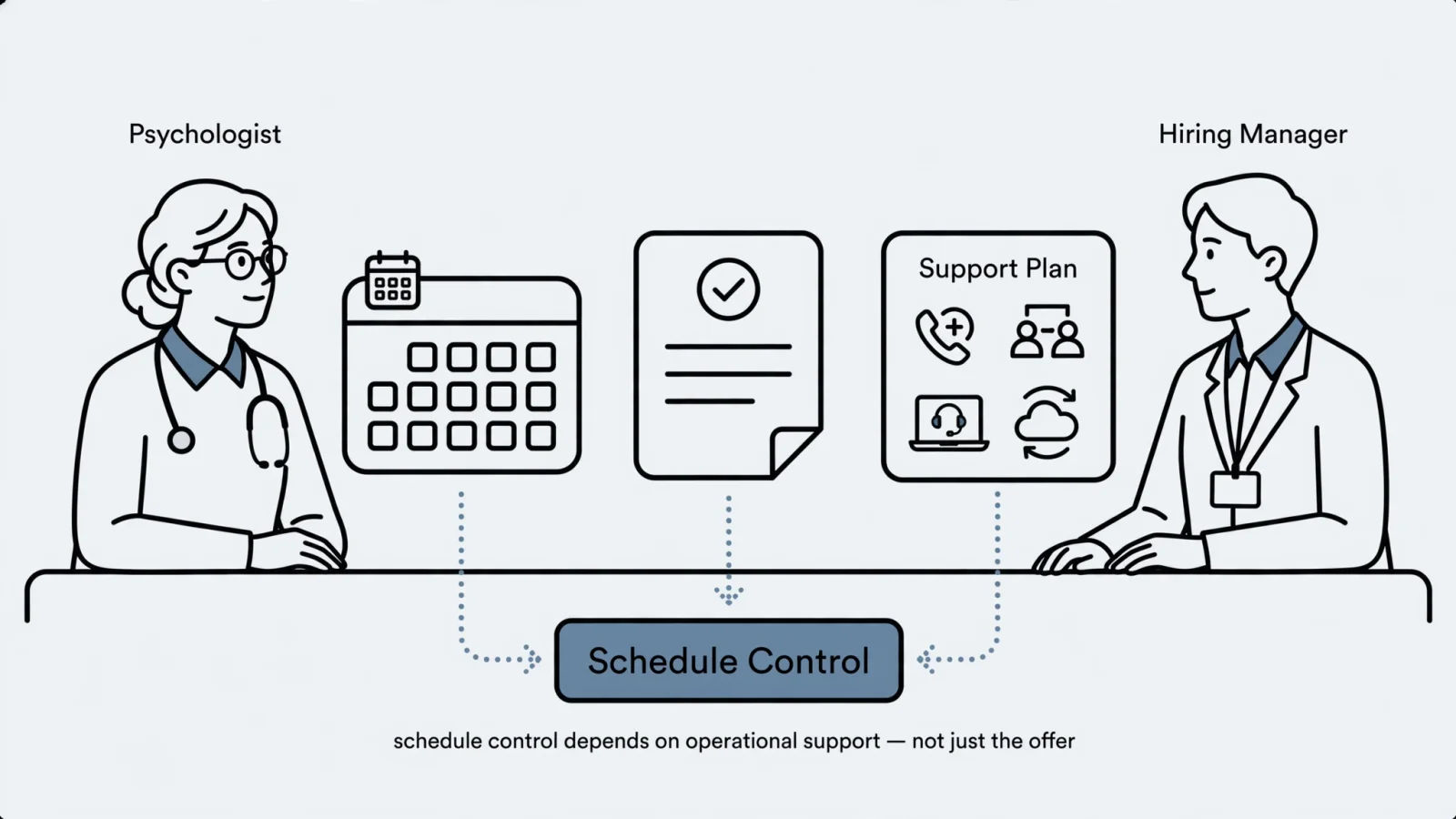
Define schedule flexibility operationally, because a telehealth position offers true flexibility only when you understand the daily requirements. Ask about self-scheduling versus assigned blocks, minimum availability, evening or weekend requirements, split shifts, and protected breaks. Find out how quickly schedules change, who covers your panel during paid time off, and whether you can work from other approved locations.
Different role models offer distinct trade-offs:
- W-2 group-practice or platform roles often provide benefits, centralized scheduling, employer-provided technology, and clinical leadership. They may also impose volume expectations or require specific appointment blocks.
- Independent-contractor or private-practice roles offer autonomy over patients, hours, and modalities while shifting billing, credentialing, marketing, and compliance costs to the psychologist.
- Health-system roles provide referral channels and interdisciplinary support, though they often add team meetings and care coordination to the schedule.
- Alternative clinical roles, such as remote clinical informatics jobs or remote chart review physician jobs adapted for psychologists, trade weekly therapy volume for report writing, program development, or system design.
Evaluate the operational environment before accepting any model by asking who supplies the HIPAA-compliant platform, hardware, and technical support. Confirm the private workspace requirements, internet speed minimums, and outage procedures. If your internet connection drops during a session, you need to know whether the practice imposes a financial penalty and what backup communication method the employer expects you to use.
Calculate the Effective Hourly Value of the Compensation
Compare compensation using an effective hourly value to create a reliable baseline across different employment models. This effective value equals total guaranteed compensation and benefits, adjusted for clinician-paid costs, divided by all required work hours.
Build the full denominator by including sessions, notes, messages, meetings, supervision, training, care coordination, administrative work, and on-call time. A per-session rate rarely equals an hourly rate, so compare salary, hourly, per-session, billed-visit, and collections-based formulas. A high per-session rate loses its value when you spend ten unpaid hours a week managing prior authorizations and following up on unpaid claims.
Account for benefits and clinician-paid costs by evaluating paid time off, patient-volume guarantees, licensing fees, PSYPACT expenses, malpractice coverage, continuing education, and downtime risk. Independent contractors absorb these costs directly, while W-2 roles typically bundle them into the employment package.
Review the contract beyond the headline rate. Candidates using WeekdayDoc can review compensation context, market percentiles, work-life scores, call coverage, and administrative burden alongside the job description. Instead of evaluating a remote role on pay alone, you see the structural demands of the position. Read the complete contract before accepting and pay close attention to non-compete terms, tail coverage, repayment clauses, and restrictive provisions. If an asynchronous telehealth job or hybrid role seems financially attractive, use the WeekdayDoc AI contract scanner to flag aggressive non-competes or payback clauses hidden in the terms.
Use a Telehealth Job Scorecard Before You Accept
Turn your research into an interview checklist covering jurisdiction, workload, crisis protocols, and schedule control. Using a structured scorecard prevents you from accepting a position based on vague promises of flexibility.
| Dimension | What to verify | Positive signal | Work-life concern |
|---|---|---|---|
| Licensure and jurisdiction | Patient states, clinician work state, state licenses, PSYPACT requirements, patient-location verification | Listing names eligible states and explains credentialing support | "Nationwide" language without state-specific details |
| Caseload | Scheduled versus completed visits, session length, intake volume, panel size, messaging volume, report obligations | Transparent clinical-hour and administrative expectations | High volume described only with "earning potential" |
| No-shows and cancellations | Whether scheduled visits, late cancellations, and no-shows are paid; whether the clinician can use the time for notes | Written cancellation policy and clear productivity denominator | Pay based only on completed sessions with no backfill or administrative allowance |
| Crisis coverage | Patient acuity, safety assessments, escalation process, on-call shifts, nights, weekends, backup coverage | Defined emergency plan, handoff process, and clinical backup | Clinician is expected to manage crises alone or outside scheduled hours |
| Documentation | Note format, completion deadline, treatment plans, messages, forms, prior authorizations, utilization reviews | Documentation is scheduled and included in paid work | Notes and messages are expected after the last appointment |
| Supervision and consultation | Whether supervision is required, who provides it, frequency, payment, clinical-director access, peer consultation | Scheduled, paid supervision or reliable clinical consultation | Supervision is informal, unpaid, or unavailable during high-risk cases |
| Schedule control | Self-scheduling versus assigned blocks, minimum availability, evening/weekend requirements, response-time expectations | Clinician chooses blocks and has protected breaks | "Flexible" role requires broad availability or frequent schedule changes |
| Compensation | Base salary, hourly rate, per-session pay, no-show treatment, benefits, license fees, malpractice, CEUs | Compensation formula is understandable before the interview | "Up to" compensation without expected completed volume |
Ask explicitly which states are open and how many visits are scheduled versus completed. Find out who handles emergencies, whether notes and messages are paid, who controls the calendar, and who pays for malpractice coverage.
Look for specific positive signals, including written cancellation policies, protected administrative time, accessible clinical backup, clear compensation formulas, and explicit evening or weekend expectations. Conversely, watch for warning signs such as flexible scheduling paired with broad availability, compensation described only as "up to" a high amount, unpaid documentation, vague crisis coverage, and missing no-show rules. If an employer expects you to manage multi-state compliance without institutional guidance, the role will likely drain your time and compromise your license.
Search telehealth jobs for psychologists on WeekdayDoc, compare the work-life score and compensation context, and review the contract before you sign. Visit WeekdayDoc.com to find a role that fits your clinical skills and your schedule.