988 Remote Jobs: Roles, Pay, and Schedules
Explore remote 988 crisis roles, qualifications, state limits, schedules, pay, and how to find openings that match your needs.

Finding remote 988 crisis roles requires understanding how the national crisis network operates. The three-digit number suggests a single federal call center, leading many applicants to search for one central hiring portal, but the system functions differently. When someone dials or texts the network, the routing system directs their contact to an independently operated regional or local crisis center. Those individual centers manage the hiring, set the schedules, and determine whether their employees can work from home.
The 988 Lifeline network includes over 200 centers, and its careers directory lists them with links to their career or volunteer websites, where you can find open opportunities.
A center in one region might advertise a role open to applicants nationwide, while another restricts remote hiring to its own county. For example, a recent Didi Hirsch mental health posting sought a counselor capable of working remotely anywhere in the United States. A separate Centerstone listing restricted its remote chat and text specialist role to residents of Tennessee, so check the eligibility boundaries for each opening. As you evaluate these positions, WeekdayDoc helps clinicians compare the burnout risks, schedules, and administrative demands of sustainable healthcare roles. Applying that same scrutiny to crisis center postings ensures you understand the operational trade-offs before accepting an offer.
What Remote 988 Work Involves
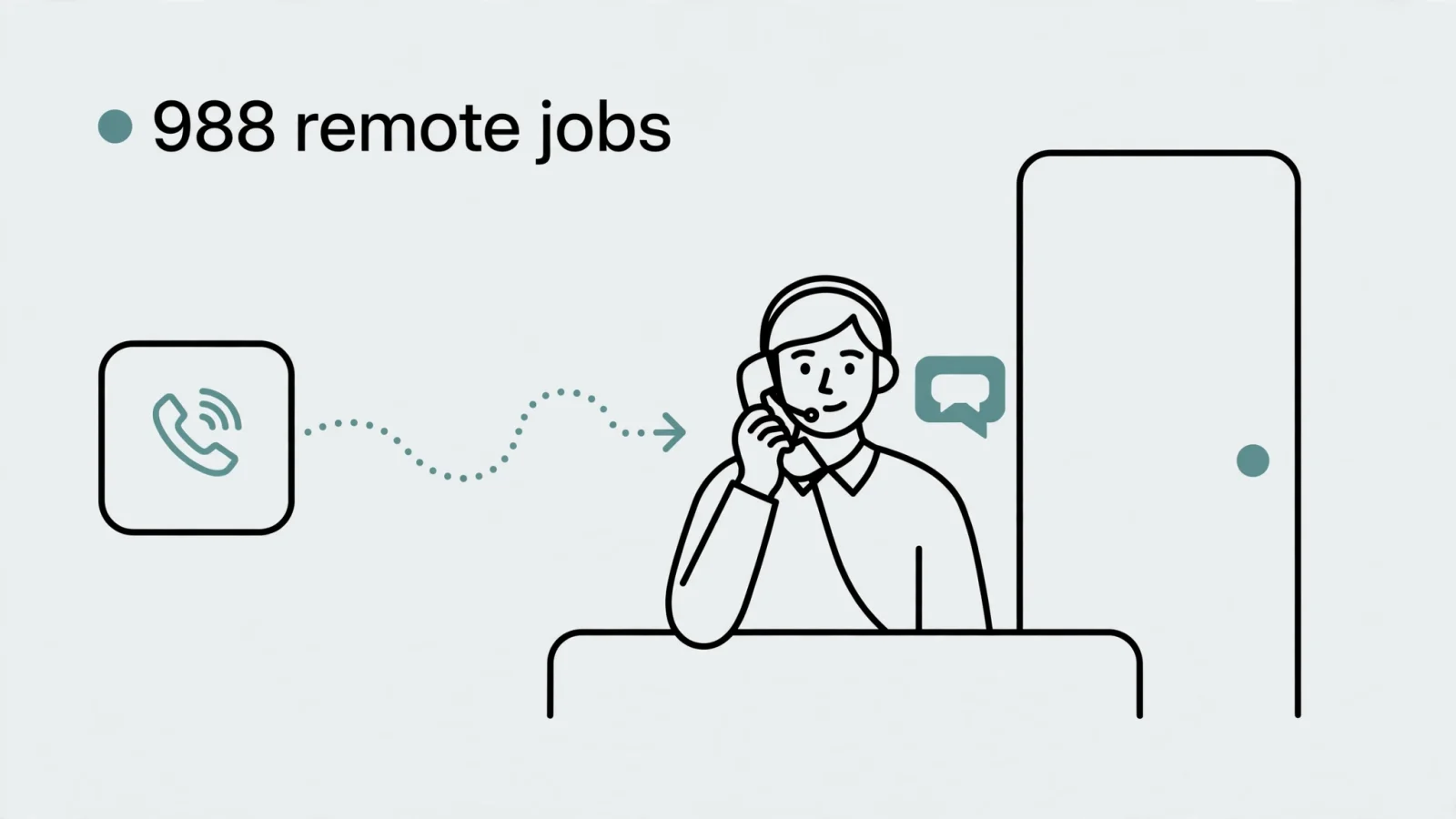
A counselor title in a crisis center describes a specific operational function rather than a broad clinical practice. The work focuses on immediate crisis intervention, risk assessment, and safety planning. When a contact reaches a center, the responder evaluates the person's immediate safety, works to de-escalate emotional distress, and identifies available local resources for ongoing help. This interaction is acute and brief, with the goal of stabilizing the individual in the moment and bridging them to further care.
Operating in this environment requires strict adherence to network protocols. The 2025 Lifeline minimum standards mandate designated training before any staff member independently handles contacts. You learn specific frameworks for assessing suicide risk, managing imminent danger, and coordinating with emergency services when a caller cannot commit to a safety plan. This structured approach ensures consistent care across the network, but it leaves little room for the personalized treatment planning found in traditional outpatient settings.
Check which communication channels the role covers, as some postings specify phone support while others focus entirely on chat and text response. Chat and text roles often require managing multiple concurrent conversations, changing the cognitive load and pacing of the shift. A center might cross-train staff to handle all three modalities depending on volume, or it might isolate chat specialists into a dedicated department. Understanding the expected modality helps you gauge the daily rhythm of the position.
Do not conflate this brief crisis response with ongoing teletherapy or telepsychiatry. Providing longitudinal care involves building a therapeutic alliance over weeks or months, managing ongoing treatment plans, and tracking clinical progress. Crisis intervention requires moving quickly from introduction to assessment to disposition, often without ever learning what happens to the person after the interaction ends. If you want to build ongoing patient relationships, explore adjacent telehealth therapy or psychiatric roles rather than crisis center positions.
Career progression within these centers typically involves moving into operational or clinical leadership. Searching for crisis program manager or clinical supervisor titles reveals roles focused on shift management, quality assurance, and real-time escalation support. Supervisors monitor active contacts, guide counselors through complex risk assessments, and authorize emergency interventions, overseeing the immediate operational flow rather than managing individual patient caseloads.
Degree and Licensing Requirements
Individual centers set their own educational and credentialing requirements based on their specific funding contracts and operational models, meaning you cannot assume a standard degree requirement across the network. Some centers build their staffing models around trained volunteers and undergraduate interns. Others require a bachelor's degree in psychology, social work, or a related behavioral health field for their entry-level employee positions. The posted job description dictates the necessary background for that specific center.
For licensed professionals, the key question is how a center uses their credentials. Physicians, nurse practitioners, psychologists, and licensed clinical social workers frequently encounter counselor job titles that do not require an independent clinical license. Accepting one of these roles means working within the center's standardized crisis intervention protocols rather than operating at the top of your clinical scope. Ask the recruiter whether the position formally utilizes your license, whether the center provides malpractice coverage for your specific credential, and how the center handles clinical supervision hours.
A supervisory role generally carries stricter credentialing requirements, with centers often requiring full independent licensure for the staff members authorizing involuntary holds or managing high-risk emergency dispatches. These clinical supervisors bear the responsibility for complex decision-making when a contact escalates. Reviewing the center's organizational chart helps you understand where your specific degree or license fits into their escalation tier.
Remote roles also impose strict logistical and environmental requirements on your home workspace. Because the work involves highly sensitive health information, centers mandate robust privacy standards. You typically need a designated home office with a closing door to ensure no one else in your household can hear callers or see chat screens.
Technical requirements go beyond basic internet connectivity. Centers routinely specify wired, high-speed ethernet connections and prohibit the use of wireless networks or satellite internet due to latency and security concerns. The Didi Hirsch posting detailed exact technical specifications and privacy rules for its remote staff. Check whether the employer provides the necessary computer equipment, headsets, and secure routing hardware, or if you bear the cost of meeting their technical standards.
State and Geographic Eligibility
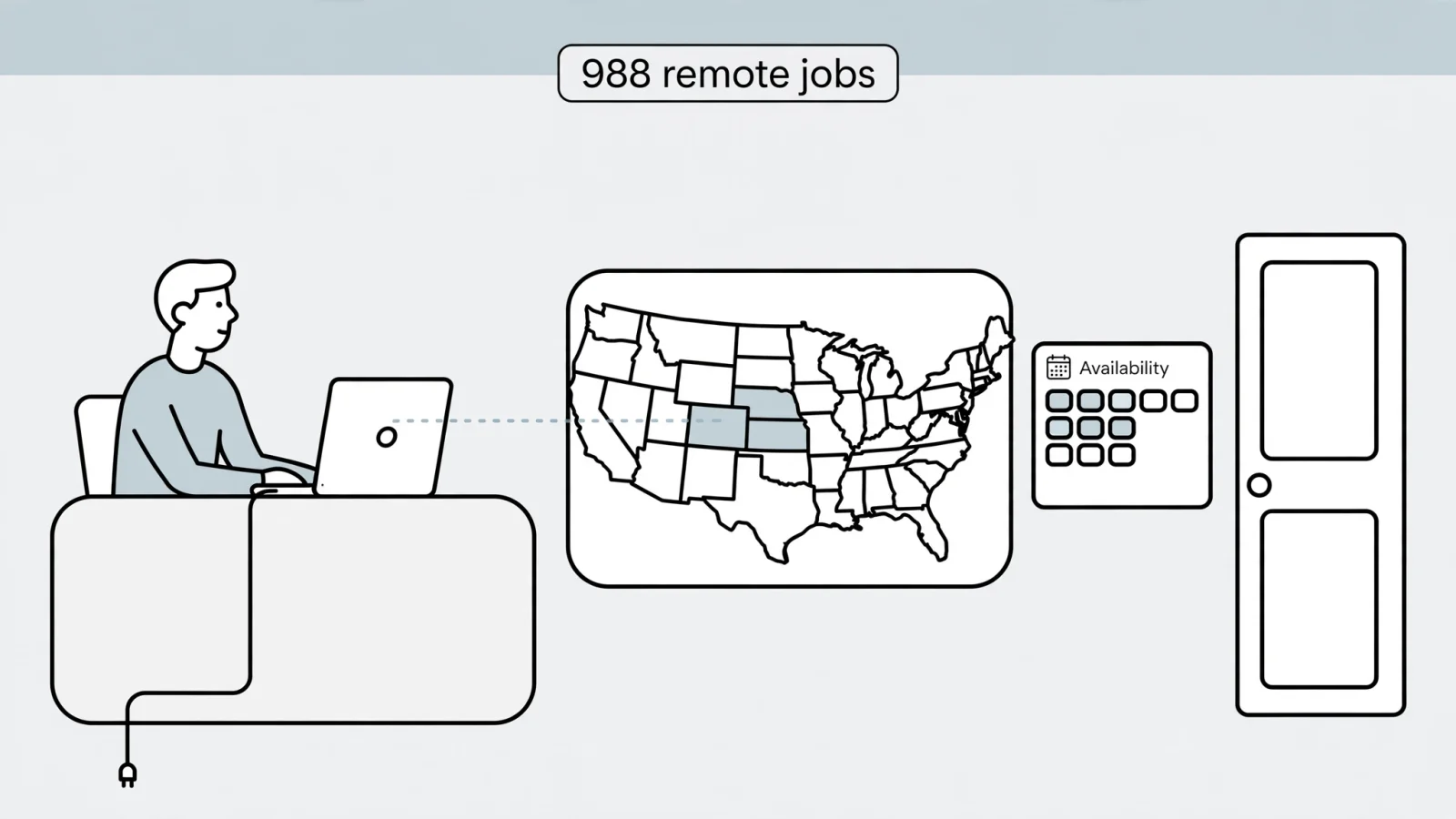
The word remote describes where you physically sit while working, not a guarantee of nationwide eligibility. Employment laws, state tax regulations, and professional licensing rules restrict where organizations can legally hire employees. A crisis center based in Ohio might lack the administrative infrastructure to process payroll taxes or manage labor compliance for an employee living in California, so check which states are eligible for each remote opening.
Funding sources also dictate hiring boundaries. Many contact centers operate using state or county grants that require them to employ local residents. Even when a center answers network overflow calls from across the country, their primary mandate often centers on a specific geographic region. Hiring locally ensures staff possess immediate familiarity with regional emergency response systems, local homeless shelters, and county-specific mobile crisis teams.
Travel restrictions frequently accompany remote agreements. If a center approves you to work from your home in Texas, that approval rarely grants you permission to log in from a hotel in New York during a vacation. Logging into secure health systems from unapproved locations often triggers immediate security lockouts. Ask the recruiter exactly how the center handles temporary travel, permanent relocation, and time zone changes before committing to a remote arrangement.
Comparing the Didi Hirsch and Centerstone postings demonstrates this geographic variation clearly. The Didi Hirsch role accepted applicants from across the United States, indicating an organization built to manage multi-state employment compliance, while the Centerstone posting limited its hiring to residents of Tennessee. Treat the location requirement as a hard filter when evaluating postings, regardless of how aggressively a job board advertises the role as a work-from-home opportunity.
Compare Shifts, Pay, and Support
The national network routes contacts to available centers 24 hours a day, but individual centers manage their own operating hours. Some local organizations answer calls around the clock, while others operate only during daytime hours and forward overnight contacts to larger backup centers. Remote work does not automatically grant you a flexible, self-directed schedule. You typically bid on or receive an assigned shift that dictates exactly when you must remain logged into the routing system.
Clarifying the scheduling mechanics prevents unexpected burnout. Clarify whether the center uses fixed schedules where you work the same hours every week, or rotating shifts that bounce between days, evenings, and nights. Ask about mandatory weekend coverage, holiday obligations, and on-call requirements. Because call volume drives staffing needs, centers often implement strict rules regarding tardiness, minimum weekly hours, and the process for requesting schedule changes.
Compensation structures vary widely based on the center's location, funding, and the required clinical credentials. A Didi Hirsch job posting from January 2026 illustrates one specific model. The employer offered approximately 20 scheduled hours per week at a base rate of $24 per hour, with a $3 differential for overnight shifts. The role also required completing three weeks of full-time, 40-hour-per-week paid training. These figures represent one employer's snapshot, not a validated national benchmark for the entire crisis network.
When researching 988 remote jobs, evaluate the entire compensation package. Check the eligibility thresholds for health insurance, retirement matching, and paid time off, as many centers hire part-time staff who fall below the hours required for full benefits. Understand the overtime policies and how the center compensates staff who get stuck on a high-risk contact past the end of their scheduled shift.
Operational support dictates how long you can sustain the work, since handling back-to-back crisis contacts carries a high emotional toll. Ask recruiters how the center handles post-contact debriefing and whether they allocate paid recovery time after severe interactions. Also clarify the escalation pathway when a caller requires emergency rescue, including how quickly a clinical supervisor can join the contact.
Local jurisdiction rules further complicate the support structure. The network standards require centers to train staff on duty-to-warn procedures and mandatory reporting laws. Because these laws vary by state, ask how the center provides clear, jurisdiction-aware training rather than leaving you to guess about your legal liability during a crisis.
For clinicians comparing crisis center opportunities against broader telehealth roles, WeekdayDoc provides valuable context. WeekdayDoc assigns a 0-to-10 work-life score to clinical listings, allowing you to weigh the impact of call coverage, weekend requirements, autonomy, and administrative burden. Using these metrics helps you identify roles that offer fair compensation without demanding unsustainable schedules. Applying a similar analytical approach to a 988 posting ensures you understand the true demands of the position before signing a contract.
Find Openings and Screen Each Posting
Searching for these positions requires moving past generic job board aggregators and examining the source organizations directly. Because independent centers manage the hiring, search their individual career portals directly. A structured search process helps you filter out expired listings and clearly identify the operational requirements of each active role.
Start With the 988 Lifeline Careers Directory
The most reliable starting point is the official network directory. Navigate to the map interface and select your state or territory of residence, which provides links to the specific centers operating in your region. Following those links takes you to the local employers' own websites, where you can view their current active vacancies.
Once on a center's career page, look for specific operational titles. Search for 988 Crisis Counselor, Crisis Intervention Specialist, or Chat/Text Crisis Specialist. Combine those titles with location filters to uncover 988 remote jobs. Check the opening on the employer's direct site, even if you first spotted the vacancy on a third-party job board, to ensure the position remains funded and open.
Questions to Ask Before You Apply
Use the recruiter screening call to get a clear picture of the day-to-day operations. Start by confirming residency and equipment rules. Ask explicitly which states qualify for employment, whether the role requires specific internet hardware, and how the center handles hardware failures during a shift. Getting those details up front can save time later.
Dig into the daily scheduling realities. Ask whether the role involves fixed or rotating shifts, and confirm the expectations for night, weekend, and holiday coverage. Request details about the initial training period, including the daily schedule, whether the training is fully paid, and how the center evaluates readiness before allowing independent contact handling.
Clarify the clinical boundaries of the position. Ask which degree or license the role requires and how the center utilizes that credential in practice. Discuss the supervision structure, the escalation protocols for imminent risk, and the documentation requirements following each contact. Clear answers regarding charting expectations and post-shift debriefing indicate a center that actively manages staff burnout.
Match the position against your long-term career goals. A remote crisis center job provides structured, immediate intervention work focused on safety planning and de-escalation, demanding high emotional resilience and strict adherence to operational protocols. If you prefer diagnosing conditions, managing ongoing treatment plans, or building long-term therapeutic relationships, look beyond crisis response toward dedicated teletherapy or telepsychiatry practices.
Are you a healthcare professional looking for sustainable remote, hybrid, or on-site roles? WeekdayDoc scores every job listing for burnout risk, call coverage, and schedule flexibility, helping you compare the lifestyle impacts of an offer. Join today to view work-life scores, benchmark compensation, and use our AI contract scanner to evaluate your next career move.