Remote Occupational Therapist Jobs: Find Your Fit
Explore remote OT jobs in telehealth, schools, and clinical review, with guidance on pay, licensure, schedules, and paid documentation.

Occupational therapists can practice remotely by providing direct care through telehealth or using their clinical expertise in remote review roles. Finding one of these positions requires understanding that "remote" describes a work location or a service delivery model, not a guarantee of flexible hours, a lighter workload, or blanket permission to treat clients in any state.
Remote occupational therapist jobs fall into a few distinct categories with different daily expectations. Before leaving an on-site clinic or hospital, you need to know how an employer handles licensure, tracks billable hours, and pays for the time spent documenting care. WeekdayDoc helps clinicians search for these roles by profession, specialty, location, and work type. The platform highlights schedule quality and compensation data, helping you assess a position's schedule and compensation before submitting a resume.

Types of Remote Occupational Therapist Jobs
Looking for remote work means choosing between distinct job paths rather than a single unified role. The options split between providing direct care over video and stepping away from direct treatment to handle administrative review. Neither path is necessarily more common, as availability depends heavily on payer rules and employer needs.
School-Based Teletherapy
School-based remote roles focus on delivering virtual occupational therapy to students during the school day. These positions require much more than logging into a video call for thirty minutes of treatment, as the work involves conducting evaluations, observing students in their educational environment via webcam, and coordinating with teachers, aides, and caregivers.
When considering this path, verify the structural details of the contract. Ask whether the position follows a standard school-day schedule and a nine-month calendar. Clarify the expected caseload and ask whose technology the school uses to connect. Finally, find out if the employer pays for the time spent writing individualized education programs (IEPs), attending team meetings, and documenting sessions, or if compensation covers only direct student contact time.
Pediatric and Outpatient Telehealth
Clinicians working in pediatric and outpatient telehealth treat clients who log in from home or a local clinic. AOTA provides telehealth resources detailing pediatric outpatient models to illustrate how care can be delivered, though these clinics do not necessarily dominate the remote job market.
Working with pediatric or adult outpatients remotely requires direct caregiver involvement. When a child cannot manipulate a therapeutic tool, a parent or guardian acts as the clinician's hands under instruction. Before accepting an outpatient telehealth job, check the specific client population and their expected acuity levels. Determine how the employer handles session cancellations, whether they pay for session preparation, and what happens when a client repeatedly fails to log in for scheduled therapy.
Clinical Review and Utilization Management
For therapists who prefer to leave direct patient care, clinical review and utilization management offer a different remote path. Instead of evaluating clients, an OT in this role reviews therapy service requests, treatment plans, and medical records to determine if requested services meet medical necessity criteria. Similar utilization models exist across healthcare, including specific reviewing roles for physical therapists and other allied professionals.
Review jobs rely on productivity targets, requiring clinicians to process a set number of case files per hour or day. Ask whether the work involves strict quota expectations, mandatory fixed hours, or any weekend coverage, and clarify which state licenses the employer expects you to hold.
What Remote OT Work Involves Beyond Sessions
Telehealth is fully realized clinical work. Delivering therapy through a screen does not remove the responsibility to assess a client accurately, ensure their safety, document their progress, and coordinate their care. A remote schedule can fill with the exact same administrative tasks that occupy an in-person therapist.
Conducting an evaluation over video introduces mechanical and clinical challenges, as standardized tests designed for in-person administration do not always translate smoothly to a webcam. An AOTA document on school-based virtual evaluation cautions that the validity of test results can be affected when standardized assessments are administered remotely. You will need to review existing records, coordinate with teachers or caregivers to set up the testing environment, and select assessments suited to virtual delivery. Clinicians also document exactly how the test was administered and note any limitations the remote environment placed on the results. They use professional judgment to decide whether telehealth is safe and appropriate for each client, while protecting patient privacy and following payer billing rules for virtual care.
Live sessions represent only a fraction of the workload. Preparing materials, attending interdisciplinary meetings, and communicating with local support staff take up significant time. A remote clinician coordinates with the people physically present with the client to ensure the environment is safe and the necessary therapeutic tools are within reach. Ask potential employers what protocol to follow when a client needs an in-person assessment or local physical support. Find out who provides the software platforms, therapy materials, and technical support when a connection fails. Strong remote roles establish clear systems for handling technology failures and provide a distinct pathway for transferring a client to in-person care when telehealth stops being an effective intervention.

Check State Licensure Before Applying
A remote role does not automatically grant permission to work from anywhere in the United States. Telehealth regulations depend on where the therapist and client are located, and failing to understand these rules can jeopardize a clinician's professional standing.
The U.S. Bureau of Labor Statistics notes that all states require occupational therapists to be licensed, so occupational therapy remains subject to state licensure.
When evaluating a job offer, ask which states you are permitted to work from and where the clients will reside. Clarify who carries the responsibility for verifying a client's location at the start of each session and how the clinic handles temporary changes, such as a patient traveling out of state for a week. Insurers and healthcare facilities frequently impose their own credentialing requirements on top of state law. Ask whether the employer pays for the initial applications and ongoing renewals for multiple state licenses, because those costs add up quickly when treating a regional patient panel.
Compare Pay, Schedule, and Workload
Remote healthcare compensation models vary by employer. Some offer a standard annual salary, while others pay only for the minutes spent actively treating a patient on video. Understanding how those models compare requires looking at baseline salary data and the reality of billable hours.
The Bureau of Labor Statistics provides a helpful baseline for occupational therapy compensation, though it does not separate data by remote or on-site status. In May 2025, the BLS reported a median annual wage of $100,330 for occupational therapists. Breaking that data down by industry shows how compensation shifts based on the service setting.
| BLS industry category | OT median annual wage, May 2025 |
|---|---|
| Educational services | $87,300 |
| Offices of physical, occupational and speech therapists, and audiologists | $97,940 |
| Hospitals | $102,820 |
| Nursing care facilities | $105,850 |
| Home healthcare services | $106,300 |
These figures represent industry-level compensation, not a promised rate for a remote position. They serve as context for evaluating an offer, helping you see how a virtual school-based salary compares to the broader educational services market.
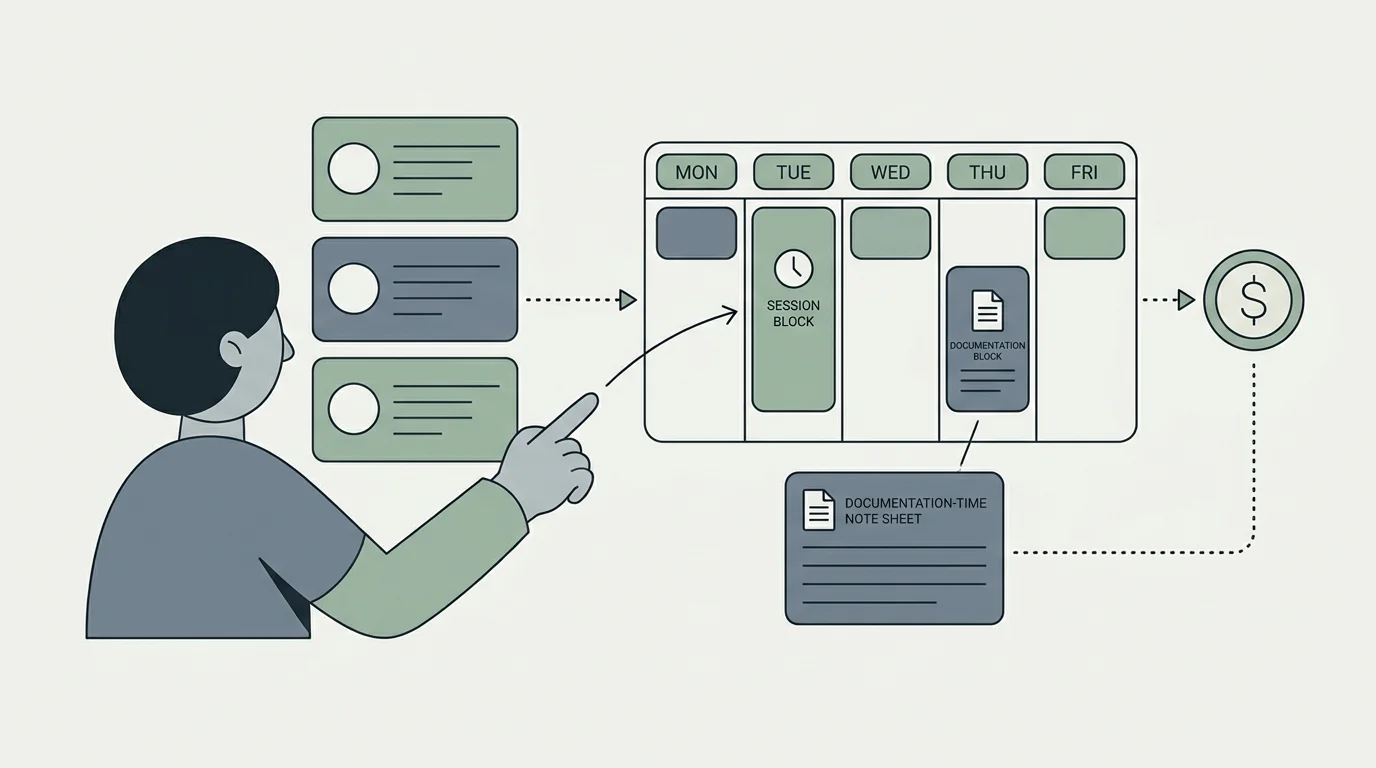
Comparing a billable-hour rate directly against an annual salary produces a misleading result. A $60 hourly rate sounds competitive until you realize you only get paid for 24 hours a week due to patient cancellations and unpaid administrative time. When reviewing a contract, check whether the pay is an annual salary, a per-visit fee, or a billable-hour rate. Find out which hours are guaranteed, and ask if the employer pays for the time spent writing evaluations, finishing daily documentation, attending staff meetings, and completing mandatory training. Determine what happens to your paycheck when a patient fails to show up for a virtual appointment.
You also need to factor in employment status and benefits. An independent contractor (1099) role might offer a higher hourly rate, but it leaves you responsible for self-employment taxes, health insurance, liability coverage, and equipment costs. Schedule flexibility requires equal scrutiny, as a remote label does not guarantee a Monday-through-Friday, nine-to-five schedule. Some roles require evening availability to treat children after school or adults after work, mirroring on-site therapists who adjust hours to accommodate their clients.
The regulatory environment also sets how long certain Medicare therapy services can be furnished by telehealth. An update to Medicare therapy services from CMS extended the ability of occupational therapists, physical therapists, and speech-language pathologists to furnish Medicare telehealth services through December 31, 2027. Because the update concerns Medicare, it doesn't establish coverage from other payers.
Find and Evaluate Remote OT Listings
Finding the right role starts with targeted searching, since general job boards often bury remote positions under local clinic listings. Use specific search phrases such as "remote occupational therapist," "telehealth occupational therapist," "virtual school-based OT," or "remote OT clinical review" to filter out on-site requirements.
Once you locate a posting on a school job board or employer career page, verify its terms closely. WeekdayDoc assists healthcare professionals with this step by allowing clinicians to search by profession, specialty, location, and work type. The platform surfaces schedule quality and compensation structure alongside the basic job description.
WeekdayDoc assigns each listing a 0-to-10 work-life score based on factors such as call coverage, required nights, weekend expectations, schedule flexibility, autonomy, and administrative burden. This score acts as a job-comparison aid, giving you a fast way to judge a role's operational demands before reading the entire contract. You can view salary comparisons and market percentiles right next to the posting, adding practical context to the BLS benchmarks. By combining targeted searches with clear visibility into how a clinic treats its staff, you can identify positions that offer fair compensation for every hour worked.
Remote Occupational Therapist Jobs: FAQs
Role duties, licensure requirements, and daily schedules vary based on the employer, the payer, and the client's physical location.
Can occupational therapists work remotely?
Yes. Occupational therapists can work remotely by delivering direct care through telehealth platforms or by using their clinical expertise in non-treatment roles, such as remote clinical review and utilization management. These roles parallel other remote clinical opportunities where practitioners apply their training outside a traditional hospital setting.
What types of remote jobs can OTs search for?
The primary job paths include virtual school-based teletherapy, pediatric and adult outpatient telehealth, and remote clinical review. Direct care roles require evaluating and treating clients over video, while review roles involve auditing treatment plans and medical records for medical necessity.
Can remote OTs work from any state?
A remote position does not bypass state borders. State boards generally require the occupational therapist to hold an active license in the exact state where the client is physically located at the time of service. Employers and insurance payers often add their own credentialing requirements on top of state laws.
How much do remote occupational therapists make?
The BLS reports a May 2025 median annual wage of $100,330 for occupational therapists, with industry medians ranging from $87,300 in schools to $106,300 in home healthcare. Remote pay depends on whether the clinician receives a salary or a billable-hour rate, and whether the employer pays for documentation and cancellations.
Are virtual OT evaluations appropriate for every client?
Virtual evaluations require careful clinical judgment. Some standardized tests lose validity when administered over video, and certain clients lack the physical safety or cognitive attention required for a remote assessment. Therapists coordinate with local caregivers and document any limitations the virtual environment causes.
Does a remote OT job guarantee flexible hours?
A remote location does not guarantee a flexible schedule. Many school-based telehealth jobs require strict alignment with school hours, and outpatient telehealth roles often demand evening or weekend availability to match client schedules.
What should an OT ask about documentation, cancellations, and paid hours?
Ask whether you receive pay for non-billable time, including writing notes, preparing materials, and attending meetings. You also need to know the clinic's policy on client no-shows and whether you receive compensation when a scheduled telehealth session falls through.
Ready to evaluate the actual workload and compensation of your next role before you apply? Search for remote opportunities, compare work-life scores, and check market salary percentiles at WeekdayDoc.