Remote Pharmacist Jobs: Roles, Pay, and Work-Life Fit
Explore remote pharmacist roles in hospital order review, managed care, and virtual care, with guidance on pay, licensing, schedules, and workload.

A pharmacist looking for remote work often pictures a home office, a predictable daytime schedule, and a break from the physical demands of retail or hospital floors. These positions span a much wider range of clinical and administrative functions. A pharmacist remote job might involve verifying hospital orders overnight, processing payer coverage determinations, or conducting virtual medication reviews with patients. The "remote" label describes how the service reaches the patient or facility, but it does not guarantee working from home, standard business hours, or a lighter overall workload. To find a role that fits your life, compare the specific worksite, clinical duties, eligible practice states, shift structure, and total compensation. WeekdayDoc structures this decision data, providing a clear view of schedule expectations, compensation context, and a work-life score so you can evaluate the operational details before submitting an application.
Types of Remote Pharmacist Jobs
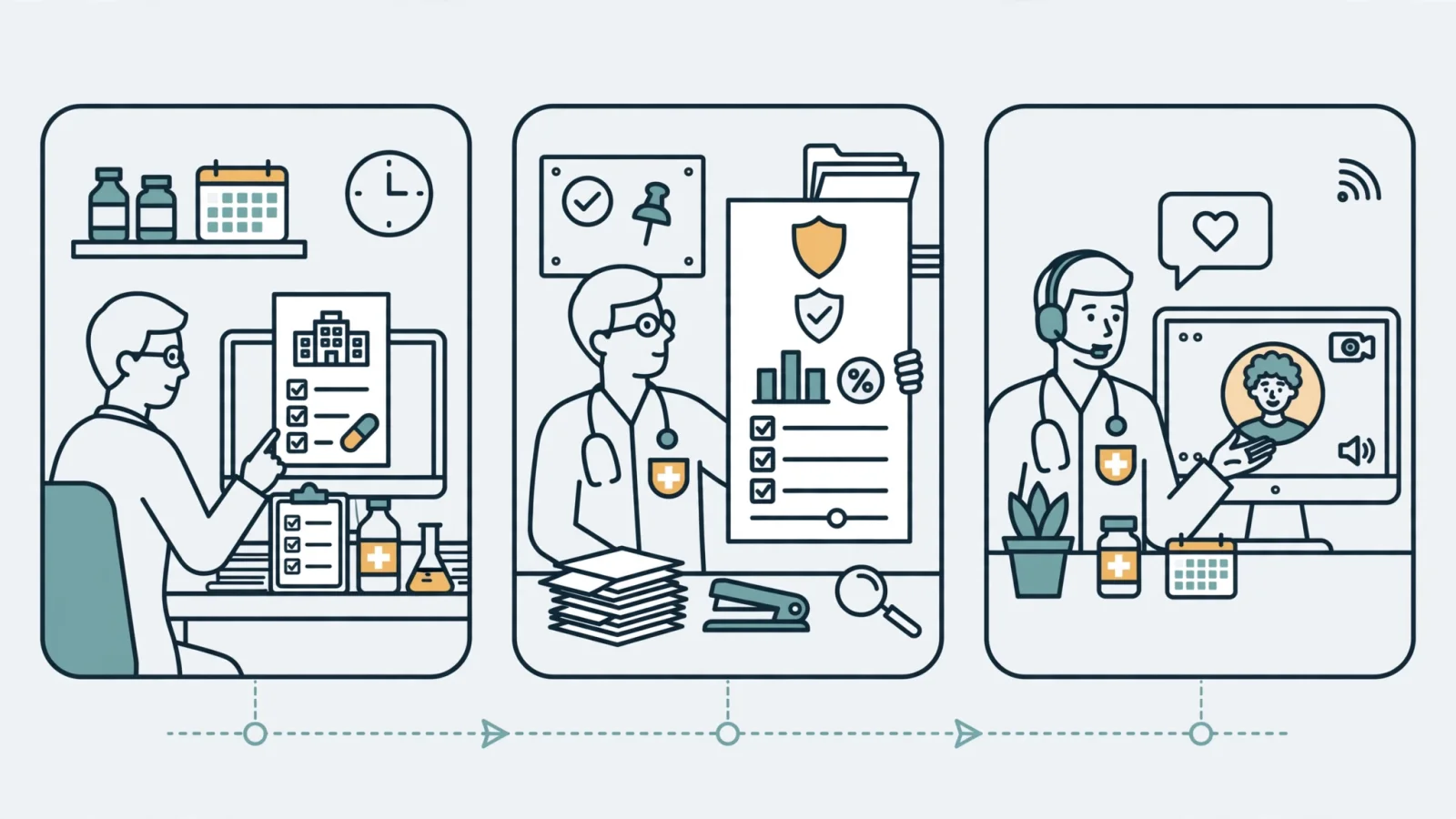
Remote pharmacy roles differ in their setting, patient contact, and balance of clinical and administrative work. Because exact duties vary by employer, evaluate the daily workflow instead of relying on the job title alone. Evaluating remote pharmacist positions requires understanding which core area of pharmacy practice the role supports.
Hospital Order Review and Telepharmacy
Health systems hire telepharmacists to extend clinical coverage, manage peak volume, and maintain 24-hour pharmacy operations without staffing every facility onsite overnight. According to a recent ASHP Statement on Telehealth Pharmacy Practice, these services frequently include medication selection, order review, dispensing support, IV admixture verification, patient counseling, and clinical monitoring. To perform these duties, you log into the hospital's electronic health record to verify computerized provider order entries, check weight-based dosing, and flag drug interactions.
This work requires the same acute-care clinical judgment as being on the floor, meaning you communicate directly with bedside nurses and attending physicians to resolve order discrepancies or recommend alternative therapies. Because hospitals operate continuously, these positions frequently involve second shifts, overnights, weekends, and holiday rotations. Ask the hiring manager whether the role operates entirely from your house, follows a hybrid schedule, or requires you to work from a central licensed telepharmacy facility.
Managed Care, Payer, and PBM Roles
Pharmacy benefit managers and health insurance companies hire pharmacists to manage drug utilization and control costs, shifting the focus from acute patient care to policy application, clinical documentation, and administrative review. You spend your shifts working on formulary management, prior authorization processing, coverage policy development, and medication access programs. When a provider prescribes a high-cost specialty medication, for example, you review the patient's chart against the payer's step-therapy requirements and clinical guidelines to approve or deny the claim.
The American Pharmacists Association's career profile describes these functions and notes that some pharmacists conduct virtual or telephonic medication therapy management alongside their policy duties. While a recent APhA survey of 37 managed-care pharmacists offers a useful look at the structure of these roles, the small sample size serves better as a description of responsibilities than a definitive salary benchmark. These positions tend to offer more predictable daytime schedules than hospital order review, replacing clinical emergencies with strict productivity metrics, turnaround-time requirements, and high case volumes.
Virtual Medication Management and Telehealth
Telehealth clinics and primary care networks employ remote pharmacists to provide direct patient care outside the traditional dispensing environment. These roles focus on phone-based or video-based medication reviews, chronic disease state management, patient counseling, and care coordination. Depending on the clinic, you might run a virtual anticoagulation program, manage diabetes medication titrations under a collaborative practice agreement, or conduct post-discharge reconciliation to prevent hospital readmissions.
Patient interaction forms the core of this job, so you spend the majority of your shift talking to people, identifying adherence barriers, and coordinating with primary care providers to adjust regimens. Ask the hiring manager about the expected daily patient-contact volume, and confirm whether the position operates entirely from your residence or requires you to conduct virtual visits from a specific clinic location.
Does Remote Mean Work From Home?
The term "remote" indicates that the pharmacist and the patient, or the pharmacist and the dispensing facility, sit in different locations. It does not automatically mean you can work from your living room. Many employers operate centralized telehealth hubs where clinicians report in person to provide remote services to other facilities.
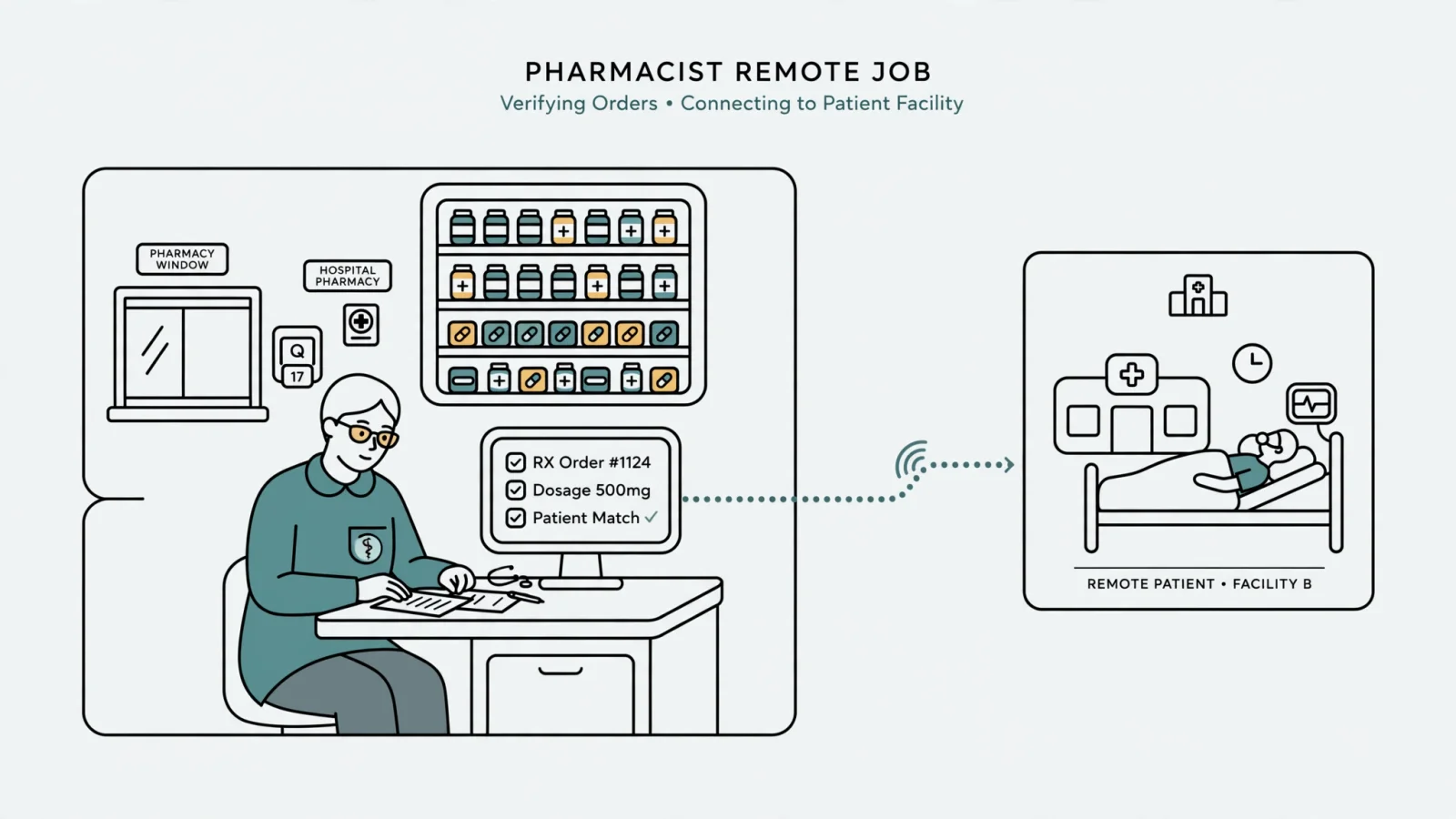
One concrete example highlights this distinction. An ASHP CareerPharm listing for a Cardinal Health "Pharmacist - Remote Pharmacy Services" role, viewed October 22, 2026, explicitly states that the pharmacist must work within a licensed pharmacy rather than from home. The same listing describes a schedule of seven days on followed by seven days off, covering overnight shifts. While one posting does not represent the entire job market, it demonstrates why candidates need to read the work-location and schedule details carefully.
Prompt recruiters to confirm the exact physical requirements of the job, including whether the role is exclusively work-from-home, hybrid, or site-based. Determine if the employer enforces residence-state restrictions that prevent you from moving, and ask if the company mandates onsite training periods or travel for quarterly meetings. Confirming the shift structure early prevents surprises regarding nights, weekends, holidays, call coverage, and the specific time zones you will support.
What Licenses and Experience Do Remote Pharmacists Need?
Telepharmacy practice crosses state lines, introducing significant regulatory complexity. State pharmacy boards set their own requirements for out-of-state clinicians providing services to their residents, meaning one pharmacist license does not authorize you to practice nationwide. If a telepharmacy company covers hospitals in five different states, you generally need an active pharmacist license in all five jurisdictions before you can verify orders for those facilities.
Check which states the employer serves and what specific pharmacist licenses or registrations the role requires. Ask whether the organization provides administrative support for the credentialing process and if they reimburse the costs of multi-state licensure, background checks, and fingerprinting. If you are exploring remote pharmacist jobs in Georgia, for example, verify whether the employer requires only a Georgia license or expects you to acquire neighboring state credentials within your first ninety days.
Experience requirements remain employer-specific. The Cardinal Health listing mentioned earlier expects candidates to have hospital pharmacy experience, which makes sense for a role verifying acute-care orders. Managed care or PBM roles might prefer residency training or retail experience. Evaluate each posting's criteria rather than assuming remote positions are universally open or closed to early-career applicants, and tailor your application materials to highlight the specific clinical background the role demands.
How Much Do Remote Pharmacist Jobs Pay?
For context, the U.S. Bureau of Labor Statistics reports that the national median annual wage for pharmacists was $140,910 in May 2025. This occupation-wide figure provides broad context for the profession, but it does not specify pay for telepharmacy roles.
A snapshot of WeekdayDoc listings from October 18, 2026, offers a narrower view of advertised compensation. The platform showed 348 live remote listings, with salary data disclosed on 181 of them. Among those listings, the advertised-pay median was $166,000, and the 75th percentile reached $189,000. Treat this as a measure of posted pay for active listings, not an accepted-offer workforce survey. Because the BLS and WeekdayDoc figures measure different populations, they do not establish that remote roles pay more than onsite positions.
When weighing a job offer, compare the pay basis and expected hours against the workload. Determine if the role pays a flat salary, an hourly rate, or relies on productivity bonuses tied to case completion. Ask about shift differentials for overnight or weekend coverage, and evaluate the overall benefits package. You also need to confirm whether the company covers the cost of your home office equipment, internet stipends, and continuing education requirements.
How to Compare Remote Pharmacist Jobs Before Applying
Finding a remote position does not automatically improve your work-life balance, since a home-based role with unreasonable productivity targets and rotating overnight shifts can cause as much burnout as a busy retail counter. A few practical questions can help you assess the job's day-to-day demands before signing a contract.
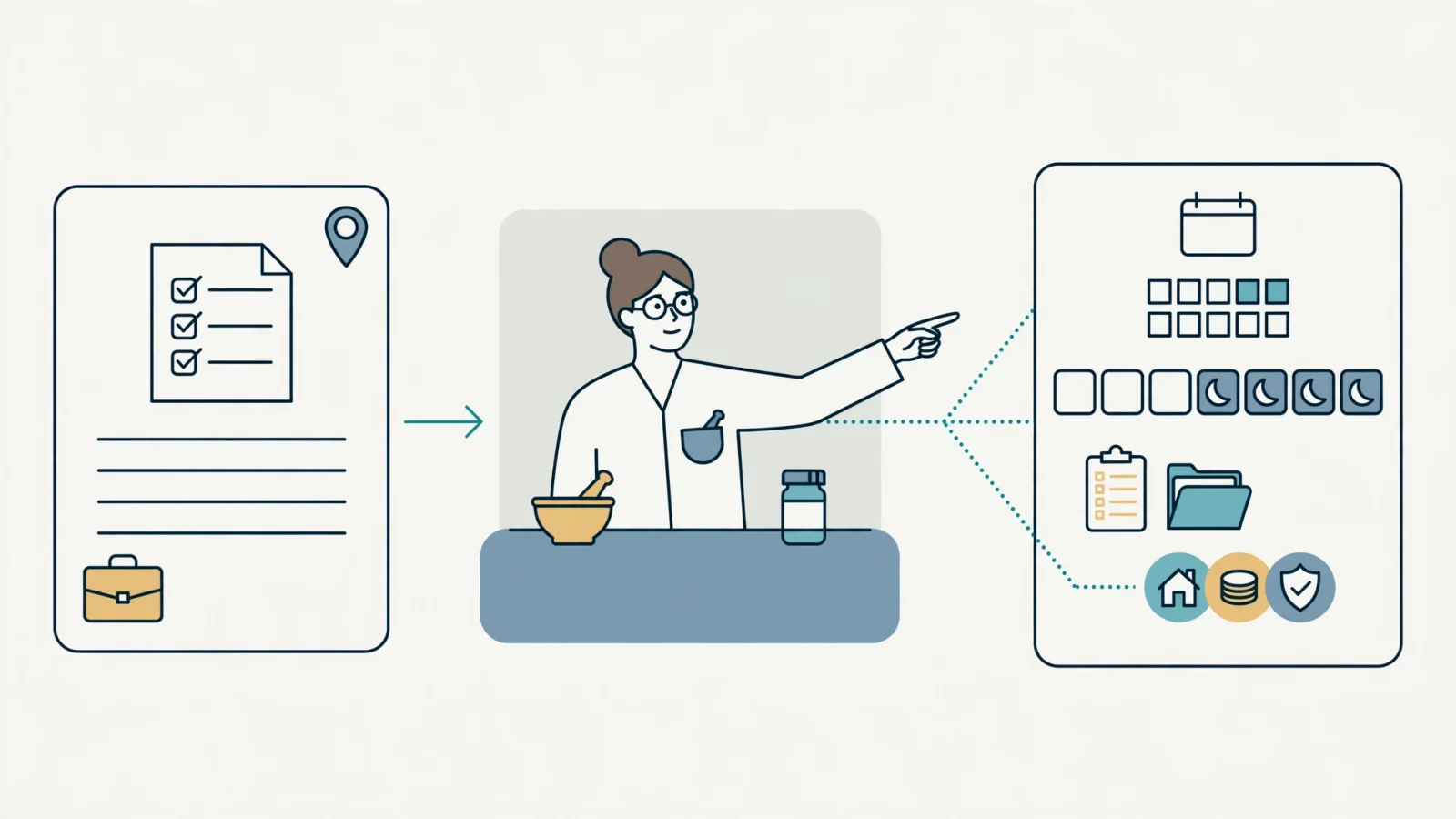
Start by evaluating the workload and schedule. Clarify whether the shifts are fixed or if they rotate based on coverage needs, and note the specific expectations for nights, weekends, holidays, and on-call coverage. Ask the hiring manager about the expected order, case, or call volumes per shift to understand the pace of the work. Find out what turnaround times or productivity targets govern performance reviews, and check if the role carries routine after-hours documentation responsibilities.
Break down the daily role content next. Determine how much time goes toward patient care or clinical review versus administrative documentation and internal meetings. Assess the clinical support structure by asking about supervision, escalation paths for complex clinical issues, and how you will collaborate with prescribers.
WeekdayDoc helps you structure this evaluation. When you are evaluating remote pharmacist jobs on the platform, you can view a 0-to-10 work-life score attached to each listing. This metric synthesizes factors such as call coverage requirements, night and weekend expectations, schedule flexibility, clinical autonomy, and administrative burden. Use the score and the provided compensation context as a screening aid to flag roles that match your lifestyle needs, focusing your search and prompting the right questions during interviews. As you prepare to apply, tailor your resume to the specific tasks required for the role. If you receive an offer, review the contract terms carefully for payback clauses, non-competes, and equipment return policies.
Remote Pharmacist Job FAQs
Remote pharmacist roles exist across several job families, but location requirements, daily duties, and licensing demands vary widely. Review these specific answers to common questions as you evaluate potential career moves.
Can Pharmacists Work Remotely?
Yes. Pharmacists work remotely in health-system order review, managed care policy, prior authorization processing, and virtual medication management. The delivery method changes, but the requirement for clinical accuracy and regulatory compliance remains identical to onsite practice.
What Types of Pharmacist Jobs Can Be Remote?
Common remote roles include hospital telepharmacy, where clinicians verify orders and check IV admixtures for distant facilities. Managed care and PBM positions involve utilization review and formulary management. Telehealth roles focus on direct patient counseling, medication therapy management (MTM), and chronic disease management via phone or video.
Does a Remote Pharmacist Job Mean Working From Home?
No. Many employers require remote pharmacists to work from a centralized, licensed telepharmacy facility or a regional corporate hub. Even work-from-home positions often enforce residence-state restrictions, mandate specific hours to cover certain time zones, and require a private, secure workspace to meet HIPAA regulations.
What Licenses Do Remote Pharmacists Need?
You generally need an active pharmacist license in the state where the patient or the dispensing facility is located. Pharmacists covering hospitals in multiple states must maintain active licenses in each jurisdiction. Ask potential employers which states they serve and if they cover the cost and administrative burden of maintaining multiple credentials.
How Much Do Remote Pharmacist Jobs Pay?
Pay depends on the role, shift, and employer. While the BLS reports a national median annual wage of $140,910 for all pharmacists in May 2025, a WeekdayDoc snapshot from October 2026 showed a median advertised pay of $166,000 among remote listings disclosing salary. Evaluate base pay alongside shift differentials, productivity bonuses, and licensing reimbursement.
Can a New Pharmacist Qualify for a Remote Role?
Experience requirements depend entirely on the employer and the specific duties. Roles involving independent acute-care order review often require hospital experience or residency training. Other positions in call centers or prior authorization may accept recent graduates. Always check each job posting for its specific clinical criteria.
Ready to find a role that fits your clinical background and lifestyle goals? Browse remote and telehealth pharmacist positions on WeekdayDoc. Compare accurate salary context, evaluate schedule expectations with our 0-to-10 work-life score, and set customized job alerts to find a sustainable path forward in your pharmacy career.