Infectious Disease Pharmacist Jobs: Roles and Pay
Explore infectious disease pharmacist roles, training, salary context, remote options, and key questions to ask before accepting an offer.

Infectious disease pharmacy requires balancing individual patient outcomes with broader public health objectives. The specialty combines direct clinical care with antimicrobial stewardship operations. Finding the right position means looking past the job title to understand how much time a role dedicates to hospital rounds versus program management. WeekdayDoc helps healthcare professionals evaluate these positions by providing listing-level pay data, work-life scores, and schedule expectations before applying. The employer’s full job description is still the best source for role-specific details, but having structured comparison data makes evaluating offers much more straightforward.
What Do Infectious Disease Pharmacist Jobs Involve?
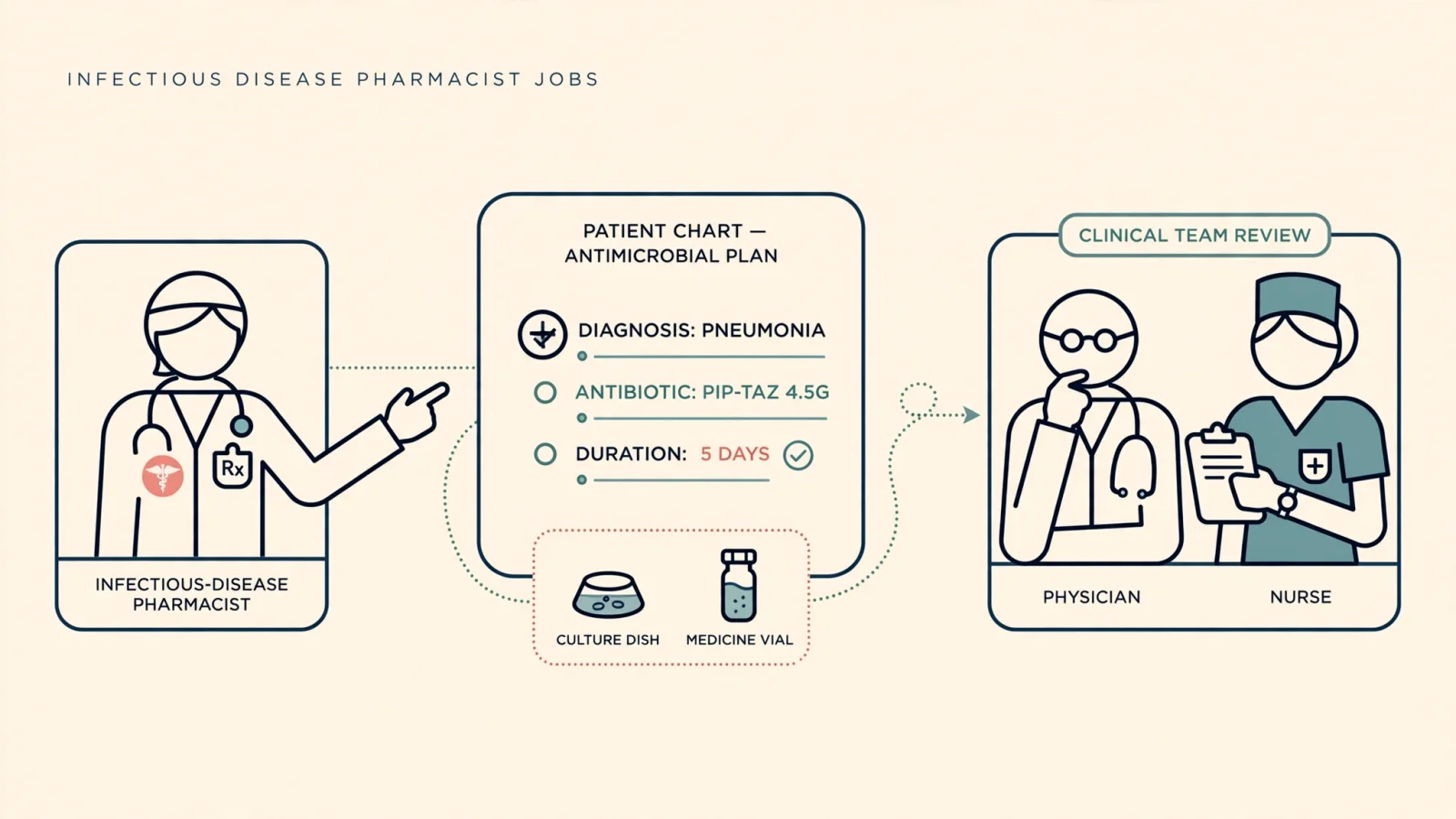
The daily scope of infectious disease pharmacist jobs spans a wide range of clinical and operational duties. A joint statement by ASHP and SIDP outlines how practitioners handle both patient-specific medication recommendations and system-level antimicrobial management. These professionals optimize dosing based on pharmacokinetics, monitor for adverse drug reactions, and guide the selection of targeted therapies once culture results return.
Job titles often fail to reflect the daily responsibilities of the position. A hospital might advertise for an infectious diseases clinical pharmacist, yet the role could require you to spend half your shift on general order verification or decentralized staffing. Other positions dedicate all working hours to consulting on complex cases, such as bacteremia, endocarditis, or central nervous system infections.
Operational stewardship forms the other half of the specialty. The Centers for Disease Control and Prevention identifies pharmacy expertise as a core element of hospital antibiotic stewardship programs and names physicians and pharmacists as examples of program leaders. It also recommends interventions such as prospective audit and feedback or preauthorization, along with monitoring antibiotic prescribing, the impact of interventions, and resistance patterns. So, the split between clinical and operational responsibilities is an important part of evaluating a prospective role.
Types of Infectious Disease Pharmacist Jobs
Because naming conventions vary across health systems, job titles overlap heavily. You will see listings for Clinical Pharmacy Specialist in Infectious Diseases, Infectious Diseases Pharmacotherapy Specialist, and Antimicrobial Stewardship Pharmacist. These labels do not guarantee a specific workflow. Some roles combine specialist work with coverage across several hospital sites, while others remain strictly confined to a single intensive care unit or specialty clinic.

Inpatient ID Clinical Pharmacist Roles
Inpatient clinical specialists typically integrate directly with physician-led consult services. Participating in daily rounds, these pharmacists review patient charts to optimize complex regimens. They adjust doses for changing renal function, manage drug interactions, and transition patients from intravenous to oral antibiotics when appropriate. Because the pace follows the hospital's admission and consult volume, asking how much time involves direct patient care versus unit-based staffing duties helps clarify the expectations. Understanding whether the role requires covering general clinical services on weekends provides a clearer picture of the workload.
Antimicrobial Stewardship Pharmacist Roles
Stewardship positions focus heavily on population-level interventions and quality improvement. These pharmacists conduct prospective audit and feedback, which involves reviewing active antibiotic orders after 48 to 72 hours and recommending de-escalation based on susceptibility data. They also build order sets in the electronic health record, manage medication shortages, and present antimicrobial-use data to hospital leadership. A stewardship pharmacist needs protected time to accomplish these programmatic goals. Without dedicated hours, the demands of daily staffing easily overwhelm the data collection and protocol development required to maintain a successful program. Questions about data support, physician partnership, and executive backing help determine if a stewardship role has the resources to succeed.
Ambulatory ID, HIV, and OPAT Roles
Outpatient settings offer distinct career paths focused on long-term disease management. Ambulatory infectious disease roles often center on HIV care, where pharmacists manage antiretroviral therapy, monitor viral loads, and provide medication counseling. Outpatient parenteral antimicrobial therapy (OPAT) and complex oral antimicrobial therapy (COpAT) represent another growing sector. Pharmacists in these clinics coordinate home infusion services, track weekly laboratory results to prevent drug toxicity, and manage catheter-related complications. Clinicians considering these positions need to clarify whether the role sits within a single clinic or requires travel across a regional health system. After-hours coverage expectations also matter, as OPAT patients occasionally experience urgent medication issues outside standard business hours.
Pediatric, Transplant, and Immunocompromised-Host Roles
Some positions narrow the focus to highly specialized populations. Pediatric infectious disease pharmacists adjust therapies for neonates and children, populations that require precise weight-based dosing and custom compounding considerations. Solid organ and stem cell transplant programs employ ID pharmacists to manage prophylactic antimicrobial regimens and treat opportunistic infections in immunocompromised hosts. These roles demand advanced expertise in drug-disease interactions, particularly regarding immunosuppressive medications. Clinicians evaluating these specialty roles benefit from asking if their responsibilities extend to overnight or weekend service-line coverage beyond the primary clinic schedule.
Public Health, Research, Education, and Industry Roles
Pharmacists seeking alternatives to direct patient care can find opportunities in public health, academia, and the pharmaceutical industry. State health departments hire stewardship coordinators to track regional resistance trends and assist critical access hospitals with their antibiotic programs. Universities employ clinical faculty to teach pharmacotherapy while maintaining a practice site. In the pharmaceutical sector, medical science liaisons educate healthcare providers about new antimicrobial agents and gather clinical insights for drug development. These positions measure success through programmatic outcomes, publication records, or educational reach rather than individual patient interventions.
Training and Credentials for ID Pharmacist Jobs
Employers set individual hiring standards based on the complexity of the patient population and the independence required by the role. While certain baseline qualifications apply universally, specialized training paths offer different ways to build the necessary clinical expertise.
Pharmacy Degree, Licensure, and Specialty Training
Every state mandates a Doctor of Pharmacy (Pharm.D.) degree and active pharmacist licensure for clinical practice. Requirements for initial licensure and license transfer vary by state board. Beyond that baseline, specialized training often dictates a candidate's competitiveness. Completing a postgraduate year one (PGY1) residency followed by a PGY2 residency in infectious diseases represents the most direct pathway into the specialty.
A PGY2 residency provides intensive, structured exposure to stewardship, critical care, microbiology, and outpatient ID clinics. A PGY2 is not a strict requirement for every position, though, as many health systems hire experienced clinicians who have built substantial practice experience over several years. ASHP and SIDP recognize that some settings support pharmacists through internal training, mentorship, and setting-appropriate stewardship certificates. For pharmacy students mapping their future, ASHP career resources include an infectious diseases profile, which can help them explore the specialty.
BCIDP Eligibility and Its Limits
Board certification demonstrates a validated level of expertise, and many employers prefer or require it for clinical specialist roles. The Board of Pharmacy Specialties sets the examination specifications for the Board Certified Infectious Diseases Pharmacist (BCIDP) credential. Earning this designation requires a qualifying pharmacy degree, an active license, and completion of an eligible pathway within a specific seven-year window.
Candidates can qualify by completing four years of post-licensure ID pharmacy practice, provided at least fifty percent of their time falls within the defined scope of infectious diseases. Alternatively, completing a PGY1 plus two years of qualifying ID practice meets the standard. Completing an accredited PGY2 infectious diseases residency provides immediate eligibility. Applicants relying on the practice-experience routes must secure employer verification detailing their clinical hours. Board certification serves as a professional credential that differentiates a candidate; it does not replace the state pharmacist license required to practice.
Infectious Disease Pharmacist Salary and Job Outlook
Determining a reliable national salary benchmark specifically for infectious disease pharmacists remains difficult, as current labor data aggregates all pharmacy specialties. General pharmacist wages provide the most accurate starting context for understanding compensation.
The U.S. Bureau of Labor Statistics reports a May 2025 median annual wage of $140,910 for pharmacists overall. Pay also varies by industry: pharmacists working in hospitals had a median of $157,290, while those in ambulatory healthcare services had a median of $153,920. By comparison, pharmacists in pharmacies and drug retailers had a median of $132,940. These are medians for pharmacists by industry, not pay figures for a specific specialty.
Individual employers construct pay scales based on regional competition, facility size, and the specific duties of the role. For example, a Baystate Health posting accessed October 23, 2026, for a Clinical Pharmacy Specialist in Infectious Diseases listed a salary grade of $130,977 to $178,048, with a midpoint of $150,550. The posting explicitly noted that new hires typically start in the lower portion of that broad grade. This example shows why candidates benefit from evaluating offers locally rather than relying on assumed national averages.
Labor projections from the BLS anticipate five percent employment growth for pharmacists overall from 2025 to 2035, generating roughly 12,500 openings annually. While this covers the entire profession, the ongoing regulatory emphasis on antimicrobial stewardship programs continues to support demand for specialized clinicians within health systems. Using WeekdayDoc salary comparisons allows candidates to view listed compensation ranges alongside similar local roles, making it easier to determine if an employer's offer aligns with the current market.
Remote Options, Schedules, and Workload
Telehealth expansion has created remote opportunities within infectious disease pharmacy, particularly for stewardship and order-verification roles. Working from home appeals to many clinicians, but a remote designation does not automatically equate to a flexible, weekday-only schedule with no call responsibilities.
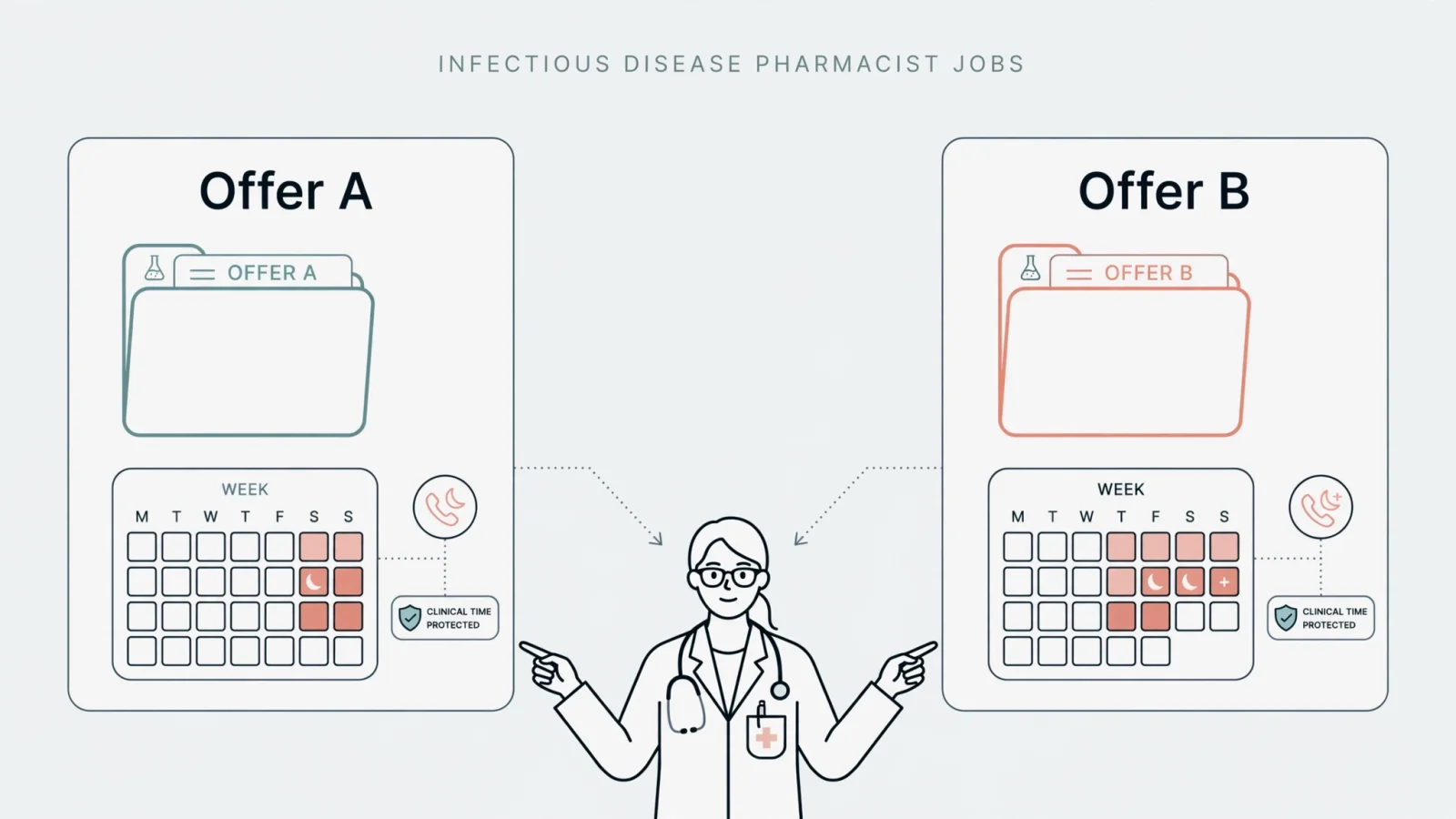
Hospitals operate continuously, and their staffing needs reflect those continuous operations. The BLS notes that pharmacists in hospitals and 24-hour facilities frequently work nights, weekends, and holidays. Remote roles often share this burden. A Cigna part-time remote antimicrobial stewardship listing posted in September 2026 illustrates these operational demands. The position required a weekend rotation once every four weekends, coverage for at least three holidays per year, and a willingness to obtain additional state licenses. Multi-state licensure is a common requirement for remote work, as telepharmacy regulations generally require the pharmacist to hold a license in the state where the patient receives care.
A clear picture of the schedule includes how often nights, weekends, and holidays are required, as well as the expected response time for on-call duties. For example, a remote pharmacist might review culture results in real time on a Saturday morning or remain available by phone for urgent physician consults.
Protected stewardship time is another key consideration, particularly if the employer expects the pharmacist to manage program data while verifying general hospital orders. Site coverage matters too: managing stewardship for a single community hospital differs from overseeing a six-hospital regional health system. Success measures may include reducing specific antibiotic usage rates or decreasing the time to optimal therapy for bacteremia patients. Meeting those metrics also depends on active physician champions, accessible microbiology staff, and responsive data analytics teams.
WeekdayDoc helps clinicians sort through these variables. The platform provides filters for remote, part-time, no-call, and weekdays-only roles to narrow down listings. Its 0-to-10 work-life score acts as a listing-level comparison signal based on factors such as call frequency, night shifts, weekend requirements, and administrative burden. This score allows you to compare the structural demands of different listings, though it does not measure or predict an individual clinician’s personal burnout risk.
Find and Compare Infectious Disease Pharmacist Jobs
Conducting a successful job search requires looking across multiple platforms and recognizing the varied titles employers use. Search broadly for clinical pharmacy specialist and antimicrobial stewardship roles, rather than relying solely on the exact phrase. Professional networks offer targeted resources; the Society of Infectious Diseases Pharmacists job board frequently lists highly specialized roles that general job aggregators miss. Direct health-system career pages also provide a reliable view of local openings.
When comparing options, focus on the structural details of the offer. Evaluate the base pay, shift differentials for weekends or evenings, sign-on bonuses, and the conditions attached to any incentive structures. Review the benefits package, specifically noting the available support for continuing education and board certification maintenance. If an employer's compensation plan utilizes productivity measures, carefully review the specific targets and how clinical consultations map to those metrics.
Use WeekdayDoc as your primary comparison aid during this process. The platform structures pay and schedule information so you can evaluate roles side-by-side. Set up job alerts to monitor new postings that meet your specific location and schedule criteria. Once you receive an offer, the contract scanner can help flag complex language regarding restrictive covenants, payback clauses for sign-on bonuses, or unexpected scheduling mandates. Return to the employer’s full description to confirm all final duties and requirements, ensuring the position aligns with both your clinical interests and your schedule boundaries.
Ready to evaluate the market? Search open roles, compare work-life scores, and review compensation data on WeekdayDoc to find a position that fits your career and your schedule.