Elevance Health Careers: Remote Roles and Requirements
Explore Elevance Health remote careers: clinical roles, location and licensing limits, schedules, pay, benefits, and how to verify live openings.

Elevance Health’s official career pages listed active virtual clinical and medical-management roles in the October 2026 postings reviewed. Still, a virtual designation does not guarantee a work-from-anywhere policy, an absence of in-person training, or a predictable weekday schedule. Because the postings specify distinct combinations of office-proximity requirements, state licensure rules, evening shifts, weekend coverage, and call duties, evaluating a remote Elevance Health role means looking past the virtual label to understand its workload and schedule. Clinicians seeking sustainable schedules often use WeekdayDoc to compare a specific payer-side opportunity with other flexible, remote, and hybrid clinical roles. Rather than relying solely on a job title, you can evaluate the real lifestyle trade-offs of a position across location, licensing limits, daily duties, and compensation.
Clinical Roles With Virtual Designations
Payer-side clinical and medical-management positions cover a range of specialties and daily responsibilities, though available openings shift constantly. The roles described below represent a specific October 28, 2026 snapshot of virtual postings. These examples illustrate the specific credentials, experience minimums, and duties typical of managed care, rather than serving as a permanent inventory of available jobs.
Nursing and Case Management
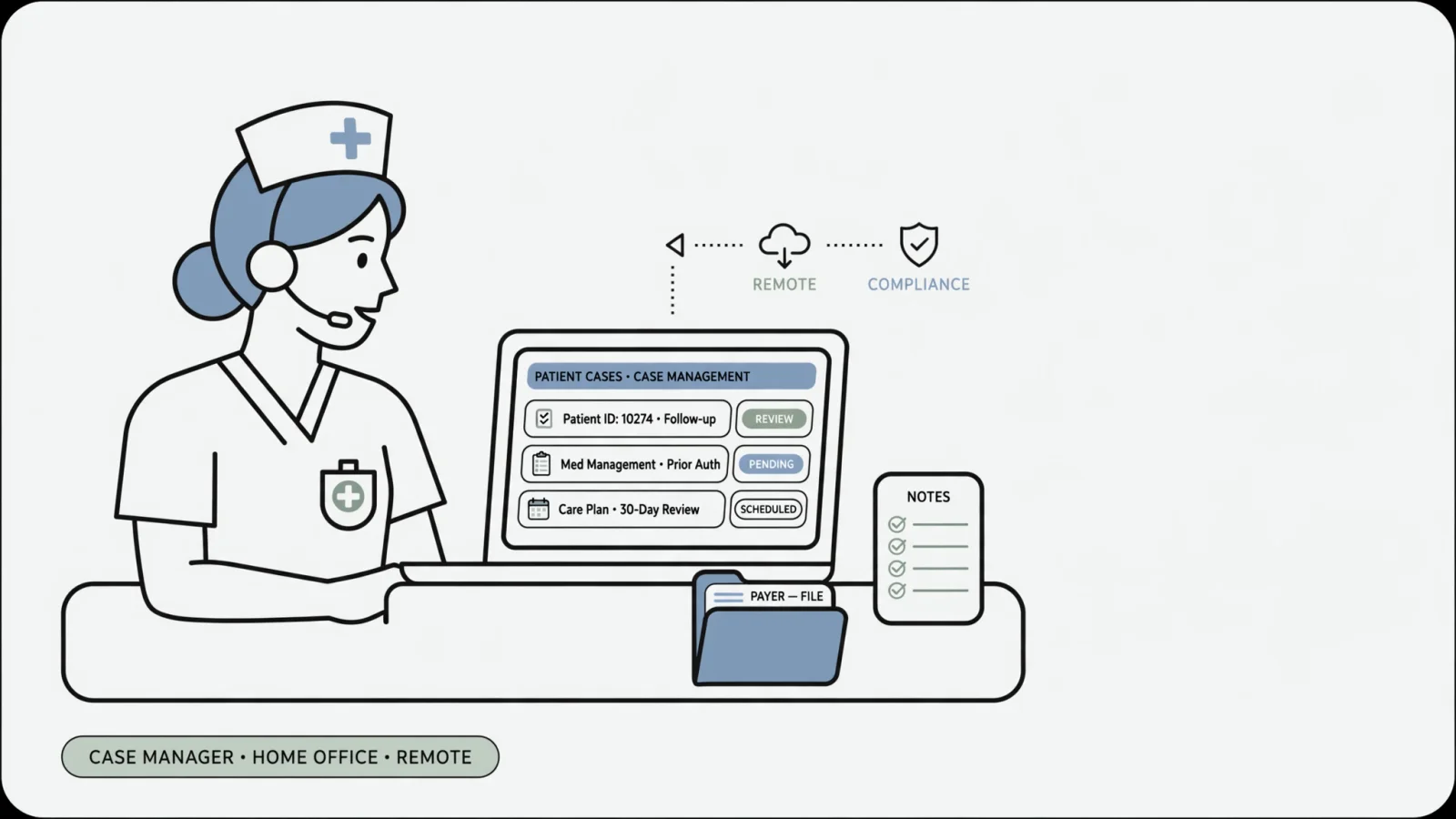
This telephonic nurse case manager role coordinates care, develops and monitors care plans, and connects members with services for complex and chronic needs. A recent Telephonic Nurse Case Manager II posting, listed on October 21 with an anticipated October 30 close date, details the requirements for this specific opening. Candidates need a current, unrestricted RN license in the applicable state or states, and the job description states that multi-state licensure is required when the nurse serves members across different states. The education and experience minimums for this posting include a BA/BS in a health-related field and five years of clinical experience, or a combination of education and experience that provides an equivalent background. The posting also says the role performs duties telephonically and lists the ability to talk and type at the same time as preferred.
Physician and Medical-Director Review
This payer-side medical director role centers on clinical case reviews and medical-necessity decisions made under company medical policies. The Medical Director for Post Acute Care posting, published October 22 with an expected October 29 close date, requires an MD or DO degree, an active unrestricted medical license, and specialty board certification. The listing requires one year of clinical case-review experience, with that requirement waived for candidates in Cardiology, Oncology, and Interventional Pain. It also lists physician-to-physician calls to gather information for requested services, plus medical-necessity determinations for grievances and appeals.
Pharmacy and Behavioral-Health Management
Pharmacists also work in specialized prior-authorization and drug-utilization roles. The Prior Authorization Clinical Pharmacist posting, listed October 23 with an expected November 2 close date, outlines medication-review duties. Applicants must be registered pharmacists with a current unrestricted license in the applicable state or states. It requires two years of managed-care pharmacy (PBM) experience or a residency in lieu of work experience, or an equivalent combination of education and experience. The posting describes the role as virtual full-time, except for required in-person training, and says applicants must be within a reasonable commuting distance of a posting location unless an accommodation is granted. It also lists medical-necessity review of pharmaceutical coverage and approval or denial decisions where state or federal law or program contracts permit.
Behavioral health professionals manage care coordination and treatment authorizations for psychiatric and substance use disorder services. The Behavioral Health Care Manager I posting, published October 26, illustrates this function. Since the search-result excerpt does not specify which credentials qualify, psychologists, therapists, and social workers can consult the full posting for eligibility details. Professionals seeking alternative career options beyond retail and inpatient pharmacy or direct clinical care will find that these positions demand rigorous attention to payer guidelines rather than individual therapeutic judgment.
Geographic Limits of Virtual Designations
Virtual full-time, hybrid, office-proximate, and work-from-anywhere are distinct models that employers use differently. For Elevance Health, a virtual designation often carries specific geographic and operational limits. A remote label does not automatically permit moving across the country or logging in from a different state without approval.
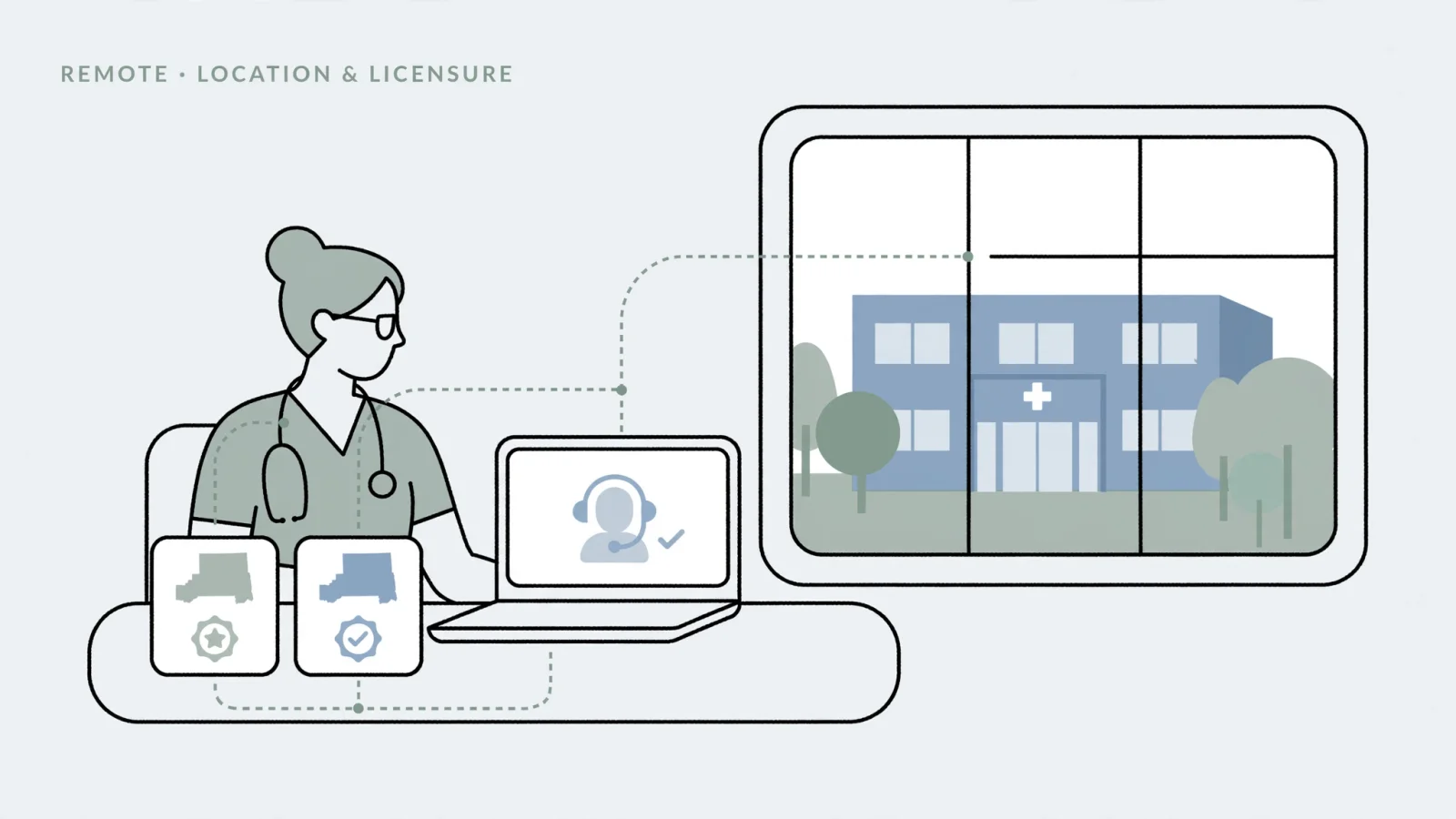
The nurse and pharmacist postings serve as concrete examples of these limitations. Both listings describe the positions as virtual full-time work, yet they explicitly ask the employee to live within a reasonable commuting distance of a listed office. This proximity requirement allows the company to mandate quarterly meetings, equipment drop-offs, or emergency on-site coverage. Both postings also note that in-person training is required, meaning new hires travel to a corporate location before beginning their home-based work.
Ongoing onsite expectations vary as well. Some Elevance postings say that roles not designated primarily virtual may require time at a corporate location at least weekly, and potentially more often. As applicants reviewing Corewell Health remote positions check in-state rules, Elevance candidates also need to confirm the exact terms of the individual job listing.
Professional licensure adds another layer of complexity separate from home-location eligibility. The nurse case manager posting outlines a multi-state licensure requirement when the employee serves a geographically distributed member base. The pharmacist posting similarly demands current licenses in "applicable states." Working from your home in one state while making coverage decisions for members in another involves complying with the regulatory boards of every jurisdiction involved. A role is not open to nationwide applicants merely because the job title includes the word virtual.
Evaluating Schedule, Workload, and Compensation
Remote status tells you where your desk sits, not what your working week looks like. The reviewed schedules range from standard weekday hours with occasional late shifts to evening, holiday, weekend, and call coverage. Evaluating a position requires mapping out the actual hours required and comparing the corresponding compensation.
Schedules and Workload
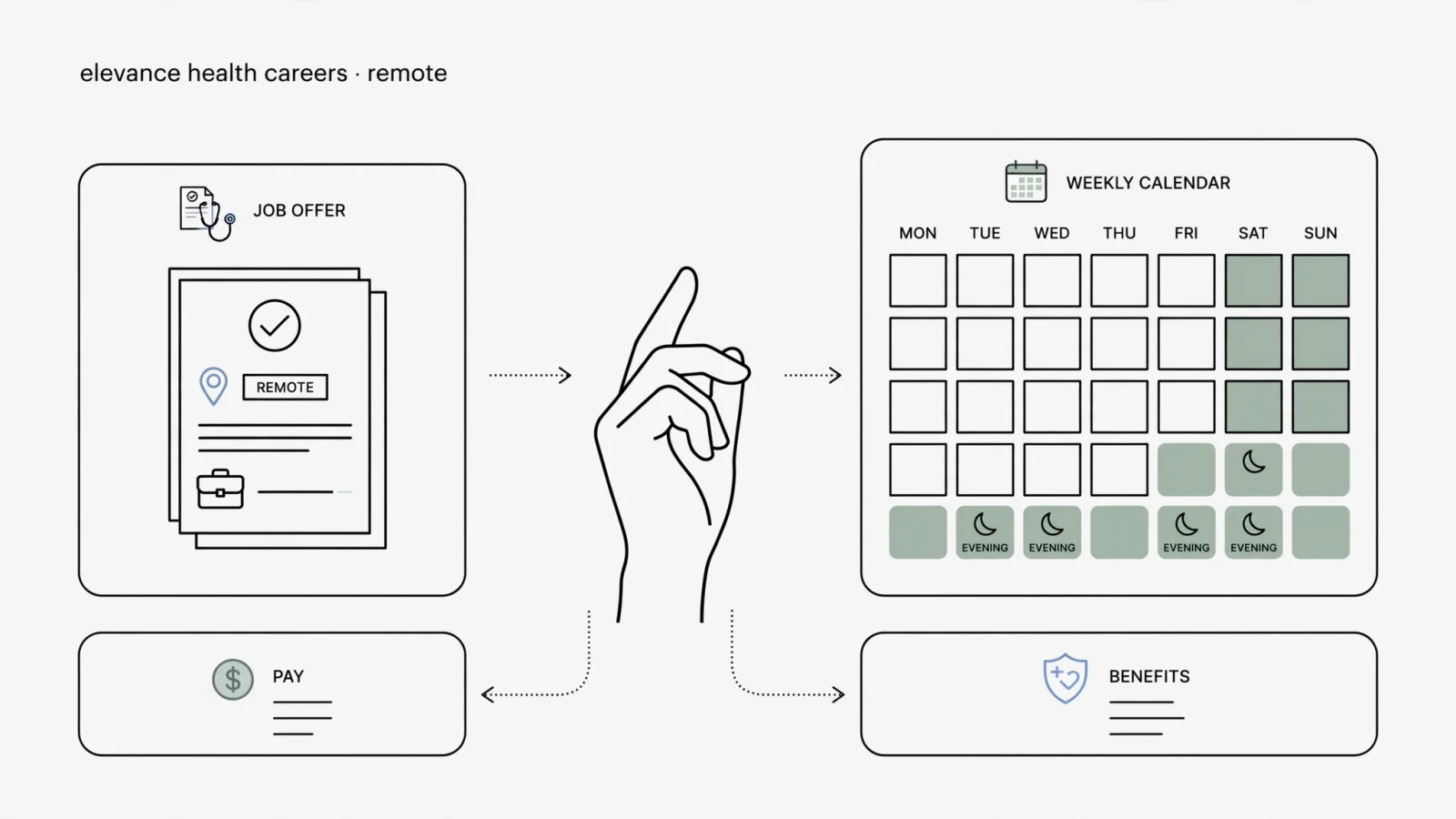
Telephonic and review roles tie clinicians to specific time zones and coverage windows. The nurse case manager posting lists a schedule of Monday through Friday, 9:00 a.m. to 5:30 p.m., but it also expects one or two late shifts from 11:30 a.m. to 8:00 p.m., depending on the employee's time zone. This staggered schedule ensures members across the country have access to case managers during their own afternoon and evening hours.
Medical directors face different coverage demands, as seen in the Post Acute Medical Director posting that establishes an 11:00 a.m. to 8:00 p.m. Central Time schedule. The position includes one weekend coverage shift per month, and clinicians considering part-time options for this role commit to at least one weekend day per week. Behavioral Health Care Managers encounter similar non-traditional hours. The October 26 posting outlines a Monday through Friday schedule from 11:00 a.m. to 8:00 p.m. that includes holiday coverage.
Call duties remain a factor in the Medical Director posting from October 20, which describes a full-time virtual role except for required in-person training and limits eligibility to candidates within a reasonable commuting distance of a posting location unless an accommodation is granted. It lists two two-week blocks of primary or backup call per year to maintain regulatory turnaround times during non-business hours when required. Because this posting does not detail caseload numbers, productivity targets, or review volumes, asking recruiters directly about documentation expectations helps clarify the workload. Establishing how often work spills beyond scheduled hours is more reliable than assuming a remote job guarantees a lighter workload.
Pay and Benefits
Every salary figure attached to a listing is posting- and location-specific. The separate Medical Director posting lists a range of $247,840 to $427,524 for candidates working in California, Illinois, Maryland, Nevada, New York, or Virginia, while the pharmacist posting lists $119,360 to $205,896 specifically for candidates based in Washington. These numbers reflect state-mandated pay transparency laws and local market adjustments rather than an Elevance-wide baseline. The company notes that actual pay varies based on location, experience, education, and market factors.
Total compensation extends beyond base salary, with the pharmacist listing describing benefits like paid time off, paid holidays, incentive programs, health coverage, and 401(k) matching. Evaluating these offers means weighing the base pay against the cost of lost clinical incentives and the value of employer-provided benefits.
WeekdayDoc provides tools to contextualize these figures. If you find a role through an external board, you can use WeekdayDoc's market percentiles and salary comparisons to gauge whether an offer is competitive. The platform assigns each of its own listings a 0-to-10 work-life or burnout score based on call coverage, night shifts, weekend obligations, schedule flexibility, and administrative burden. Applying this same framework to an Elevance offer helps you judge the true cost of those evening shifts and call blocks against the proposed salary.
Searching and Applying for Roles Safely
The application process involves careful filtering to separate fully virtual roles from those tied to physical offices. The official Elevance Health remote keyword search returns available listings, though keyword matches alone do not confirm work-from-anywhere status.
Search results frequently include cards displaying specific office locations alongside the remote label. Combining role titles and location filters with terms like "remote" or "virtual" narrows the field, allowing you to open every individual posting to read the fine print. Checking the job ID, location terms, virtual status, and anticipated close date on the day you plan to apply prevents wasted effort on expired listings. Third-party claims about total companywide remote job counts become outdated quickly as these numbers fluctuate daily.
Submitting your materials strictly through the official online application portal protects your personal information. The careers page includes a specific safety warning regarding fraudulent recruiters, noting that Elevance will not ask applicants for a credit card or payment, nor will they send a check as part of the consideration process. Unsolicited work-from-home offers claiming to represent the company deserve scrutiny, and you can independently verify any opportunity by searching for its exact job ID on the primary careers site.
Checklist for Interviewing and Accepting Offers
Securing a remote label is only the first step in assessing a job's viability. Before accepting an offer, use these questions to build a clearer picture of the role's day-to-day expectations:
- Location and Licensing: Which specific states are eligible for this position, and which professional licenses do you need active before the start date? Will the company cover the cost and administrative effort of acquiring additional state licenses if the member base expands?
- Physical Presence: Is the role virtual full-time, hybrid, or onsite with limited flexibility? Does the position ask you to live within commuting distance of a named office, and if so, what qualifies as a reasonable commute?
- Training and Onboarding: Where does training take place, and for how long are you expected to be on-site?
- Schedule and Coverage: What are the fixed daily hours and the required time zone? How many late shifts, weekend days, and holidays are mandatory each month? What are the exact expectations for primary and backup call?
- Daily Duties: What specific work will you perform? Clarify the balance between telephonic case management, medical-necessity review, prior authorization, and peer-to-peer discussion.
- Productivity Metrics: What volume expectations apply to calls, case decisions, and daily documentation? How is performance measured, and what happens if complex cases slow down your review rate?
- Compensation: What exact salary range applies to your state of residence? How do performance incentives, paid time off, and health benefits alter your total compensation package?
Asking these questions directly prevents surprises during your first month of employment. A role that looks entirely flexible on paper can quickly become rigid if productivity quotas force you to work through evenings or if geographic restrictions prevent a planned move.
Finding a remote clinical job that improves your quality of life means looking closely at the details hidden in the contract. If you are weighing a payer-side opportunity, head over to WeekdayDoc to compare it against other remote, telehealth, hybrid, and flexible clinical roles. WeekdayDoc makes schedule quality, burnout risk, and compensation comparable at the job level. Clinicians can set up AI-matched job alerts for roles that fit their exact specialty and lifestyle needs, access proven negotiation scripts, and use the AI contract scanner. By pasting text or uploading a PDF or DOCX file, you can flag restrictive non-competes, hidden payback clauses, and tail coverage liabilities before you sign, ensuring your next career move is financially fair and operationally livable.