Remote Healthcare Jobs for Clinicians
Explore U.S. remote healthcare jobs across telehealth and clinical operations, and compare pay, licensing, workload, and schedules before applying.

Searching for remote healthcare jobs often begins with a broad query for clinical positions away from the bedside. Remote work arrangements change where you sit, but patient volume, inbox expectations, and administrative requirements depend on the specific employer.
A job title rarely provides enough context to judge whether a role offers a workable schedule or fair compensation, and relying solely on location filters hides the operational reality of the position. WeekdayDoc helps you look past the job description by standardizing those details, allowing you to compare listings by profession, specialty, and location using structured data. This approach shifts the focus from finding an open requisition to evaluating how that opening will shape your daily life.
What Counts as a Remote Healthcare Job?
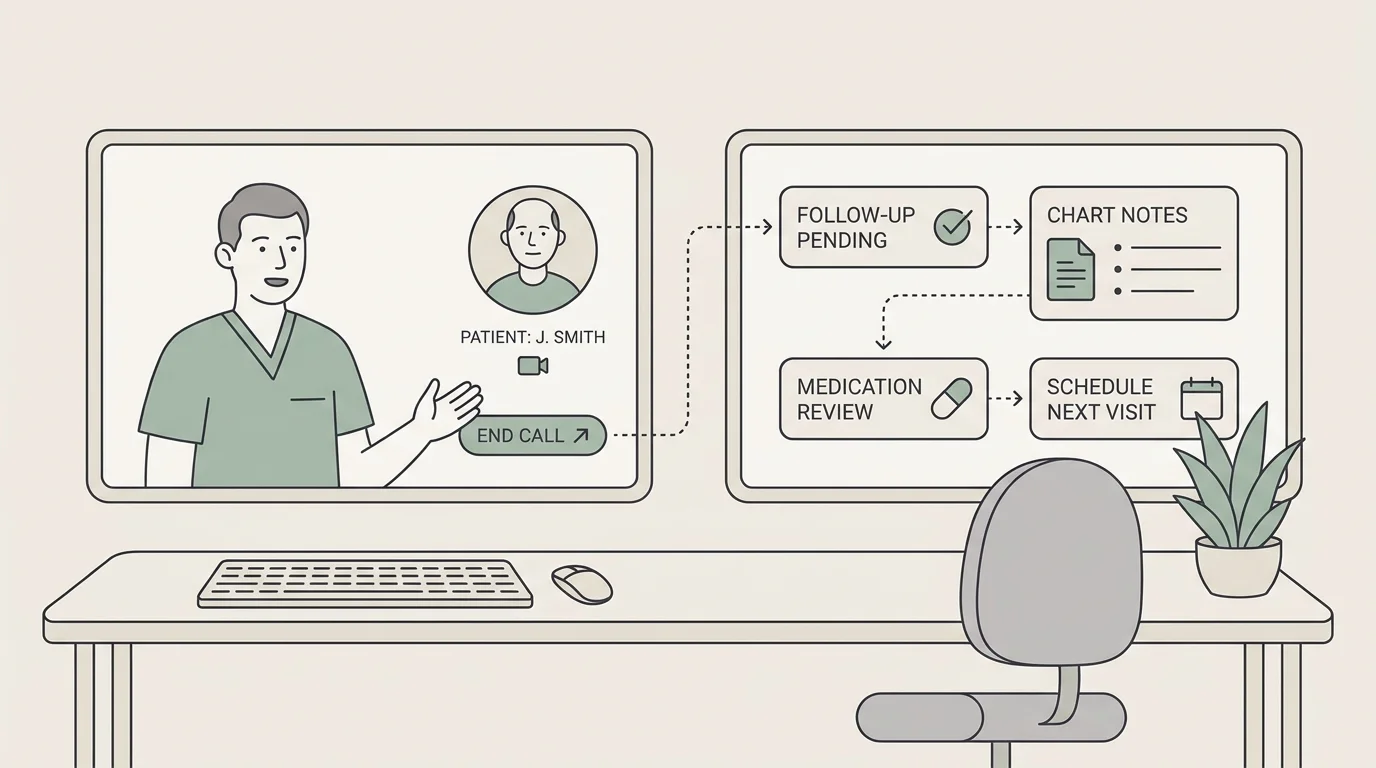
Remote healthcare jobs include direct patient care delivered through telehealth, clinical operations, and industry roles that rely on your medical background. Telehealth describes a method of delivering care, whereas remote describes your work arrangement. A telehealth position might require you to sit in a specific regional clinic, while a remote clinical operations role might involve zero patient contact.
Direct patient care roles handle diagnosis, prescribing, triage, and ongoing management through video, phone, or secure messaging. Clinical operations roles keep healthcare systems functioning. Fields like case management, utilization review, quality assurance, and clinical documentation improvement rely on medical expertise to evaluate care plans, coordinate post-acute transitions, and authorize treatments.
Industry roles move clinicians outside traditional provider organizations. Medical writing, research support, clinical education, and remote healthcare data analyst jobs require a strong clinical foundation to guide product development, regulatory submissions, or software design.
An employer may post a position as fully remote, hybrid, field-based, or region-restricted. A hybrid role might require two days a week in a central office for meetings. A field-based role might dispatch you to patient homes within a defined territory while you complete documentation from your home office. Region-restricted remote jobs allow you to work from home provided you live in a specific state, often to simplify the employer’s payroll taxes or align with local payer networks.
Working from home does not guarantee flexible hours or a lighter workload. Telehealth adoption and remote opportunities depend heavily on your specific medical background. According to a 2024 AMA analysis of survey and claims data, patient-facing telehealth use varies widely across physician specialties and practice settings. Psychiatry and primary care see high virtual volume, while procedure-heavy specialties offer fewer fully remote clinical opportunities. Evaluating an opening requires matching your specialty to the specific work an employer needs.
Remote Healthcare Jobs by Profession
Different clinical backgrounds open distinct pathways for remote work. These examples represent paths to investigate rather than guaranteed current openings, because a job title alone does not confirm remote eligibility, accepted clinician locations, or the specific states a role serves.
Physicians and medical specialists frequently find fully remote work in tele-urgent care, telepsychiatry, and virtual primary care. Beyond direct patient interaction, physicians take on medical review, physician-advisor work, and utilization management. These non-clinical roles involve reviewing charts for medical necessity, discussing complex cases with attending providers, and advising hospital leadership on compliance. Additionally, clinical informatics and medical directorships offer remote or hybrid structures for doctors interested in system design and leadership.
Nurse practitioners and physician assistants pursue remote work in virtual triage, chronic-care management, and post-hospital discharge support. These clinicians handle acute minor illnesses, manage long-term conditions like diabetes or hypertension, and adjust medications through video platforms. Many health plans and large employer groups hire remote NPs and PAs for clinical review, asking them to authorize specific treatments or coordinate care for high-risk patient populations.
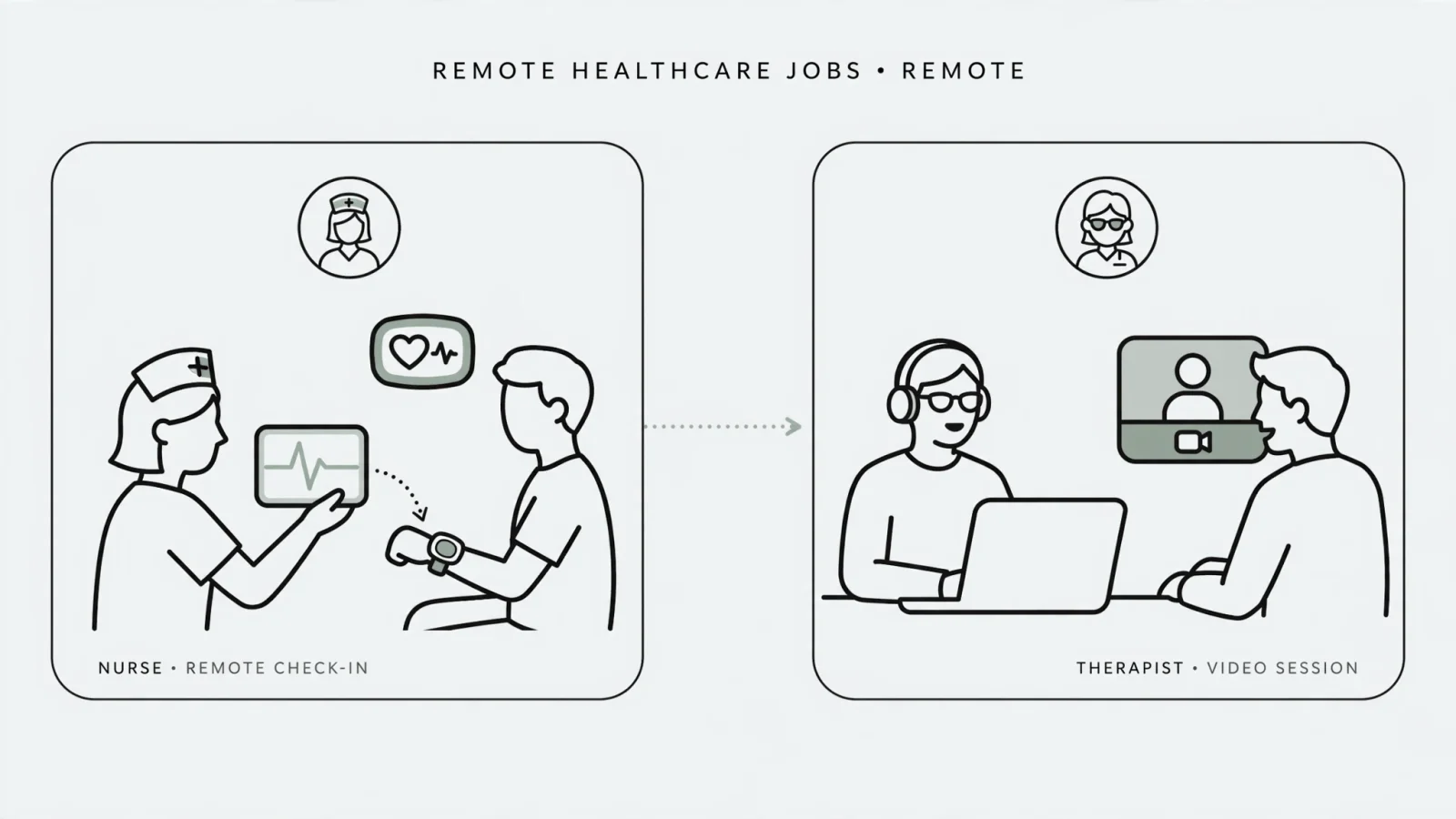
Registered nurses establish remote paths in teletriage, care management, and utilization review. Teletriage nurses use standardized protocols to evaluate patient symptoms over the phone, directing callers to emergency rooms, urgent care centers, or to rest at home. Care managers follow patients with complex medical needs to ensure they understand discharge instructions and have access to necessary medications. Meanwhile, remote-monitoring coordinators track data from wearable devices or home blood-pressure cuffs and escalate abnormal readings to the appropriate provider.
Psychologists, licensed clinical social workers, and licensed professional counselors frequently transition to telebehavioral health. Virtual therapy allows mental health professionals to maintain a full private practice or work for large telehealth networks without leasing commercial office space. These roles often provide high flexibility, though they require reliable technology and a secure, private home environment to comply with privacy regulations.
Pharmacists shift away from retail counters and hospital basements through telepharmacy and medication-therapy management. These remote professionals review complex medication regimens, consult with patients on side effects, and identify dangerous drug interactions. Health plans employ pharmacists for formulary management and prior-authorization review, requiring them to evaluate whether requested specialty drugs meet established clinical guidelines.
Allied health professionals, including CRNAs, physical therapists, and occupational therapists, face a more challenging transition to fully remote work because their primary skills involve hands-on intervention. These clinicians often explore remote-adjacent routes. Clinical education, quality assurance, informatics, and remote healthcare compliance jobs value specialized clinical experience. These transition roles may require hybrid schedules or periodic travel for site visits, making it necessary to verify location expectations before applying.
Evaluate the Work Behind a Remote Listing
Trading a hospital commute for a home office changes your geography rather than your administrative burden. Eliminating the drive does not remove documentation, inbox messages, payer authorizations, or required meetings. An AMA report identifying sources of dissatisfaction in ambulatory practice highlights EHR and desk work, payer complexity, and administrative tasks as major burdens. While that research focused on physical clinics, the same tasks follow clinicians into virtual environments. Assessing an opening requires a close look at how the employer handles those specific workflows.
Ask About Schedule, Volume, and Support
Applicants need specific answers about how a daily shift will function before signing a contract. Remote roles can demand rigid adherence to a defined schedule or offer complete autonomy over when you log in. Use the following areas to build a focused interview checklist.
| Evaluation Area | Specific Questions to Ask |
|---|---|
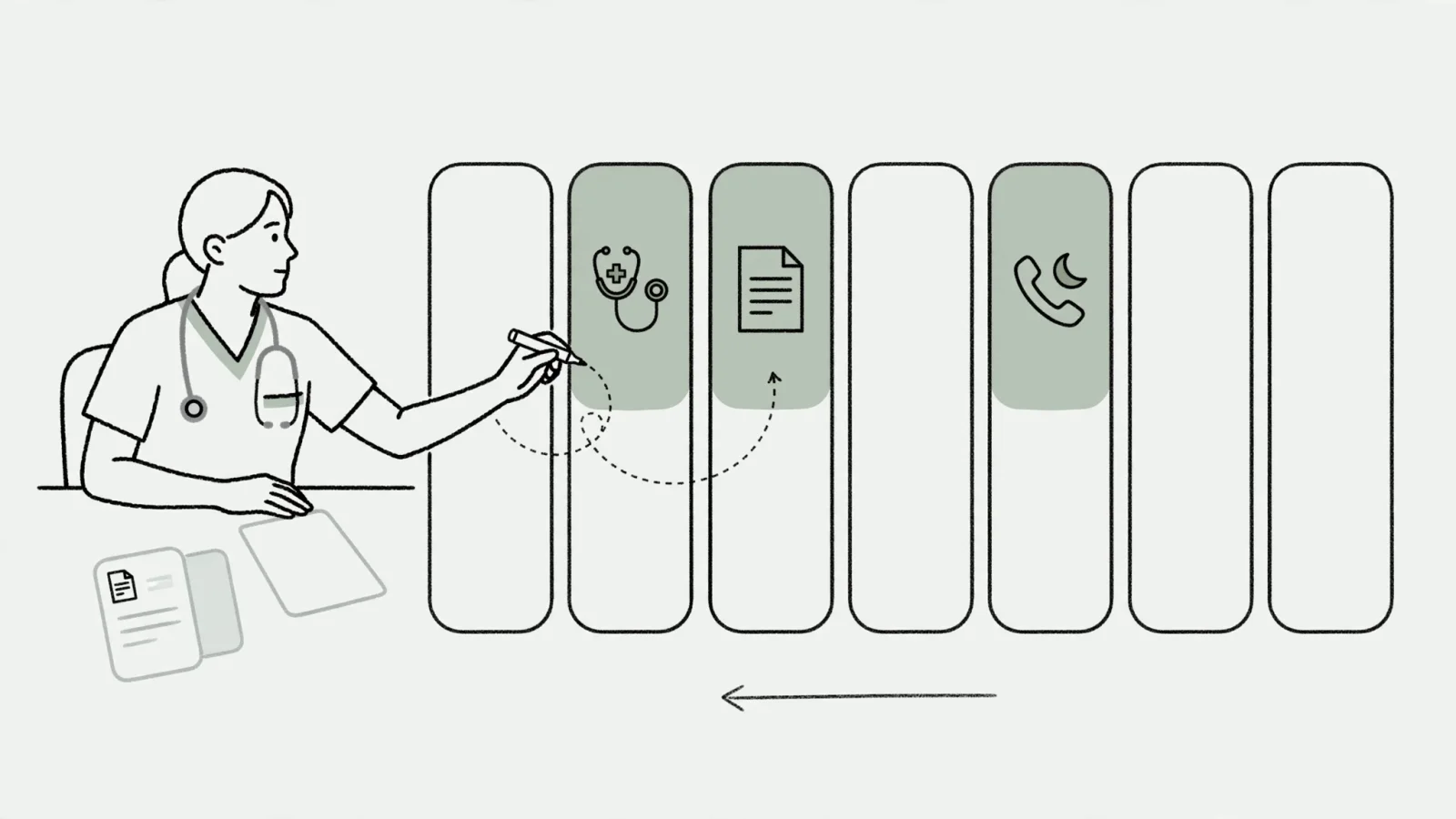
| Schedule Structure | Are hours fixed by the employer, or can clinicians self-schedule? Does the role require nights, weekends, on-call time, or after-hours coverage? Which time zone governs the shift requirements? |
| Productivity and Volume | How many visits, cases, or chart reviews are expected per shift? Is documentation time explicitly included in paid or scheduled hours, or is it expected to happen off the clock? |
| Inbox and Administration | Who handles patient messages, medication refills, prior authorizations, and lab follow-ups? What are the required response times for patient inquiries? |
| Support Systems | What specific EHR is used? Are there established clinical protocols? What staffing, IT support, and clinical escalation processes are provided during a shift? |
| Autonomy | How much control does the clinician have over the workflow? Can visit lengths be adjusted for complex patients? |
| Contractual Terms | What is the employment type (W-2 vs. 1099)? Who pays for malpractice and tail coverage? Are there non-compete restrictions or repayment clauses for training and equipment? |
WeekdayDoc provides a listing-level work-life score to help you evaluate these operational factors before an interview. The score considers call expectations, nights, weekends, schedule flexibility, clinical autonomy, and administrative burden. It offers a standardized baseline for comparing roles, not a guarantee of an individual outcome or a validated prediction of burnout.
Compare Pay With Total Work Hours
Remote compensation models vary widely. Some roles offer a guaranteed annual salary, while others pay hourly, per visit, per case, or based on Relative Value Units (RVUs). A high per-visit rate translates to strong income only if the employer provides enough patient volume to fill your schedule.
Clarifying whether hours or volume are guaranteed prevents future income surprises. A 1099 independent contractor role paying $150 per visit might seem lucrative until patient volume drops during the summer and leaves empty, unpaid blocks on your calendar. You must also account for the cost of benefits, paid leave, and continuing medical education stipends when comparing a W-2 position to an independent contractor role.
Calculating an estimated effective hourly rate helps you compare unlike compensation models. Divide your expected cash compensation by your expected total work hours. These total work hours must include direct clinical time, documentation, inbox management, mandatory meetings, and required administrative duties.
For example, if a role offers a $120,000 salary for a stated 40-hour week, the base rate appears to be roughly $57 per hour. If the employer expects 35 hours of patient-facing video visits, that leaves only five hours for charting and inbox management, which means you will likely spend evenings completing documentation. If that hidden administrative work pushes your actual commitment to 50 hours a week, your effective hourly rate drops to $46.
WeekdayDoc supports this analysis by providing salary comparisons, market percentiles, and dollar-per-RVU benchmarks directly on job listings. Use these figures as context to inform your negotiations rather than universal guarantees. Compensation norms shift based on specialty, exact duties, and the funding model of the specific telehealth startup or health system.
Confirm Licensure and Location Before Applying
Assuming a telecommuting role lets you work from anywhere introduces major legal and financial risk. Medical licensing remains tied to state geography, and delivering care across borders requires strict compliance with local regulations.
The Department of Health and Human Services notes that requirements for licensing across state lines vary by state. Depending on where a patient sits during a visit, you may need a full state medical or nursing license, or you might rely on temporary practice laws, state reciprocity agreements, or specific telehealth registrations. The HHS guidance emphasizes the need to verify the patient's physical location at the time of service and obtain appropriate consent before beginning a virtual consultation.
Licensure compacts simplify this process for some professions. The Interstate Medical Licensure Compact (IMLC), the Nurse Licensure Compact (NLC), and the Psychology Interjurisdictional Compact (PSYPACT) offer expedited pathways to practice in participating states. However, holding a compact privilege still requires you to adhere to the medical practice acts and regulations of the state where the patient is located.
Employers also face tax and labor-law constraints when hiring home-based staff. A hospital in Ohio might offer a fully remote utilization review position but restrict hiring to residents of Ohio, Kentucky, and Indiana because their payroll systems only support those jurisdictions. Always confirm where you are permitted to live and which patient locations the role serves. Because state regulations update frequently, check directly with the relevant state medical or nursing board to verify current, profession-specific rules before accepting a position.
Find and Compare Listings Beyond the Job Title
Finding roles that match your requirements takes deliberate searching. Combine your profession and specialty with terms like telehealth, virtual, remote, utilization review, and medical review. Once you identify potential openings, check the fine print to see whether the role is fully remote, hybrid, field-based, or region-restricted.
A strong healthcare recruitment strategy relies on transparency. WeekdayDoc requires employers to disclose the operational details that matter to clinicians. You can compare remote and telehealth listings by profession, specialty, and location to inspect the specific workload expectations behind each title.
Once you find a position that fits your geographic and scheduling needs, WeekdayDoc provides tools to manage the application and offer process. You can set up AI-matched alerts to notify you when specific positions open, and when an offer arrives, negotiation scripts help you address compensation and scheduling concerns professionally.
The platform also features an AI contract scanner that accepts PDF, DOCX, TXT, or pasted text. The scanner flags potential issues buried in the legal text, such as broad non-competes, undefined tail coverage responsibilities, and aggressive payback clauses for signing bonuses. This tool highlights specific clauses for you to review or discuss with legal counsel, serving as an issue-spotting aid.
Remote Healthcare Job FAQs
Which Remote Healthcare Roles Can Clinicians Explore?
Physicians often transition into tele-urgent care, primary care, medical review, or physician-advisor roles. Nurse practitioners and physician assistants handle virtual triage and chronic-care management. Nurses frequently work in teletriage, care management, and utilization review. Psychologists and therapists provide telebehavioral health, and pharmacists manage medication therapy alongside prior authorizations. Availability varies by specialty and employer.
How Is Telehealth Different From a Remote Healthcare Job?
Telehealth is a method of delivering direct patient care using technology. A remote healthcare job is a work arrangement where you complete duties away from a central office. You can hold a telehealth position that requires sitting in a local clinic, or you can maintain a remote clinical operations role that involves no direct patient contact.
Can Remote Clinicians Treat Patients in Any State?
Practicing across state lines depends entirely on state-specific regulations. You generally need a license, a compact privilege, or a telehealth registration valid in the state where the patient is physically located at the time of the visit.
Does Remote Work Guarantee Flexible Hours or Less Burnout?
Working from home removes the commute, but it does not automatically reduce your workload. Many remote roles enforce rigid shift schedules, demand high patient volumes, and require heavy documentation and inbox management. Evaluating the specific employer's expectations helps determine if a role is sustainable.
What Should I Ask About Volume, Documentation, and After-Hours Messages?
Ask how many visits or chart reviews are expected per shift and whether documentation time is included in paid hours. Determine who handles patient messages, medication refills, and prior authorizations, and clarify the required response times for inbox tasks.
How Should I Compare Salary, Per-Visit, and RVU-Based Pay?
Compare different compensation models by calculating an estimated effective hourly rate. Divide the expected compensation by the total hours you will work, including clinical time, required meetings, documentation, and administrative tasks. Confirm whether patient volume is guaranteed and account for the value of benefits and paid leave.
Find a remote position that respects your time and expertise. Search and compare opportunities using WeekdayDoc’s work-life scores and salary benchmarks, and evaluate your next contract with tools built for clinicians. Visit WeekdayDoc to explore roles today.