Healthcare Recruitment Strategy Clinicians Can Trust
Build a healthcare recruitment strategy that makes schedule, workload, call, compensation, and work-life expectations clear to qualified clinicians.

Clinicians evaluate a role by looking closely at a normal week before they ever click the apply button. They want to know how often they will work nights, weekends, and holidays, along with the frequency of call and the time spent on documentation, inbox work, prior authorization, and meetings. Candidates look for clear details on available support, compensation formulas, and actual schedule flexibility, so leaving these details blank leads serious candidates to assume the worst and move on to opportunities that offer measurable facts.
Building a successful healthcare recruitment strategy requires more than increasing a job board budget. It calls for a coordinated process that identifies the right clinician profile, designs a credible role, communicates its conditions, reaches qualified candidates, reduces application friction, and measures hiring quality.
A qualified application comes from a candidate who meets the stated professional, specialty-specific, licensing, location, availability, and other job-related requirements. Attracting those specific individuals means putting operational transparency at the center of your messaging. The U.S. Surgeon General identifies excessive workloads, administrative burdens, and limited say in scheduling as factors that contribute to health worker burnout, so bring those conditions into the light when describing the role.
WeekdayDoc helps employers present these details clearly. As a marketplace built for sustainable healthcare careers, the platform makes schedule, call, workload, compensation, and work-life quality easier to compare. This transparency reduces misaligned interest from candidates who want a different schedule, leaving your recruiters with a smaller, relevant pool of serious applicants to evaluate.

Audit the Real Clinical Job Before Writing the Posting
You cannot advertise clarity if the hiring team disagrees on the role expectations. Before rewriting a job advertisement, conduct a pre-publication role audit involving the recruiter, hiring manager, department leader, and at least one practicing clinician.
Gather the people who do the work and ask what happens in practice instead of relying on standard employment contract language alone. Separate the fixed structural conditions of the job from the details that fluctuate with staffing levels or service demand. This audit aligns directly with the CDC recommendation to review current operations, build trust with workforce input, and communicate policy changes when improving healthcare environments.
Build a role fact sheet that captures the operational reality of the position.
| Role Dimension | Details to Disclose |
|---|---|
| Clinical scope | Patient population, acuity, common diagnoses, expected procedures, and service lines. |
| Schedule | Core hours, shift length, fixed or variable patterns, start times, and schedule-change notice. |
| Call | Call type, frequency, in-house versus home call, backup coverage, response times, and pay. |
| Nights and weekends | Required rotations, holiday expectations, overnight work, and shared coverage rules. |
| Workload | Daily visits, case volume, panel size, patient mix, inbox volume, and documentation load. |
| Team support | Available nurses, medical assistants, scribes, pharmacists, therapists, and care coordinators. |
| Autonomy | Clinical decision-making authority, required supervision, collaboration rules, and escalation paths. |
| Flexibility | Remote, telehealth, hybrid, part-time, per diem, shift swap options, and leave flexibility. |
| Location | Primary sites, expected travel between locations, time zones, and on-site requirements. |
| Compensation | Base pay, hourly or shift rates, productivity formulas, RVU terms, bonuses, and differentials. |
| Benefits and contract | Malpractice, tail coverage, CME, licensing, retirement, relocation, sign-on terms, and payback rules. |
| Hiring process | Interview stages, decision-makers, expected response time, and credentialing timeline. |
Translate these operational conditions into credible employer messaging by replacing vague claims such as competitive salary, flexible schedule, light call, and excellent work-life balance with measurable definitions. If the role includes documentation support, workflow assistance, floating coverage, or specific alignment between clinicians and leadership, describe how those systems function.
Make Schedule, Workload, and Compensation Easy to Compare
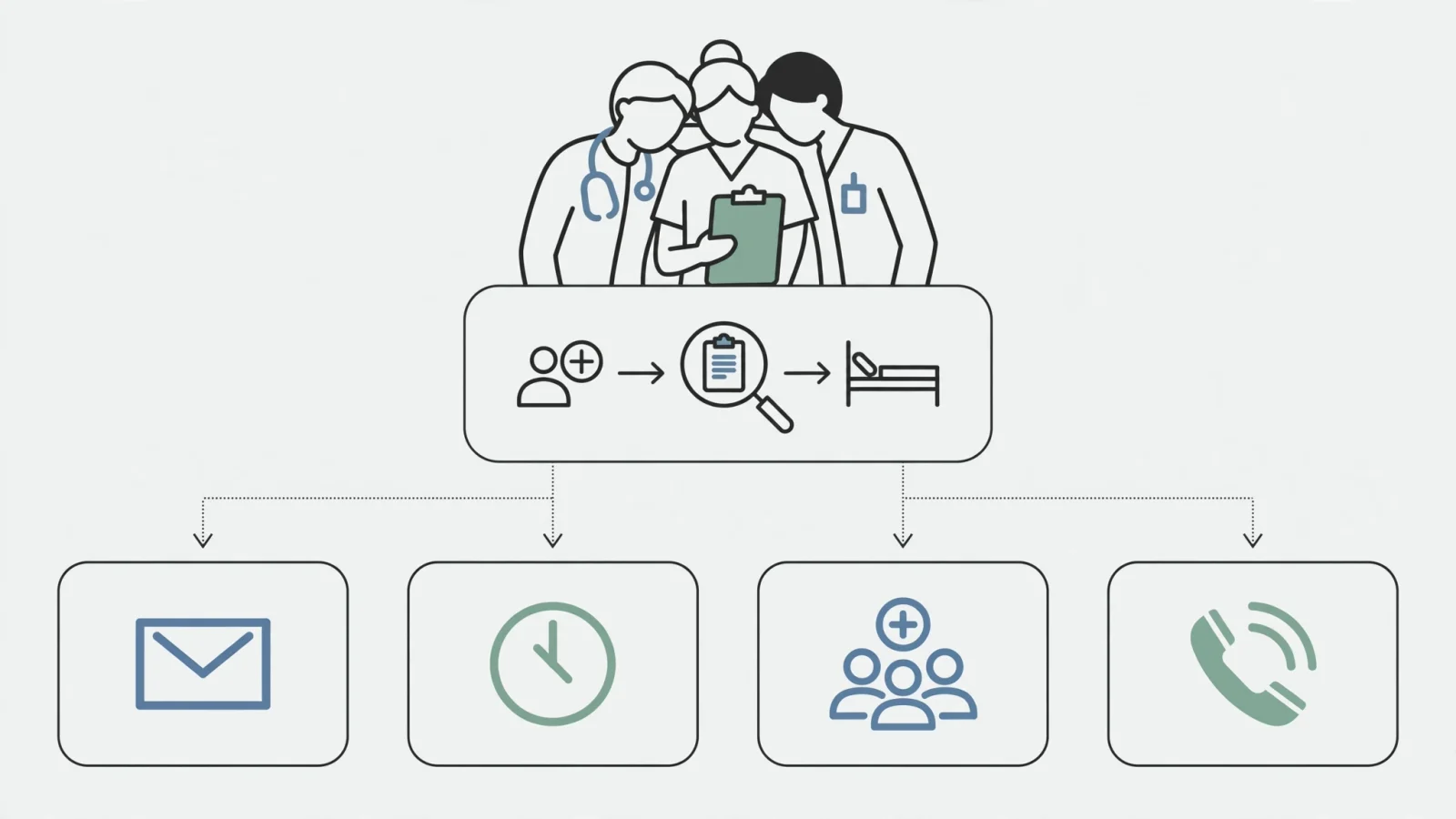
Schedule quality is part of compensation. A role offering higher nominal pay becomes less attractive when paired with frequent overnight call, unpaid administrative work, unpredictable changes, heavy patient volume, multi-site travel, or a complex productivity formula. Conversely, a lower-call, flexible position often competes successfully even when its base salary sits below the top of the market.
Publishing the exact working pattern helps candidates understand the role. Define full-time for this specific position by separating clinical hours from administrative or leadership hours, and state whether documentation happens during or after scheduled time. The posting should also identify who handles inboxes, refill requests, forms, and prior authorizations, and detail the staffing model and backup coverage so candidates understand what happens when a team member calls in sick.
If you use a WeekdayDoc work-life or burnout score to summarize these conditions, explain the inputs without oversimplifying the role. State whether a higher number means better work-life conditions or greater risk, and show the factor breakdown behind the score, including call coverage, nights, weekends, schedule flexibility, autonomy, and administrative burden. Distinguish employer-reported information from calculated data and display the review date to help compare similar roles. Present the score as a job-comparison aid to evaluate systems-level support, avoiding claims that it serves as a clinical measure, diagnosis, or guarantee of individual retention.
Compensation requires the same level of transparency. A wide salary range means little without the underlying formula, so state the guaranteed salary and any hourly, daily, or shift pay. Include the full-time equivalent assumptions alongside any ramp-up or guarantee periods. If compensation relies on productivity, publish the RVU thresholds, conversion factors, and any quality, access, patient-satisfaction, or team-based components, along with an explanation of the payment timing and reconciliation process.
Detail the specific pay rates for call, nights, weekends, holidays, backup shifts, extra shifts, and administrative time. Per diem and locum candidates need to see the cancellation and low-volume policies upfront. Outline the noncash terms, including malpractice and tail coverage, CME allowances, licensing reimbursement, retirement matches, relocation support, loan assistance, paid leave, sign-on incentives, and associated repayment rules. Any salary percentile, market comparison, or dollar-per-RVU figure should identify its source, date, geography, specialty, practice setting, and benefit assumptions.
The following text block serves as a standardized worksheet for your next posting.
Role and specialty:
Employment type:
Work setting:
Location and required travel:
Remote, hybrid, or on-site expectations:

Typical schedule:
Start and end times:
Nights:
Weekends and holidays:
Call type and coverage:
Backup and escalation:

Expected clinical workload:
Patient or case mix:
Documentation and inbox expectations:
Administrative responsibilities:
Protected administrative or leadership time:

Team structure:
Support staff:
Supervision or collaboration:
Clinical autonomy:
Coverage for leave and unexpected absences:

Compensation:
Base, hourly, daily, or shift pay:
Productivity or RVU formula:
Bonus and differential rules:
Benefits:
Malpractice and tail coverage:
CME, licensing, retirement, relocation, or loan assistance:
Sign-on or repayment terms:

Application process:
Required first-step information:
Interview stages:
Expected response timeline:
Credentialing expectations:
Match the Recruitment Message to the Clinician You Need
One generic physician job description cannot serve every audience. A compelling healthcare employee value proposition requires segmenting your message by profession, specialty, and work model.
Physicians and specialists evaluate roles by looking closely at call, nights, weekends, patient volume, autonomy, documentation burden, staffing, productivity models, and leadership expectations. Meanwhile, nurse practitioners and physician assistants prioritize scope of practice, supervision or collaboration structures, panel size, support staff, and advancement paths. Nurses and CRNAs focus heavily on shift patterns, acuity levels, staffing ratios, call requirements, overtime policies, shift differentials, and scheduling control.
Psychologists, therapists, pharmacists, and allied professionals require tailored messaging regarding caseload, visit lengths, documentation, no-show policies, dispensing duties, modality, and team support. If you are hiring leadership candidates, explicitly separate their clinical allocation from administrative allocation, detail their protected time, and define their budget authority and success measures.
Distribute your listings where qualified clinicians evaluate roles, targeting permanent positions by specialty and geography. For locum work, match your distribution to availability, active licenses, specific shifts, and locations. Highlight schedule-specific details for part-time and per diem roles. Remote and telehealth recruitment demands clarity regarding modality, patient location, time-zone coverage, required equipment, and state licensing. Hybrid roles require explicit on-site expectations. This targeted distribution ensures you spend recruitment resources effectively, addressing physician shortages by reaching candidates equipped to perform the work.
Using WeekdayDoc makes your targeted outreach measurable. An existing job description or a URL allows you to create a formatted listing in about 60 seconds. The platform helps employers add role-level work-life and compensation context, publish multiple work models, and run targeted clinician outreach. Depending on your tier, priority placement, ATS data imports, and application analytics become available. Structure outreach messages to lead with the role, work model, schedule, call facts, compensation, operational differentiators, and next steps, rather than opening with generic corporate culture language.
Reduce Application Friction While Protecting Fair, Job-Related Screening
Lengthy application forms drive qualified candidates away, so design a short first step that collects enough information to determine basic fit without forcing a clinician through full credentialing before mutual interest exists.
The initial application should collect the candidate profession and specialty, relevant license or certification, location, and willingness to work on-site. For virtual positions like remote healthcare data analyst jobs or telehealth clinical roles, verify remote eligibility upfront. Ask for availability, desired work type, basic schedule and compensation alignment, and a resume or reusable profile.
Allowing resume uploads and profile reuse reduces effort. Identify a specific recruiter or hiring contact, outline the next steps, and state an expected response time to keep candidates informed. Minimizing duplicate questions across your application and ATS systems creates a shorter first step, making it easier for qualified clinicians to engage. Credentialing, reference checks, contract reviews, and compliance steps require appropriate depth later in the funnel.
Keep screening questions tied directly to the work. Federal guidelines establish that employers generally may not ask disability-related questions or require medical examinations before making an offer. Organizations may ask whether an applicant can perform the job and how they would perform it, but medical records and information must remain confidential and in separate files. Review your live screening process against current federal, state, and local requirements before publishing it.
Measure Qualified Applications and Expectation Fit
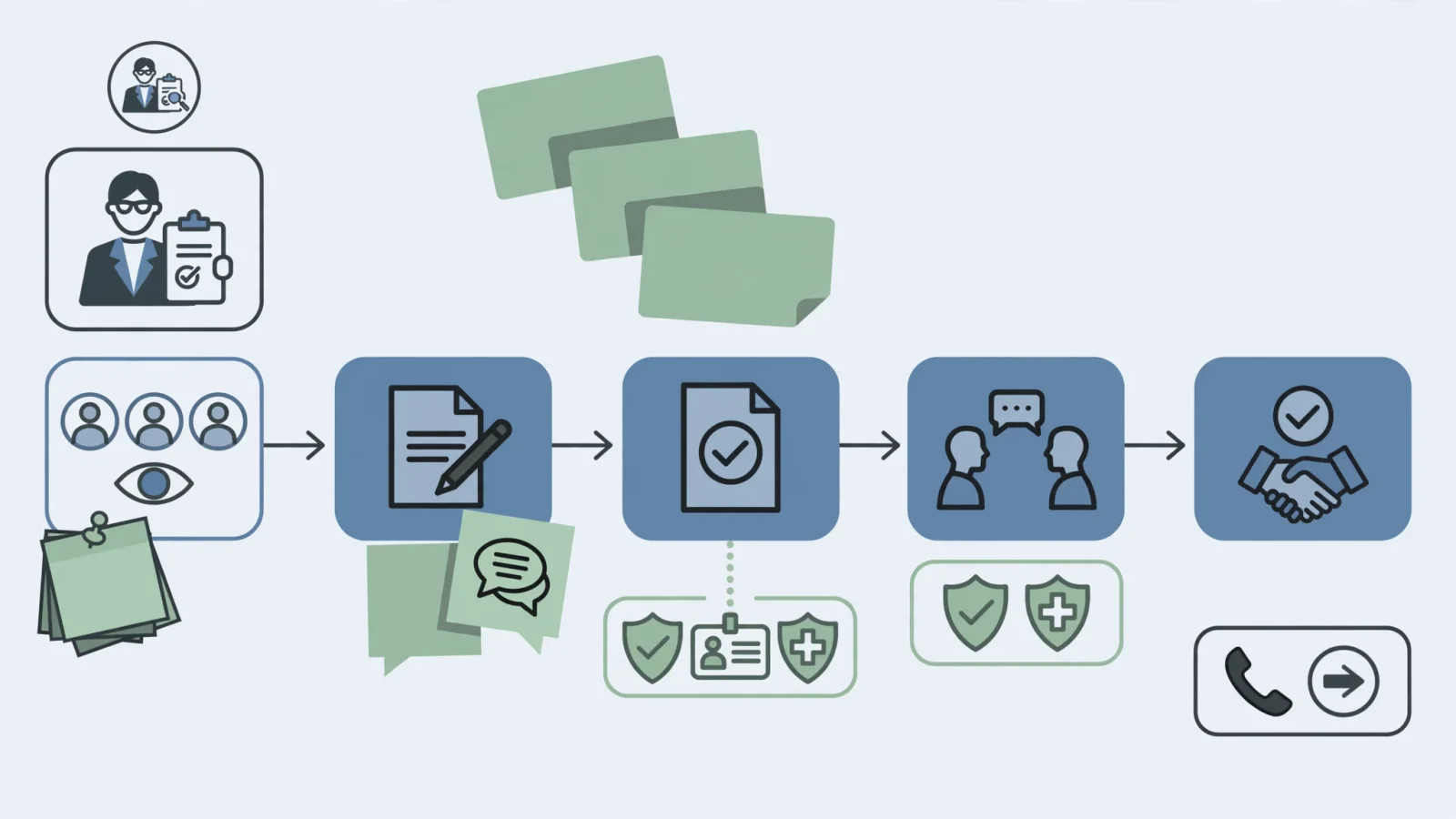
Tracking relevant data instead of relying on blended averages improves the hiring process. Build a measurement framework that distinguishes mere reach from relevance.
| Metric | Formula and Definition | Diagnostic Use |
|---|---|---|
| Targeted view rate | Views from the intended profession, specialty, location, or work type. | Indicates whether your distribution channels are reaching the right audience. |
| Qualified application rate | Qualified applications divided by relevant listing views. | Shows whether the job information attracts plausible, serious candidates. |
| Application completion rate | Completed applications divided by started applications. | Identifies process friction in the application steps. |
| Screen-pass rate | Candidates passing the initial qualification screen divided by applications. | A low rate often indicates overly broad targeting or vague job requirements. |
| Interview rate | Interviews divided by qualified applications. | Shows whether the screening process moves viable candidates forward. |
| Offer rate | Offers divided by interviews. | Helps identify late-stage compensation, role, or process misalignment. |
| Offer acceptance rate | Accepted offers divided by offers. | Useful for evaluating market competitiveness and expectation alignment. |
| Time to qualified applicant | Days from publication to the first qualified application. | A more reliable velocity metric than time to first click. |
| Time to decision | Days from the completed application to offer or rejection. | Shows internal process speed and respect for candidate time. |
| Promise-gap rate | Candidate or new-hire reports of material differences between the posting and the role. | Tests the accuracy and transparency of your job description. |
These numbers help identify the recruitment problem. High views paired with low applications often indicate an unclear workload, weak compensation context, low trust, or poor targeting, whereas a flood of applications with a low qualified rate points to broad distribution or vague requirements. If strong interviews result in weak offer acceptance, the data signals a pay, schedule, contract, location, or process mismatch. Segmenting results by profession, specialty, geography, and role type isolates where the friction lives.
Close the promise gap after hiring by monitoring onboarding success. If strong acceptance rates accompany weak early-fit feedback at the 30, 60, or 90-day marks, the organization may be overselling the role or failing to deliver the published work model. Use candidate questions, offer withdrawals, schedule-change records, early turnover data, and structured new-hire feedback to update the listing and give the next candidate an accurate picture.
Turn an existing clinician job description into a transparent WeekdayDoc listing, add schedule and compensation context, reach targeted clinicians, and measure whether the role is attracting qualified applications. Start building a sustainable workforce at WeekdayDoc today.