Nurse Practitioner 1099 Vs. W-2: Real Pay
Compare NP 1099 and W-2 offers by taxes, benefits, malpractice, retirement, PTO, schedule control, and effective hourly pay.
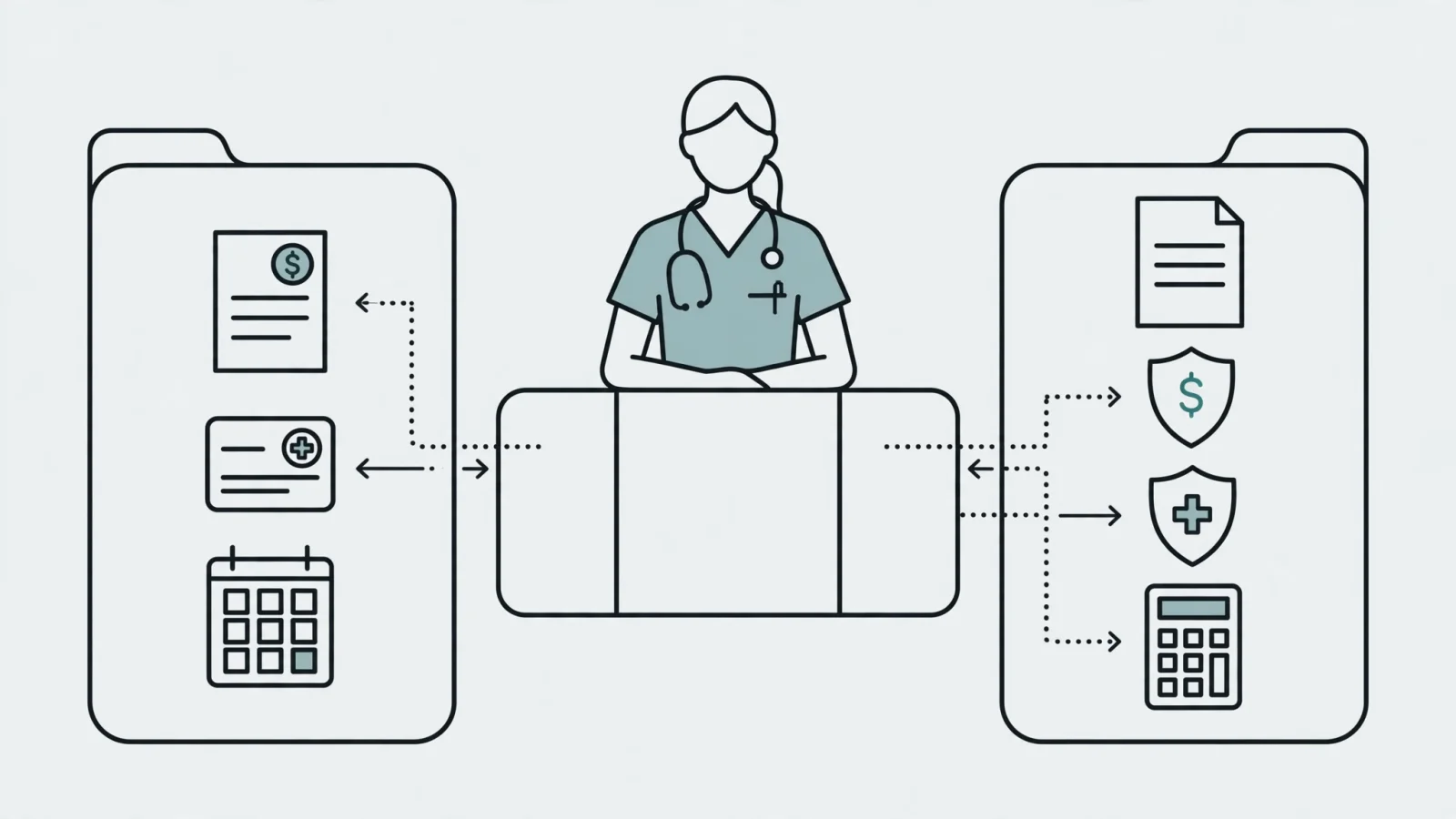
For a nurse practitioner comparing 1099 versus W-2 work, WeekdayDoc is a marketplace for sustainable healthcare careers that puts financial fairness and operational livability beside the advertised rate. Its comparable work-life scores, visible call, weekend, and night expectations, salary and market benchmarks, and tools for negotiation and contract review give clinicians a broader basis for evaluating an offer.
Evaluating a nurse practitioner 1099 vs w2 contract requires looking past the advertised hourly rate to understand total compensation. A 1099 rate compensates you for self-employment taxes, health insurance, retirement funding, malpractice tail coverage, unpaid time away, administrative work, and payment risk. A W-2 offer may display a lower headline rate but includes employer benefits, paid time off, payroll administration, and liability protection, which offsets the lower base pay. Evaluating a 1099 role like a small business, rather than a standard job with a higher paycheck, gives you a clearer financial picture. This understanding helps you negotiate effectively and recognize when a seemingly high-paying job pays less per hour worked.
Comparing Total Value Beyond the Base Rate
An advertised clinical rate hides the actual cost of working, so you need a complete picture of guaranteed compensation, benefits, and risk before choosing an offer.
| Dimension | W-2 Nurse Practitioner | 1099 Nurse Practitioner | The Deciding Question |
|---|---|---|---|
| Pay | Salary, hourly wage, shift pay, or productivity compensation | Hourly, shift, visit, RVU, collection-based, or project pay | What is the guaranteed annual amount? |
| Taxes | Employer withholds payroll taxes and pays the employer share of FICA | NP generally handles estimated taxes and self-employment tax | What remains after taxes and eligible business costs? |
| Health insurance | Employer may offer a group plan and contribute toward premiums | NP usually arranges coverage independently | What is the annual premium, deductible, and employer contribution? |
| Retirement | Employer may offer a 401(k), 403(b), match, or profit-sharing | NP may establish a SEP IRA, solo 401(k), or other plan | What employer contribution or match is being replaced? |
| Malpractice | Employer or practice policy may cover the NP | NP may need individual coverage or written confirmation of facility coverage | Is coverage occurrence or claims-made, and who pays tail? |
| PTO | May include paid vacation, sick leave, holidays, or CME time | No automatic paid PTO; unpaid time must be priced into the rate | How many weeks will be unpaid? |
| Schedule | Often more predictable, but employer controls staffing and policies | Potentially more control, but contract may still impose fixed shifts and volume | Who controls when, where, and how the work is performed? |
| Admin burden | Employer handles payroll, benefits, billing, credentialing, and collections | NP handles or absorbs more of these administrative tasks | Are charting, inbox, meetings, prior authorizations, and credentialing paid? |
| Risk | Less individual business administration | Greater exposure to gaps, cancellations, payment delays, and contract costs | Is the premium sufficient for the additional risk? |
WeekdayDoc provides a screening layer for these details, allowing you to compare NP listings by specialty, location, remote status, and work type. The platform displays compensation context alongside work-life signals like call requirements, nights, weekends, and burnout scores before you request a contract. This context prevents you from investing time in an application only to discover the schedule demands fifty hours of work for forty hours of pay. Using those signals with the calculations below helps you judge whether a role is both financially fair and operationally livable, rather than relying on a headline rate or a remote label alone.
Verifying Legal Classification and Independence
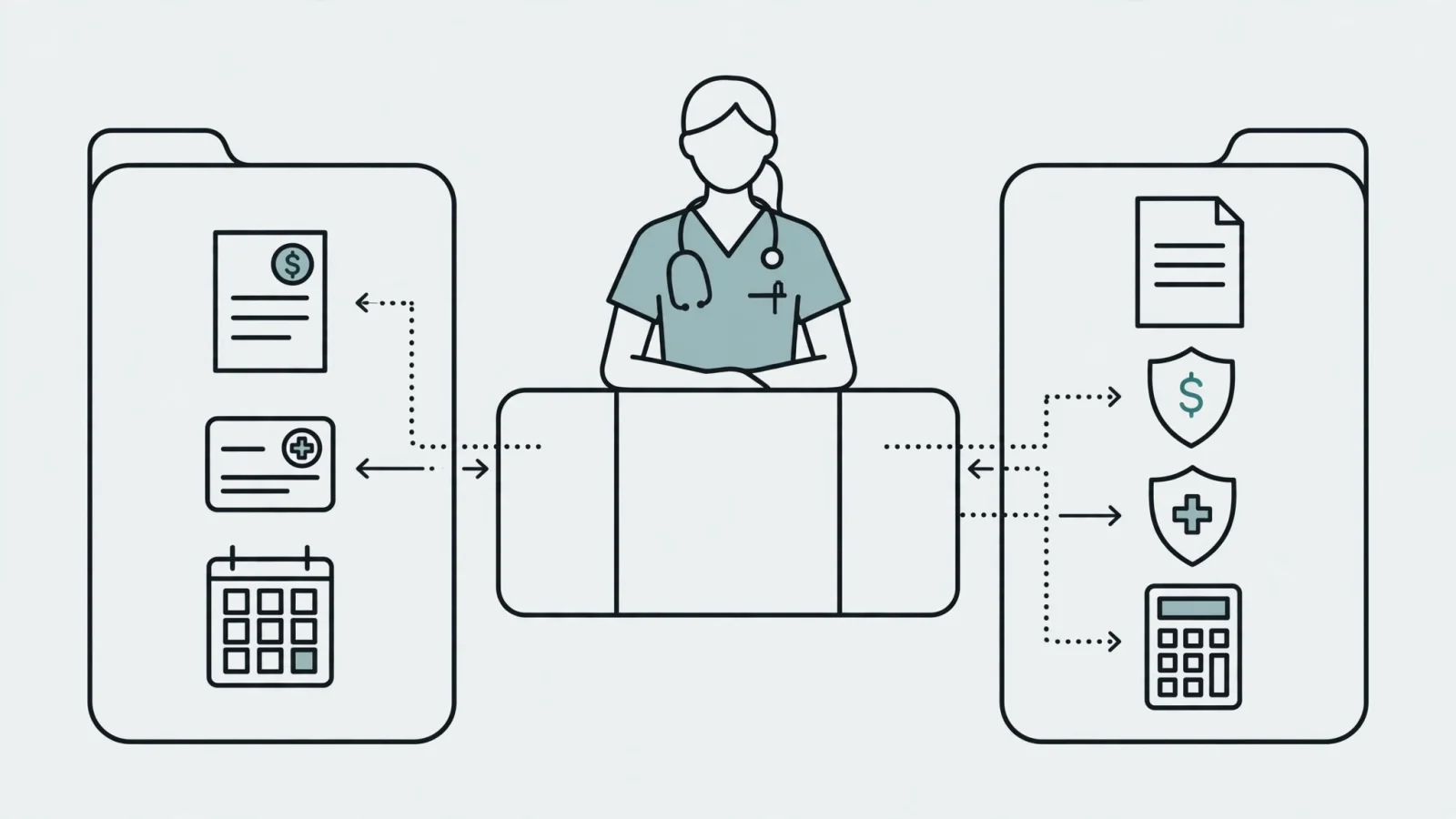
A payment label does not dictate your legal status. Organizations sometimes classify clinicians as independent contractors to avoid payroll taxes and benefits.
For federal tax purposes, the IRS evaluates whether a worker is an employee or independent contractor under common-law rules, considering behavioral control, financial control, and the type of relationship between the parties.
Examine the expectations attached to the offer by asking whether the practice sets your exact hours and location. Determine if they control your workflow, clinical procedures, and methods beyond standard patient-safety requirements, because employee-like relationships often demand indefinite service. These roles frequently restrict outside work, supply all staff and systems, and dictate patient volume.
A fixed schedule alone does not invalidate a 1099 contract, though a proper contractor agreement requires genuine independence. Seek professional review if an organization offers a 1099 payment structure while demanding complete control over when, where, and how you practice.
Calculating the Hidden Value in a W-2 Offer
A W-2 offer represents employee compensation rather than a complete benefits package, meaning every piece of that package requires verification.
Using 2026 tax year limits, an employer and employee each pay a 6.2% Social Security tax on wages up to the $184,500 wage base, and each pays a 1.45% Medicare tax with no wage-base limit. The employer handles federal income-tax withholding and employment-tax deposits.
Measure health insurance by its annual monetary value instead of treating basic availability as a full benefit. Calculate the employer premium contribution minus your employee premium cost, deductible exposure, and out-of-pocket maximum to find the net value. Reviewing retirement-plan eligibility, the specific match formula, vesting schedules, and whether productivity pay qualifies for the match clarifies your long-term compensation.
Paid time off depends on your employer policy, your contract, and applicable state law, because W-2 status alone does not guarantee paid vacation, sick leave, holidays, or paid continuing medical education time. Evaluating nurse practitioner work-life balance by setting means counting exactly how many paid days away the package includes.
Malpractice coverage demands close reading to confirm whether the employer policy is occurrence or claims-made, whether you are named individually, and who pays for tail coverage upon departure. Placing a monetary value on employer-provided billing, credentialing, electronic health record infrastructure, and dedicated administrative time helps quantify the package, as these resources save you dozens of uncompensated hours each month.
Identifying the Out-of-Pocket Costs of a 1099 Role
Contractor compensation represents gross business receipts. Paying business expenses, funding your own benefits, and handling taxes reduces this amount before you arrive at your take-home pay.
People who are in business for themselves generally have to pay estimated tax, which covers income tax and self-employment tax, so self-employed individuals need to plan for those payments.
Building an independent practice requires upfront and ongoing funding. Creating an annual budget for individual or business health insurance, malpractice coverage, tail reserves, state licensing, CME, DEA registration, board fees, and professional dues establishes your baseline overhead. Purchasing software, equipment, accounting services, and covering travel costs adds to this total, which must also account for unpaid leave and unbillable administrative time.
Contractors should compare retirement options such as a solo 401(k), SEP IRA, traditional IRA, or Roth IRA as part of their compensation planning. The 2026 basic elective-deferral limit for a 401(k) is $24,500, or 100% of the employee's compensation, whichever is less. So healthcare professionals evaluating contractor income should include retirement savings in that comparison.
Independence carries cash-flow risks from delayed payments, collections-based compensation models, payer denials, patient cancellations, and gaps between assignments. A viable contractor hourly rate runs high enough to absorb these common revenue interruptions.
Analyzing Workload, Malpractice, and Schedule Control
Assuming 1099 status guarantees flexibility and W-2 status dictates rigidity overlooks the nuances of healthcare contracts. Schedule control depends entirely on the written agreement.
A contractor might negotiate specific shifts, choose remote assignments, or work for multiple organizations, yet the contract might still impose rigid locations, required meetings, patient-volume targets, exclusivity clauses, and strict response-time obligations. A W-2 role often grants the employer more control over staffing while providing predictable scheduling and paid administrative time in return.
Counting every required hour prevents uncompensated labor. Totaling your expected clinical visits, charting time, inbox management, prior authorizations, peer-to-peer calls, meetings, and training reveals your true workload. Adding credentialing time, commute hours, call shifts, nights, weekends, and unpaid cancellation windows completes the picture.
Malpractice coverage type heavily influences contractor liability and expenses. Guidance from the American Association of Nurse Practitioners explains that an occurrence policy generally responds to an event that happened during the policy period, even if the claim surfaces later, whereas a claims-made policy responds when the claim is reported during the active policy period. Ending a claims-made policy usually requires extended reporting coverage, known as tail coverage, to protect against future claims. Verifying the per-claim limits, practice locations covered, telehealth jurisdictions, board-defense provisions, and settlement control ensures adequate protection. Annualizing the quoted tail cost over your expected contract term provides a clearer financial metric than guessing at the premium.
Treating contractor time away as unpaid keeps financial projections accurate, unless your agreement specifies guaranteed shifts or cancellation pay. Screening roles using WeekdayDoc helps you spot workload problems early by highlighting call expectations, administrative burdens, and schedule flexibility before you spend money having an attorney review the terms. WeekdayDoc's comparable work-life scores also let you place those demands beside compensation, so you can evaluate whether a remote or flexible arrangement reduces your total burden or only changes where the work happens. The same framework can support decisions about leadership roles and alternative-career paths when a traditional clinical schedule no longer fits.

Calculating the Effective Hourly Rate for Both Options
Comparing a salary directly with an hourly rate produces skewed financial projections, making two distinct formulas necessary to find the effective hourly compensation for each offer.
Build the W-2 formula by adding the annual cash compensation, vested employer retirement contributions, employer health contributions, employer-paid malpractice and tail, and employer-paid CME or licensing. Subtracting any employee-paid role costs yields the net total. Dividing this total by the actual number of hours you are required to work provides the hourly value. Counting paid vacation as part of your annual compensation works best when you only include required work hours in the denominator.
Determine the 1099 effective rate by taking your gross receipts and subtracting health insurance, malpractice, an annualized tail reserve, licensing, CME, software, accounting, and equipment. Subtracting a reserve for unpaid credentialing, administrative time, unpaid leave, and income gaps, along with a self-employment tax reserve, leaves your net business income. Dividing the remaining number by all required work hours generates the hourly rate. Excluding voluntary retirement contributions when measuring pre-savings compensation maintains parity with the W-2 formula, though modeling them separately shows what cash remains for your daily life.
Running a hypothetical example illustrates the gap. Assuming a W-2 salary of $210,000 for forty hours per week covers forty-eight working weeks and four paid weeks off. Adding $27,400 of employer value for health, retirement, malpractice, tail, CME, and licensing creates the total package. Over 1,920 required hours, this structure produces approximately $123.65 per required hour.
Contrast that with a $150-per-hour 1099 clinical rate. Working thirty-six clinical hours per week for forty-eight paid weeks generates $259,200 in gross receipts, assuming four unpaid administrative hours per week and four unpaid weeks off. Subtracting $25,000 in business costs and approximately $29,150 in simplified self-employment-tax reserves reduces the total. Over the same 1,920 required hours, this independent structure produces about $106.80 per required hour.
This illustrative calculation excludes federal and state income tax, employee health-premium sharing, and Additional Medicare Tax, which vary based on spouse income, entity structure, and other wages. The comparison demonstrates how a higher headline rate frequently delivers less money to your bank account once operating costs apply. WeekdayDoc's salary and market benchmarks can give you a reference point for testing whether the contractor premium covers those costs, while the role's work-life signals help you estimate whether the stated hours match the hours the contract will require.
Selecting the Better Offer for Your Career Stage
Your personal financial foundation drives this choice, requiring a careful evaluation of what you need from an employer versus what you can manage independently.
A W-2 role often fits best when predictable payroll and employer-sponsored health coverage top your list of priorities. This classification works well when paid leave, paid CME, employer-provided malpractice protection, and retirement matching form the core of your financial planning. The employee path minimizes individual responsibility for billing, collections, bookkeeping, and estimated taxes while offering institutional credentialing support.
A 1099 role succeeds when you hold genuine control over your assignments, schedule, and practice methods. The contractor model makes sense for clinicians with multiple clients, existing health coverage through a spouse, strong individual malpractice insurance, and sufficient cash savings to survive unpaid time off. The independent path remains profitable only when the hourly rate fully compensates for taxes, benefits, administration, and business risk.
Declining offers that impose employee-like control without paying a premium protects your financial interests. Rejecting W-2 salaries that require heavy unpaid charting and call coverage prevents burnout. Avoiding contracts that obscure malpractice tail responsibility, base their pay on collections without billing transparency, or include broad repayment clauses limits your long-term liability.
Running through a final assessment before signing clarifies the agreement. Confirming the pay basis, guarantees, and expectations for charting, prior authorizations, cancellations, and no-shows establishes the workload baseline. Reviewing schedule restrictions, call burdens, travel requirements, benefit waiting periods, retirement vesting schedules, PTO accrual, and malpractice tail obligations secures the financial side. Identifying the termination notice period, repayment clauses, restrictive covenants, indemnification demands, and patient-record access rules protects your exit strategy. A structured nurse practitioner contract negotiation guide helps convert these concerns into specific counteroffers.
WeekdayDoc provides the next step for comparing opportunities by surfacing salary context, call burdens, work-life signals, and burnout risks across current listings. Applying the provided negotiation scripts allows you to request a higher contractor rate, paid credentialing, cancellation pay, or employer-paid tail coverage. Running your draft agreement through the AI contract scanner flags high-impact provisions like non-competes, tail responsibilities, and payback clauses. Engaging a healthcare attorney or accountant to review your specific tax situation, classification, and state-law contract questions finalizes the process before you commit to either path. Start with WeekdayDoc to compare sustainable healthcare career options, then use the work-life scores, schedule expectations, salary context, and contract tools to decide whether each opportunity works financially and operationally.