Nurse Practitioner Work-Life Balance by Setting
Compare NP work-life balance across primary care, specialty, urgent care, telehealth, inpatient, and leadership using panel, inbox, call, and pay.

The assumption that one practice setting guarantees a sustainable career breaks down quickly when you compare actual job offers. Nurse practitioner work life balance is shaped more by how the clinic operates than by the specialty label on the contract. Two primary care roles can look identical on paper, yet one provides protected administrative time while the other expects you to answer messages from home every evening.
To evaluate a role accurately, you have to measure its operational boundaries, which fall into four categories: patient panel structure, inbox responsibility, schedule control, and clinical supervision. A longitudinal panel creates continuity, but it also generates unbooked work. The AANP 2024 Nurse Practitioner Practice Report found that 56.4% of surveyed NPs maintained a patient panel. When you own a panel, the visit is only the beginning of the workload, as results, refills, prior authorizations, and portal messages follow you after the appointment ends.
Schedule control and call expectations dictate when you can disconnect. A clinic that closes at 5 p.m. still produces after-hours work if administrative tasks remain assigned to you alone. Observational research published in PubMed comparing advanced practice nurses found that outpatient practice carried higher burnout odds than hospital practice, with an odds ratio of 1.80. That finding does not prove inpatient work is always healthier, but rather highlights that an eight-hour outpatient day often conceals unpaid administrative work, while inpatient shifts feature clearer departure boundaries.
Instead of guessing how a specific clinic operates, WeekdayDoc allows you to compare transparent listings. Every role receives a 0-to-10 work-life score based on visible call expectations, schedule flexibility, administrative support, and market compensation, removing the surprise from the job search.
Primary Care: Predictability Versus Panel Work
Primary care serves as the baseline for outpatient schedules, attracting clinicians seeking standard holidays and nights off. The trade-off is the continuous responsibility of a longitudinal panel, where you manage preventive care, chronic disease surveillance, and acute walk-ins simultaneously.
When interviewing for a primary care role, the stated schedule matters less than the panel mechanics. You need to ask whether the panel is inherited from a departing provider, built gradually, or assigned immediately upon credentialing. Find out how the clinic measures complexity alongside raw patient numbers, and whether administrators add same-day acute visits to the schedule without reducing the existing booked slots.
The inbox serves as the primary threat to an outpatient schedule. Portal messages, medication refills, laboratory results, prior authorizations, disability forms, and referral coordination accumulate throughout the day. A retrospective study in JMIR Medical Informatics found that primary-care NP and PA after-hours message responses rose from 10% to 19% over the study period, showing why a predictable schedule can be an illusion when the clinic assigns all results and refills to you without providing protected administrative blocks.
Call rotation design also separates sustainable primary care jobs from exhausting ones. Clarify the callback expectations, response times, and whether nurse triage handles initial patient contact. A practice that forwards all weekend calls directly to the on-call NP provides a very different lifestyle than one that uses a robust triage service.
Outpatient Specialty Jobs: Narrower Scope, Different Burdens
Moving to an outpatient specialty narrows your clinical focus and reduces decision fatigue because you no longer manage every systemic complaint or coordinate the entirety of a patient's preventive care. However, specialty roles do not automatically reduce your daily workload.
Specialty practices divide into episodic and chronic care models. Procedure-focused specialties, such as dermatology or orthopedics, often feature fewer longitudinal tasks. Chronic-care specialties, including endocrinology and cardiology, maintain active panels requiring medication management, routine surveillance, and care coordination. The JMIR study noted that specialty NPs and PAs completed approximately 12% of their message responses after hours, demonstrating that the specialty inbox remains a significant factor.
Instead of broad primary care messages, the specialty inbox presents specific, high-stakes tasks like complex imaging results, pathology reports, procedure follow-ups, and specialized medication monitoring.
Call expectations in specialty practices range from nonexistent to highly demanding. Depending on the field, call might involve predictable weekend rounding, hospital consultations, or procedural backup. Review credentialing requirements at each site, physician review protocols, and the escalation process for complex cases. Narrowing your scope improves your daily rhythm only when the practice provides adequate staffing to handle the specialized administrative load.
Urgent Care: Shift Boundaries Versus Throughput
Urgent care demonstrates why shift-based work improves boundaries without automatically reducing stress, as this setting focuses entirely on episodic encounters. You do not manage a traditional longitudinal panel, meaning chronic disease surveillance and long-term medication management are removed from your daily responsibilities.
The operational trade-off is high throughput. The AANP practice data reported a median of 35 patients per day among full-time urgent-care respondents in 2023, a volume that requires rapid assessment, decision-making, and documentation. You leave the clinic without a panel following you home, but you spend the entire shift managing continuous arrivals.
Shift boundaries in urgent care protect your days off because another clinician assumes responsibility for the waiting room when your shift ends. Yet, those shifts frequently include evenings, weekends, holidays, and variable locations, and you still own test callbacks, urgent referrals, and unfinished documentation generated during your hours.
Supervision in an urgent care environment requires precise definition. You need to know if a physician is immediately available by phone, what the escalation protocols require for high-risk transfers, and whether expectations change when covering satellite locations. Urgent care suits clinicians who prefer episodic encounters and firm days off, provided they can sustain the required hourly pace.
Telehealth: Location Flexibility and Hidden Work
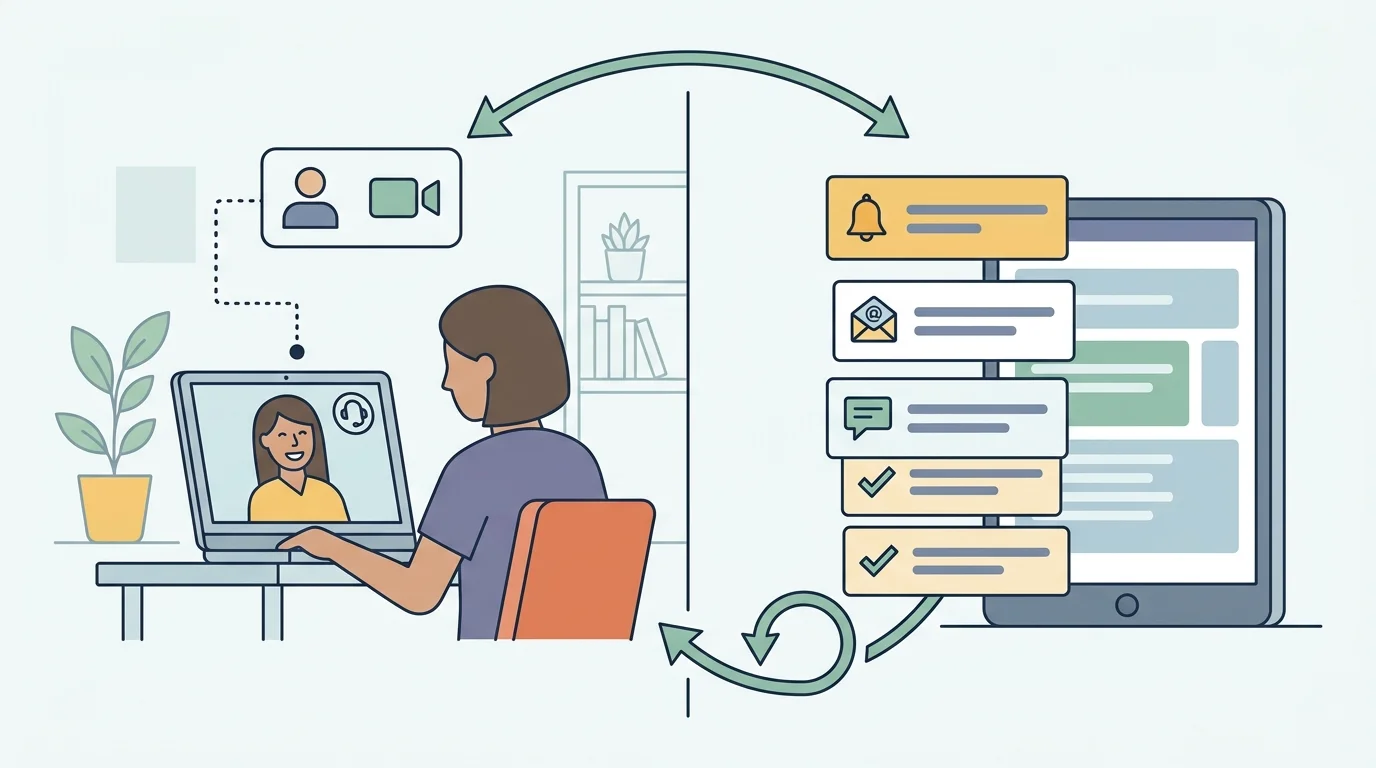
Remote practice removes the commute and offers location flexibility, but it does not guarantee schedule control. Telehealth models vary from scheduled video visits to shared on-demand queues to asynchronous messaging platforms.
A scheduled telehealth role often mirrors a traditional clinic, replacing the exam room with a camera. You still face back-to-back appointments, productivity quotas, and strict no-show policies. Asynchronous care models might allow you to log in at your discretion, but they replace face-to-face visits with high-volume clinical messaging and strict response-time mandates.
Licensing and regulatory compliance add administrative weight to remote roles. Cross-state telehealth practice involves managing multiple jurisdictions. Depending on the arrangement, HHS guidance notes you may need a full license, temporary practice laws, reciprocity, or telehealth registration to practice across state lines. Clinicians should verify the patient’s location and follow applicable state requirements, while license maintenance may involve annual fees and continuing education.
When evaluating a remote role on WeekdayDoc, check the disclosures for the mix of patient states, visit length expectations, and asynchronous duties. Telehealth provides excellent geographic freedom, but the administrative tasks, portal messages, and technology troubleshooting can push your workday into the evening if quotas are set too high.
Inpatient Roles: Shift Structure and Acuity
Inpatient nurse practitioner roles organize work around a unit census, an admission flow, or a specific service line. You leave the outpatient panel behind and focus entirely on the patients admitted to your team.
The inpatient inbox consists of immediate operational tasks. You manage active orders, stat results, admissions, discharge planning, handoffs, and urgent cross-cover issues. When your 12-hour shift concludes, you hand the pager to the oncoming clinician and leave the hospital. This clear boundary appeals to many NPs transitioning from outpatient roles, a pattern also common in physician assistant work-life balance comparisons.
The cost of that boundary is intensity. Inpatient shifts involve high-acuity decision making, rapid interventions, and constant coordination with attending physicians and specialists. The schedule regularly includes nights, weekends, and major holidays, making sleep disruption and variable weekly routines central components of the job.
To evaluate an inpatient offer, ask about the average daily census, the admission responsibilities, and the specific cross-cover expectations. You need to understand the hospital credentialing requirements, the attending availability overnight, and the autonomy you possess to admit, discharge, and adjust treatment protocols independently.
Leadership and Administration: The Cost of Protected Time
Transitioning into clinical leadership or administration introduces system-level influence. You step away from full-time patient care to manage quality metrics, recruitment, budgets, staffing challenges, and operational troubleshooting.
Leadership improves your schedule only when the organization explicitly protects your administrative time. If a clinic expects you to maintain full clinical productivity while handling management duties, your work-life balance will deteriorate rapidly as you find yourself charting and answering administrative emails late at night.
Clarify what percentage of the role is allocated to clinical versus administrative FTE, along with the budget authority you hold and whether you have the power to adjust staffing levels. A well-designed leadership role provides autonomy and predictable weekday meetings, but it requires firm boundaries to prevent operational escalations from consuming your personal time.
Comparing the NP Work-Life Variables
To make an accurate decision, evaluate the settings across the exact same operational criteria. The matrix below outlines how the structural burdens shift across different clinical environments.
| Setting | Panel Structure | Inbox Burden | Call Profile | 2023 AANP Median Total Comp |
|---|---|---|---|---|
| Primary Care | Longitudinal panel (Median 16-18 patients/day) | High (portal messages, labs, refills, forms, care coordination) | Weekday schedule + rotating evening/weekend triage | Data not isolated by single worksite |
| Outpatient Specialty | Varies (episodic vs chronic surveillance) | Moderate to High (specialized imaging, procedure follow-up, referrals) | Practice-dependent (predictable vs procedural/hospital backup) | Data not isolated by single worksite |
| Urgent Care | Shift-based throughput (Median 35 patients/day) | Low (limited to shift-generated callbacks and test results) | Days, evenings, weekends, and holidays | $128,960 |
| Telehealth | Shared queue or virtual panel | High (asynchronous messages, strict quotas, tech troubleshooting) | Scheduled blocks or flexible login windows | $130,000 |
| Inpatient | Unit census and cross-cover | Moderate (orders, handoffs, rapid discharges, admissions) | 12-hour shifts, nights, weekends, holidays | $135,000 |
| Leadership | Reduced clinical FTE (if protected) | High (metrics, staffing escalations, budget management) | Weekdays + administrative availability and after-hours coverage | Data not isolated by single worksite |
(Note: Compensation figures reflect median total compensation from the AANP 2024 Nurse Practitioner Compensation Report, representing 2023 calendar year data. Work-setting samples differ in size and role mix, and these figures serve as historical benchmarks rather than 2026 salary guarantees.)

Final Verdict: Score the Job, Not the Setting
A sustainable schedule depends on the mechanics of the offer, so evaluate those mechanics rather than relying on the specialty name. Calculate the effective hourly value of any contract by dividing the total expected cash compensation by all required work time. Factor in scheduled patient care, mandatory meetings, charting, inbox management, call coverage, and callback time. A high salary loses its value if the clinic requires ten unpaid hours of documentation every week.
Which Setting Should You Choose?
- Choose primary care if you value patient continuity and predictable clinic hours, provided you negotiate protected administrative time and explicit inbox coverage during your PTO.
- Choose urgent care if you prioritize firm boundaries at the end of the day and prefer episodic treatments, and you are willing to work evenings, weekends, and manage high patient throughput.
- Choose inpatient practice if you want to leave the portal inbox behind and prefer condensed 12-hour shifts, and you can tolerate high-acuity pressure, night rotations, and holiday scheduling.
- Choose telehealth if geographic flexibility is your primary requirement, provided the employer discloses visit quotas, asynchronous expectations, and covers all cross-state licensing costs.
Before you sign any contract, use WeekdayDoc to check the market percentiles and dollar-per-RVU context. The platform's AI contract scanner reviews your PDF or text for problematic non-competes, tail coverage obligations, and relocation payback clauses, flagging them for professional review. A job is only as sustainable as the terms written in the agreement.
Evaluate your next clinical role using clear data, not assumptions. Search transparent listings, review 0-to-10 work-life scores, and use the AI contract scanner at WeekdayDoc to find a healthcare career that respects your time.