Remote Clinical Informatics Jobs: Choose Your Fit
Compare remote clinical informatics jobs by role, training, pay, meetings, project work, and patient-facing time to find a better career fit.

Searching for remote clinical informatics jobs does not guarantee a predictable lifestyle or freedom from patient interaction. The work can mean configuring electronic health records from a home office, analyzing clinical data across time zones, or leading clinical strategy while maintaining a direct patient panel.
The American Medical Informatics Association defines clinical informatics as an interdisciplinary field that brings together professionals from medicine, nursing, pharmacy, public health, and computer science. This work focuses on analyzing, designing, implementing, and evaluating information systems to improve care access, outcomes, and the clinician-patient relationship. Finding a role that fits your background means comparing clinical versus technical duties, patient-facing time, project types, meeting loads, and compensation structures.
General job boards often bury schedule requirements and workload risks. WeekdayDoc helps you search and compare remote, hybrid, and flexible healthcare roles using structured work-life scores, salary context, and schedule data. This allows you to evaluate a position based on actual travel, call expectations, and administrative burden rather than assuming every remote role is low-stress.
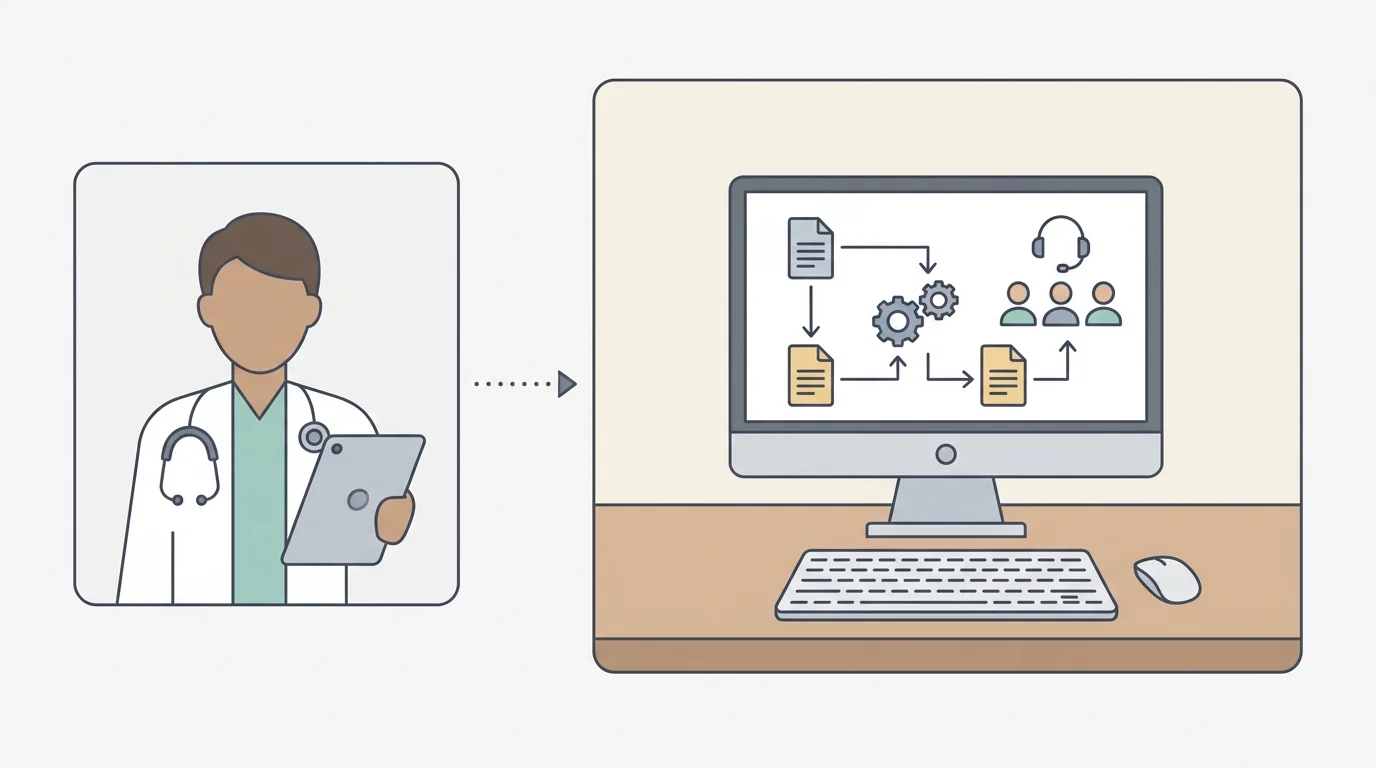
Roles That Match Your Clinical Background
Different clinical backgrounds map to specific informatics disciplines, allowing you to transition from direct care into technical configuration, clinical governance, or data analysis depending on your license and technical readiness.
| Clinical Background | Common Responsibilities | Likely Training Signal | Patient-Facing Time | Main Workload Risk |
|---|---|---|---|---|
| RN, NP, PA, PharmD | Workflow analysis, EHR configuration, testing, training | Vendor certification, implementation experience | Usually indirect | Testing deadlines, support tickets, go-lives |
| Nurse Leaders | Governance, adoption, process improvement | Clinical and IT experience combined | Indirect or blended | Balancing clinical and IT expectations |
| Practicing Physicians | Clinical governance, decision support, strategy | Fellowship or extensive project leadership | None to substantial | Executive alignment, unclear decision authority |
| Quality/Data Staff | Data modeling, validation, product requirements | SQL, reporting tools, analytics experience | Usually indirect | Rapid project scope changes, ambiguous ownership |
| HIM Professionals | Data quality, reporting, registry maintenance | AHIMA credentials, relevant degrees | Usually indirect | Repetitive computer work, compliance deadlines |
EHR, Application, and Nurse Informatics
Clinical systems analysts, Epic analysts, and application specialists bridge the gap between software design and end-user needs. This work involves gathering operational requirements, mapping workflows, configuring modules, testing updates, and training clinicians. A September 2026 remote analyst posting for Molina Healthcare requires at least three years of implementation experience to handle testing, training, and issue resolution, while a remote EMR analyst role at Cincinnati Children’s involves leading design meetings and consulting with end users about clinical applications.
Nurse informaticists connect nursing workflows with IT and clinical governance. They design clinical documentation, refine decision support, and guide system adoption. Geisinger’s 2026 remote nurse informatician posting targets candidates with five years of clinical experience and four years of IT experience. Remote arrangements in this category frequently carry location or travel limits. For example, a remote nurse informaticist role at Computer Task Group requires Pacific-hours coverage and mandates three to six travel days per month.
Physician, Pharmacy, and Advanced-Practice Roles
Physicians, pharmacists, and advanced practice clinicians often step into subject matter expert, medical director, or chief medical information officer positions. These professionals guide clinical policy, standardize order sets, oversee medication safety, and manage AI oversight. A U.S.-remote physician clinical SME posting at Aptive asks for eight years of experience in healthcare modernization and clinical operations.
These roles vary widely in their clinical expectations. Ovatient offers a blended U.S.-remote CMIO role structured as up to 70% clinical practice and 30% informatics leadership, and Sutter Health lists a non-remote physician informatics role with a similar 70/30 split.
Data, AI, HIM, and Career-Changer Paths
Clinicians moving away from direct care can target clinical data, artificial intelligence, product, terminology, and registry positions. Health information management professionals and medical registrars analyze clinical data, maintain databases, and validate patient information. When exploring these transitions, reviewing the broader market of remote utilization review nurse jobs or quality assurance roles can reveal overlapping data skills. Expanding your search terms to include remote clinical systems analyst, remote health informatics, remote clinical data, and remote healthcare AI will help you capture these adjacent opportunities.
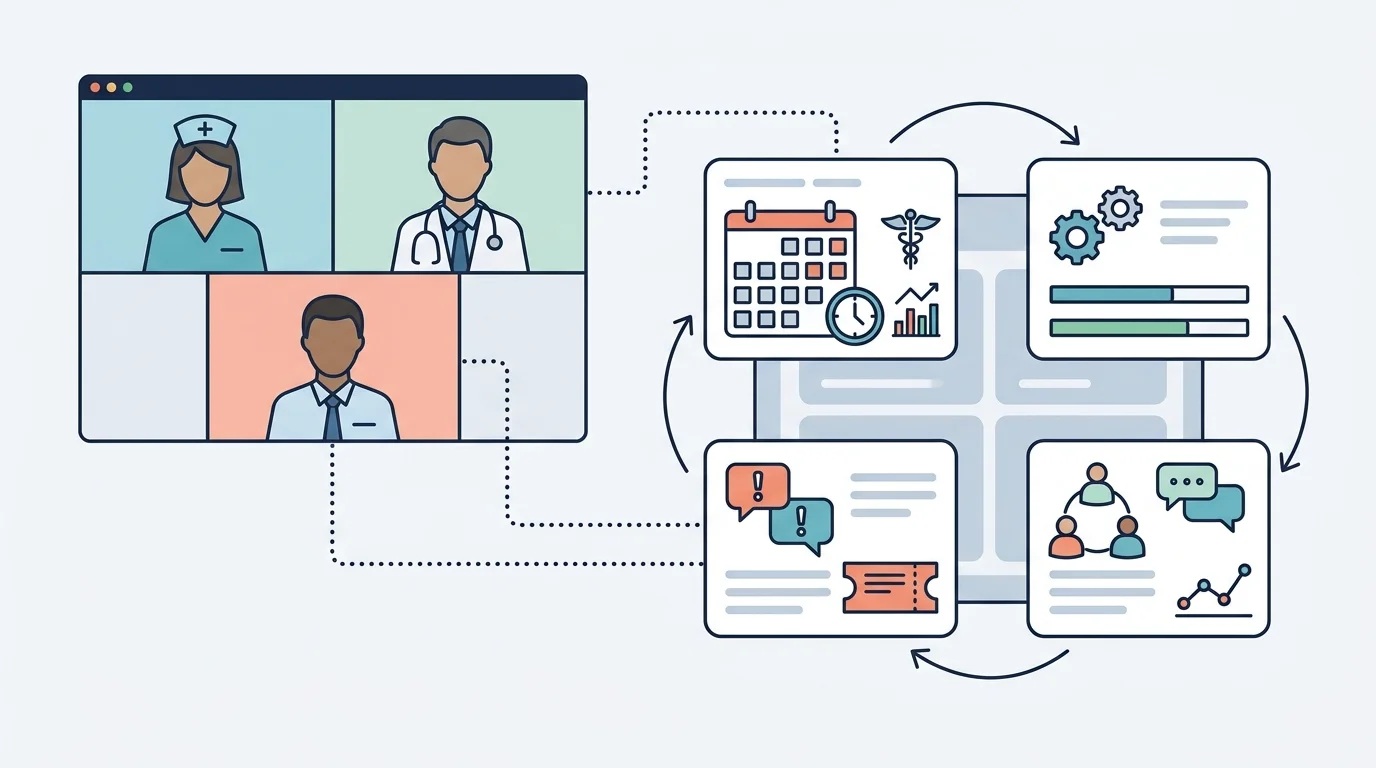
Training, Credentials, and Skills
Finding an informatics role involves distinguishing between general job qualifications and formal board certification. Requirements range from specific degrees and fellowships to employer-sponsored vendor training.
Physicians: Fellowship and Board Certification
You do not need a clinical informatics fellowship for every physician leadership role, but you do need one to achieve American Board of Preventive Medicine clinical informatics certification. The Accreditation Council for Graduate Medical Education mandates a 24-month fellowship. This curriculum covers programming, database design, user-interface design, workflow analysis, clinical decision support, implementation, data matching, and telehealth systems.
To apply for ABPM clinical informatics certification, you need a medical degree and current primary specialty board certification. The American Board of Preventive Medicine states that the ACGME-accredited fellowship pathway requires successful completion of a minimum of 24 months in an ACGME-accredited Clinical Informatics fellowship program. Reviewing current ABPM rules can help you plan your certification route.
Clinicians: Experience, EHR, and Employer Training
Nurses, advanced practice clinicians, and pharmacists face highly variable training paths. Employers often prioritize a clinical degree paired with EHR super-user or implementation experience over a specialized master's degree. For instance, Aspen Valley’s hybrid clinical informatics analyst posting accepts an RN, APRN, PA, PharmD, or a relevant master’s degree paired with five years of healthcare experience and Epic certification.
Mid-career professionals from interdisciplinary backgrounds can pursue the AMIA Health Informatics Certification. The AHIC Certification Guide sets experience requirements based on your degree and the percentage of time you perform informatics work. Professionals with a master’s degree in a related field need six years of experience working 50% to 100% in informatics, or eight years at 20% to 49%, so AHIC validates existing experience rather than serving as an entry-level stepping stone.
HIM and Interdisciplinary Credentials
Entry-level candidates and HIM professionals can access the field through foundational education. The Bureau of Labor Statistics notes that health information technologists typically need at least an associate degree. AHIMA offers a Foundations of Health Informatics microcredential covering health information systems, data management, reporting, privacy, and project management. Additionally, the RHIA credential requires completion of qualifying CAHIIM-accredited health information management education.
Practical skills matter more than credentials for daily operations. Demonstrating workflow mapping, clinical content design, implementation facilitation, and the ability to translate technical constraints to clinical teams will set you apart.
Compare Patient Care, Projects, and Meetings
A remote informatics job replaces physical commuting with virtual collaboration. Looking at a role's structure helps you understand the daily workload.
| Role Type | Project Work | Meeting Load | Patient-Facing Time | Main Workload Risk |
|---|---|---|---|---|
| EHR Analyst | High during implementation | Medium to high | Indirect | Ticket volume, training, go-live deadlines |
| Nurse Informaticist | Workflow, adoption, governance | Medium to high | Indirect or blended | Dual clinical and IT expectations |
| Physician Leader | Strategy, policy, implementation | High | None to substantial | Executive alignment, stakeholder management |
| Data/AI Specialist | Modeling, validation, analytics | Medium to high | Indirect | Ambiguous ownership, changing project scope |
| HIM Professional | Data quality, reporting, privacy | Low to medium | Indirect | Repetitive computer tasks, compliance deadlines |
Patient-Facing Time: None, Indirect, or Blended
What counts as clinical work depends on the employer. Many analyst, clinical SME, data, and HIM roles involve zero scheduled patient encounters. Instead, these roles affect care indirectly by refining order sets, preventing medication errors, and smoothing documentation workflows.
Blended arrangements preserve direct care. Ovatient’s 70% clinical and 30% CMIO structure means you still manage a panel, chart visits, and answer patient messages while dedicating specific blocks to leadership tasks.
Project Work Versus Support Work
Your daily stress depends on whether you own projects or resolve tickets. Project work involves redesigning workflows, deploying new modules, or leading a clinical governance committee. Conversely, support work requires answering end-user questions, troubleshooting login failures, maintaining existing configurations, and responding to system outages. High-support roles demand rapid context switching and strict adherence to service-level agreements.
Meetings, Time Zones, Travel, and Go-Lives
Working from home does not mean working alone. Analyst and nurse informatics roles feature significant meeting blocks for requirements gathering and end-user training, while physician leaders spend most of their informatics time in executive alignment and stakeholder meetings. Asking employers about recurring meetings, protected focus time, and core hours will clarify your daily commitments.
Remote work can still require travel. CTG’s requirement of three to six travel days per month illustrates why clarifying the location policy matters. You may also face after-hours obligations, as implementations, system upgrades, and go-lives routinely happen on nights and weekends to minimize clinical disruption.
WeekdayDoc helps you sort through these hidden burdens. The platform uses structured fields and work-life scores so you can compare patient-care percentages, meeting loads, travel expectations, and administrative burdens across different listings.
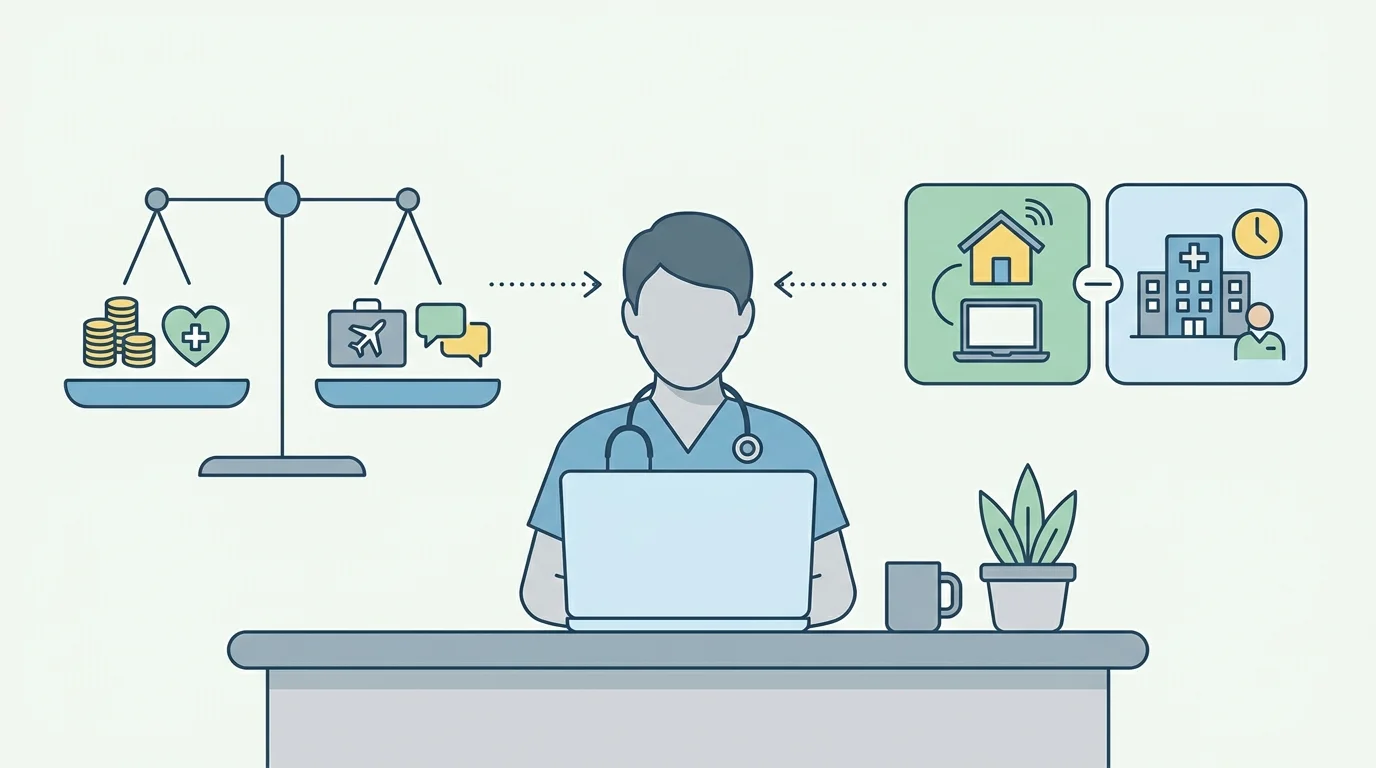
Pay, Benefits, and Clinical Opportunity Cost
There is no single salary average for remote clinical informatics jobs. The compensation ceiling varies widely based on your clinical degree, management responsibilities, and the employer's location.
What Current Postings List
A snapshot of September 2026 job postings shows how widely pay varies across disciplines and experience levels.
- Molina Healthcare: Remote clinical informatics analyst range of $44,936.59 to $97,362.61.
- Cincinnati Children’s: Remote EMR Analyst I training-operations range of $67,537.60 to $86,112.
- Mass General Brigham: Hybrid clinical informatics RN principal range of $117,707.20 to $171,204.80.
- Aspen Valley: Hybrid clinical informatics analyst range of $99,000 to $158,000.
- Layer Health: Physician informatician base range of $200,000 to $260,000 plus equity.
- Sutter Health (Non-Remote Comparator): Blended 70% clinical and 30% physician informatics role range of $300,000 to $500,000.
Data from adjacent occupations in the Bureau of Labor Statistics lists a median annual wage of $68,020 for health information technologists and medical registrars, while medical and health services managers show a median of $123,860. These figures provide context for the listed occupations.
How to Compare Total Compensation
Comparing an informatics offer requires measuring the package against the clinical income you would give up. Calculate base salary, annual bonuses, equity, health coverage, retirement contributions, and CME or licensure support, then subtract your lost clinical income, expected RVU bonuses, call pay, and any self-funded credentialing costs.
For blended physician roles, getting a clear breakdown of your clinical percentage prevents mismatched expectations. Ask how the employer calculates RVU targets when 30% of your time is dedicated to informatics, and determine whether your informatics time is fully protected or if answering patient messages during IT meetings is the norm. WeekdayDoc provides salary, RVU, salary-to-FIRE, and market-comparison tools to help you judge an offer against its actual role design.
How to Vet and Land a Sustainable Role
Inspecting the operational details of a remote job before accepting an offer reveals what vague job descriptions often leave out, including rigid schedules and heavy administrative demands.
Vet the Remote Arrangement, Not Just the Label
These questions can guide your interviews:
- Location eligibility: Confirm whether the role is open nationwide, restricted to specific states, or bound by regional proximity.
- Time zone: Identify the core hours and required coverage for different time zones.
- Clinical licensure: Determine which state licenses and payer requirements apply if the role includes any patient-facing work.
- Travel: Ask for the exact number of travel or on-site days expected each quarter.
- Workload split: Clarify the exact percentage of time devoted to chart review, stakeholder consultation, project work, and ticket support.
- After-hours obligations: Ask about the frequency of nights, weekends, on-call rotations, and go-live escalation coverage.
- EHR environment: Identify the specific platforms and modules you will configure.
- Certification support: Check whether the employer funds vendor certification and allows you to complete it during paid working hours.
- Success metrics: Ask whether performance is measured by clinical outcomes, project delivery, adoption rates, or ticket closure speed.
- Contract terms: Review the offer for non-competes, repayment clauses, tail coverage requirements, and side-project ownership limits.
Asking to see a representative weekly calendar reveals the true meeting density and protected focus time far better than a recruiter's promise of flexibility.
Translate Clinical Experience Into Informatics Evidence
You already possess informatics skills if you manage quality initiatives, update order sets, or champion new software in your department. Presenting those skills in technical terms helps hiring managers recognize that background.
| Clinical Experience | Informatics Translation |
|---|---|
| EHR super-user or department champion | End-user support, workflow analysis, adoption strategy |
| Quality improvement committee | Measurement, process redesign, change management |
| Charge nurse or physician leadership | Clinical governance, stakeholder coordination |
| Order-set or documentation updates | Clinical content design, clinical decision support |
| Research or registry management | Data validation, abstraction, analytics |
| Medication safety initiatives | Medication informatics, formulary management |
| Telehealth implementation | Virtual-care workflow design, patient-facing technology |
List the specific EHR platform and modules you use. Describe the clinical problem, outline your intervention, and quantify the outcome when you have the data to support it. Highlighting any experience with reporting, dashboards, SQL, project management, and governance strengthens your application. Building a small portfolio with a workflow map or a decision-support evaluation helps demonstrate your capability, and you can also gain insight into translating educational duties by comparing remote nurse educator opportunities.
Find, Compare, and Negotiate With WeekdayDoc
WeekdayDoc is a marketplace for sustainable healthcare careers. You can compare remote, hybrid, and flexible informatics jobs by profession, specialty, location, patient-facing time, and work type. The platform converts standard job descriptions into comparable data, displaying salary context and a 0-to-10 work-life score. Setting AI-matched alerts lets you receive notifications for roles that fit your criteria and apply with one click.
Employers hiring informatics professionals benefit from constructing transparent listings that disclose the required time zone, travel expectations, meeting cadence, go-live duties, and certification support upfront. WeekdayDoc employer tools turn standard URLs into structured listings, calculate a market context score, and deliver targeted clinician outreach alongside analytics for impressions and applications.
Remote Clinical Informatics Jobs FAQ
Do I Need a Fellowship or Master’s?
A physician does not need a fellowship for every informatics job. The ACGME fellowship and ABPM certification matter primarily for formal physician board certification and certain senior leadership tracks. Similarly, a master's degree is not universally required for nurses, advanced practice clinicians, pharmacists, or analysts. Employers often accept a combination of clinical experience, implementation background, and vendor certification.
Are Remote Roles Patient-Facing and Nationwide?
Remote roles vary widely in patient contact. Pure technical or data roles feature no scheduled patient care, while blended roles include chart review, virtual care, or a defined direct-care percentage. Clarifying the expected clinical duties with the hiring manager helps set boundaries. Remote also does not automatically mean nationwide. Current postings frequently include state-specific restrictions, required time-zone coverage, and mandatory travel days based on corporate tax and licensure laws.
Can I Combine Clinical Practice With Informatics?
Physicians and advanced practice clinicians can combine clinical practice with informatics leadership. A blended role requires explicit boundaries, meaning the clinical percentage, RVU targets, and protected informatics time need to be defined in your contract. Comparing the total compensation package against your current practice income factors in lost productivity bonuses, call pay, and benefits.
Compare remote clinical informatics jobs by profession, location, and burnout risk on WeekdayDoc. Review comparable salary data, set AI-matched alerts, use our contract scanner to spot problematic clauses, and find a role that fits your life.