Career Change From Nursing: Find Your Best Fit
Compare non-bedside, remote, leadership, and healthcare-adjacent paths for a career change from nursing, including retraining, pay, schedule, and work-life fit.

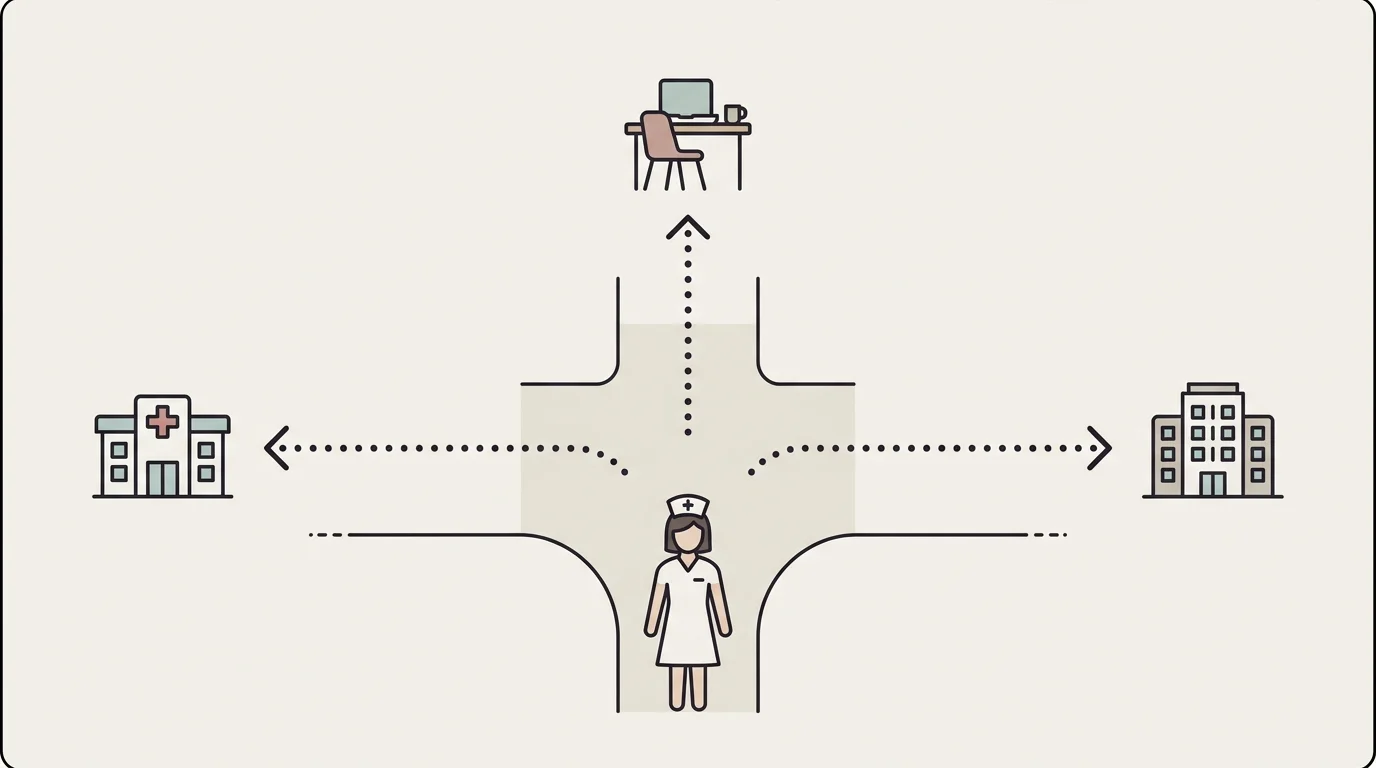
Seeking a career change from nursing does not always mean abandoning your clinical background. The desire to leave your current position often stems from a specific operational problem rather than a loss of interest in patient care. Whether you need a different shift, a non-bedside environment, a remote setting, or a completely new field, the best path depends on the specific friction you want to eliminate and the retraining you are willing to complete.
Evaluating your next move requires real data about daily schedules, call expectations, and workload, because job titles rarely tell the whole story. WeekdayDoc helps clinicians inspect actual job details by offering visible work-life scores and schedule clarity, which lets you find a role that fits your life before applying.
Decide What You Want to Change First
Career transitions exist on a spectrum. The closer your new role is to your existing clinical experience, the less retraining you need. Keeping your registered nurse license active opens doors to immediate moves, but neighboring roles might retain the same emotional, regulatory, or schedule pressures you want to leave behind. Moving further away from patient care offers a cleaner break, though it often requires more education, a temporary compensation reset, or a longer job search.
Before browsing open positions, identify the exact problem you need to solve. Because burnout takes many forms, solutions vary widely. If physical strain is the primary issue, an outpatient clinic or case management role might resolve it, whereas a structured daytime administrative position makes more sense for unpredictable schedules. Some nurses want to stop providing direct patient care altogether, while others want to escape the hospital setting or a specific employer. Naming your primary goal, whether that is schedule predictability, remote work, income protection, autonomy, or a new professional identity, focuses your search.
Turn Nursing Experience Into Transferable Skills
Clinical work builds a catalog of operational skills that employers value. The challenge lies in translating hospital terminology into standard business language. Hiring managers outside of clinical leadership might not understand the intensity of a bedside shift, which means you have to describe your functions in terms they recognize.
Nursing requires constant assessment and triage, translating directly to prioritizing risk and making time-sensitive decisions. Patient and family education maps well to stakeholder training and customer education, and care coordination functions as complex project management.
Instead of listing patient counts or unit names on your resume, describe the outcomes of your work. Charge nurse or preceptor experience becomes workflow leadership, delegation, and coaching, while quality and safety committee work translates to process improvement, compliance auditing, and incident review. Reframing your daily duties this way turns your clinical background into a versatile asset for a career change from nursing rather than a narrow hospital credential.
Compare Lower-Retraining Non-Bedside Paths
If you want to maintain your nursing salary without returning to school, start with roles that use your active RN license. These options typically present the lowest barrier to entry, though they trade physical bedside strain for different types of demands.
Outpatient or ambulatory nursing reduces hospital intensity while keeping you engaged in clinical work. Clinic nurses often enjoy regular daytime hours and holidays off, but you still need to check for late clinic expectations, heavy patient inbox management, weekend rotations, and after-hours call requirements.
School and occupational health nursing offer defined populations and distinct daytime schedules. These roles focus heavily on assessment, triage, prevention, and emergency response. While the calendar might align with a school district or corporate office, these positions often involve solo coverage, and you might face seasonal volume spikes, athletic event coverage, required travel between sites, or after-hours responsibilities depending on the employer.
Case management, utilization review, and clinical documentation roles remove direct physical care. These positions rely on your clinical judgment to assign resources, evaluate care necessity, and ensure accurate records. Payer-side nursing and care navigation offer reliable hours, though the trade-off involves heavy phone queues, strict turnaround targets, denial management, audits, and prolonged screen time.
Education and leadership can be fulfilling options for nurses who enjoy coaching, managing workflows, and handling operations, but management brings its own demands. For example, some medical and health services managers work more than 40 hours per week, and evening or weekend work can be required in healthcare settings that operate around the clock. Managers can also be on call in case of emergencies. The role includes staff supervision, budget monitoring, and operational coordination.
Explore Remote, Adjacent, and Complete Career Changes
Moving away from direct patient interaction opens up remote opportunities, healthcare-adjacent fields, and new industries.
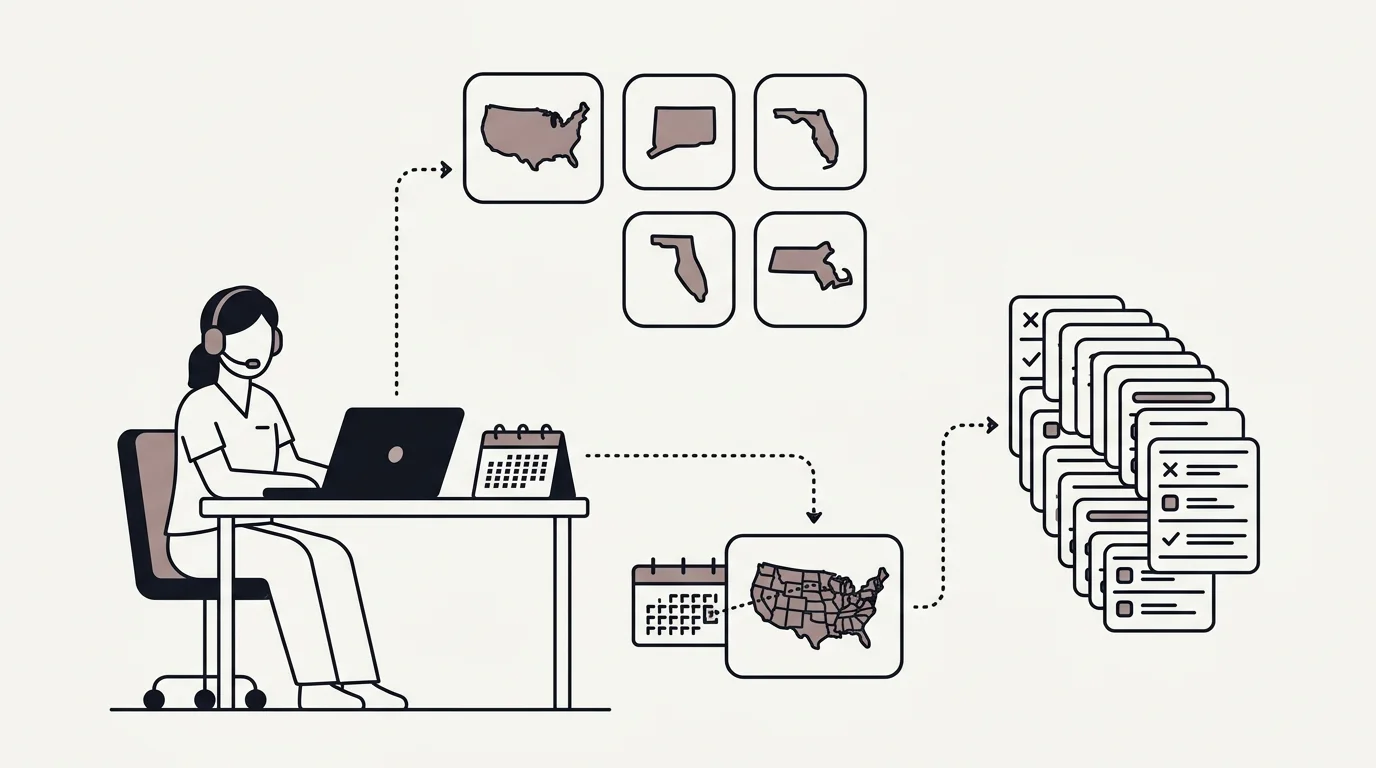
Telehealth triage, remote patient monitoring, and virtual case management allow you to work from home. Remote work represents a location change rather than a guaranteed reduction in stress. Working from a home office eliminates your commute, but it often adds continuous call queues, rigid response-time standards, and strict productivity targets.
For telehealth nursing, the patient's location determines the applicable state license. Under the Nurse Licensure Compact, a nurse must be licensed in the state where the patient is located at the time nursing service is provided, and this rule applies to telehealth care. A nurse with a multistate license can provide telehealth services to patients in other NLC states and territories, so confirm that the relevant jurisdiction participates in the compact before accepting a patient-facing telehealth job.
Nursing informatics, electronic health record implementation, and clinical research sit adjacent to traditional healthcare. These roles use your clinical understanding to improve systems, evaluate software, or manage trials. Employers hiring for informatics or health information roles might expect analytics experience, software certifications, or an additional degree. Implementation roles frequently require travel for go-live support, and the work centers around specific project cycles.
A complete move out of healthcare into technology, writing, sales, recruiting, or corporate operations requires a longer transition. You will likely need to build a portfolio, network in a new industry, and earn credentials. This path offers the clearest break from clinical burnout, though it often involves a longer search and a temporary reset to entry-level compensation.
Evaluate Pay, Retraining Requirements, and Work-Life Fit
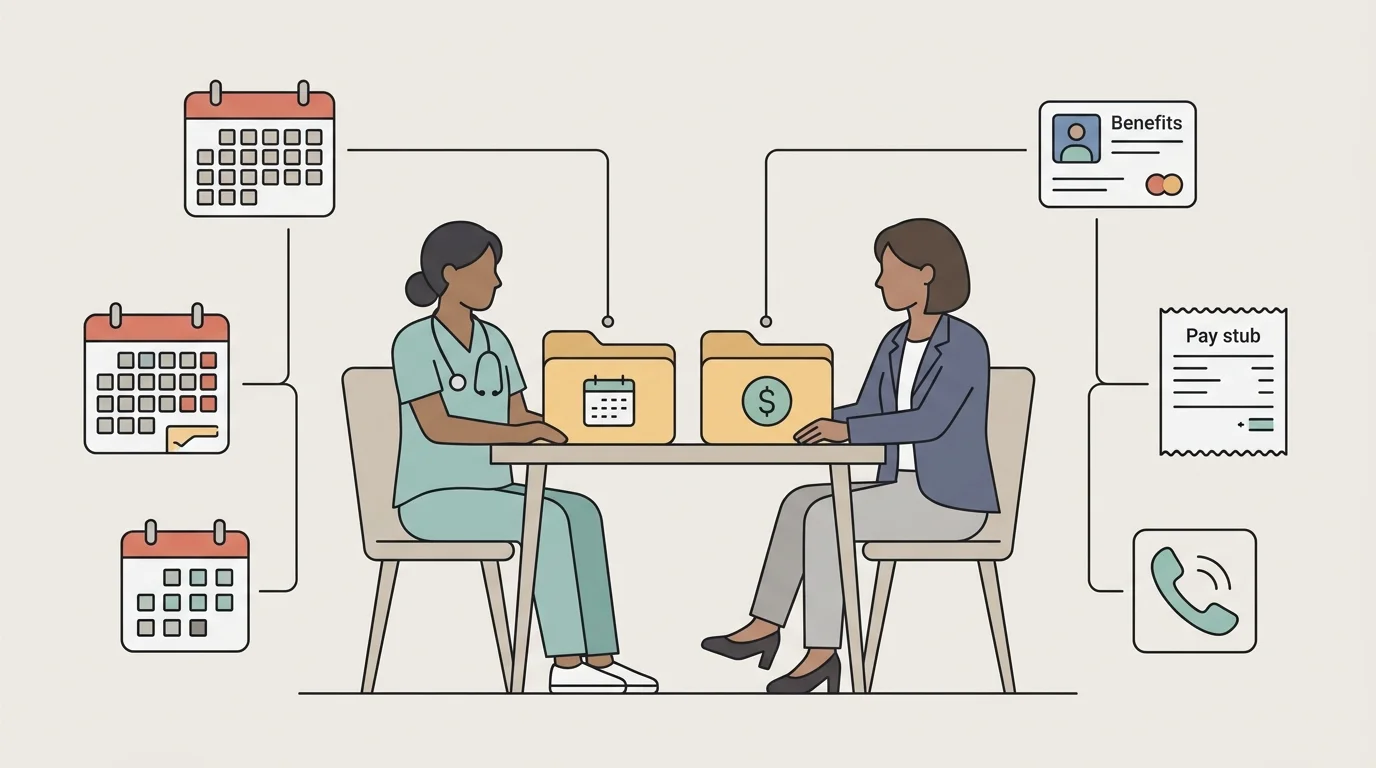
Before leaving your current position, build a realistic compensation baseline. Total compensation includes base pay, shift differentials, overtime eligibility, call stipends, and bonuses. Evaluating an offer also involves weighing health insurance premiums, retirement contributions, paid time off, licensure reimbursement, and whether a new role classifies you as a W-2 employee or a 1099 independent contractor.
Federal labor data provides helpful context for different occupations, though median salaries do not represent guaranteed offers for transitioning nurses.
| Occupation | Median Annual Pay | Data Year |
|---|---|---|
| Registered Nurses | $93,600 | May 2024 |
| Medical and Health Services Managers | $117,960 | May 2024 |
| Health Information Technologists | $68,020 | May 2025 |
| Health Education Specialists | $63,000 | May 2024 |
| Medical Records Specialists | $50,250 | May 2024 |
The U.S. Bureau of Labor Statistics reports a $97,550 median annual wage for registered nurses in May 2025. It lists median annual wages of $78,620 in educational services (state, local, and private) and $110,780 in government (excluding state and local education and hospitals) among some of the top industries employing registered nurses.
Evaluate schedule quality rather than chasing vague promises of low stress. Measure the actual number of nights, weekends, holidays, and on-call hours required by asking about daily caseload limits, queue volumes, administrative burdens, and calendar autonomy during interviews. You can review remote RN jobs on WeekdayDoc to see schedule details and a work-life score for each listing before you apply.
Plan the Transition and Vet the Offer
Turn your career comparison into a structured transition plan by setting hard constraints. Decide your maximum weekly hours, acceptable commute, minimum base pay, and required benefits. You should also determine whether you refuse to work nights, weekends, or call, and if you want to preserve your active RN license.
Choose one lower-retraining path and one longer-term path to test, then audit real job postings to identify recurring requirements for degrees, software experience, travel, and state restrictions. Avoid paying for a new certificate or degree program until you see that credential requested repeatedly in roles you want. You can test a chosen path by shadowing a colleague, requesting an internal transfer, volunteering for a quality project, or taking a short course.
Rewrite your resume around business outcomes.
| Clinical Experience | Transition-Oriented Phrasing |
|---|---|
| Patient assessment and triage | Prioritized risk and identified escalation needs |
| Care coordination | Coordinated multidisciplinary services and resources |
| EHR documentation | Maintained compliant records and identified data gaps |
| Patient and family education | Translated complex information into action plans |
| Charge or preceptor duties | Coordinated workflow, delegated tasks, and coached staff |
| Quality or safety committee | Supported process improvement and risk reduction |
During an interview, ask specific questions about coverage, such as who handles your workload when you take paid time off. Confirm whether the role is salaried or hourly, and find out how the company measures daily productivity. For virtual roles, clarify if the position remains fully remote after onboarding or if it requires occasional travel to a corporate office or client sites.
Review every written offer carefully before signing by checking the stated work hours, schedule-change rights, bonus formulas, and termination notice requirements. Watch for sign-on bonus repayment clauses and restrictive covenants, and verify malpractice obligations if you are considering consulting roles or independent contractor work. You can paste an offer into the WeekdayDoc AI Contract Scanner for an educational first-pass review to flag potential issues, which helps organize questions before taking material concerns to qualified legal counsel.
Frequently Asked Questions About Leaving Nursing
What is a good career change for a nurse?
The best change matches your specific priority. If you want a predictable schedule, outpatient clinics or utilization review work well. If you want to drop direct patient care, health informatics, clinical documentation, or medical sales offer strong alternatives, provided the new path addresses the friction you want to solve.
What can nurses do besides bedside nursing?
Nurses can move into outpatient care, education, case management, utilization review, quality improvement, informatics, healthcare operations, and clinical research. Outside of healthcare, former clinicians transition into project management, corporate recruiting, medical writing, and health technology sales.
Can nurses work remotely without going back to school?
Telephone triage, telehealth, remote patient monitoring, and remote case management often require only an active RN license and clinical experience, applying your assessment and coordination skills in a virtual environment.
Which nursing jobs have the most predictable schedules?
School nursing, occupational health, utilization review, and clinical documentation typically operate on standard daytime schedules. Outpatient clinics also offer regular hours, though some require late-evening inbox management or weekend rotations, so verify the actual schedule during the interview.
Do remote nursing jobs require more than one state license?
Telehealth and patient-facing remote roles generally require you to hold a license in the state where the patient is located. A multistate license under the Nurse Licensure Compact covers many states, but you still need to verify individual board regulations and your employer's specific coverage map.
Is healthcare administration a good career change for nurses?
Administration fits nurses who enjoy managing workflows, budgets, and team dynamics, but it does not automatically cure burnout. Managers often face severe staffing shortages, heavy meeting loads, and after-hours escalation calls. Evaluate the operational support provided to the leadership team before accepting a role.
Can nursing experience transfer to health informatics?
Clinical experience holds high value in informatics because you understand how end-users interact with electronic health records. Transferring usually requires demonstrating technical proficiency by participating in an EHR go-live, earning a software certification, or completing an informatics degree.
Will I take a pay cut if I leave bedside nursing?
Leaving bedside nursing can result in a pay cut, especially if you move into lower-acuity roles like medical records or lose shift differentials, overtime pay, and weekend bonuses. Compare total compensation packages, including benefits and remote-work savings, rather than relying on base salary alone.
Should I keep my RN license if I leave clinical work?
Keeping your RN license active preserves your flexibility and serves as a credential in healthcare-adjacent fields like health technology and medical sales. Maintaining it requires tracking renewal deadlines, paying state fees, and completing continuing education requirements.
How should I explain leaving nursing in an interview?
Focus on the work you want to do next rather than complaining about bedside burnout. Explain that you want to scale your impact by improving systems, that you excel at project coordination, or that you are seeking a role focused on patient education and preventive health.
The best next role aligns its schedule, daily workload, licensing obligations, and contract terms with the life you are trying to build. Visit WeekdayDoc to search clinician listings with visible work-life scores, check the Market Pulse for compensation context, and evaluate real schedule trade-offs before you apply.