Recognizing the Signs of Physician Burnout and Finding Your Path to Recovery
Discover the key signs of physician burnout. This guide offers practical strategies for recovery, helping you restore well-being and build a sustainable career.

It's a familiar story: you feel a constant sense of exhaustion, a growing distance between you and your patients, and a nagging voice asking if any of this is even making a difference. These aren't just signs of a tough week. They are the classic hallmarks of physician burnout.
This is far more than just stress. Burnout is a slow erosion of your professional spirit, a gradual draining of the very energy that brought you into medicine. Recognizing it for what it is—an occupational syndrome, not a personal failing—is the first real step toward taking back control.
Decoding Physician Burnout Beyond Simple Stress

Let's get one thing straight: burnout is not a sign of weakness. It’s a predictable consequence of chronic, unmanaged stress baked into the healthcare system itself.
Think of your professional reserves as a battery. Every demanding shift, every pile of administrative paperwork, every emotionally draining patient encounter draws down its power. Without a real chance to recharge, that battery eventually dies. You’re left running on empty.
This isn't just about being tired. It's a deeper, more persistent state that frays your ability to empathize, connect, and find meaning in what you do. To really understand it, you have to look at its three core components. Breaking it down helps put a name to the feeling and shifts the focus from silent suffering to finding a solution.
The Three Core Components of Physician Burnout
Burnout is officially defined by three distinct, yet interconnected, symptoms. As you read through them, see which ones hit closest to home.
To make this clearer, let's break down exactly what each component of burnout looks like in day-to-day practice.
| Dimension of Burnout | What It Feels Like | A Common Thought |
|---|---|---|
| Emotional Exhaustion | Being physically and emotionally depleted. You start the day already feeling drained. | "I don't know if I have anything left to give today." |
| Depersonalization | Feeling detached, cynical, or callous toward your work and patients. | "They're just another case, another problem to solve." |
| Reduced Accomplishment | Feeling ineffective and that your work doesn't matter, leading to a loss of satisfaction. | "No matter how hard I work, nothing ever changes or improves." |
Recognizing yourself in this table is a crucial realization. It means you're not alone, and there's a well-understood framework to describe what's happening.
Physician burnout is an epidemic hidden in plain sight. It’s not about physicians being less resilient; it's about the healthcare system demanding more than is humanly sustainable. Recognizing the signs is an act of self-preservation.
This is a widespread issue, not an isolated struggle. Physician burnout rates peaked at a staggering 62.8% in 2021. While that number has since dropped to 45.2%, it remains 82% higher than in the general workforce. The problem is even worse for female physicians, who face a 27% higher risk.
You can explore the longitudinal data on doctor burnout from Stanford Medicine to see the trends for yourself. Identifying these signs in your own life is the most important step you can take toward reclaiming your career and your well-being.
Identifying the Emotional and Psychological Toll
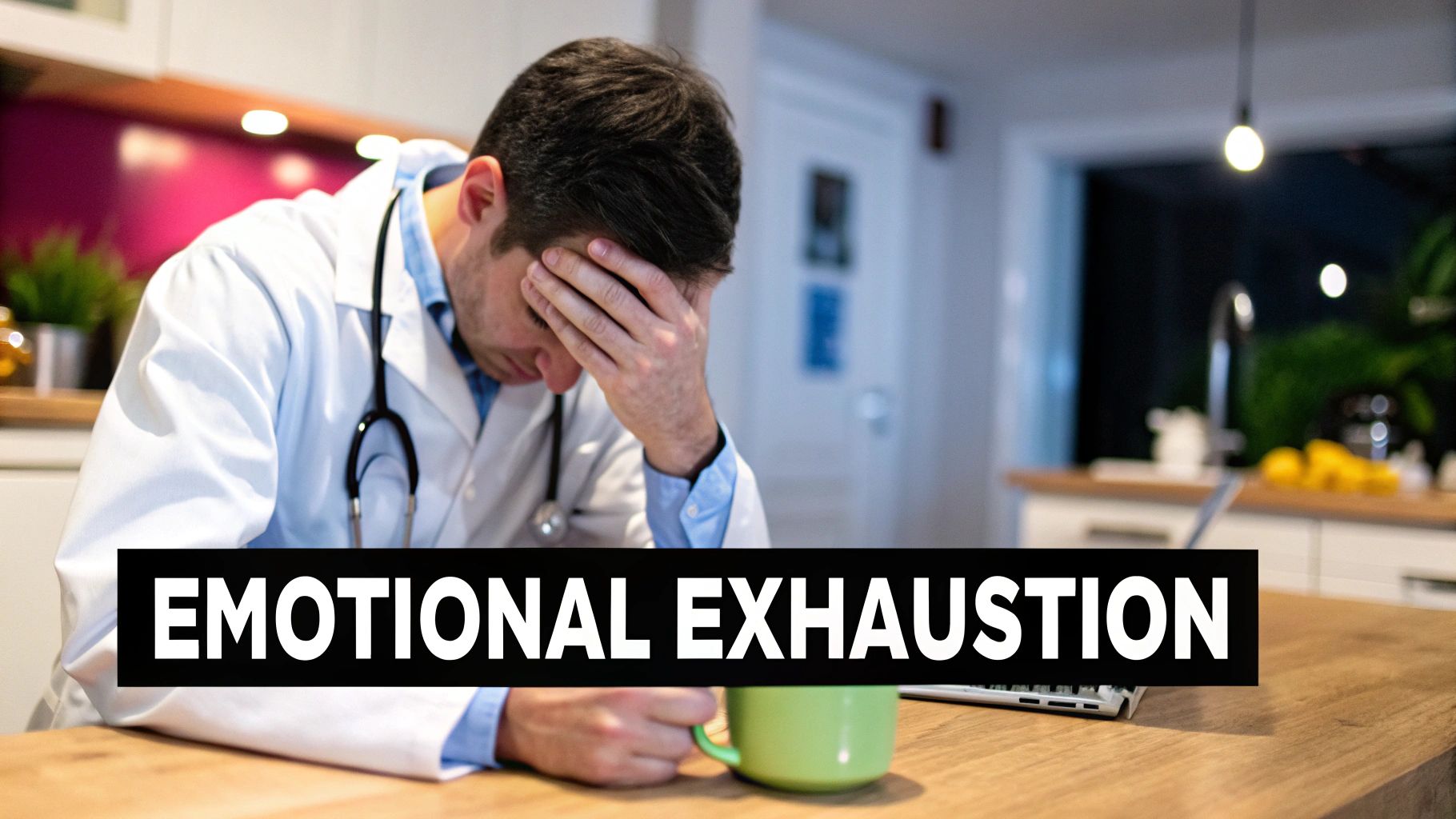
While the physical signs of physician burnout get a lot of attention, the deepest damage is often the kind you can't see. The emotional and psychological toll builds quietly, creating a silent struggle that can feel incredibly isolating.
These symptoms aren't character flaws or a sign that you're not cut out for this work. They're the predictable outcome of a sustained professional crisis.
It all starts with emotional exhaustion, the absolute core of burnout. This isn't just feeling tired after a tough shift. It's a bone-deep depletion that sleep can't touch, leaving you with absolutely nothing left to give—not to your patients, not to your family, and certainly not to yourself.
This is the kind of exhaustion that makes you dread the sound of your alarm, feeling completely spent before you've even put on your scrubs. That feeling is your mind and body sending a clear signal: your emotional reserves are running on empty.
The Growing Distance of Depersonalization
Once emotional exhaustion takes root, a protective—but destructive—coping mechanism often kicks in: depersonalization. It’s that feeling of detachment and cynicism that puts an emotional wall between you and your work. It's a subconscious attempt to survive being completely overwhelmed.
You might start seeing patients as a list of symptoms to check off rather than as people. It’s not because you’ve suddenly stopped caring. It’s because the emotional price of caring has become too high to pay.
This creeping cynicism can show up in a few ways:
- A loss of empathy for what patients are going through, which can come across as being dismissive or impatient.
- Irritability and frustration over small things with colleagues, staff, or even your family.
- Feeling emotionally numb or disconnected from things that would normally get a strong reaction, both at work and at home.
The problem is still widespread. A recent wellbeing survey from The Physicians Foundation found that 54% of U.S. physicians report frequent feelings of burnout. While that's a slight improvement from 60% the year before, it highlights a crisis that isn't going away, with high stress and anxiety still fueling exhaustion across healthcare. You can discover more insights into physician wellbeing from their 2025 survey.
The Burden of Anxiety and Dread
Burnout rarely stays neatly contained within the clinic walls. It follows you home, morphing into a constant state of anxiety and a creeping dread about your next shift. This isn't just normal work stress; it's a pervasive unease that hijacks your personal life.
You might find yourself replaying a difficult case over and over in your head or worrying about your inbox long after you've left for the day. This inability to mentally disconnect means you never truly rest, locking you into a vicious cycle of exhaustion.
Burnout steals your ability to be present. The constant mental chatter about work makes it impossible to recharge, turning your personal time into just another waiting period before the next demanding shift.
This persistent anxiety is one of the most classic signs of physician burnout because it signals a total breakdown of work-life boundaries. When work stress consistently ruins your ability to rest and connect with loved ones, it’s a clear sign your job has become unsustainable.
The first step is figuring out where you stand. You can evaluate your own symptoms with our guide to the Burnout Index to get a clearer picture. Recognizing these emotional and psychological symptoms for what they are—validated signs of an occupational hazard—is the first real move you can make toward healing.
Recognizing the Physical and Behavioral Red Flags
The emotional grind of burnout is what most of us focus on, but the damage doesn't stop there. It radiates outward, showing up as very real physical symptoms and distinct changes in our behavior. Think of it this way: burnout isn't just in your head; it’s a full-body experience. Your body often keeps the score long before your mind is ready to admit something is seriously wrong.
These physical and behavioral shifts aren’t random aches or signs you're not tough enough. They are your body’s emergency flares, signaling that you're running on empty. Ignoring them is like driving with the engine light flashing—eventually, a breakdown is guaranteed.
Your Body Is Sending Distress Signals
When chronic stress goes unchecked, the body starts to falter. This isn't just a feeling; it's a physiological response to being stuck in high-alert mode. The nagging aches and pains you might brush off as “just part of the job” are often the clearest signs of physician burnout.
One of the most telling physical symptoms is a deep, bone-weary chronic fatigue. This is a world away from the normal tiredness a good night's sleep can cure. It’s a profound exhaustion that sticks with you day after day, making it feel like you can never truly recharge.
Other physical signs often follow:
- Persistent Headaches: Tension headaches or migraines start showing up more often as your body physically holds onto stress.
- Digestive Problems: Issues like stomach pain, acid reflux, or IBS can suddenly flare up. The gut-brain connection is real, and it’s reacting to the constant pressure.
- Weakened Immune System: You find yourself catching every cold that makes the rounds because your body's defenses are shot.
These symptoms are your body waving a white flag. They are the direct fallout from a nervous system that's been pushed way past its breaking point for far too long.
When Behavior Starts to Change
As your physical and emotional gas tank empties, your behavior inevitably shifts. These changes are often subconscious survival tactics—your brain's attempt to conserve what little energy is left or create distance from the source of pain. The problem is, they usually just isolate you more and feed the burnout cycle.
A classic behavioral red flag is social withdrawal. You might start dodging colleagues in the breakroom, saying no to dinner with friends, or just feeling too drained to connect with your family when you get home. It’s not that you don’t care; it’s that being "on" for other people requires energy you simply don’t have.
This withdrawal often seeps into your professional life, leading to a noticeable decline in performance. You might miss a deadline, make a small clinical error you’d normally catch, or struggle to focus during rounds. It's a direct consequence of your cognitive functions being hijacked by chronic exhaustion.
"Burnout makes you a stranger to yourself. The behaviors that emerge—irritability, isolation, reliance on unhealthy coping mechanisms—are not who you are. They are symptoms of a system in distress, a desperate attempt to survive an unsustainable environment."
Another dangerous behavioral sign is leaning more heavily on unhealthy coping mechanisms. This can look like:
- Using alcohol or other substances to numb the exhaustion or quiet the dread.
- Disrupted sleep patterns, like insomnia or oversleeping, as your body’s internal clock goes haywire.
- Increased irritability and a short fuse, snapping at your team or loved ones over things that wouldn't have bothered you before.
Recognizing these physical and behavioral signals is the first, most critical step toward getting better. They aren’t separate problems; they are interconnected symptoms all pointing to the same root cause. Seeing them for what they are allows you to stop blaming yourself and start tackling the real issue.
Distinguishing Burnout from Depression and Compassion Fatigue
Knowing the signs of physician burnout is a critical first step. But just as important is knowing what burnout isn't. The exhaustion, the cynicism, the sense that you're just not effective anymore—these feelings can look a lot like other conditions, especially depression or compassion fatigue.
Making the right distinction is everything. It's the key to getting on the right path to recovery.
The simplest way to start telling them apart is to look at the source and scope of what you're feeling. Burnout is fundamentally a workplace problem. It's a syndrome directly tied to chronic, unmanaged stress in your professional environment. Its symptoms are sharpest and most obvious when you think about your job.
Depression, on the other hand, is a pervasive mood disorder that tends to cast a shadow over every part of your life—not just your 9-to-5. While burnout can certainly trigger or coexist with depression, they aren’t the same thing. Think of it this way: if burnout is a targeted storm raging over your professional life, depression is a dense fog that settles over everything.
This decision tree helps visualize how feelings of fatigue, irritability, and withdrawal can point toward burnout.
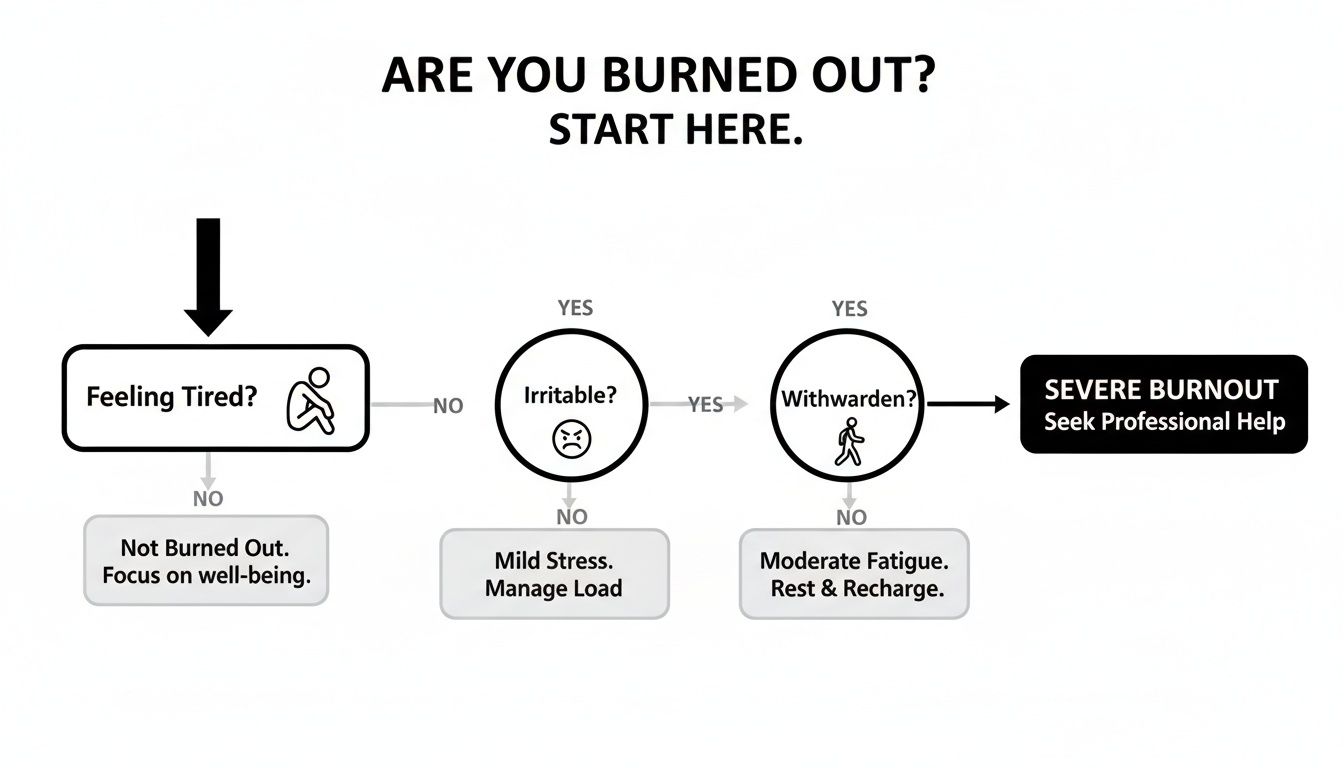
As the flowchart shows, when these negative feelings are primarily anchored to your job, burnout is the likely culprit. This realization points you toward targeted, work-based solutions instead of a one-size-fits-all approach.
What About Compassion Fatigue?
Then there's compassion fatigue, a very specific form of secondary traumatic stress. It’s the emotional and physical erosion that happens when healers absorb the trauma and suffering of their patients over and over again.
While it shares the same deep exhaustion as burnout, compassion fatigue is specifically about the cost of caring. It often shows up as a blunted capacity for empathy, heightened anxiety, or even intrusive thoughts related to your patients' trauma.
Here’s the core difference: Burnout is caused by the system you work in—the endless administrative tasks, the brutal hours, the lack of autonomy. Compassion fatigue is caused by the work itself—the direct, repeated exposure to pain and suffering.
Burnout says, "I can't handle this broken system anymore."
Depression says, "I can't handle my life anymore."
Compassion fatigue says, "I can't handle their pain anymore."
This distinction is crucial because the solutions are completely different. Addressing compassion fatigue might involve trauma-informed care training or dedicated peer support groups. Tackling burnout, however, requires systemic changes to your work environment. Learning more about different physician wellness strategies can help you identify the specific kind of support you actually need.
Burnout vs Depression A Symptom Comparison
To make the differences even clearer, this table compares the typical symptoms and thought patterns associated with each condition.
| Symptom Area | Primarily Burnout | Primarily Depression |
|---|---|---|
| Primary Source | Job-related stressors and environment | Internal mood state; can be situational or biological |
| Emotional State | Cynicism, frustration, and detachment from work | Hopelessness, sadness, and loss of interest in all activities |
| Impact on Life | Negatively impacts work life, can spill into personal life | Pervasive negative impact on work, personal, and social life |
| Common Thought | "I dread going to work." | "I dread waking up." |
| Hope for Future | Belief that changing jobs or roles could bring relief | A general sense of hopelessness, regardless of circumstances |
Recognizing where your experience fits isn't about self-diagnosis. It’s about arming yourself with knowledge. Understanding the nuances between these conditions allows you to have a much more informed conversation with a therapist, coach, or mentor, ensuring you get the targeted support that will truly make a difference.
Building Your Action Plan for Recovery and Resilience

Spotting the signs of burnout is the first crucial step, but true recovery begins when you build a deliberate action plan. There's no magic bullet here. Instead, it’s about making a series of intentional choices that claw back your well-being, piece by piece.
This requires a two-pronged attack: immediate self-care tactics to stop the bleeding, paired with a longer-term strategy to redesign your professional life. Think of it like treating a chronic illness—you need acute interventions for the flare-up, but also a sustainable care plan to manage the underlying cause.
Immediate Steps for Relief and Self-Preservation
When you're deep in the trenches of burnout, the first goal is triage. These initial actions are designed to create some breathing room, helping you regain a sense of control and start recharging. This is first aid for your career.
It starts with reclaiming your own time. That means drawing—and fiercely defending—hard lines between your work and your life.
- Enforce a Hard Stop: Pick a time your workday is over, and stick to it. That means logging out of the EHR and silencing work notifications on your phone. No exceptions.
- Schedule Your Downtime: Just like a patient visit, block out non-negotiable time on your calendar for rest, hobbies, or family. Treat it with the same importance.
- Reconnect with Your 'Why' Outside Medicine: Burnout has a nasty habit of erasing your identity outside of being a physician. Make a conscious effort to do things that remind you who you are—hiking, painting, playing music. Anything that’s just for you.
These aren't luxuries; they're critical interventions. They're how you start pushing back against the impossible demands that got you here in the first place.
Redesigning Your Career for Long-Term Resilience
While immediate self-care is vital, the most powerful antidote to burnout is fixing the source of the problem: your work environment. For many of us, this means fundamentally redesigning our professional lives to align with our own needs and values. This is the move from just coping with a bad situation to creating a sustainable one.
A staggering 43% of U.S. primary care physicians face burnout—the highest rate among ten developed nations. A Commonwealth Fund survey found that for 44% of them, the number one driver wasn't patient care, but administrative overload. That data tells a clear story: individual resilience can't win against systemic pressure. You can read more about the global burnout crisis and its causes here.
The ultimate solution is often finding a role that is inherently "burnout-friendly." That means a job designed from the ground up to protect your work-life balance, not just pay lip service to it.
"A truly burnout-friendly role isn’t just about fewer hours; it's about eliminating the chronic stressors that drain your energy. It’s a job where nights, weekends, and on-call duties are not part of the equation, giving you the predictable downtime you need to thrive."
Platforms like WeekdayDoc are built entirely on this principle. We help physicians find roles that match their personal and financial goals without the soul-crushing extras.
You can browse a wide range of part-time physician jobs that offer the flexibility and balance needed to finally break the burnout cycle. By taking back control of your schedule and cutting out the most draining parts of traditional medical roles, you lay the foundation for a career that's not just survivable, but fulfilling.
Common Questions About Physician Burnout
Working through physician burnout brings up a lot of questions. As you go from just recognizing the signs to actually making a plan, it's normal to want some straight answers. This section tackles the most common questions we hear from physicians, clearing up the confusion so you can move forward.
What Is the Difference Between Stress and Burnout?
It’s easy to mix up "stress" and "burnout," but they are fundamentally different experiences.
Stress is a state of over-engagement. You feel frantic, overwhelmed, like you're drowning in responsibilities but still kicking. There’s often a nagging feeling that if you just push a little harder, you can get back on top of things.
Burnout, on the other hand, is defined by total disengagement and emptiness. The hyperactivity of stress gives way to detachment and cynicism. You’re not just tired; you're emotionally exhausted. The drive is gone, replaced by a deep sense of hopelessness.
Think of it like this: A stressed physician is still in the fight, treading water furiously. A burned-out physician feels like the well has run completely dry—there's no energy left to even try. That loss of motivation is the critical difference.
Can I Recover from Burnout Without Leaving My Job?
Yes, it’s possible, but it demands real, intentional changes from both you and your organization. It's not about just trying harder.
First, you have to get brutally honest about what’s driving the burnout. Is it the crushing patient load? Zero control over your schedule? A toxic department culture? Once you know the source, you can start making targeted changes.
- Draw Hard Lines: This isn’t about "self-care" bubble baths. It’s about taking your lunch break without charting. It's refusing to answer work emails at 9 PM. It's fiercely protecting your days off. These become non-negotiable rules for your survival.
- Push for System-Level Fixes: Talk to your leadership about practical solutions. That could mean smarter EHR workflows, better staffing, or protected admin time that’s actually protected. Frame it as a win-win for physician well-being and patient safety.
But let's be realistic. If the problems are baked into the culture and leadership isn't willing to budge, finding a new role that respects your time might be the only sustainable long-term fix.
How Can I Support a Colleague Who Seems Burned Out?
Seeing a colleague struggle is tough. Approaching them requires care and discretion—you want to offer help, not judgment.
Wait for a private moment. Start with genuine, low-pressure concern. Something like, "You've had a lot on your plate lately. Just wanted to check in and see how you're doing," opens the door without making them feel cornered.
The most powerful thing you can do for a burned-out colleague is to listen without trying to fix it. Just having someone else see their struggle and acknowledge it can be a huge relief.
Instead of a vague "let me know if you need anything," offer something concrete. "Can I grab you a coffee?" or "Let me finish that discharge summary for you." You can also gently point them toward confidential resources like an Employee Assistance Program (EAP) if your hospital has one. Your main job is just to be a supportive presence and remind them they’re not alone.
What Are the Most Common Burnout Assessment Tools?
There are a few well-regarded tools used to measure burnout. The most recognized is the Maslach Burnout Inventory (MBI), which is considered the gold standard in research. It looks at the three core components of burnout:
- Emotional Exhaustion: Feeling completely drained and overextended by your work.
- Depersonalization: Developing a cynical, detached, or impersonal attitude toward your patients.
- Personal Accomplishment: A declining sense of competence and achievement in your work.
Another common tool is the Mini-Z Burnout Survey, which is shorter and designed for quick check-ins. While these surveys are great for self-assessment and spotting the warning signs of physician burnout, they are screening tools, not diagnostic ones. Only a qualified mental health professional can provide a formal diagnosis for burnout or any related condition.
At WeekdayDoc, we know the best way to beat burnout is to change the system you work in. We focus on connecting physicians with burnout-friendly roles that have no nights, no weekends, and no on-call duties. This gives you the predictable downtime needed to build a career that’s actually sustainable. Explore roles that fit your life at https://www.weekdaydoc.com.