Remote Healthcare Data Analyst Jobs Guide
Explore remote healthcare data analyst roles, including skills, pay, entry paths, schedules, and how to compare openings on WeekdayDoc.
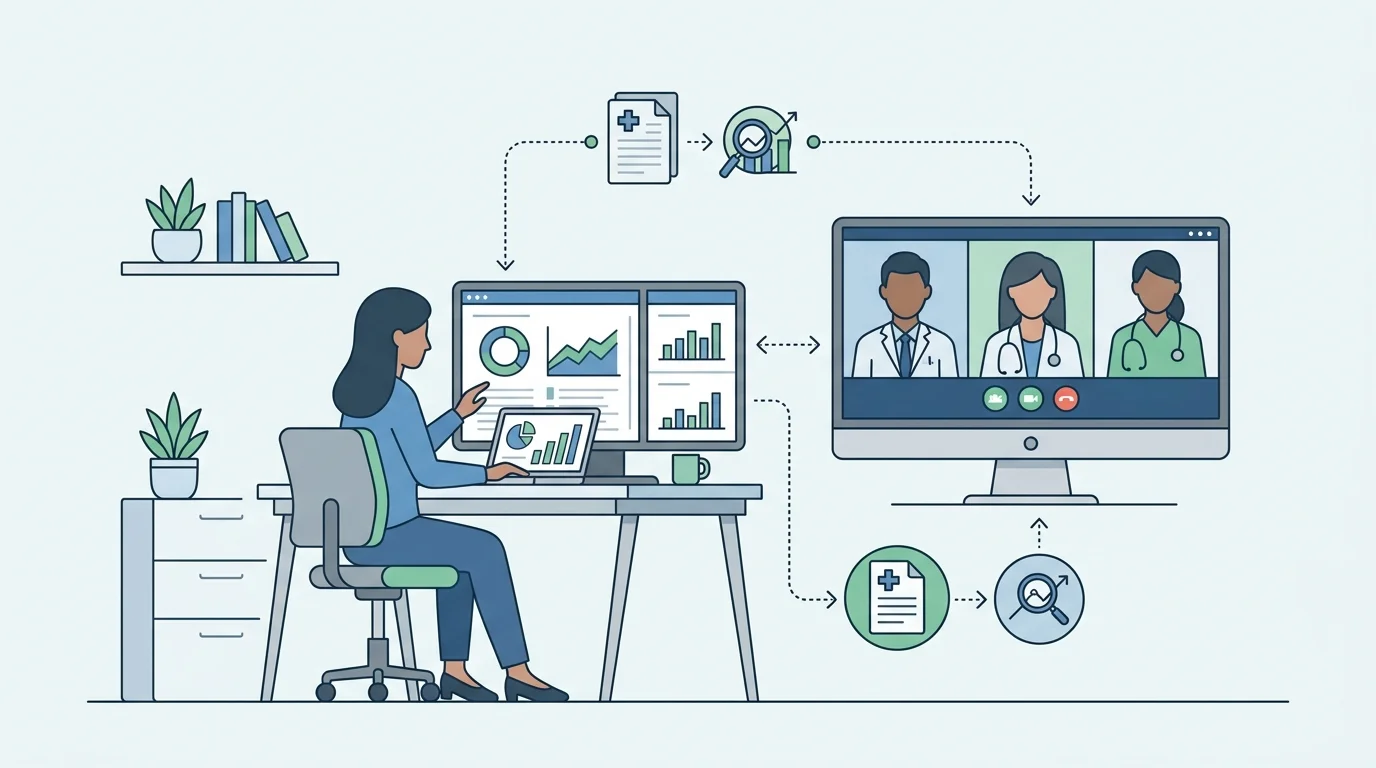
Remote healthcare data analyst jobs involve querying, organizing, validating, and interpreting clinical or operational information to support care decisions. A job title alone does not tell you whether the work involves autonomous reporting, constant meetings, tight deadlines, or competitive pay. Because the same search query returns different responsibilities, compare the actual lifestyle and compensation context before applying. WeekdayDoc calculates work-life scores and salary percentiles to help you evaluate these roles beyond the initial job description.
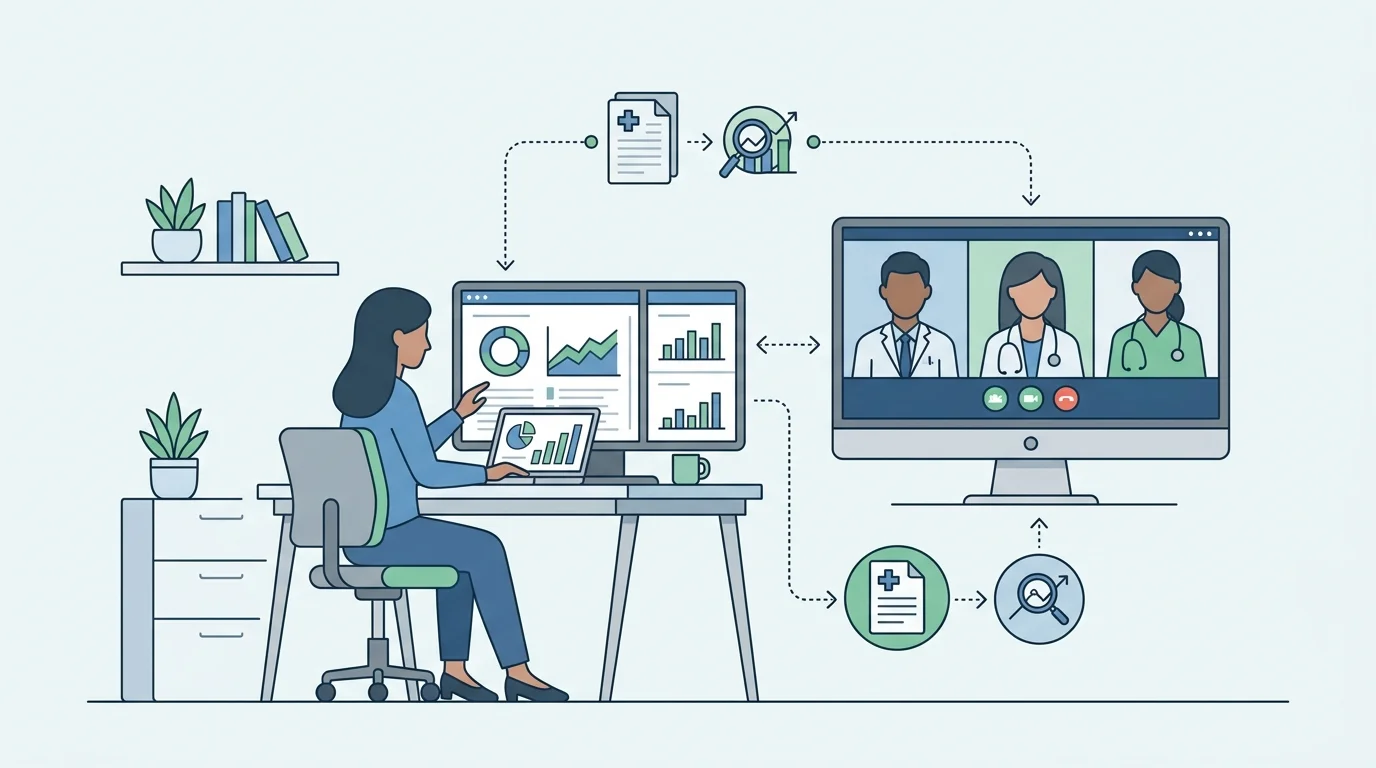
What Do Remote Healthcare Data Analysts Do?
The Bureau of Labor Statistics lists health information technologists and medical registrars as a relevant reference occupation. This occupation includes analyzing clinical data, maintaining disease registries, validating data integrity, supporting computerized healthcare systems, and protecting patient information. The Bureau of Labor Statistics describes this role as usually office-based, with computer work and mostly full-time schedules, so the description doesn't establish flexible schedules or fully remote work.
More quantitative postings align with operations research analyst or data scientist work. Because a single search returns multiple career tracks, categorizing the listings helps you identify the primary focus of an opening. The table below organizes the common role families.
| Role family | Typical work | Best fit for |
|---|---|---|
| Clinical data analyst | Clinical databases, outcomes, registries, treatment patterns, data-quality checks, and reporting for care teams. | Clinicians, health-information professionals, and analysts with clinical exposure. |
| Quality analyst | Quality metrics, performance reports, chart abstraction, care-process monitoring, and improvement projects. | RNs, NPs, PAs, physicians, quality-improvement professionals, and healthcare analysts. |
| Population health analyst | Patient cohorts, care gaps, utilization, risk groups, and program outcomes. | Clinicians or analysts interested in preventive care, payer work, or value-based care. |
| Claims or revenue-cycle analyst | Claims, denials, reimbursement, utilization, coding patterns, payer performance, and payment data. | Analysts with claims, billing, coding, or payer knowledge. |
| Health informatics or EHR analyst | EHR reporting, workflow requirements, system implementation, data validation, and user support. | Clinicians who understand workflows and analysts interested in healthcare IT. |
| Healthcare BI or operations analyst | Dashboards and analysis for access, capacity, staffing, productivity, finance, or service-line performance. | General business analysts moving into healthcare. |
| Research or registry analyst | Clinical research datasets, disease registries, treatment follow-up, and data abstraction. | Professionals with research, registry, epidemiology, or clinical backgrounds. |
| Healthcare data scientist | Predictive modeling, advanced statistics, machine learning, experimentation, and large-scale data work. | Candidates with stronger statistics, programming, and quantitative training. |
This taxonomy helps you avoid applying to a highly statistical role when your background points toward workflow optimization, so you can assess technical expectations accurately.
Skills and Healthcare Knowledge Employers Look For
Focus on a practical baseline of core technical tools. Start with SQL, Excel, and one business-intelligence platform like Power BI or Tableau. You will use SQL joins to connect patient demographic tables with encounter records, common table expressions to organize complex queries, and window functions to calculate running totals. Your Excel work will require pivot tables, lookups, data cleaning, and basic modeling to format reports for non-technical managers.
For postings that emphasize advanced statistics, automation, predictive modeling, or data science, check whether Python is listed. To support that check, O*NET's 2025 U.S. job-postings data reports software mentions for operations research analyst postings. In that nationwide sample, Excel appeared in 26% of unique postings, SQL in 11%, Power BI in 10%, Tableau in 10%, and Python in 5%. Because the figures cover U.S. postings linked to this occupation, compare the occupation-level benchmark with the requirements in a specific healthcare posting.
Technical execution requires healthcare domain knowledge, including the ability to define cohorts, calculate rates, identify denominators, spot trends, and interpret missing values. The underlying data source shapes your approach. EHR databases contain encounters, diagnoses, medications, and clinical documentation, whereas claims data tracks payer transactions, procedures, and reimbursement. Operational datasets, meanwhile, measure scheduling access, capacity, and staffing productivity.
Standardized code sets classify medical diagnoses and procedures, so they support functions such as billing and tracking public health. Within that framework, the Centers for Medicare & Medicaid Services lists HCPCS alongside ICD-10, CPT, CDT, and NDC among the HIPAA code sets. For the role itself, use the specific posting to determine whether it asks for interpreting these codes, building utilization reports, or experience with Epic, specialized EHR reporting modules, FHIR, HL7, Snowflake, or Databricks.
Remote Healthcare Data Analyst Salary and Compensation
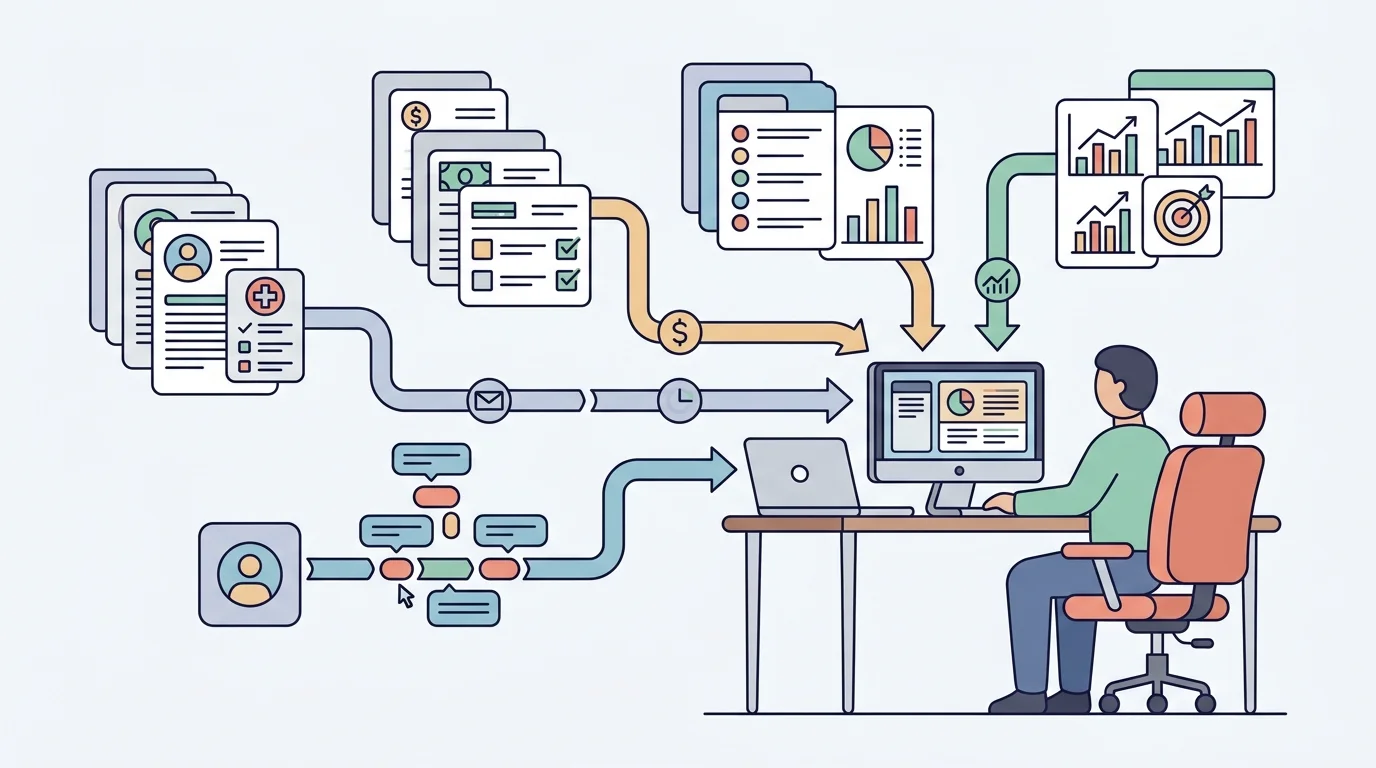
Because the title spans several occupational families, evaluating pay requires matching the job description to the correct occupational benchmark. Compensation depends on your technical depth, seniority, geographic location, and whether you own reporting systems or fulfill requests.
As of August 2026, three distinct frameworks based on recent wage data can help you evaluate offers.
The first benchmark uses health information technologists and medical registrars as a reference for work involving clinical databases, registries, and clinical-data analysis. For that benchmark, the Bureau of Labor Statistics' May 2024 wage data lists a $67,310 median annual wage for this group. The reported medians also differ by industry, ranging from $52,760 in offices of physicians to $64,320 in hospitals, $72,610 in professional, scientific, and technical services, and $80,990 in management of companies and enterprises.
The second benchmark applies to operations research analysts, providing a solid reference for analytical operations, modeling, optimization, and quantitative business roles. The May 2024 national wage table from the Bureau of Labor Statistics reported a $99,120 mean annual wage and a $43.89 median hourly wage. Annualizing that median hourly figure at 2,080 hours produces an estimated $91,291 to help guide your salary expectations.
The third benchmark covers data scientists and fits advanced analytics or machine-learning postings. The same May 2024 national wage table reports a $124,590 mean annual wage and a $54.13 median hourly wage for this category.
Applying a data scientist's compensation as the baseline for a standard quality-reporting role will inflate your salary expectations. Your final offer will shift based on employee versus contractor status, bonus potential, equity, retirement benefits, and required travel. WeekdayDoc displays salary comparisons and market-percentile context directly on listings, allowing you to evaluate an individual opening against its specific role family alongside the full compensation package.
How to Move Into Healthcare Analytics
Physicians, nurse practitioners, physician assistants, nurses, pharmacists, psychologists, and therapists hold an advantage in clinical and quality roles because they understand workflows, documentation practices, and patient populations. As a clinician, you already know why a timestamp in the medical record might be inaccurate during a shift change. To apply this knowledge professionally, your resume needs to demonstrate analytical execution.
Build a portfolio project that turns a clinical question into a measurable outcome. A SQL cohort analysis, a Power BI quality dashboard, a claims-utilization analysis, or a population-health care-gap analysis proves you can handle the data without exposing real patient information. Data validation, privacy, security, confidentiality, and integrity remain strict requirements for health-information work. Your resume needs to quantify reports built, metrics defined, dashboards delivered, manual work reduced, or quality projects measured to support your past clinical titles. You might also explore similar non-clinical paths, such as remote utilization review nurse jobs, which heavily feature chart analysis and criteria application.
For health information technologists and medical registrars, education requirements vary. The occupation typically requires at least an associate's degree, while some positions require a bachelor's or master's degree, and programs can include courses in medical terminology, health-data requirements, medical ethics, and classification and coding systems.
General business intelligence analysts can enter the field by learning medical terminology, EHR concepts, ICD-10 and HCPCS familiarity, quality metrics, and patient-data privacy practices. For data scientists, the transition involves managing imperfect clinical datasets, defining cohorts accurately, and communicating statistical findings clearly to clinicians who focus on patient outcomes. Because certifications and degree requirements vary widely by employer, tailored applications yield the best results.
Does Remote Healthcare Analytics Lower Burnout?
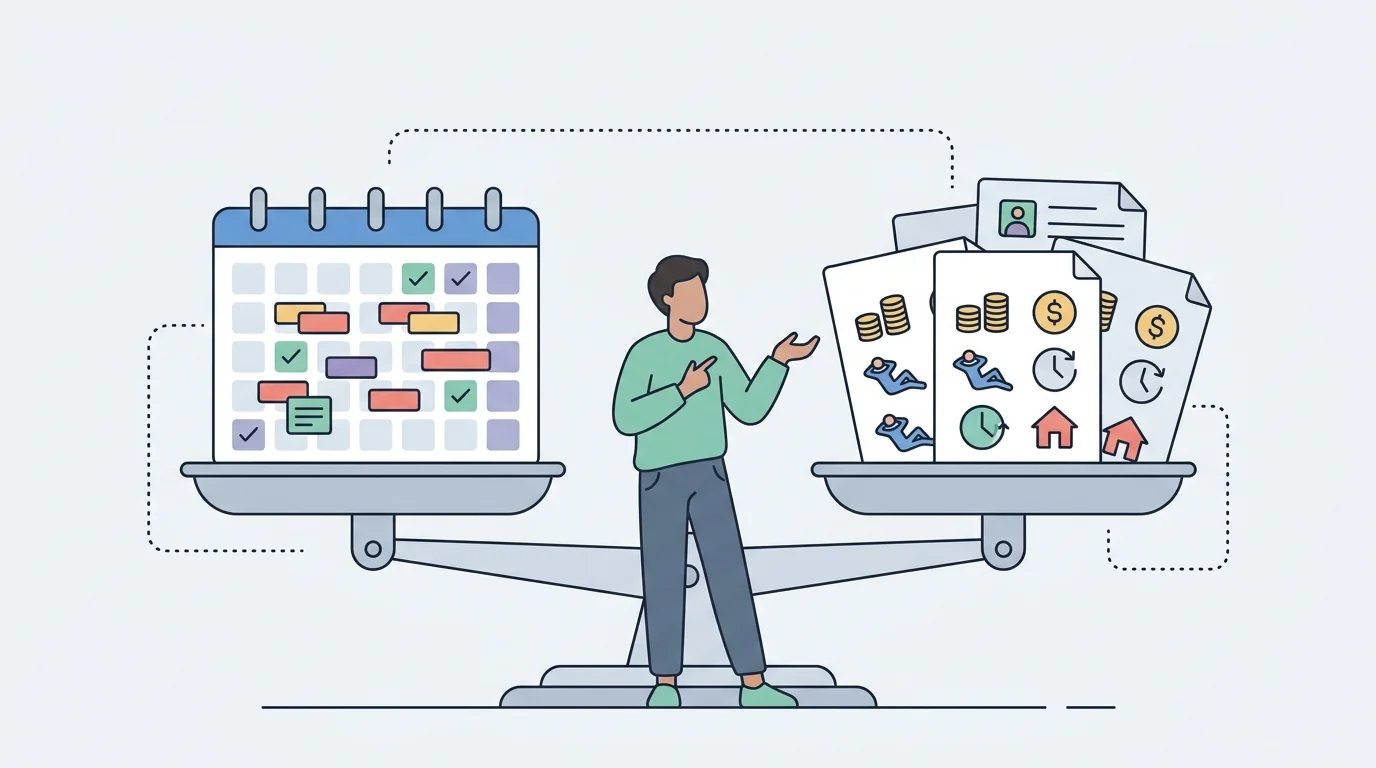
A remote position doesn't guarantee low stress, so assess the schedule and workload before making a career move. While a remote job changes your physical location, your schedule and overall workload depend entirely on the specific company culture and team structure.
Working from home provides tangible benefits by eliminating commutes, removing the physical demands of direct patient care, and reducing weekend coverage. At the same time, the position introduces a different set of demands, such as long periods at a computer doing repetitive data cleaning. You will handle ambiguous reporting requests, manage tight deadlines for regulatory submissions, and attend a heavy rotation of collaborative meetings. Production incidents, shifting leadership priorities, and a constant ticket queue create high-pressure days even without direct patient contact.
Specific questions during an interview reveal the true schedule. Ask whether the role is fully remote or restricted to certain states for tax reasons, and determine which time zone controls the core expected hours. Also confirm whether early-morning, evening, weekend, or on-call duties apply during maintenance windows. Ask how the team handles urgent executive requests, and clarify whether online monitoring software is used, so you can picture the daily expectations.
WeekdayDoc provides structured context for these decisions by assigning listings a 0-to-10 work-life score based on factors like call coverage, schedule flexibility, autonomy, and administrative burden. The score helps you compare listings, but analyst-specific reporting deadlines and technical on-call obligations still deserve attention before you accept an offer.
How to Compare Current Openings on WeekdayDoc
Searching only for the exact phrase "remote healthcare data analyst" limits your options, so expanding your query to match the varied role families in the market reveals better opportunities.
Start by searching for related titles like remote clinical data analyst, health informatics analyst, healthcare BI analyst, population health analyst, quality analyst, and claims analyst. Filter the results by remote, hybrid, permanent, part-time, and location options to narrow down the field. Confirm the eligible states, time-zone requirements, and on-site travel expectations directly with the employer to ensure the setup meets your needs.
Use the worksheet below to evaluate a shortlist and make an informed application decision. Identifying the role family before comparing salaries helps you accurately weigh schedule details and work-life score drivers side by side.
| Comparison field | What to record |
|---|---|
| Employer and role family | Clinical data, quality, claims, BI, informatics, operations, research, or data science |
| Work type | Permanent, contract, part-time, hybrid, or fully remote |
| Geographic limits | Eligible states, time zone, travel, and on-site requirements |
| Schedule | Core hours, meeting expectations, after-hours work, weekends |
| On-call | None, occasional, scheduled, or production support |
| Tools | SQL, Excel, Power BI, Tableau, Python, R, EHR, claims platform |
| Data domain | EHR, claims, registry, quality, operations, research |
| Compensation | Base, hourly rate, bonus, benefits, market percentile |
| Autonomy | Decision rights, manager structure, project ownership |
| Administrative burden | Ticket queue, recurring reporting, documentation, implementation work |
| WeekdayDoc score | 0-to-10 score and the factors behind it |
| Contract issues | Restrictions, payback clauses, IP, monitoring, termination |
Setting up a profile activates AI matching and personalized job alerts on WeekdayDoc, accelerating discovery and enabling one-click applications as you compare openings.
When you receive an offer, the platform's AI contract scanner accepts PDF, DOCX, TXT, or pasted text to help you scrutinize the employment agreement. The tool flags restrictive clauses such as non-competes, tail coverage, and payback provisions. For analytical roles, pay close attention to intellectual-property ownership, confidentiality agreements, monitoring policies, non-solicitation clauses, bonus repayment terms, and equipment provision, and direct any specific legal questions to qualified counsel.
What a transparent remote healthcare analyst posting discloses If you are an employer or recruiter, vague job descriptions hurt your applicant quality. A transparent posting specifies the role family, seniority, required tools, data sources, remote-state limits, core hours, on-call expectations, and travel requirements. Listing the pay range, benefits, success metrics, and decision rights helps attract qualified candidates. WeekdayDoc turns an existing job description or URL into a formatted listing and calculates a work-life score and market context to support targeted clinician outreach.
Frequently Asked Questions About Remote Healthcare Data Analyst Jobs
What skills do I need for a remote healthcare data analyst job? You need a foundation in SQL, Excel, one business-intelligence platform, data interpretation, and communication, alongside an understanding of healthcare terminology and data structures. Python or R becomes necessary for advanced analytics, automation, and predictive modeling roles.
Do I need a healthcare degree to become a healthcare data analyst? No single degree applies to every role. Health-information positions often begin at the associate level, and data-science roles typically demand a quantitative or computing bachelor's degree at minimum, with specific employer preferences varying widely.
How much do remote healthcare data analysts make? No single national figure exists for the exact remote title, as pay depends heavily on the role family. You can build expectations using occupational benchmarks for health-information technologists, operations-research analysts, or data scientists based on the technical depth and data domain of the posting.
Are remote healthcare data analyst jobs flexible? Some positions offer flexible hours, but remote status alone does not guarantee an open schedule. Ask the hiring manager about core hours, time-zone requirements, recurring meetings, reporting deadlines, on-call support, weekends, travel, and online monitoring to clarify daily expectations.
Can a physician, nurse, NP, PA, or pharmacist become a healthcare data analyst? Yes, clinical knowledge transfers well to clinical-data, quality, population-health, informatics, and research roles. You still need to build a portfolio demonstrating SQL, reporting, dashboard creation, data-quality auditing, or measurable quality-improvement work.
What healthcare coding systems should analysts know? Depending on the data domain, you will likely need to interpret ICD-10-CM, ICD-10-PCS, CPT, and HCPCS, which the Centers for Medicare & Medicaid Services identifies among the standardized healthcare code sets.
What should I search besides "healthcare data analyst"? Expand your query to include remote clinical data analyst, health informatics analyst, quality analyst, population health analyst, claims analyst, EHR analyst, healthcare BI analyst, healthcare operations analyst, and research data analyst.
Compare remote healthcare analytics and alternative-career roles on WeekdayDoc using salary context, work-life scores, schedule details, and personalized job alerts.