Ultimate Guide to Part Time Physician Jobs for Better Work Life Balance
Explore part time physician jobs to achieve work life balance. Get insights on schedules, pay, top specialties, negotiation tactics, and burnout-friendly roles.

What Part Time Physician Jobs Entail
Busy physicians often wonder what stepping back to part time really involves. Instead of logging 40+ hours in clinic or the hospital, you pick reduced hours and design a week that fits both your patients and your life.
Many colleagues see lower burnout almost immediately. By dialing down your clinical load, you reclaim evenings, weekends, or an afternoon block for family, hobbies, or simply breathing room.
Modular Building Block Analogy
Think of your weekly schedule as a tower of blocks. Each block is a shift—whether it’s telehealth, in-person clinic, or rounding. Stack fewer blocks and watch work–life balance stay standing.
- Benefit: Less clinical volume frees mental space for meaningful patient interactions and self-care.
- Challenge: Slotted schedules demand clear communication with your team.
- Typical Hours: 20–30 patient-facing hours weekly, though every specialty adjusts its own mix.
- Flexibility Level: From fixed part-week clinics to fully remote telehealth shifts.
Types Of Part Time Models
Part-time roles come in several flavors, and mixing them lets you tailor income and flexibility.
- Job-Sharing — Two physicians split one full-time FTE.
- Locum Tenens — Short-term assignments with premium hourly rates.
- Telehealth — Dedicated blocks caring for a remote panel.
- Hybrid — A blend of on-site clinic days and virtual shifts.
For example, you might handle telehealth on Mondays and Wednesdays, then pick up a locum weekend shift to keep earnings steady while controlling stress.
Infographic Overview
Here’s a quick visual snapshot of these part-time options.

The infographic illustrates that most part-time gigs deliver about 30% fewer hours while preserving roughly 80% of full-time pay.
Below is a quick reference to the key trade-offs in a part-time setup.
Overview of Part Time Physician Job Features
| Benefit | Challenge | Typical Hours | Flexibility Level |
|---|---|---|---|
| Lower burnout and more focus | Coordinating team schedules | 20–30 weekly | Medium-High |
| Better work–life control | Managing complex logistics | Variable | High |
This table helps you weigh the pros and cons at a glance as you build your ideal schedule.
Comparing With Full Time Roles
While full-time roles often mean 40+ hours and full benefits, part-time gigs pro-rate both salary and perks. Understanding the differences upfront prevents surprises later.
- Hours: Full-time 40+ vs Part-time 20–30
- Benefits: Complete package vs Prorated contributions
- Income: 100% vs Approximately 75% average
- Scheduling: Fixed weekly rota vs Custom modular shifts
Assessing Fit For Part Time Roles
Part-time medicine fits at various career stages.
- Early-career physicians seeking work–life balance
- Mid-career clinicians juggling research, teaching, or family time
- Senior doctors easing toward retirement pace
- Caregiving physicians needing tailored schedules
Reflect on your personal goals and daily needs to decide if part-time blocks build toward your ideal practice.
“Part-time work can be the building block to sustainable practice.”
If the modular approach resonates, continue exploring how to evaluate, score, and negotiate these roles. In the next sections, you’ll dive into specialties with strong part-time demand, scheduling strategies, and negotiation tips for a burnout-friendly career.
Understanding The Rising Trend
Part-time physician roles are no longer a fringe option. More doctors are carving out schedules that fit family life, personal passions, and burnout prevention. At the same time, hospitals and clinics are redesigning positions to keep talent engaged.
This shift reflects two big forces: generational priorities and looming workforce gaps. Younger physicians prize flexibility—whether it’s an afternoon surf session or time for a moonlighting project. Veteran clinicians, on the other hand, are easing into lighter clinical loads as a bridge to retirement.
- Younger Cohort Seeks varied experiences and freedom from nine-to-five routines.
- Senior Physicians Reduce hours to share wisdom without full retirement.
- Institutions Experiment with job-sharing and telehealth to plug staffing holes.
In New York, for instance, some doctors traded endless commutes for morning rounds and afternoon telehealth from home. Meanwhile, seasoned specialists preserve their expertise by covering high-impact cases a few days each week instead of a full schedule.
Administrative Pressures
Electronic health records and mounting paperwork have turned many clinic days into administrative marathons. To protect their well-being, physicians are shifting to part-time roles that carve out “protected admin time.”
“Reducing hours can cut burnout and improve patient focus.”
A national survey revealed doctors now spend about 2 hours on charts for every 1 hour with patients. Fractional positions often include:
- Built-in admin slots between patient visits.
- Shared EHR duties in job-share partnerships.
- Telehealth-only days to tackle backlogs.
Relay Race Analogy
Think of patient care like a relay baton passed between part-time physicians. Each doctor picks up where the last left off, matching their peak energy cycles and ensuring continuous coverage.
- Morning Blocks: Ideal for early risers tackling rounds and procedures.
- Afternoon Shifts: Telehealth handoffs when in-person visits wind down.
- Weekend Floats: Flexible coverage for unexpected surges.
Institutional Responses
Hospitals across the US and Europe are rolling out flexible shifts and job-sharing models. By doing so, they maintain coverage and reduce burnout at the same time.
A poll of over 1,200 physicians by Sermo found:
- 77% noticed more part-time doctors in their communities.
- 91% believe these roles curb burnout.
- 89% see part-time jobs as a smart response to a projected 86,000 doctor shortage by 2036. Read the full research about part-time physician trends
| Metric | Percentage |
|---|---|
| Observed Part-Time Growth | 77% |
| Burnout Reduction Belief | 91% |
| Shortage Solution Belief | 89% |
These insights set the stage for diving into specific schedules and specialties in the next sections.
Global Adoption
Beyond the US, health systems in Europe and Australia are piloting flexible contracts to retain talent. In the UK, some NHS trusts offer 0.8 FTE roles that include dedicated research days. Australian clinics report a 20% rise in part-time hiring, while German hospitals saw 15% fewer staffing gaps. In Canada, provinces link flexible work arrangements to 10% higher physician satisfaction.
Flexible schedules can reduce turnover by up to 25% in pilot programs.
Bridging Shortages
When full-time recruitment stalls, fractional teams fill critical windows. Institutions map peak patient flows and assign part-time doctors accordingly:
- Morning rounds swapped between two physicians.
- Tele-ICU slots covering overnight needs.
- Afternoon clinics flexing around high-demand hours.
This “tag-team” approach keeps the baton moving without overtaxing one provider.
Job-sharing is like tag-teaming patient care to sustain both doctors and systems.
Looking Ahead
Part-time roles are on track to become a core staffing strategy. New scheduling dashboards will forecast demand by hour, burnout-scores will guide work–life tweaks, and salary projections will ensure financial viability.
- Data Dashboards: Predict peak coverage needs.
- Burnout Scores: Shape personal schedules.
- FIRE Projections: Secure long-term financial health.
With this backdrop, you’re ready to explore specific schedules, compensation figures, and specialties in the chapters ahead.
Who Benefits From Part Time Physician Jobs
Part-time physician roles can adapt to every chapter of your medical journey. Early-career docs often discover that dialing back clinical hours wards off burnout and carves out precious personal time. Evenings, weekends and study blocks suddenly fall back into place without sacrificing skill development.
Early Career Advantages
- Flexibility to swap busy clinic days for lighter on-call shifts.
- Protected Time reserved for board exam prep or research deep-dives.
- Extra Learning through shadowing seniors and rotating without a full caseload.
As you build confidence, this breathing room becomes a launchpad for growth.
Mid-career physicians frequently juggle patient care with teaching or research. One hospitalist, for example, might spend two days a week running clinical trials while keeping the rest of the week patient-focused. That blend prevents fatigue and keeps curiosity alive.
Mid Career Opportunities
- Grant Writing Days spent off the ward to craft stellar proposals.
- Teaching Blocks carved out for mentoring residents and fellows.
- Locum Tenens Shifts mixed in to boost income, minus extra calls.
Transition To Retirement
Veteran physicians nearing retirement often treat part-time work as the perfect bridge. They maintain patient relationships at a gentler pace before fully stepping back. Over time, this phased approach eases the shift from full practice to well-earned leisure.
- Colleague Connections preserved with shared weekend coverage.
- Light-Intensity Clinics enjoyed alongside mentoring duties.
- Gradual Ramp-Down of hours to balance legacy and lifestyle.
Dual-career families, international graduates and caregiving doctors also benefit. They tailor part-time portfolios with locum tenens or telehealth shifts. Additionally, burnout and staffing gaps are pushing nearly 40% of physicians into side gigs to regain autonomy. Today’s doctors see around 73 patients per week while handling hefty admin loads, and 38% of providers pick up side roles—and reshape care models toward sustainability. Learn more about these findings.
“Reducing hours can spark renewed passion and protect well-being.”
Many dual-career couples align clinic days to share childcare duties. International graduates gain space to build networks without a full FTE commitment. Caregiving physicians finally control their schedules around family needs.
Tailoring Your Choice
- Reflect on your energy peaks and schedule clinical blocks accordingly.
- Discuss your vision with mentors or a career coach.
- Use WeekdayDoc’s Burnout Index to pinpoint roles matching your resilience.
This approach ensures part-time positions fit both your professional aspirations and personal life.
Case Study Spotlight
Dr. Chen scaled back to 0.6 FTE after her first year in practice. She now keeps one weekend day for clinic and uses Fridays to teach medical students.
Dr. Alvarez shifted to part-time telehealth while pursuing diabetes research. He balances patient visits with grant writing and family dinners.
These stories illustrate how part-time jobs flex to individual goals. Recognize your career season, map out your ideal week and target roles that match.
Consult WeekdayDoc’s curated listings to find positions with No Call and No Weekends markers. Join the community and start building a sustainable medical career today.
Exploring Part Time Schedules And Compensation
Many physicians carve out a 0.6 FTE or settle into a two-to-three-day workweek to strike a better life-work balance. Think of your week as a pie: each slice is a block of clinical hours, and your take-home pay shrinks or grows with each wedge you keep.
But before you commit, remember that benefits—health premiums, retirement matches and malpractice coverage—also get sliced down. Understanding these trade-offs early on can save you from surprise costs at open enrollment or when you tally year-end finances.
Common Part-Time Structures
Physicians tend to choose one of three tried-and-true part-time models:
- Job Share – Two docs split a full-time role, each handling roughly 50% of the weekly shifts.
- Locum Tenens – Short-term assignments at premium hourly rates, usually with limited benefit obligations.
- Hybrid Telehealth – A mix of in-person clinic days and virtual appointments, with salary and perks prorated to total hours.
Each option uses a simple formula: fewer hours mean lower pay and scaled-back benefits—no surprises.
Comparison of Part Time Physician Compensation Models
Here’s a side-by-side look at typical hours, weekly pay and flexibility for these part-time roles:
| Job Type | Average Hours | Average Weekly Pay | Flexibility Rating |
|---|---|---|---|
| Job Share | 20–22 | $2,200 | High |
| Locum Tenens | 15–25 | $3,000 | Medium |
| Hybrid Telehealth | 16–24 | $2,500 | Very High |
This table helps you see which role best fits your ideal blend of income and free time.
Prorating Benefits And Coverage
Cutting to 0.6 FTE often trims health premiums by about 40%. Retirement matching may dip from 5% of base salary to around 3%, and malpractice pools adjust according to clinical hours.
Benefits often scale like a volume dial, not an on/off switch.
Key prorated elements include:
- Health insurance contributions
- Employer retirement match
- Malpractice insurance premiums
- Paid time off accrual
Knowing how each piece adjusts keeps you from getting caught off guard.
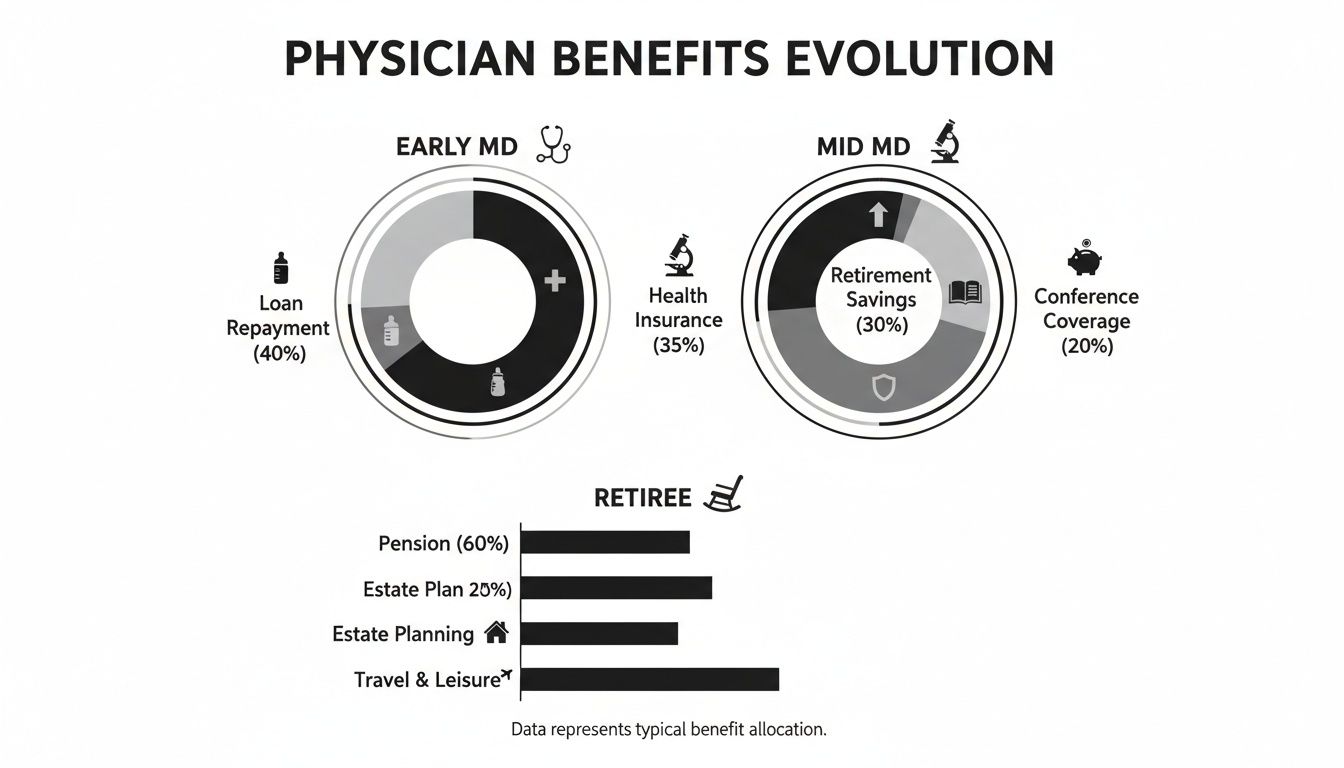
This infographic breaks down benefit levels for early-career, mid-career and retired physicians at different FTEs. At 0.6 FTE, you generally keep about 75% of full-time retirement contributions and 70% of malpractice coverage.
Forecasting Income And Workload Balance
Projecting your annual net earnings is as simple as multiplying your hourly rate by expected weekly hours, then factoring in prorated benefits. For instance, 24 hours per week at $100/hour with 80% benefit coverage nets roughly $115,200 a year.
Accurate projections prevent unexpected shortfalls.
You can plug numbers into a spreadsheet or try the WeekdayDoc FIRE calculator (https://weekdaydoc.com) for state-specific salary figures and future-value estimates.
Forecast Tips:
- Track your hours consistently to verify what you log.
- Update your rate assumptions annually to reflect market trends.
- Review benefit statements each quarter to catch changes early.
- Adjust your FIRE projections before open enrollment begins.
Choosing The Right Compensation Model
Your ideal model hinges on both financial goals and lifestyle preferences. Ask yourself:
- Which minimum weekly hours cover my basic expenses?
- How do per-hour rates and benefit percentages compare across models?
- What flexibility rating aligns with my peak and off days?
For insider tips on balancing schedule freedom with stable income, check out our detailed guide on flexible schedule physician jobs at WeekdayDoc.
Specialties With High Part Time Demand

Finding the right specialty for a part-time schedule can feel like piecing together a puzzle. Some fields fit more neatly than others, offering reduced hours without diluting the quality of patient care.
For instance, primary care, psychiatry, radiology and dermatology lead the pack when it comes to flexible schedules. Many clinics will let you work two or three days a week, maintaining your panel while freeing up personal time.
Physician shortages are reshaping opportunities worldwide. In the U.S., experts project 32,000 annual physician openings through 2033. The AAMC anticipates a gap of 13,500–86,000 physicians by 2036—especially in primary care and core specialties. A recent Sermo poll found 77% of practices now embrace more part-time roles, and locum tenens searches hit 16.4% of total activity.
Learn more about physician job outlook on BartonAssociates
Key Specialties With Demand
- Primary Care: Clinics offering 20–30 hour weeks to preserve panel continuity.
- Psychiatry: Telehealth options let you set your own hours and skip on-site duties.
- Radiology: Teleradiology gigs that adapt to your preferred reading schedule.
- Dermatology: Condensed clinic days, often grouped into two or three full sessions.
- Pediatrics: A mix of outpatient visits and telehealth to suit varying needs.
- Emergency Medicine: Shift-based models that slot easily into part-time plans.
- Anesthesiology: Perioperative blocks with minimal on-call requirements.
- Pathology: Remote slide reviews creating a weekday-only rhythm.
“Choosing a specialty with built-in flexibility can preserve your energy for patient care.”
Pediatrician Case Studies
Dr. Lopez works at 0.6 FTE, seeing well-child patients on Mondays, Wednesdays and half-day Fridays in her outpatient clinic. This steady rhythm keeps her engaged without burning out.
Dr. Singh pairs a telehealth panel during the week with locum tenens shifts on weekends. When life demands a change, he swaps blocks seamlessly.
These snapshots show how workflow and continuity shape part-time pediatrics. Look for departments that support job-sharing or have strong telehealth infrastructure.
Tools like WeekdayDoc help you filter roles by No Call markers, part-time openings, and a Burnout-Friendly Score. By focusing on specialties known for flexibility, you’ll balance patient care with your life goals.
Comparing Part Time Opportunities
Here’s a quick snapshot of where most part-time positions cluster.
| Specialty | Typical Hours | Flexibility Rating |
|---|---|---|
| Primary Care | 20–25/week | High |
| Psychiatry | 15–20/week | Very High |
| Radiology | 10–18/week | High |
- Confirm whether your team arranges handoffs or job-shares.
- Double-check telehealth support and licensing requirements for remote roles.
- Bring up your desired hours early in interviews to set clear expectations.
Remember, institutional culture and panel size can vary widely. Targeting specialties with rapidly growing part-time demand will give you stronger negotiating leverage.
Finding Burnout Friendly Roles With Smart Negotiation
Landing a position that truly guards your work–life balance takes more than luck. It hinges on contract language that cushions you when clinical demands surge. Think of negotiation as weaving a safety net beneath every shift.
Understanding Safety-Net Clauses
Every clause you negotiate is like a strand in that safety net. Clear wording makes each strand strong and enforceable. Vague language—phrases like “as needed”—can fray your net and leave you holding extra shifts.
Start by pinpointing areas where workload spikes most. Is it covering colleague vacations? Handling unexpected call rotations? Spell out what happens when volume doubles or admin tasks pile up.
Key Contract Clauses For Burnout Protection
Below is a checklist of essential clauses to negotiate. These elements form the core of your burnout shield.
| Clause | Purpose | Suggested Language | Impact Level |
|---|---|---|---|
| Guaranteed Rest Days | Ensures weekly downtime | "Provider entitled to 2 rest days/week" | High |
| CME Protected Hours | Secures paid education time | "10 hours CME leave annually, paid" | Medium |
| Malpractice Coverage | Protects against liability gaps | "Coverage extended to all clinical work" | High |
| Locum Backup | Provides backup for absences | "Employer to supply locum coverage" | Medium |
Each of these clauses targets a specific burnout risk—whether it’s relentless clinical hours or unpaid education time. Making them contractually binding shifts protection from a promise to a guarantee.
Negotiation Strategies
Build your pitch with data and examples. Lay out how benefits should prorate if you work part-time. Propose clear shift start and end times, and show how locum backfill preserves continuity of care.
- Prorate Benefit Contributions by FTE percentage
- Define Shift Schedules with precise clock-in/clock-out language
- Secure Locum Tenens Coverage for planned and unplanned absences
- Articulate Guaranteed Rest Days in calendar terms
Each point you raise adds a layer of security for your personal time.
Evaluating Impact Levels
Not all clauses carry equal weight. Assigning an impact level helps you prioritize:
- High Impact: Must-have protections (e.g., rest days, malpractice)
- Medium Impact: Important supports (e.g., CME hours, locum coverage)
- Low Impact: Nice-to-have perks (e.g., free parking)
Tailor your ask list based on your personal burnout risk factors. Keep critical items front and center.
Real-World Examples
Dr. Patel negotiated a 0.7 FTE contract that prorated vacation and CME. He also added a locum clause covering holidays and sick days. The result? A predictable schedule and protected learning time.
Dr. Gomez used clear “no after-hours” language to avoid surprise weekend calls. She framed her ask around continuity of care—making it an employer benefit, not just a personal perk.
Setting Clear Boundaries
Explicit shift terms are your first line of defense against unscheduled call. Use language like “shift ends at 5 PM” or “no call status after sign-out.” Ask for written confirmation in your offer letter to avoid misunderstandings.
Financial Safeguards
When you drop to part-time, check how benefits and retirement matches prorate. Confirm employer contributions to 401(k) or 403(b) aren’t tied strictly to full-time hours.
Factor malpractice premiums into your hourly rate. If you work fewer clinical hours, you should pay only for those hours.
Negotiating Remotely
Telehealth roles often let you negotiate via email, creating a time-stamped record. Schedule a video call to walk through each clause. Save meeting notes in your contract folder to reference later.
Tips For Success
- Review your draft with a legal advisor familiar with healthcare contracts
- Practice your talking points and frame asks around patient care quality
- Document every agreed change in email or amendment language
- Follow up within 48 hours to lock in negotiated terms
Data plus clear examples gives you confidence and credibility at the table.
Leveraging Internal Resources
Human resources can share standard templates and past contract clauses used by other part-time physicians. Use those examples as a baseline for your draft.
Using WeekdayDoc Tools
WeekdayDoc offers a FIRE calculator to project long-term finances and a Burnout Index scoring system. Combining these tools with your checklist gives a 360° view of each offer.
Avoiding Common Pitfalls
- Vague terms like “as needed” or “reasonable” invite extra shifts
- Unspecified review processes can stall mid-term changes
- Broad scope language may pull you into undesired projects
Clarify who defines key terms and insist on written agreement.
Building A Negotiation Portfolio
Collect anonymized contracts from mentors. Note which clauses they won and how they phrased them. Track employer responses to your drafts—it’s a growing repository of real-world tactics.
FAQs On Contract Talks
- When should I start negotiations? Before you sign or formally accept any offer.
- How do I prorate benefits? Multiply the full-time contribution by your FTE percentage.
- Can I revisit terms? Yes—include a six-month review clause for adjustments.
Measuring Success
Monitor your burnout scores monthly and gather feedback from peers. Compare performance reviews with personal well-being metrics. Adjust your contract or schedule when necessary.
Next Steps
- Review your current contract for missing clauses
- Assign impact levels to each clause
- Draft negotiation language with examples
- Practice your pitch with a mentor
- Submit your revisions and confirm in writing
Continued Learning
Attend webinars on medical contract law and subscribe to negotiation newsletters. Update your approach once a year to reflect market shifts.
Peer Support
Form a small group of physicians to share negotiation wins and missteps. Quarterly meetups or secure forums foster collective wisdom and fresh ideas.
Legal Review
Always engage an attorney to comb through your final draft. Look for gray areas in dispute resolution and termination clauses to avoid surprises later.
Balancing Flexibility
Include triggers for FTE adjustments after major life events. This clause allows you to scale up or down without renegotiating from scratch.
Community Feedback
Post draft clauses in physician networks for anonymous review. Incorporate suggested phrasing that aligns with legal best practices.
Tool Integration
Map contract clauses to entries in your FIRE calculator. Use spreadsheet formulas to see how each term affects your path to financial independence.
Maintaining Relationships
After signing, schedule periodic check-ins with your manager to ensure clauses are honored. Address issues early to keep trust intact.
Scaling Your Approach
Adapt your core clause template for different employers and specialties. This speeds up negotiations and preserves consistency.
Celebrating Wins
A successful negotiation is worth sharing. Highlight your story to inspire colleagues and signal to institutions that physician well-being matters.
Summary Highlights
Burnout-friendly roles demand intentional clause design. Each negotiated element weaves into a safety net, protecting your time, energy, and learning.
Wellness is written into contracts through clear, enforceable clauses.
Action Plan
- Review your current contract for gaps
- Assign impact levels to each clause
- Draft precise negotiation language
- Practice your pitch with a trusted mentor
- Submit revisions and confirm all changes in writing
Resources List
- WeekdayDoc Burnout Index offers live employer well-being scores
- WeekdayDoc FIRE Calculator projects your path to financial independence
- American Medical Association contract negotiation guides
- Local physician groups and forums share best practices
Ready to negotiate roles that protect your well-being? Start with our curated part-time listings at WeekdayDoc. Your sustainable practice awaits.
Part Time Physician Jobs FAQ
Thinking about a part-time physician role? You’ve come to the right place. This FAQ walks you through targeted job hunting, prorated benefit breakdowns, seamless patient handoffs, and side-by-side offer comparisons.
Each answer is packed with real-world tips and examples so you can move forward with confidence.
How To Find Part Time Physician Jobs
First, sketch out your dream week. Do you need guaranteed weekends off? How many telehealth days feel right?
Having that template in hand makes every search more efficient. Then:
- Create profiles on specialty-focused job boards and switch on email alerts.
- Engage in peer networks—online forums or local meetings often share unadvertised gigs.
- Carve out weekly “application time” blocks to send resumes and follow up.
“A focused routine exposes hidden opportunities before they hit the main listings.”
How To Compare Compensation And Benefits
Part-time pay structures can look like a jigsaw puzzle if you don’t break them down. Start by lining up each piece:
| Benefit Component | What To Verify |
|---|---|
| Health Premium | % of full-time contribution |
| Retirement Match | Match tied to your FTE level |
| Malpractice Coverage | Hourly premium vs. flat rate |
Don’t overlook sick leave and CME hours—they usually scale with your FTE. A simple spreadsheet helps you plug in your hours, rates, and perks side by side.
Check your personalized projections with our Work-Life Balance Calculator: https://weekdaydoc.com/wlb-calculator
How To Maintain Patient Continuity
Shifting schedules can create gaps in care unless you lock down a clear handoff process. Aim for precise, concise notes and brief overlap days to stay in sync.
- Condense recent visits into a one-page summary.
- Schedule overlap sessions so you can hand off cases face-to-face.
- Assign a backup physician for urgent callbacks when you’re out.
“Seamless handoffs are the backbone of continuous care.”
Ready to explore curated part-time physician roles that honor your time and expertise?
Browse openings on WeekdayDoc: Discover Part-Time Physician Jobs
Article created using Outrank