Physician Burnout Rate by Specialty A Data-Driven Comparison
Explore the latest physician burnout rate by specialty. This guide compares high-risk and low-risk fields, analyzes key drivers, and offers solutions.
While the overall physician burnout rate dropped to 49% in 2024 from 53% the year before, that number doesn't tell the whole story. Front-line specialties like emergency medicine are still getting hammered, proving that burnout risk is anything but uniform across the medical field.
A Systemic Crisis Beyond Individual Resilience
Physician burnout isn’t a personal failing. It’s a systemic problem, plain and simple. We define it by three core symptoms: emotional exhaustion, depersonalization (that feeling of being detached and cynical), and a lost sense of personal accomplishment.
This crisis is fueled by deep-seated institutional pressures that hit clinicians in every field, though some get it worse than others. Understanding these drivers is the key to seeing why burnout rates vary so wildly between specialties.
The big culprits are consistent across healthcare, creating a high-stress environment that just grinds people down.
- Administrative Overload: The endless mountain of paperwork, prior authorizations, and bureaucratic nonsense that pulls us away from actual patient care.
- Clunky EHR Systems: Poorly designed Electronic Health Record systems are a universal headache, leading to hours of after-hours charting—what many of us grimly call "pajama time."
- Grueling Hours and No Control: Long shifts, unpredictable schedules, and a feeling that you have no say in your own work environment are a fast track to exhaustion.
To really get a handle on what this feels like, it’s worth knowing the warning signs. This article on the 10 Key Signs of Emotional Burnout offers a great breakdown.
Why Your Specialty Matters So Much
Everyone deals with these pressures, but the intensity is what separates the high-risk fields from the more sustainable ones. Certain specialties are structured in a way that just pours gasoline on the fire.
This table shows exactly how these factors play out in two very different worlds.
| Driver Category | High-Risk: Emergency Medicine | Lower-Risk: Dermatology |
|---|---|---|
| Work Environment | Unpredictable, high-acuity chaos with constant interruptions. | Structured appointments, predictable schedules, controlled patient flow. |
| Administrative Burden | Complex coding for unscheduled, diverse cases under extreme time pressure. | Standardized documentation for common conditions. |
| Emotional Toll | Constant exposure to trauma, critical illness, and death. | Primarily outpatient focus, far less exposure to life-and-death situations. |
| Work-Life Integration | Demanding shift work that includes nights, weekends, and holidays. | Generally regular business hours with minimal on-call duties. |
These differences make it obvious why a one-size-fits-all wellness program is doomed to fail. The data backs this up. Female emergency medicine physicians are at an even higher risk, with 56% reporting burnout compared to 44% of their male colleagues in 2024.
By digging into the physician burnout rate by specialty, we can start to see which career paths are built for the long haul.
Understanding your personal burnout risk is the first step toward building a more sustainable career. You can gain personalized insights by using our burnout calculator tool.
Comparing the Highest Burnout Medical Specialties
While the overall burnout rate gives us a decent snapshot, digging into the physician burnout rate by specialty tells the real story. Some fields are getting hit much harder than others, consistently bearing the brunt of the systemic pressures in modern medicine. If you're planning a long-term, sustainable career, you have to understand the specific stressors that define these high-risk specialties.
We're going to compare three of the specialties with the highest reported burnout: Emergency Medicine, Internal Medicine, and Obstetrics/Gynecology. It's not just about who is burning out, but understanding the unique mix of pressures in each field that leads to such high rates of exhaustion and depersonalization.
This chart shows just how widespread the issue is, highlighting the overall rate and the significant gender gap within a field like Emergency Medicine.
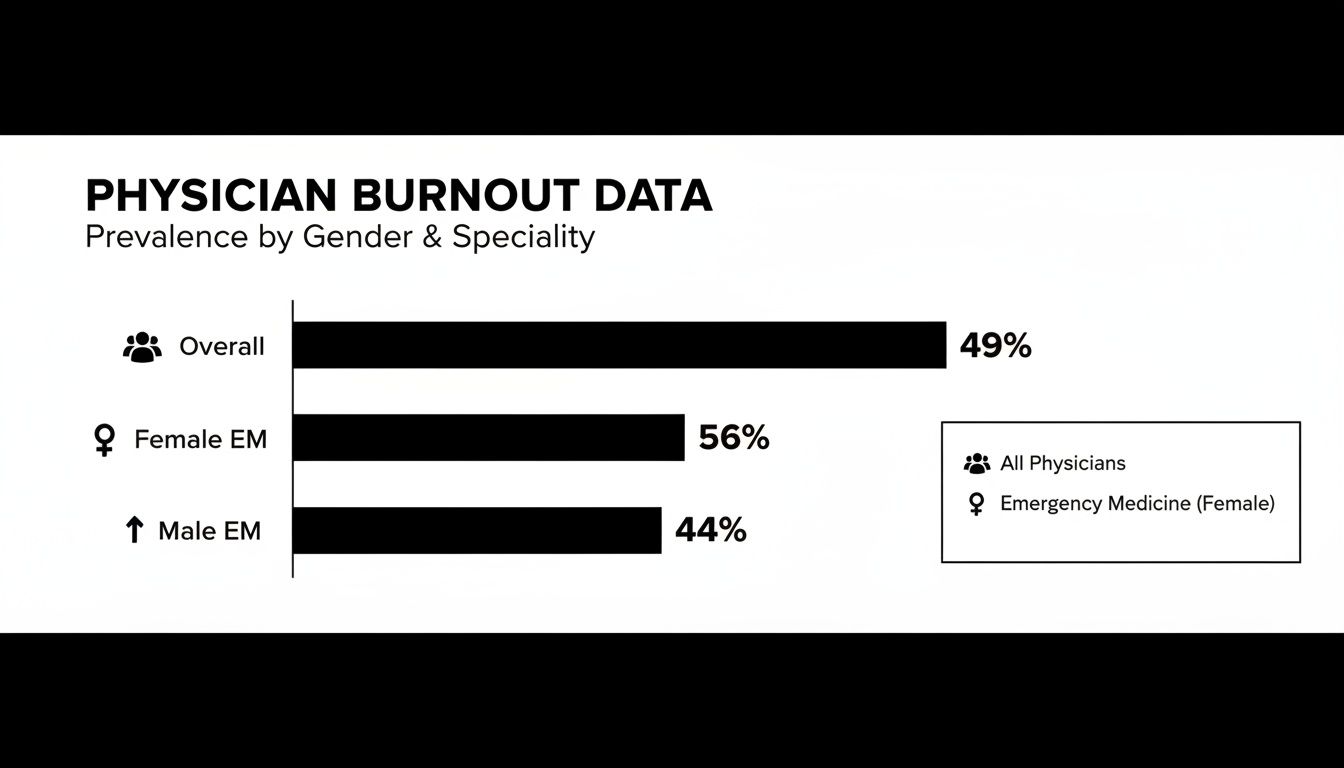
The data is clear: nearly half of all physicians are struggling with burnout, but female EM physicians are at a substantially higher risk than their male colleagues.
Emergency Medicine: The Unrelenting Front Line
Emergency Medicine (EM) consistently tops the burnout charts, and it’s no surprise why. The specialty is built on high-stakes unpredictability. EM docs are the system's safety net, dealing with everything from minor cuts to major trauma, often with incomplete information and under intense time pressure.
This constant state of high alert is exhausting. The ED isn't a scheduled clinic; it’s a chaotic environment defined by constant interruptions, rapid task-switching, and the emotional burden of managing trauma and sudden death daily.
Key burnout drivers in Emergency Medicine include:
- High Emotional Toll: Constant exposure to traumatic events, patient suffering, and life-or-death decisions leads directly to compassion fatigue.
- Unpredictable Workload: You can't predict patient volume or acuity, which creates a chaotic and frequently overwhelming environment.
- Shift Work & Circadian Disruption: Working nights, weekends, and holidays is a given, wrecking sleep patterns and personal lives.
It's a field where your resilience is tested every single shift. The pressure is relentless, and the chances to truly recover are few and far between.
Internal Medicine: The Weight of Chronic Complexity
Internal Medicine physicians are struggling with sky-high burnout rates, driven by crushing administrative work, complex chronic disease management, and the relentless grind of hospitalist shifts. The 2023 Medscape report found that 60% of internists felt burned out, putting them just behind emergency medicine.
The burnout here isn't usually from the acute chaos of an ER. It's more of a slow, steady grind. Internists, especially hospitalists, manage patients with multiple, complex conditions. This requires massive cognitive effort and care coordination, all while fighting bureaucratic red tape.
The administrative burden is a huge factor. Internists spend an incredible amount of time on charting, fighting with clunky EHRs, and chasing prior authorizations. This "death by a thousand clicks" kills job satisfaction and steals time from actual patient care.
A huge piece of the burnout puzzle in Internal Medicine is directly tied to system problems. When you feel more like a data-entry clerk than a doctor, it's easy to feel disconnected from your work.
On top of that, the emotional weight of caring for chronically ill patients over long periods, especially with poor outcomes or systemic barriers to care, is incredibly draining.
Obstetrics and Gynecology: A High-Stakes Blend of Joy and Trauma
Obstetrics and Gynecology (OB/GYN) has its own unique and challenging set of stressors that land it among the most burned-out specialties. The field swings wildly between the joy of delivering a healthy baby and the sudden terror of an obstetric emergency. That emotional whiplash is a major contributor to burnout.
OB/GYNs work a demanding schedule that mixes routine clinic days with unpredictable, high-intensity labor and delivery shifts. The on-call burden is immense, often meaning long hours without sleep followed by a full day of clinic appointments. The fear of litigation also looms large, adding another layer of intense pressure to every decision. A single bad outcome can lead to years of legal stress.
To see how these pressures differ, let's compare them side-by-side.
Burnout Rates and Stress Drivers Across Top-Affected Specialties
This table breaks down the key burnout metrics and contributing factors for the specialties reporting the highest levels of professional exhaustion. It provides a clear, at-a-glance summary of what drives stress in each field.
| Specialty | Reported Burnout Rate | Key Stress Factors | Primary Burnout Drivers |
|---|---|---|---|
| Emergency Medicine | Up to 65% | High acuity, unpredictability, shift work, emotional trauma. | System chaos, compassion fatigue, circadian disruption. |
| Internal Medicine | Around 60% | High administrative load, complex chronic cases, system inefficiencies. | Bureaucratic tasks ("pajama time" with EHRs), cognitive overload. |
| OB/GYN | Up to 53% | Demanding on-call schedule, emotional volatility, high litigation risk. | Work-life conflict, high-stakes emergencies, legal pressure. |
This comparison makes it clear that while all three specialties suffer from high burnout, the reasons are very different. Understanding these nuances is the first step toward finding a career path that aligns with your personal tolerance for different types of stress.
To get a better handle on your own risk factors, you might want to check out our detailed WeekdayDoc Burnout Index. This tool can help you pinpoint which workplace factors are impacting you the most.
Why Some Specialties Report Lower Burnout
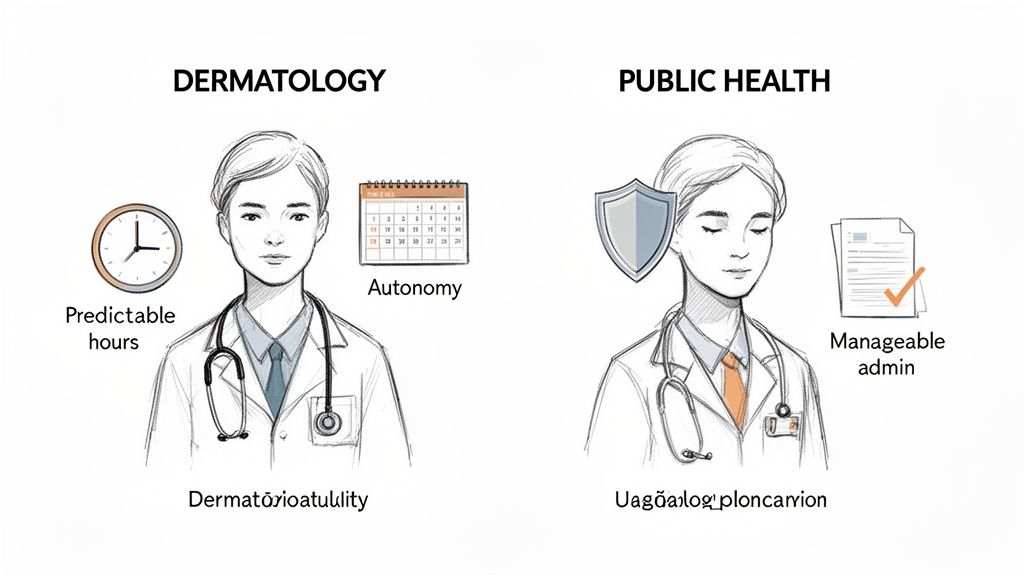
While specialties like emergency and internal medicine are constantly in the burnout spotlight, it's worth looking at the other end of the spectrum. Fields like Dermatology and Public Health consistently post lower rates of professional exhaustion, and it's not because their clinicians are any less dedicated. The difference is baked into the very structure of the work.
Figuring out what makes these roles more sustainable is a critical lesson for any doctor planning a long-term, fulfilling career. When we break down the elements that protect well-being, we can find principles that even physicians in high-stress fields can use to guide their own choices. It’s all about finding an environment that matches your personal definition of work-life balance.
At its core, the lower physician burnout rate by specialty in these fields comes down to a few key protective factors that are simply harder to find in high-stress environments.
The Power of Predictability and Control
One of the single biggest differentiators is how much control a physician has over their schedule and work environment. Specialties with lower burnout almost always feature more predictable, structured workdays.
Dermatology is the classic example. Most dermatologists work in outpatient clinics with scheduled appointments. This setup completely sidesteps the chaos of unscheduled emergencies, allowing for a manageable patient flow—a world away from the constant unpredictability of the ER.
This predictability isn't just about the 9-to-5. It dramatically impacts on-call responsibilities, which are often minimal or nonexistent in many of these fields. When you can actually plan your personal life without the constant threat of a pager going off, a huge source of chronic stress just vanishes.
Autonomy is a powerful antidote to burnout. When physicians have greater control over their patient load, schedule, and clinical decisions, their sense of professional satisfaction and personal agency increases dramatically.
And control isn't just about the clock; it's about professional autonomy. Fields with lower burnout rates often give physicians more say in how they practice medicine, with less direct oversight from hospital administrators breathing down their necks.
Manageable Administrative Burdens
Paperwork is a universal pain point, but its impact varies wildly by specialty. Fields like dermatology or certain roles in public health tend to have more standardized and less urgent documentation than, say, managing a critically ill patient with a dozen comorbidities in the ICU.
Just look at the charting differences:
- Dermatology: Documentation for common conditions often follows a predictable template, making notes far more efficient to complete.
- Public Health: These roles might focus on population-level analysis or policy, shifting the burden from individual patient charts to project-based work.
- Preventive Medicine: With a focus on health maintenance and screening, the documentation is more standardized and less time-sensitive.
This isn't to say these fields have zero admin work, but the volume and urgency are far more manageable. The "pajama time" spent catching up on EHRs is a lot less common when the clinical day is less chaotic and the documentation is more straightforward. Reducing that bureaucratic friction is key to preserving the mental energy needed for actual patient care.
The Nature of Patient Interactions
The emotional weight of medicine also plays a huge role. While every specialty has its tough moments, those with lower burnout rates often operate on a different model of patient interaction.
In a field like dermatology, most encounters are outpatient-based and rarely involve life-or-death decisions. Physicians get to build long-term relationships with patients managing chronic but non-critical conditions. This provides a unique kind of professional fulfillment, one built on continuity of care without the constant emotional grind of trauma and loss.
Likewise, public health physicians often work at a systems level, where their "patient" might be an entire community. This population-level focus can provide a profound sense of making a broad impact, which is incredibly rewarding without the direct, one-on-one emotional intensity of acute care.
By understanding these structural advantages, clinicians in any field can start to pinpoint what they need for a sustainable career. It may not mean switching to dermatology. But it could mean seeking out roles with more predictable hours, greater autonomy, or a different patient care model—all of which are filters you can use on platforms like WeekdayDoc to find a much better fit.
Identifying the Universal Drivers of Burnout
While an ER doc's daily grind looks nothing like a dermatologist's, there are powerful, systemic forces driving burnout across the entire medical field. These are the shared battles that chip away at professional satisfaction, no matter what your specialty is.
Getting a handle on these universal drivers gives you crucial context for the physician burnout rate by specialty. These aren't just isolated complaints; they're deeply ingrained problems in the healthcare system. They lay a foundation of chronic stress that leaves clinicians in every field vulnerable to exhaustion, cynicism, and feeling like their work doesn't matter anymore. When these pressures pile up, even the most dedicated doctors can feel their passion fade.
The Crushing Weight of Bureaucratic Tasks
Ask any doctor what drains them the most, and you'll probably hear about the endless non-clinical work. Physicians in every specialty are drowning in administrative tasks that have little to do with actual patient care. Think endless paperwork, prior authorizations, and wrestling with convoluted billing codes.
This isn't just a minor annoyance—it's death by a thousand cuts. It fundamentally warps the job. When a family physician spends half their afternoon on the phone with an insurance company to get a necessary prescription approved, that’s time they’re not spending with patients. This friction creates a deep sense of frustration and moral injury, as the system itself prevents them from providing the best care.
The end result? Physicians feel more like data entry clerks than the healers they trained to be. This constant bureaucratic battle is a massive factor driving burnout, whether you're in a chaotic urban hospital or a quiet suburban clinic.
The Double-Edged Sword of Electronic Health Records
Electronic Health Records (EHRs) were supposed to make our lives easier and improve patient safety. For too many physicians, they’ve become a primary source of daily misery. Clunky interfaces and absurd documentation demands have created "pajama time"—the hours spent at home, long after a shift ends, just to catch up on charting.
The EHR burden contributes to burnout in a few key ways:
- Time Sink: The sheer volume of clicks and typing is staggering. It stretches the workday and bleeds into personal time that should be spent recharging.
- Cognitive Load: Trying to navigate an inefficient system while managing complex patient problems just adds another layer of mental exhaustion.
- Patient Disconnect: The EHR screen has become a physical and emotional barrier. It’s hard to connect with a patient when you’re forced to stare at a computer.
A study from the American Medical Association found that for every hour physicians spend face-to-face with patients, they spend nearly two additional hours on EHRs and other desk work. That upside-down ratio is a powerful, universal driver of burnout.
The Erosion of Clinical Autonomy
Another huge issue is the loss of professional autonomy. More and more, physicians feel like their clinical judgment is being overruled by metrics, protocols, and administrators. When treatment decisions are dictated by an insurance policy instead of a doctor's expertise, it strikes at the very core of what it means to be a physician.
This loss of control is profoundly demoralizing. It takes a decade or more of intense training to develop expert clinical judgment. Having that judgment second-guessed or overridden by non-clinical entities fosters a sense of helplessness that fuels burnout across the board.
Regaining a sense of control over your practice and your schedule is one of the most powerful ways to fight back. It’s a big reason why so many clinicians are seeking out roles that offer more flexibility and respect their autonomy. At platforms like WeekdayDoc, the entire focus is on finding opportunities that prioritize physician independence and protect a healthy work-life balance.
Building a Burnout-Resistant Medical Career
Knowing the physician burnout rate by specialty is one thing. Actually doing something about it is another. The real power comes from taking deliberate steps to build a career that actively pushes back against those systemic pressures. This isn't about finding a miracle cure; it's about making smart, strategic choices that align your work with your well-being.
Building a career that lasts means shifting from a reactive to a proactive mindset. Instead of just accepting the default path laid out for you, you can intentionally seek out roles and environments that are built for sustainability. It’s time to look beyond the salary and focus on the structural parts of a job that dictate your daily life.
Think of your career like any other part of your health. It needs regular check-ups and preventive care to stay on track.
Proactively Designing Your Ideal Work Environment
The most potent weapon against burnout is control. Control over your schedule, your environment, and your time. For most of us, that means stepping away from the chaos of unpredictable hours, crushing on-call shifts, and mandatory weekends.
Platforms like WeekdayDoc were created for this exact purpose—to help you filter for jobs that put work-life balance front and center. You can finally screen for positions that offer a sane structure, giving you back command over your own life.
Start filtering your job search with these non-negotiables:
- No Call: Ditching on-call is one of the single biggest moves you can make to cut chronic stress and finally get some sleep.
- No Weekends: Taking back your weekends for rest, family, and hobbies is fundamental to long-term survival in this field.
- Remote or Hybrid Options: Telehealth and other remote jobs can wipe out commute times and give you a much more controlled, comfortable workspace.
When you focus on these foundational benefits, you start finding roles that are inherently less draining, no matter the specialty.
Evaluating Opportunities for Long-Term Sustainability
When you're looking at a new position, the job description is just the beginning. A truly sustainable role is defined by its culture and the day-to-day operational reality. That means you need to ask some pointed questions during the interview.
To get ahead of burnout, it's critical to implement effective burnout prevention strategies from the start. Ask directly about their administrative support, expected patient loads, and how functional (or infuriating) their EHR system is.
A job that pays a bit less but guarantees protected admin time and a hard stop at 5 PM is infinitely more valuable for your health than a high-paying role that demands endless hours of "pajama time" charting.
Look for signs of a healthy workplace. What’s their physician turnover rate? Does leadership ever talk openly about burnout? These are strong clues that an organization sees its clinicians as people, not just productivity machines.
A Practical Use Case: An EM Physician's Transition
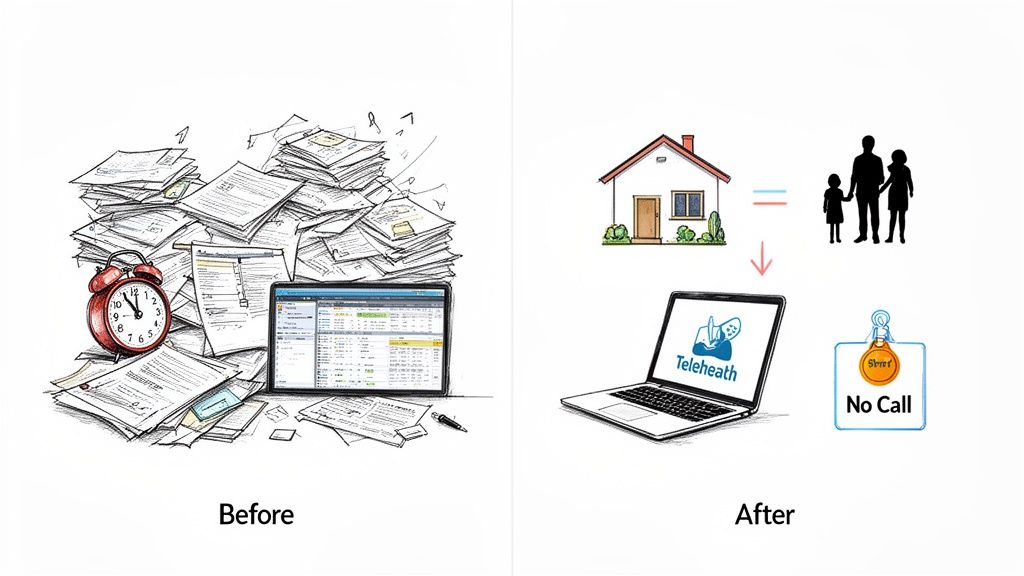
Take an Emergency Medicine physician, ten years in, who is completely fried. The constant high-stakes pressure and chaotic shifts have worn her down. But instead of quitting medicine, she decides to pivot.
Using a platform focused on work-life balance, she filters for remote, weekday-only telehealth roles in urgent care. She lands a position with a predictable 9-to-5 schedule. No call. No weekends.
This simple shift lets her keep using her hard-earned clinical skills but in a much lower-stress setting. Her admin work is manageable, and when she clocks out, she’s actually done for the day. This isn't just treating the symptoms of burnout—it’s removing the root cause.
Sometimes, finding a better-fitting role is the most powerful intervention there is. If your current job is the problem, exploring alternatives like the part-time physician jobs available can open doors you didn't know existed.
Using Financial Planning for Career Freedom
Your financial health and your career sustainability are deeply connected. When your finances are in order, you have the freedom to make career moves based on what's best for you, not just what pays the most. This is the whole idea behind the Financial Independence, Retire Early (FIRE) movement that’s become popular among physicians.
But achieving financial independence doesn’t mean you have to retire. It means you have the power to be "work-optional." This leverage allows you to:
- Cut back to part-time without financial anxiety.
- Take a year-long sabbatical to travel and recharge.
- Walk away from a toxic job without another one lined up.
- Switch to a lower-paying field you're passionate about.
Tools like WeekdayDoc’s integrated Salary & FIRE Calculator help you map out this journey. When you understand your savings rate and can project your investments, you see a clear path to freedom. That long-term plan is the ultimate defense against feeling trapped in a job that’s burning you out.
Of course. Here is the rewritten section, designed to sound like an experienced human expert and match the provided examples.
Physician Burnout: Your Questions Answered
If you're navigating a medical career, you need straight answers about burnout. Let's cut through the noise and address the most common questions we hear from clinicians trying to build a sustainable practice.
Which Medical Specialty Has the Highest Burnout Rate?
Emergency Medicine consistently tops the charts for the highest burnout rates. It's not hard to see why—the specialty is a perfect storm of high-stress environments, unpredictable shift work, and intense patient loads.
Making life-or-death decisions under immense pressure is the daily norm. That relentless pace, combined with constant exposure to trauma, creates a recipe for deep professional exhaustion.
What Really Causes Physician Burnout?
Let's be clear: burnout isn't an individual failing. It’s a systemic problem driven by dysfunctional work environments. The biggest culprits are things that pull physicians away from actual patient care.
Excessive bureaucratic tasks—endless charting, paperwork, and fighting with prior authorizations—are primary drivers. Clunky, inefficient Electronic Health Record (EHR) systems that demand hours of pajama time after a long shift are another major factor. Add in brutally long hours and a lack of control over your own schedule, and you have the core drivers of widespread burnout.
Burnout is rarely a sign of individual weakness. It's a symptom of a broken system. The first step toward a sustainable career is recognizing that the problem isn't you—it's the environment.
How Can I Find a Job That Helps Prevent Burnout?
Finding a burnout-resistant job means being proactive. You have to look beyond the salary and focus on the structural parts of a role that either protect or destroy your work-life balance.
Platforms designed to filter for these protective factors are your best bet. When you search, prioritize criteria that give you back control over your life:
- “No Call” schedules to stop unpredictable disruptions to your personal time.
- “No Weekends” to guarantee you have protected time to rest and recharge.
- “Remote/Hybrid” options to cut down on commute stress and give you more control over your work environment.
Focus on roles that offer real autonomy, manageable patient loads, and a supportive culture. Those are the jobs that lead to long-term career satisfaction.
Does Physician Burnout Actually Affect Patient Care?
Yes, absolutely. The link is direct, measurable, and deeply concerning. When clinicians are emotionally exhausted and depersonalized, the risk of medical errors skyrockets.
Research has shown that physicians experiencing burnout are about twice as likely to be involved in a patient safety incident. This is why tackling the physician burnout rate by specialty isn't just about protecting doctors. It's a critical patient safety imperative for the entire healthcare system. A healthy, supported physician is a safe physician.
At WeekdayDoc, we believe a sustainable career shouldn't be a rare find. We focus only on burnout-friendly roles that respect your time. Use our clear "No Call" and "No Weekends" filters to find a job that actually fits your life. Start your search for a better work-life balance today.