Physician Burnout by Specialty: Insights, Risks, and Practical Solutions
Discover data-driven insights on physician burnout by specialty and actionable strategies to reduce risk and sustain a rewarding career.
The root of physician burnout by specialty comes down to wildly different stressors. It's the chasm between the high-stakes trauma of an Emergency Department and the soul-crushing administrative load of a Primary Care clinic. While some fields offer more control, none are truly safe from the systemic pressures driving this crisis.
Understanding the Physician Burnout Crisis
Physician burnout isn't just about being tired after a long week. It's a profound state of emotional, physical, and mental exhaustion born from chronic, overwhelming stress. It shows up as cynicism, feeling like you’re not making a difference, and a deep detachment from the work you once loved.
This isn't a problem of individual weakness. It's a systemic failure baked into the very structure of modern healthcare.
To see the bigger picture, it helps to understand why burnout is common in the workforce in general. Many of the same culprits—insane demands, no autonomy, and not enough resources—are simply amplified to the extreme in a medical setting. This guide gets past blaming doctors and dives into the specific environmental factors that put certain specialties squarely in the crosshairs.
Key Factors Driving Burnout
Burnout is complex, but a few core drivers pop up again and again across specialties. Nailing these down is the first step toward building a career that doesn't break you.
- Excessive Workload: Brutal hours, impossible patient loads, and a mountain of administrative tasks are the primary offenders.
- Lack of Control: Having little to no say over your schedule, workflow, or even clinical decisions is a fast track to disillusionment.
- Inefficient Systems: Clunky EHRs and bureaucratic red tape steal precious time that should be spent on patient care.
- Emotional Exhaustion: Constantly dealing with human suffering, tragic outcomes, and life-or-death decisions takes an immense toll.
These factors mix into a toxic cocktail, but the recipe varies. A surgeon’s stress from a complex case is a world away from a family physician’s dread of their overflowing inbox. If you're worried about where you stand, you can assess your personal risk with our guide to the Physician Burnout Index.
The National Impact of Burnout
Recent data paints a grim picture. In 2024, 49% of all U.S. physicians reported burnout. That’s a slight improvement from 53% in 2023 but still far worse than the 42% we saw before the pandemic in 2018.
Even more shocking, physicians are 82.3% more likely to experience burnout than other U.S. workers, even after adjusting for things like work hours. You can dig into more of these burnout rate comparisons on tebra.com.
Burnout isn't a personal failure—it is a predictable, systemic consequence of a healthcare environment that places unsustainable demands on its most critical asset: its people.
The table below breaks down the key differentiators that define the burnout experience across various medical fields, setting the stage for a deeper comparison.
| Specialty Type | Primary Stressor | Key Environmental Factor | Typical Schedule |
|---|---|---|---|
| Procedural (e.g., Surgery) | High-stakes performance | Unpredictable call duties | Irregular, long hours |
| Primary Care (e.g., FM/IM) | Administrative burden | High patient volume | Structured but overloaded |
| Hospital-Based (e.g., EM) | Acute emotional intensity | Chaotic, fast-paced setting | Shift-based, high intensity |
| Outpatient (e.g., Derm) | Patient expectations | Controlled environment | Predictable, 9-to-5 |
Comparing the Highest Burnout Specialties
While stress is practically baked into a medical career, some specialties consistently top the burnout charts. They often share a common thread of high stakes and intense pressure, but if you look closer, their "burnout profiles" are remarkably different. Getting a handle on these nuances is crucial to understanding the real picture of physician burnout by specialty.
Let's break down three of the hardest-hit fields: Emergency Medicine, OB/GYN, and Critical Care. Each one brings a unique set of challenges that fuel its high rate of physician distress.
Emergency Medicine: The Unpredictable Front Line
Emergency medicine (EM) physicians live and breathe in a state of controlled chaos. As the first point of contact for completely undifferentiated patients, they have to be ready for anything—from a sprained ankle to a multi-system trauma—at a moment's notice. This constant, high-stakes unpredictability creates a massive cognitive and emotional load.
The job is all about high-acuity, rapid-fire decisions made with incomplete information. There's rarely time to build rapport; encounters are often transactional and incredibly intense. Combine that with rotating shift work that wrecks circadian rhythms, and you've got a perfect storm for total exhaustion.
EM now wears the unfortunate crown for the most severe burnout crisis. The 2024 Medscape Physician Burnout & Depression Report found that a staggering 63% of emergency physicians are burned out—the highest of any specialty. They also report the most intense emotional fatigue (68%) and the highest rates of depersonalization (55%), driven by difficult patients, crushing caseloads, and chronic staffing shortages. You can dig deeper into these trends in this comprehensive analysis of burnout data.
Obstetrics and Gynecology: A High-Stakes Blend
OB/GYN is a unique beast, merging the demands of primary care, surgery, and emergency response into one incredibly taxing specialty. An OB/GYN can go from routine clinic checkups in the morning to complex surgery in the afternoon, only to be called in for an emergency delivery in the middle of the night.
The emotional stakes are off the charts. You get to share in the profound joy of birth, but you also have to navigate devastating outcomes like fetal loss or maternal complications. This emotional whiplash, along with long, unpredictable hours dictated by labor, is a huge contributor to burnout. And hanging over it all is the constant, chronic stress of potential litigation, which wears physicians down over time.
The unique burden on an OB/GYN is the fusion of long-term patient relationships with the acute, life-or-death intensity of surgery and childbirth. It’s a specialty that demands emotional availability and technical perfection simultaneously, often on very little sleep.
The chart below shows just how stark the reality is for physicians compared to other professionals. It really highlights why this issue is so critical in these high-demand fields.
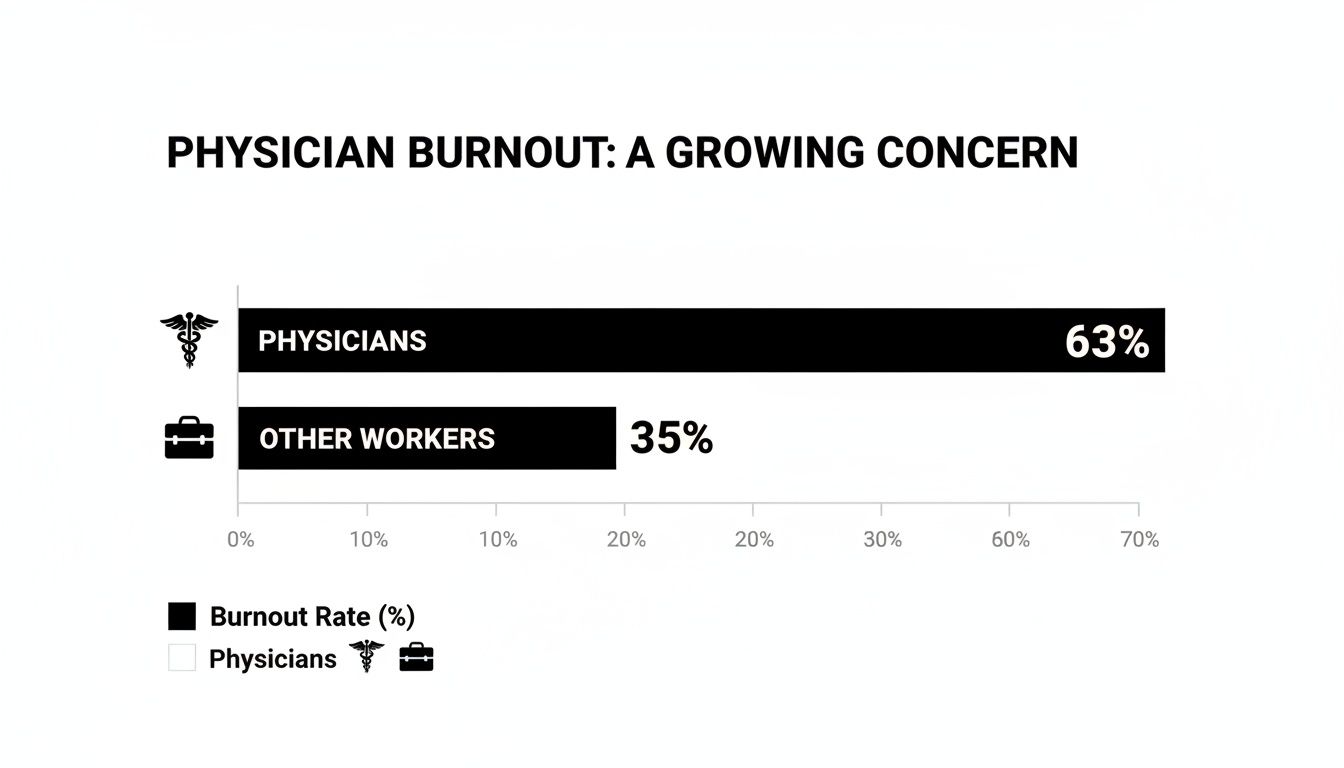
The data speaks for itself. Physicians are burning out at a rate that far outpaces the general workforce, which just underscores the systemic pressures that are unique to medicine.
Critical Care: Confronting Moral Injury
Critical Care physicians, or intensivists, spend their days managing the sickest patients in the hospital. Their world is the Intensive Care Unit (ICU)—a place of constant alarms, humming machinery, and fragile lives hanging in the balance. The work is defined by high mortality rates.
Here, a primary driver of burnout is moral injury. This is what happens when physicians feel forced to provide care that clashes with their own ethical compass—like continuing aggressive, futile treatment on a terminally ill patient because a family insists.
This constant exposure to death, dying, and ethically loaded decisions creates an immense emotional burden. Intensivists have to navigate difficult end-of-life conversations every single day, which is draining and can quickly lead to compassion fatigue and a crippling sense of helplessness.
A Head-to-Head Comparison
To get a clearer picture of these distinct challenges, let’s compare these specialties side-by-side. While all three are under immense pressure, the nature of that pressure couldn't be more different.
This table breaks down the core burnout factors for Emergency Medicine, OB/GYN, and Critical Care, offering a side-by-side view of their distinct operational and emotional demands.
Burnout Drivers in High-Risk Specialties
| Specialty | Burnout Rate | Primary Burnout Driver | Key Stressors | Work Environment Demands |
|---|---|---|---|---|
| Emergency Medicine | 63% | Unpredictability & Pace | High patient volume, shift work, difficult encounters, system failures | Constant multitasking, rapid decision-making, high acuity |
| OB/GYN | 53% | Emotional & Physical Strain | Long hours, on-call duty, high-risk procedures, litigation fears, patient outcomes | Blends clinic, surgery, and labor & delivery; emotionally charged |
| Critical Care | 47% | Moral Injury & Intensity | End-of-life care, ethical dilemmas, high mortality, complex family dynamics | Technologically dense, high-stress, emotionally heavy, team-based |
This breakdown makes it obvious why a one-size-fits-all approach to burnout just doesn't work. The solutions for an EM doc drowning in system inefficiencies are totally different from those for an intensivist grappling with moral injury. Recognizing these distinctions is the first real step toward creating targeted, meaningful changes that can help sustain physicians in these demanding—and vital—roles.
Analyzing Burnout in Primary Care
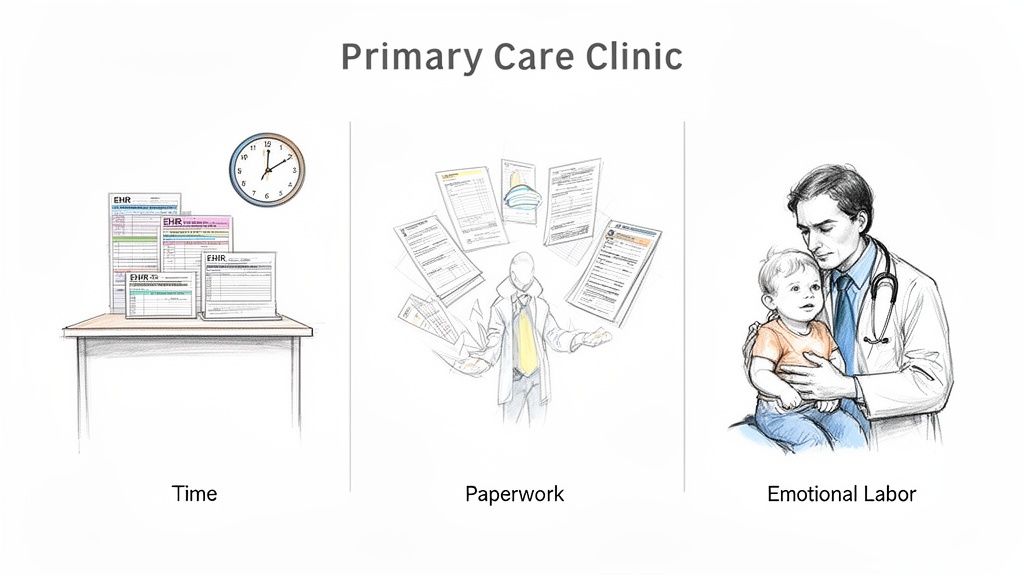
While specialties like surgery or emergency medicine often grab headlines for their high-stakes drama, the burnout crisis in primary care is a different beast entirely. It’s more insidious. The stress here isn’t about split-second, life-or-death calls; it's a relentless, low-grade grind fueled by systemic dysfunction. This is burnout by a thousand cuts.
Primary care physicians are the foundation of the entire healthcare system, yet they're crushed by a unique set of accumulating pressures. The sheer volume of patient encounters, endless electronic health record (EHR) tasks, and constant battles with insurance companies create an environment defined by chronic frustration. It’s a marathon of administrative hurdles that leaves precious little time for the very thing that drew doctors to this field—building meaningful relationships with patients.
The Administrative Burden
The administrative load in primary care is simply relentless. Unlike a proceduralist who might have intense but concentrated bursts of charting, a primary care doc basically lives in the EHR. Every single visit kicks off a cascade of follow-up tasks: refilling prescriptions, answering patient portal messages, coordinating referrals, and documenting complex, multi-problem care plans.
This is where "pajama time" comes from—the hours spent at home, long after the clinic closes, just trying to catch up on charting. For so many, the workday doesn't end when they walk out the door; it just moves to a different screen.
Contrasting Burnout Drivers in Primary Care
Even within primary care, the flavor of burnout differs. While often lumped together, Family Medicine, Internal Medicine, and Pediatrics each have their own distinct challenges. Getting into these nuances is critical to understanding physician burnout by specialty in this essential corner of medicine.
- Family Medicine doctors often carry the heaviest burden of care coordination. They manage everything from newborn checks to geriatric palliative care, which makes their administrative work incredibly varied and complex.
- Internal Medicine physicians, especially those working as hospitalists, deal with high patient turnover and suffocating documentation demands. In the clinic, they’re juggling multiple chronic conditions for every patient, which requires meticulous and incredibly time-consuming care planning.
- Pediatrics brings a very different kind of emotional labor. Physicians have to manage delicate conversations with anxious parents while caring for children who might be non-verbal or especially vulnerable. This adds a huge psychological weight to their daily work.
The core problem in primary care isn't one catastrophic event. It's the cumulative weight of thousands of small, systemic frustrations—each one chipping away at a physician's resilience, autonomy, and professional satisfaction until there's little left.
This persistent strain is all over the recent data. Primary care specialties consistently rank high on the burnout charts. In 2024, family medicine reported 46.4% burnout, with internal medicine and pediatrics not far behind at around 42%. For family doctors specifically, the biggest drivers were patient demands (23%), difficult patients (17%), and bureaucratic tasks (17%), painting a clear picture of their day-to-day reality. You can find more details in the latest physician burnout trends on ama-assn.org.
The Emotional Toll of Chronic Care
Beyond the mountain of paperwork, the work itself is emotionally taxing. Primary care is all about long-term relationships. These physicians become anchors in their patients' lives, celebrating the wins but also witnessing the slow, painful progression of chronic illnesses like diabetes, heart failure, and dementia.
This continuous exposure to suffering, often combined with a sense of powerlessness against systemic barriers, leads to profound emotional exhaustion. A pediatrician consoling the parents of a child just diagnosed with a lifelong condition is facing a different kind of stress than an ER doc managing acute trauma, but it is every bit as draining.
The brutal pace required to hit productivity targets makes it almost impossible to process any of this. With appointments squeezed into 15-minute slots, there's no time left for genuine connection or personal recovery between emotionally heavy encounters. It's a system that seems perfectly designed to accelerate the journey to burnout.
What Makes Low-Burnout Specialties Different?
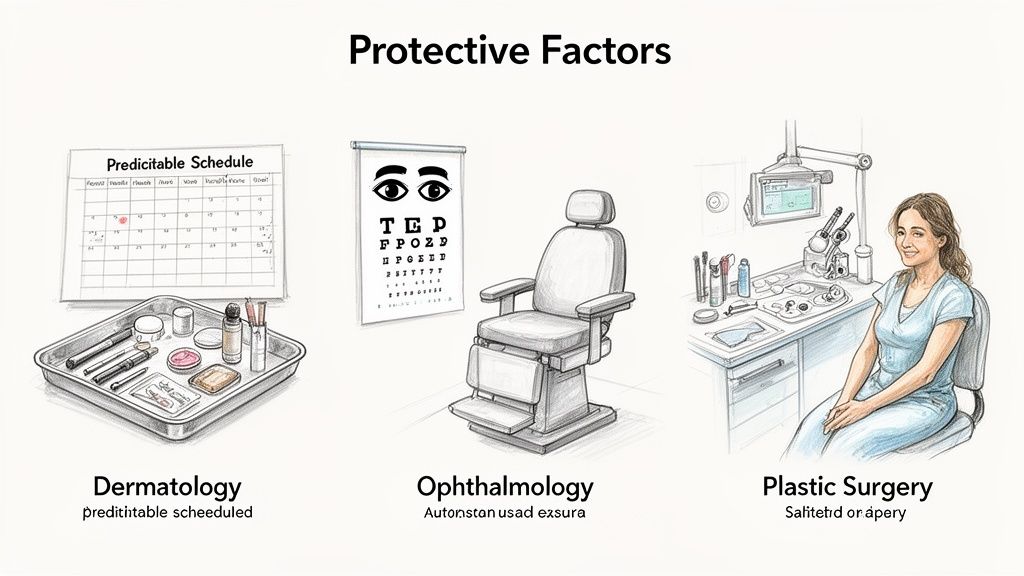
To really get a handle on physician burnout, we need to look at more than just the crisis specialties. The real lessons are often found in the fields that consistently report higher satisfaction.
Dermatology, Ophthalmology, and Plastic Surgery aren't just lucky. Their lower burnout rates come from specific, structural advantages that actively shield physicians from the daily grind that wears down so many of us.
By breaking down what makes these fields more sustainable, we can pinpoint the "protective factors" any physician should look for. The goal isn't for everyone to become a dermatologist. It's to build a blueprint for what a sustainable medical career actually looks like, no matter your specialty.
The Power of Control and Predictability
One theme you'll see again and again in these low-burnout fields is a profound sense of control over your work and life. This isn't some abstract concept; it shows up in very practical ways.
First, there's the schedule. Most outpatient roles, like in Dermatology, run on a predictable clinic-based calendar with minimal, if any, on-call duties. That structure creates a hard line between your professional and personal life—a powerful defense against the chronic exhaustion that’s so common in hospital medicine.
This predictability isn't just about time, either. It extends to the clinical work itself. While every patient is different, the diagnostic and procedural pathways are often more standardized, which dials down the cognitive load of the constant, high-stakes uncertainty you'd find in a specialty like Emergency Medicine.
Autonomy and Simpler Admin
Another huge protective factor is professional autonomy. Think of the smaller, physician-owned practices that are still common in fields like Ophthalmology and Plastic Surgery. When you run your own practice, you get to call the shots on everything from patient volume and staffing to the clinic's entire workflow.
This sense of ownership is the direct opposite of the powerlessness that drives so much burnout in massive, bureaucratic healthcare systems.
These specialties also benefit from a more manageable administrative burden.
- Focused Documentation: Charting is typically streamlined and focused on a single organ system, letting you avoid the sprawling, multi-system notes required in primary care.
- Fewer Insurance Headaches: While no one escapes insurance battles completely, they tend to be less frequent and complex compared to what an internist or family medicine doc faces daily.
The real lesson here is that burnout often has less to do with the difficulty of medicine itself and more to do with the environment it's practiced in. Predictability, autonomy, and seeing your effort lead to positive results—that's the foundation of a sustainable career.
The Impact of Seeing Results
Finally, never underestimate the psychological reward of seeing clear, positive patient outcomes. Physicians in fields like Dermatology and Plastic Surgery often see tangible, visible results from their work, and that provides a steady stream of professional satisfaction.
This direct feedback loop reinforces your sense of competence and purpose. A psychiatrist might work with a patient for years to see gradual progress, while a surgeon often sees an immediate improvement after a procedure. Both roles are incredibly important, but the latter delivers a more frequent dose of positive reinforcement.
For physicians looking for similar roles with high autonomy and patient interaction, exploring opportunities like those found in remote psychiatry jobs can offer a pathway to a more balanced career. That direct connection between action and outcome is a powerful buffer against the cynicism that defines burnout.
How to Design a Sustainable Medical Career
Knowing what drives burnout in your specialty is a solid first step. But the real power comes from using that insight to intentionally design a career that actually protects your well-being. This isn’t about running away from medicine—it’s about finding a smarter, more sustainable way to practice it.
The key is to stop passively accepting jobs and start actively hunting for roles that are built to mitigate the specific stressors of your field. When you get strategic, you can find a practice that aligns with both your personal and professional needs, laying the groundwork for a career you can enjoy for the long haul.
A Practical Framework for Career Design
Building a sustainable career begins with getting brutally honest about your personal burnout triggers. Once you know them, you can search for roles where those triggers are structurally minimized or absent altogether. This proactive approach puts you back in the driver's seat.
Take an emergency physician, for example. Instead of just another chaotic Level I trauma center, they might look for an urgent care gig with predictable hours and a less intense patient mix. That one move can eliminate the night shifts and high-acuity stress that plague EM.
Or think about a pediatrician buried under administrative work and difficult parent encounters. Shifting to a school-based health clinic could be a game-changer. That environment often comes with a more structured schedule and a different dynamic, directly tackling major primary care pain points.
The most powerful career move you can make is to stop focusing solely on salary or prestige and start prioritizing the structural elements of a job that directly impact your daily well-being. A role with built-in protections against burnout is worth more than a higher paycheck in a toxic environment.
Leveraging Tools for a Burnout-Friendly Job Search
Thankfully, you don't have to fly blind anymore. Modern job platforms are finally catching on, designing tools that help you filter for the very factors that fight burnout. Using them lets you make data-driven decisions that go way beyond a generic job description.
A good starting point is learning how to delegate tasks effectively in any role, which can instantly lighten your administrative load. But when searching for a new position, the real leverage comes from platforms that give you transparent insights into a job's true demands.
This screenshot shows how a modern job platform empowers physicians to filter roles by sustainability factors, not just specialty.
Notice the filters for "No Call" and "No Weekends." With a single click, clinicians can weed out roles that bleed into personal time and focus only on those that respect work-life boundaries.
This turns the job hunt from a stressful guessing game into a targeted search. Instead of applying everywhere and just hoping for the best, you can concentrate your energy on opportunities that meet your specific criteria for a balanced life. You might also find that exploring part-time physician jobs opens up another great path to reducing your workload.
Integrating Financial Wellness into Career Planning
Let’s be honest: one of the biggest things keeping physicians in high-burnout jobs is money. We feel trapped by our salaries, believing we can't afford to take a step back. But a truly sustainable career plan has to include a realistic financial picture.
This is where a Salary & FIRE (Financial Independence, Retire Early) Calculator becomes an indispensable tool. These calculators let you model different financial futures based on salary, location, and lifestyle choices.
You can directly compare a high-stress, $400,000 hospitalist job with a lower-stress, $300,000 outpatient role. The calculator will show you exactly how that salary difference impacts your long-term goals, like your timeline to financial independence. You might find that the lower-paying job only pushes your FIRE date back a few years—a trade-off many would gladly make for a decade of better mental health.
The table below maps common burnout drivers to specific tools and solutions, giving you a clear roadmap for taking action.
A Strategic Guide to Burnout Mitigation Tools
This table connects the dots between the problems we all face and the actionable solutions available. It’s a practical guide to using specific tools to find career opportunities that are inherently more sustainable.
| Common Burnout Driver | Strategic Solution | How It Improves Well-Being |
|---|---|---|
| Unpredictable On-Call Duty | Use "No Call" job filters to find weekday-only or outpatient roles. | Restores control over personal time and eliminates sleep disruption. |
| Excessive Administrative Work | Seek positions in DPC models or clinics with dedicated scribes. | Reduces "pajama time" spent on charting and administrative tasks. |
| High Emotional Stakes | Transition to a lower-acuity setting (e.g., from ICU to a sub-specialty clinic). | Lowers the daily emotional load and reduces compassion fatigue. |
| Lack of Financial Flexibility | Use a FIRE calculator to model the impact of a lower-paying, less stressful job. | Empowers you to make career choices based on well-being, not just income. |
By pairing a clear-eyed understanding of specialty-specific burnout with these practical tools, you can stop feeling like a victim of the system. You can become the architect of your own sustainable, and genuinely fulfilling, medical career.
Burning Questions About Physician Burnout
When you start digging into physician burnout by specialty, a lot of questions come up. It's a complex issue, and figuring out the real differences between fields and practice settings is key to building a career that doesn't burn you out. Let's tackle some of the most common questions with clear, practical answers.
Think of this as reinforcement: while the system has deep-rooted problems, you still have the power to find a corner of medicine that protects your well-being.
Which Medical Specialty Has the Lowest Burnout Rate?
The specialties with the most predictable lifestyles and controllable work always come out on top. Think Dermatology, Ophthalmology, and Plastic Surgery—these fields consistently report the lowest burnout rates.
What's their secret? It usually comes down to regular office hours, almost non-existent on-call duties, less administrative hassle, and a high degree of autonomy, especially for those in private practice. No specialty is completely immune to stress, but these fields have built-in structural advantages that just make work-life balance easier to achieve.
The real lesson here isn't that everyone should become a dermatologist. It's about identifying why they have lower burnout—predictability, control, and autonomy—and then finding ways to build those same elements into your own career, whatever your specialty.
How Do Administrative Tasks Cause Burnout in Different Specialties?
Admin work is a universal soul-crusher in medicine, but it hits different specialties in different ways. It’s never one single thing but the cumulative weight of all the non-clinical nonsense that piles up.
This "death by a thousand cuts" looks different depending on where you practice:
- Primary Care: The burnout often comes from the sheer volume of EHR notes, the endless inbox of patient portal messages, and the Sisyphean task of getting prior authorizations approved.
- Emergency Medicine: Here, the stress is all about high-volume, rapid-fire charting in a chaotic environment full of interruptions. You have to be fast, but you also have to be thorough, and that tension is draining.
- Surgeons: For them, the admin burden often involves mountains of paperwork for OR scheduling, tedious insurance pre-approvals for procedures, and complex post-op documentation.
At the end of the day, all this work pulls you away from actual patient care and stretches your workday into oblivion. It's a direct path to exhaustion, cynicism, and feeling like you've lost your purpose.
Can Changing My Practice Setting Reduce Burnout?
Absolutely. In fact, your practice environment is often a bigger deal for your daily sanity than your specialty itself. Making a smart move to a different setting can dramatically cut your burnout risk without forcing you to go back and do another residency.
Just look at these real-world scenarios:
- An EM doctor leaves a hectic urban trauma center for a job at a suburban urgent care. The result? A massive drop in stress, patient acuity, and night shifts.
- A primary care doc ditches a huge, bureaucratic hospital system to open a direct primary care (DPC) practice. They immediately regain their autonomy and slash their administrative load.
The trick is to pinpoint alternative settings that offer better schedules, more support, and less chaos. Looking into options like telehealth, specialized outpatient clinics, or hybrid roles can give you a sustainable path forward in the field you already love.
What Is a Burnout-Friendly Score on a Job Listing?
A "Burnout-Friendly Score" is a data-driven rating designed to give you a quick read on how a job will likely impact your work-life balance. It’s calculated by an algorithm that analyzes the job description for specific features known to either cause or prevent burnout.
The score rolls several critical factors into one number:
- On-call requirements: Is there call? How often?
- Schedule: Are you working weekends, nights, or holidays?
- Work Style: Is the job remote, hybrid, or 100% in-person?
- Support Systems: Does the listing mention scribes, MAs, or other help to reduce your admin load?
A higher score means the job has more built-in protections against burnout. It lets you compare opportunities based on their sustainability, not just the salary, so you can make a choice that actually supports your long-term health and happiness.
Ready to find a role that truly respects your time and well-being? At WeekdayDoc, we curate burnout-friendly jobs designed for physicians who want to build a sustainable career. Explore our listings with proprietary Burnout-Friendly Scores and find your next opportunity at https://www.weekdaydoc.com.