A Survival Guide to Physician Assistant Burnout
Feeling exhausted? This guide explores the causes and signs of physician assistant burnout and offers real, actionable strategies to reclaim your well-being.
If you're a physician assistant feeling constantly depleted, like you're running on fumes just to get through the day, you're not imagining it. You’re not alone, either.
What you're likely experiencing isn't just a string of bad days—it's physician assistant burnout, a genuine occupational hazard that's become a crisis in modern healthcare. This isn't a personal failing. It’s a direct response to a system that often demands more than anyone can sustainably give.
Think of your professional energy as a battery. Every complex patient case, every administrative hurdle, and every charting marathon drains a bit of that power. Without enough time and support to properly recharge, that battery eventually dies, leaving you feeling exhausted, cynical, and detached from the work you once loved.
It’s a Bigger Problem Than You Think
This isn't just an anecdotal feeling; the numbers confirm it's a widespread challenge. A 2023 report painted a stark picture: a staggering 60 percent of physician assistants reported experiencing symptoms of burnout.
The problem runs even deeper. That same report found that 29 percent of PAs experienced depression, with a significant overlap of 24 percent reporting both burnout and depression simultaneously. You can find a deeper dive into these statistics and their drivers on workerscompensation.com.
The fallout from this is very real and has profound consequences for both PAs and the healthcare system.
The situation has become so critical that 16 percent of PAs were so burned out they were actively thinking about leaving medicine entirely.
That statistic is a serious warning sign. When we lose dedicated, skilled PAs, it doesn't just impact the individual—it puts immense strain on a system that desperately needs their expertise.
The first step toward fixing this is recognizing the problem. You can start by taking a moment to assess your own situation with our Burnout Index tool.
This guide is designed to be your roadmap forward. We're moving past just defining the problem to give you real, actionable solutions to protect your career and your well-being. We'll cover:
- The root causes driving PA burnout.
- The clear warning signs to look for in yourself and your colleagues.
- Proven strategies for building personal resilience and advocating for organizational change.
- Practical career guidance for finding a more sustainable path in medicine.
By understanding the full scope of physician assistant burnout, you can start to take back control and build a career that’s not only successful but also genuinely fulfilling.
What Really Causes PA Burnout
Physician assistant burnout isn’t something that happens overnight. It’s not the result of one tough shift or a single difficult patient. It’s a slow burn, a gradual erosion of passion fueled by systemic pressures that make the job feel unsustainable.
Think of it like running on a hamster wheel—you’re putting in a massive amount of effort, but you feel like you’re going nowhere. This isn't a reflection of your personal resilience; it’s a symptom of a broken system. The real drivers of PA burnout are baked right into the daily grind, turning a career you once loved into a source of chronic stress.
Before we can even think about fixing it, we have to get honest about what's causing it.
The numbers paint a pretty stark picture. Burnout isn't just an occasional issue; it's a full-blown crisis in the PA community, pushing many toward depression and some out of the profession entirely.
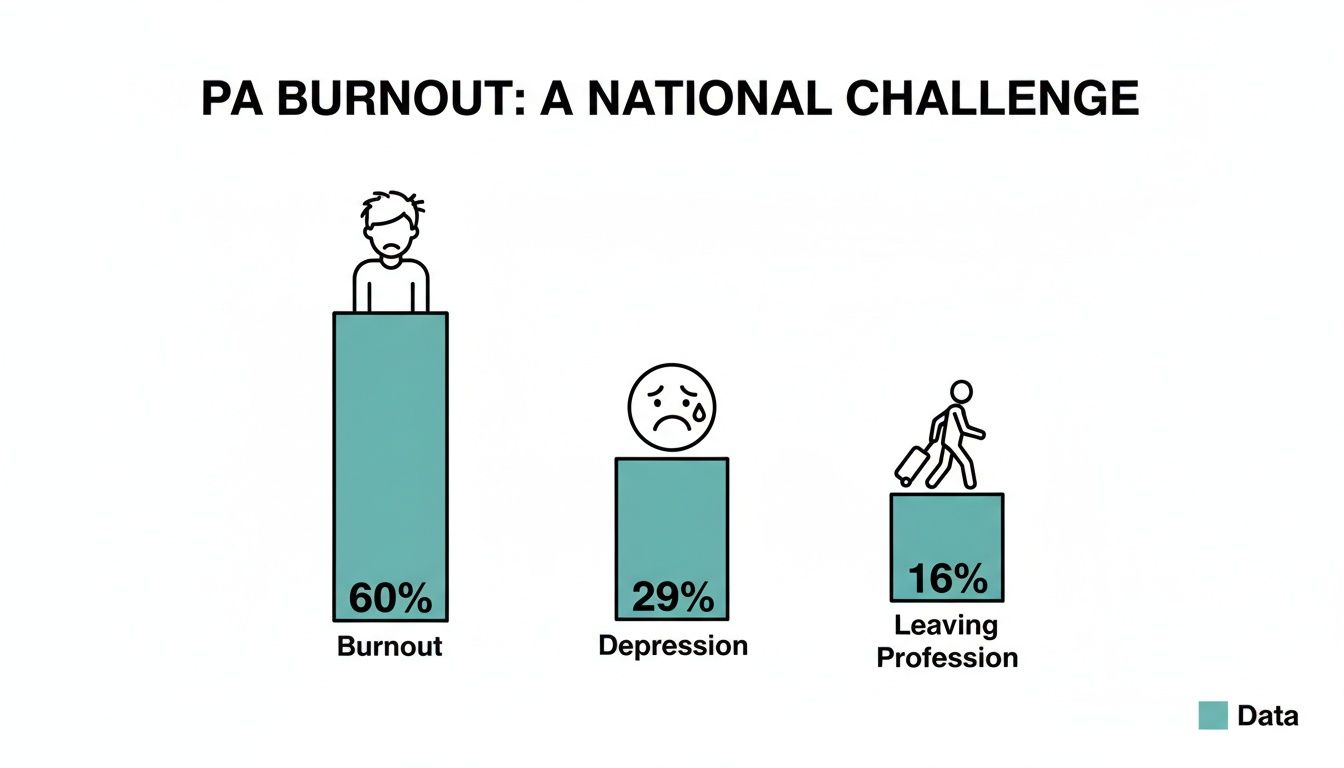
With nearly one in six PAs considering leaving medicine because of burnout, it's clear we have to address the root causes head-on.
Recent survey data gives us a clear breakdown of the biggest pain points for physician assistants today. These aren't minor inconveniences; they are major systemic flaws driving talented clinicians to their breaking point.
Top Causes of Physician Assistant Burnout
| Burnout Driver | Percentage of PAs Citing This Factor |
|---|---|
| Too many bureaucratic tasks (charting, paperwork) | 57% |
| Lack of respect in the workplace | 43% |
| Insufficient compensation (feeling undervalued) | 41% |
| Working too many hours | 37% |
These statistics show that administrative burdens are the single largest contributor, but issues of respect, pay, and hours are not far behind. It’s this combination of factors that creates a perfect storm for burnout. For a deeper dive, you can explore more about these findings and what they mean for PAs.
The Crushing Weight of Administrative Overload
One of the loudest complaints from PAs is the never-ending mountain of administrative work. Many feel like they spend more time clicking boxes in an EHR, fighting with insurance for prior authorizations, and drowning in paperwork than they do actually caring for patients.
It’s been called "death by a thousand clicks," and for good reason. Each small administrative task piles up, devouring precious time and breeding a deep sense of frustration. This busywork steals focus from the meaningful, hands-on clinical practice that drew PAs into medicine in the first place.
Toxic Workplace Culture and Lack of Respect
You can handle a heavy workload if you feel supported, but that’s a luxury many PAs don't have. A toxic work environment—defined by a lack of respect from colleagues, administrators, or even patients—leaves clinicians feeling devalued and isolated.
Too often, PAs report feeling like a "cog in a machine" instead of a vital member of the healthcare team. When your contributions are ignored and your clinical judgment is dismissed, it’s a direct hit to your morale and sense of purpose.
This lack of support isn't just about not getting a "thank you." It shows up in more damaging ways:
- No Real Mentorship: Early-career PAs are often thrown into the deep end without access to guidance from seasoned clinicians, forced to navigate incredibly complex situations alone.
- Terrible Communication: A culture where information is siloed or communication is consistently unclear just adds another layer of unnecessary stress.
- Unfair Treatment: When you see disparities in workload, scheduling, or opportunities compared to other providers, it creates resentment and a feeling of being treated inequitably.
A healthy workplace is built on mutual respect and psychological safety. When these elements are missing, the emotional toll can be just as draining as the clinical workload itself, accelerating the path to burnout.
The Erosion of Professional Autonomy
Physician assistants are highly skilled clinicians trained to make critical decisions. But when their hands are tied by restrictive protocols, micromanagement, or a scope of practice that feels like it's shrinking, it strips away their professional autonomy.
Being constantly second-guessed or forced to follow rigid, inefficient procedures crushes clinical confidence and kills job satisfaction. PAs feel most engaged and effective when they are empowered to practice at the top of their license.
When that expertise is constrained, it leads directly to frustration and a sense of powerlessness. This loss of control is a classic burnout trigger, making PAs feel less like valued providers and more like task-doers simply following orders.
Recognizing The Warning Signs Of Burnout
How do you know if you're just having a tough week or if it's the beginning of genuine physician assistant burnout? The line can feel incredibly blurry, but learning to spot the difference is critical for your career and your health. Burnout isn't just feeling stressed—it's a much deeper state of emotional, physical, and mental exhaustion that builds up over time from relentless workplace pressure.
Seeing the early signs is like running a diagnostic on your own well-being. It's the first step to heading off a full-blown crisis. Burnout usually shows up in three core ways, with each one feeding the next, creating a vicious cycle that's hard to break.

Pillar One: Emotional Exhaustion
This is the classic symptom of burnout—that bone-deep feeling of being completely drained. It's so much more than feeling tired after a long shift. Emotional exhaustion is the profound sense that you have absolutely nothing left to give. Not to your patients, not to your colleagues, and certainly not to your family when you finally walk through the door at home.
It often creeps in through subtle but damaging signs:
- The Pre-Shift Dread: You know the feeling. It’s that knot in your stomach when you pull into the hospital parking lot, already bracing for the demands of the day before it's even started.
- Motivation Goes Missing: The passion and drive you once had for your work just isn't there anymore. Even routine tasks start to feel like climbing a mountain.
- Physical Toll: Chronic exhaustion almost always brings physical symptoms with it, like constant headaches, insomnia, or just a persistent feeling of being unwell.
This isn't just about needing a good vacation. It's feeling like your internal battery is broken and simply won't hold a charge anymore.
Pillar Two: Depersonalization and Cynicism
When your emotional tank is empty, a defense mechanism often kicks in: detachment. This is depersonalization, and it shows up as a growing cynicism and emotional distance from your job and the very people you're supposed to be caring for. It’s a subconscious attempt to shield yourself from being totally overwhelmed.
This is one of the most painful parts of PA burnout because it goes against the core of why we become caregivers in the first place. You might start to notice yourself:
- Labeling Patients: Thinking of someone as "the gallbladder in room five" instead of as a person is a huge red flag.
- Becoming Irritable: You find yourself getting easily frustrated—with patients, coworkers, or just the healthcare system in general.
- Feeling Numb: The patient stories, both the triumphs and the tragedies, that used to move you now just feel distant or unimportant.
This cynical armor might feel protective in the moment, but all it really does is cut you off from the meaningful human connections that make this profession worthwhile.
Burnout isn't a sign of weakness; it's a sign you've been strong for too long. When you start to feel disconnected from your work and your patients, it’s a clear signal that the system's demands have exceeded your capacity to cope.
Pillar Three: Reduced Personal Accomplishment
The final piece of the burnout puzzle is a crushing feeling of ineffectiveness. You're working harder than ever, but you feel like you're failing. The wins don't feel like wins anymore, and a nagging sense of futility starts to take over.
This is the belief that your work doesn't matter or that you aren't making a real difference. You might start questioning your skills, doubting your career path, and feeling like you're just spinning your wheels. It’s a widespread problem—a study in JAMA found that over 35% of healthcare workers reported burnout symptoms, with this feeling of professional inefficacy being a major component.
When you're caught in this state, it’s easy to feel completely stuck. But just recognizing these three pillars in your own life is the most powerful first step you can take toward getting back on track and reclaiming your career.
How Your Specialty Impacts Your Burnout Risk
Not all PA jobs are created equal, and neither is the burnout that comes with them. The day-to-day grind of an emergency department PA is worlds away from the routine of a dermatology clinic. These differences in environment, patient acuity, and emotional load are huge drivers of your personal burnout risk.
Your specialty dictates almost everything—your hours, your administrative headaches, and the emotional weight you carry home. Understanding this isn't about blaming your specialty; it's about validating your experience. Feeling exhausted or cynical isn't a personal failure. More often than not, it’s a direct response to the specific pressures baked into your field. This is the first step to finding a way forward, whether that’s tweaking your current role or looking for a new one.
High-Acuity Fields and Burnout Hotbeds
It should come as no shock that high-stress, high-stakes environments are breeding grounds for burnout. Specialties that force you into a state of constant vigilance, rapid-fire decisions, and repeated exposure to trauma create the perfect storm for total exhaustion.
Think about the pressure cooker environments in these fields:
- Emergency Medicine: This specialty is consistently at the top of the burnout charts. You’re dealing with a never-ending flow of undifferentiated patients, sky-high emotional stakes, and life-or-death decisions. On top of that, shift work wreaks havoc on your personal life.
- Hospital Medicine and Critical Care: Managing incredibly sick patients, leading difficult family conversations, and facing high mortality rates day after day takes a massive emotional toll. The workload is relentless, and the weight of responsibility is crushing.
- Surgical Subspecialties: The combination of long hours in the OR, grueling call schedules, and the sheer physical stamina required is incredibly draining. It’s a high-pressure world with zero room for error, which just piles on more chronic stress.
A major analysis confirmed what many of us already knew, finding that while 34.2 percent of all physician assistants reported at least one symptom of burnout, the numbers swing wildly between specialties. You can dig into the full study on PA burnout rates across different specialties for a complete breakdown.
Emergency medicine PAs had the highest burnout rate at 42.2 percent, while dermatology PAs had the lowest at 26.1 percent. That massive gap shows just how much your clinical environment matters.
Why Lower-Acuity Doesn't Mean Zero Stress
Just because a specialty like dermatology or outpatient primary care has lower reported burnout rates doesn't mean it’s stress-free. Far from it. The stressors are just different. A PA in family medicine might not see the same acute trauma as their ER colleague, but they’re fighting their own battles with massive patient panels and the "death by a thousand clicks" that is modern EMR.
The common culprits in these fields include:
- Massive Patient Loads: The constant pressure to churn through a high volume of patients every day makes you feel like you’re on a hamster wheel, with no time to connect or think.
- Administrative Overload: Charting, prior authorizations, and an overflowing inbox are some of the biggest burnout drivers in the outpatient world.
- Emotional Labor: Building long-term relationships is rewarding, but it also means carrying the emotional weight of your patients' chronic illnesses and life struggles for years.
At the end of the day, your specialty creates its own unique ecosystem of burnout risks. Recognizing that fact is powerful. It gives you the clarity to look at your current job and ask, "Is this sustainable for me?" And if the answer is no, it opens the door to finding a path that won't lead you to exhaustion.
Practical Strategies To Fight Burnout
Knowing the warning signs of PA burnout is the first step. Taking action is the next.
Tackling this requires a two-front battle: one focused on your personal well-being and the other on fixing the broken systems at work. While individual coping skills are vital for staying afloat, real, lasting change only comes when healthcare organizations address the root causes fueling the fire.
This section is your playbook for reclaiming your career, with tangible strategies you can use today and a clear picture of what real organizational support actually looks like.

Taking Control: Individual Actions That Make a Difference
Even when the system feels impossibly large, you still have power. Building personal resilience isn't about just "toughing it out"—it's about strategically protecting your energy so you can keep caring for patients without sacrificing yourself in the process.
Start by setting firm, non-negotiable boundaries. It’s one of the most powerful things you can do to stop work from bleeding into every corner of your life.
- Protect Your Downtime: Decide on a hard stop. For example, "I will not check work email or answer work texts after 7 PM." This creates a mental firewall that separates your professional duties from your personal life.
- Use Your PTO Strategically: Don't wait until you're running on fumes. Schedule long weekends or single days off before you hit a wall. Remember, PTO is part of your compensation—you’ve earned it, so use it to recharge.
- Learn to Say No: You can't be everything to everyone. Politely declining extra shifts, new committee assignments, or non-essential tasks isn’t a weakness. It's an act of self-preservation.
Connecting with peers is another lifeline. No one understands the unique pressures of being a PA like another PA. Sharing experiences with colleagues who just "get it" validates your struggles and reminds you that you aren't going through this alone.
Systemic Solutions: What Organizations Must Do
Individual effort is important, but it’s a bandage on a gaping wound. The real solution to the PA burnout crisis lies in systemic change driven by leadership. A truly supportive organization goes way beyond wellness apps and pizza parties to fix the fundamental issues causing exhaustion.
The research is undeniable: working conditions are the single biggest predictor of burnout. One study found that when work quality declined, the probability of burnout shot up by nearly 20 percentage points. But for PAs who reported improved working conditions, burnout rates fell to just 21.5 percent. You can learn more about the impact of workplace improvements and see the direct link to clinician well-being.
The message is clear: To fix burnout, you must fix the job. Organizations serious about retaining their PAs focus on concrete, meaningful changes.
Here's where organizations need to invest:
- Reduce Administrative Burden: The "death by a thousand clicks" from clunky EHRs is a primary driver of burnout. Institutions can invest in better software, hire scribes, and automate paperwork to give PAs more time for actual patient care.
- Ensure Safe Staffing Ratios: Overloading PAs with unmanageable patient loads is a recipe for disaster. Safe staffing isn't just a nice-to-have; it's essential for preventing errors and protecting the mental health of the entire team.
- Cultivate a Culture of Respect: PAs must be treated as valued, essential members of the care team. This means giving them a voice in decisions, providing pathways for professional growth, and recognizing their clinical contributions.
Ultimately, a healthy work-life balance isn't a perk; it's a prerequisite for a sustainable career. You can start by getting a clear picture of your own situation with this free work-life balance calculator.
Finding Your Next Step Beyond The Bedside
When your clinical role feels completely unsustainable, it’s easy to feel trapped. But physician assistant burnout doesn't have to be the end of your career—it can be the start of a new, more sustainable chapter. It’s an opportunity to find a different path where your hard-earned medical expertise is valued in a way that protects your well-being.
Moving beyond the bedside isn’t about abandoning your training. It’s about strategically redirecting your skills toward a role that offers a better work-life balance, less direct patient-facing stress, and a renewed sense of purpose. This isn't escaping medicine; it's redefining your place in it.

Exploring Burnout-Friendly PA Roles
Your clinical knowledge is a powerful asset that opens doors to dozens of fulfilling, lower-stress career paths. Many of these roles come with more predictable hours, remote work options, and a much-needed break from the emotionally draining grind of direct patient care.
Consider these alternatives where PAs can thrive:
- Telehealth: Provide virtual care from home, managing patient consults on a more controlled schedule without the physical demands of a clinic or hospital.
- Medical Affairs: Join a pharmaceutical or biotech company as a Medical Science Liaison (MSL). You'll use your clinical expertise to educate other healthcare professionals on new therapies and research.
- Healthcare IT: Help design and improve Electronic Health Record (EHR) systems as a clinical informatics specialist. You can work on fixing the very administrative burdens that fuel burnout.
- Medical Writing: Translate complex medical information into clear, accessible content for academic journals, patient education materials, or marketing campaigns.
These are just a few examples of how your PA degree can be a launchpad into a different kind of healthcare career. Each one leverages the critical thinking and medical knowledge you already have in a fresh, invigorating way. Platforms like WeekdayDoc curate these types of physician assistant jobs specifically for clinicians looking for a better work-life balance.
Translating Your Clinical Skills For A New Arena
Making the leap to a non-clinical role means you have to reframe your experience. Your resume needs to speak the language of your target industry, whether it's tech, pharma, or communications. Think beyond procedures and patient encounters—focus on the transferable skills you've mastered.
A resume for a non-clinical role isn't a list of medical procedures. It's a testament to your ability to problem-solve, communicate complex ideas, manage high-stakes projects, and lead a team under pressure.
Start by translating your daily clinical tasks into corporate-friendly terms:
| If You Did This... | Frame It As This... |
|---|---|
| Conducted patient histories and physicals | Expert Data Collection and Analysis: Synthesized complex qualitative and quantitative data to inform critical decision-making. |
| Coordinated care with specialists and nurses | Cross-Functional Team Leadership: Managed interdisciplinary teams to achieve optimal outcomes and ensure project alignment. |
| Educated patients on treatment plans | Stakeholder Communication: Translated complex technical information for diverse audiences to ensure understanding and buy-in. |
When you get to the interview, be ready to confidently explain your "why." Frame your transition not as an escape from medicine but as a proactive move toward a career that aligns with your long-term goals. Emphasize your desire to apply your clinical expertise to impact healthcare on a broader, systemic level. This positions you as a strategic thinker, not just a clinician looking for an exit.
Of course. Here is the rewritten section, crafted to sound like it was written by an experienced human expert, following all your specified requirements.
Your Top Questions About PA Burnout, Answered
When you're in the thick of burnout, it feels like a fog. Everything is confusing, and you're not even sure what questions to ask. Let's clear some of that up. Here are straight answers to the questions PAs ask most often when they start to feel overwhelmed.
What Is The Difference Between Stress and Burnout?
People throw these terms around interchangeably, but they are worlds apart. It's a critical distinction to make.
Stress is about over-engagement. It’s that frantic feeling of having too much on your plate—too many patients, too much charting, too many demands. You feel anxious and hyperactive, like you're drowning in responsibility, but a part of you still believes you can catch up if you just work harder.
Burnout, on the other hand, is about disengagement. You're no longer frantically trying to keep up. Instead, you feel empty, cynical, and detached. The drive is gone.
- Stress: "I'm overwhelmed, and the pressure is intense." It's a feeling of urgency.
- Burnout: "I just don't care anymore." It's a feeling of helplessness.
Think of it like this: a stressed PA is sprinting on a treadmill set way too fast. A burned-out PA has gotten off the broken machine entirely and has no energy left to even think about fixing it.
What Should I Do First If I Recognize Burnout Symptoms?
If these symptoms are hitting close to home, your very first move is simple but crucial: stop and admit it to yourself. Don't write it off as a bad week or tell yourself to just "power through." Acknowledging the reality of burnout is the first step toward getting out of it.
Your immediate priority isn't to solve everything at once. It's to create a little bit of breathing room. Take a day off—a real one. Don't use it to catch up on life admin. Disconnect from work completely. Use that time to get honest with yourself about what, specifically, is draining you. Is it the patient load? The toxic work environment? The endless EHR tasks? Getting that clarity is vital for figuring out what comes next.
How Do I Talk to My Manager About Burnout?
This conversation feels daunting, but avoiding it won't fix anything. The key is to approach it strategically, not emotionally.
First, schedule a dedicated, private meeting. When you talk, avoid simply saying, "I'm burned out." That can sound like a complaint without a solution. Instead, frame the issue around concrete, operational problems.
For example, try saying something like, "I've noticed the current patient scheduling templates are making it impossible to finish my charts during clinic hours, which means I'm spending an extra 10 hours a week on documentation at home. Can we explore ways to fix this?"
This approach shifts the conversation from a personal problem to a systemic one you want to help solve. It makes you a proactive partner, not just another burned-out clinician.
It's also helpful to remember you're not alone in this. Widespread burnout has been a massive issue across healthcare for years, especially from 2018 to 2023. While primary care physicians often report the highest rates, this is a system-wide problem affecting PAs, nurses, and nearly every role. You can discover more insights about these healthcare workforce trends to see just how systemic this issue is.
Feeling stuck in the burnout cycle is a clear sign it's time to find a workplace that actually supports you. At WeekdayDoc, we're laser-focused on connecting PAs with burnout-friendly roles—positions with no call, no weekends, and a real chance at work-life balance. See what's out there at https://www.weekdaydoc.com.