Telehealth Contract Negotiation: 9 Clauses Clinicians Should Review
Learn how to negotiate a telehealth contract, from patient-location licensure and technology duties to schedule control, documentation time, malpractice, and RVU pay.
A telehealth job offer often looks like a straightforward path to a better schedule. You read the description, see a remote label, and picture a workday free of commuting, clinic politics, and administrative overflow. Moving clinical practice online does not automatically erase the workload.
Telehealth contract negotiation requires translating vague promises of flexibility into concrete operational rules. Your agreement needs to define where you can legally practice, who manages the technology stack, how much control you retain over your schedule, and whether you receive pay for the time spent charting. At WeekdayDoc, we show clinicians the visible call requirements, schedule expectations, and burnout risks for every role before they apply. Evaluating those factors up front gives you a head start, but you still have to secure them in writing.
Start With Patient Location and Licensure
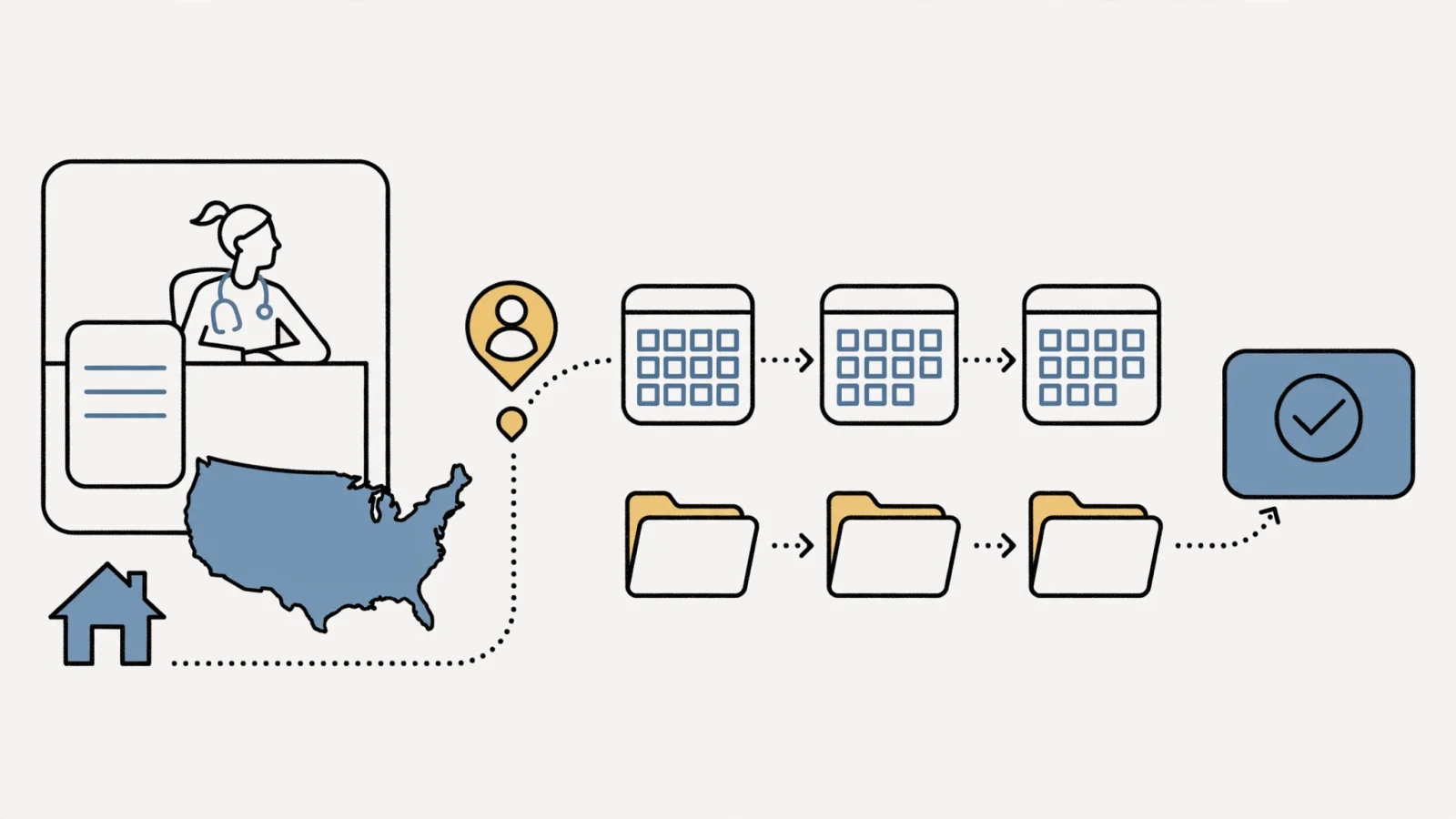
Patient location determines the legal starting point
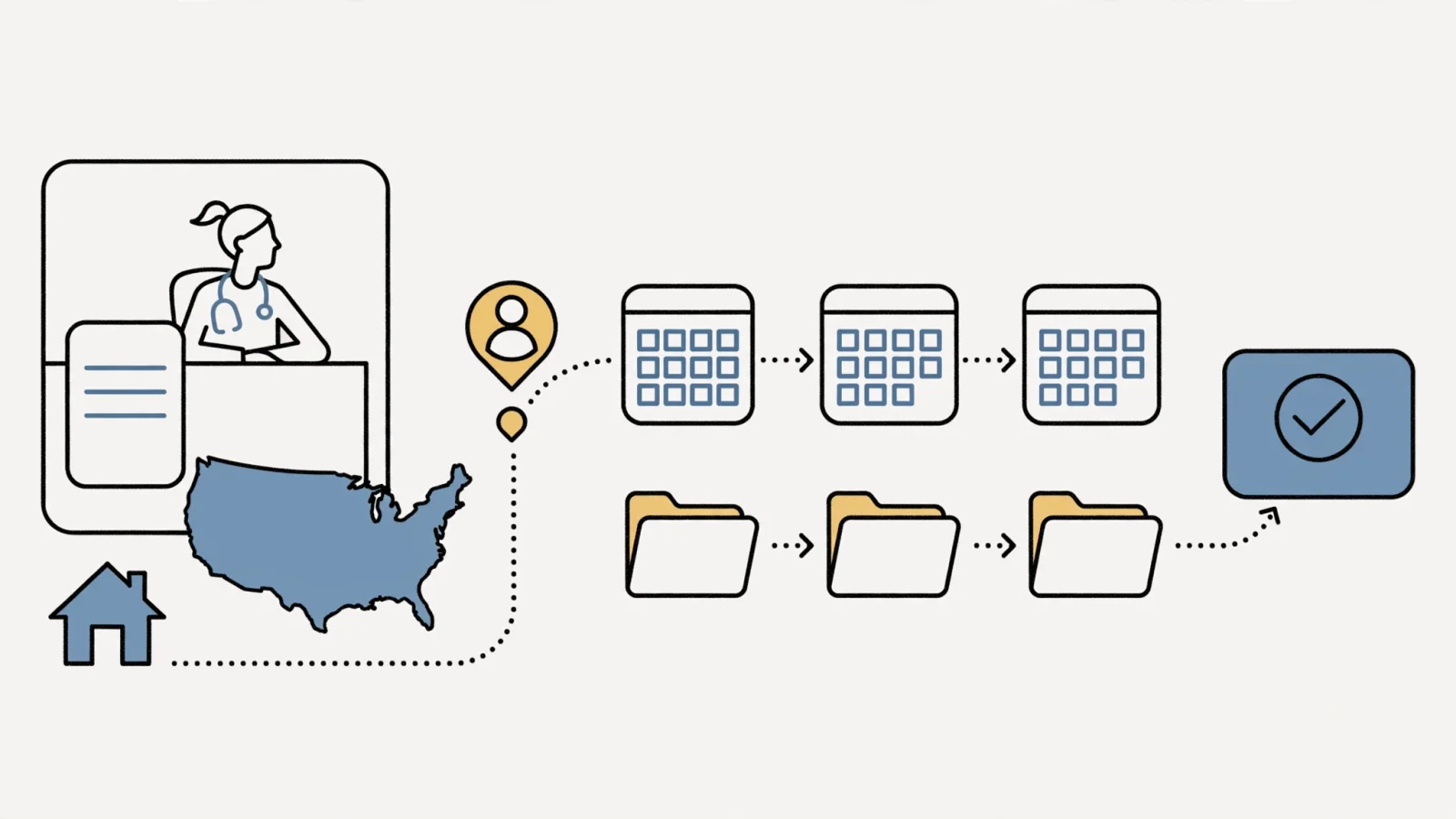
Jurisdiction in remote care centers on the patient. When you conduct a virtual visit, the appointment generally occurs in the state where the patient is sitting at that exact moment, so this geographic rule dictates which medical or nursing board holds authority over the encounter.
Current HHS guidance on cross-state practice identifies several possible pathways for compliance. Depending on the location, you might rely on full state licensure, temporary practice laws, reciprocity agreements, telehealth registrations, or interstate compacts.
Put state coverage, work location, and costs in writing
The word "remote" in a job posting rarely guarantees you can work from anywhere. It might mean you are remote from a central clinic, remote from a permitted state, or remote only for patients in a specific list of approved states. Your employment agreement needs to identify the exact patient states you will serve.
Assigning responsibility for verifying and recording the patient's location at the start of each encounter prevents compliance gaps. The contract can outline what happens when a patient travels, moves, or logs in from an unapproved state. Clinicians need the explicit right to pause, refuse, or transfer an encounter when proper authorization is missing.
Licensing multiple states adds notable expense, which means you need to clarify who pays for additional state licenses, registrations, compact fees, credentialing, renewals, and background checks. Identifying who covers continuing medical education and DEA registration expenses prevents unexpected out-of-pocket costs. If payer credentialing or state board approval faces delays, the agreement can explain what happens to your scheduled work and compensation.
Assign Technology, Privacy, and Emergency Duties
Define the technology and downtime package
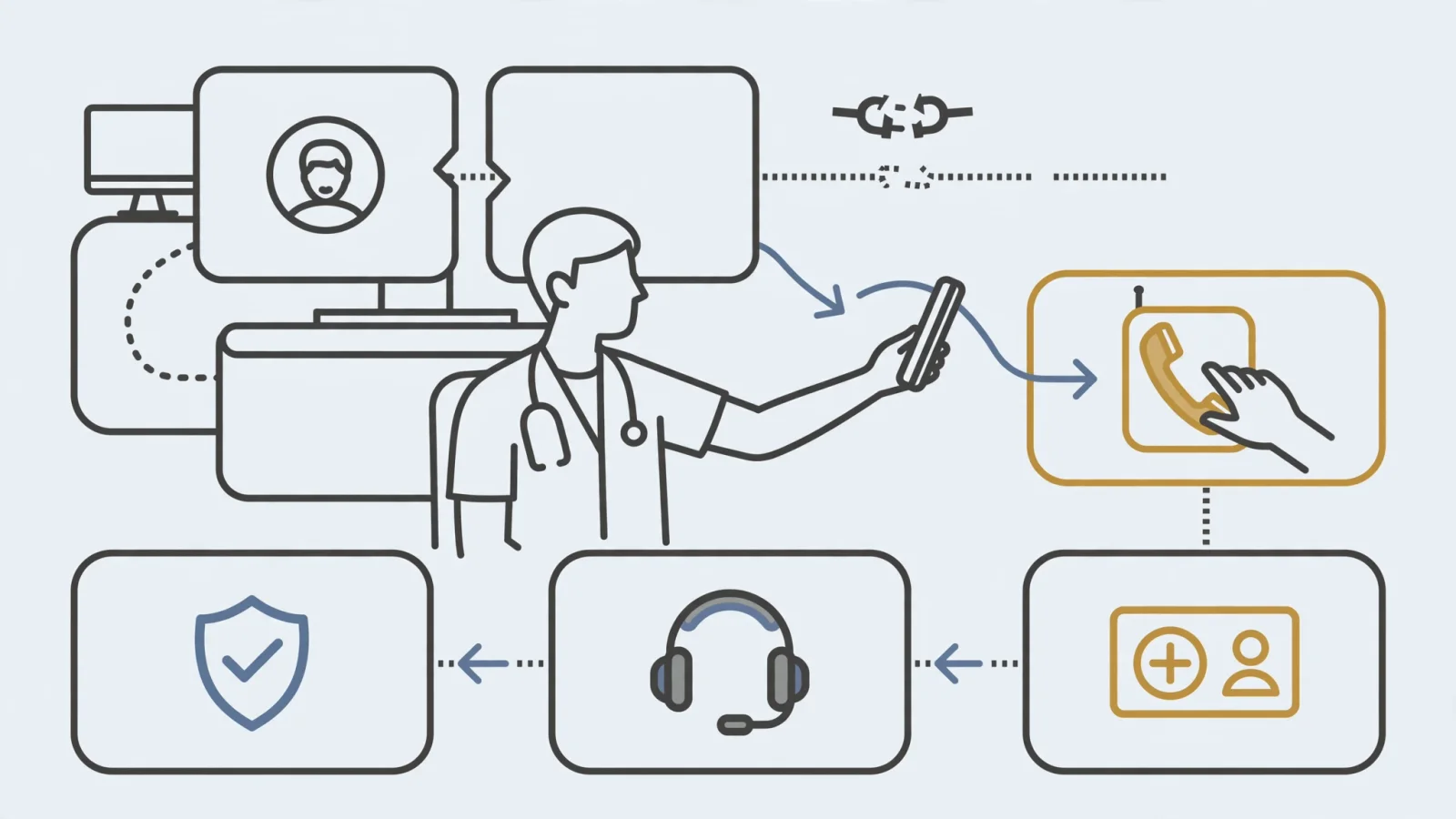
A remote role shifts physical infrastructure into your home. Leaving technology and safety language vague forces you to absorb the cost and liability of that shift. A strong contract names the party responsible for providing the video platform, electronic health record system, secure phone line, camera, headset, and encrypted device.
Telehealth raises privacy and security risks, and HHS provides guidance on reducing them. Following OCR's announcement that the public health emergency telehealth discretion would expire on May 11, 2023, HHS provided a 90-day transition period, giving covered health care providers until August 9, 2023, to come into compliance with the HIPAA Rules for telehealth.
The agreement or its attached policies can address recordings, transcripts, data retention, and artificial intelligence scribes. Establishing who owns generated notes and whether you can work from a hotel, coworking space, or temporary location protects your flexibility. Check for a downtime procedure covering platform outages or internet failures. Clarifying whether troubleshooting occurs inside paid clinical time and whether your productivity credit survives a system outage helps stabilize your income.
Plan for emergencies and continuity
Because 911 only works if you are in the same location as the patient, HHS recommends a telebehavioral health emergency plan that includes confirming the patient's location and identifying local emergency contacts.
Assigning responsibility for emergency escalation clarifies your immediate responsibilities. Find out who supplies local emergency resources, manages a disconnected high-risk call, and coordinates local referrals. You will want to determine whether you contact local emergency services directly or route the crisis to a designated operations team. Following ethical guidelines for continuity of care calls for a clear operational protocol when a video visit proves insufficient.
Negotiate Schedule Control, Availability, and Coverage
Define the hours, time zones, and notice
Schedule quality acts as a core component of your compensation and autonomy. A promise of a flexible schedule falls flat if the employer controls all the variables, so translate that flexibility into fixed or flexible clinical blocks, specific time zones, and minimum expected hours.
Detailing expectations for evening and weekend work, holiday coverage, and on-call duties prevents scheduling surprises. The agreement can require advance notice for schedule changes. You can ask whether material changes need your written consent and how much notice the employer offers before altering your shift structure. A balanced contract protects you from an employer unilaterally adding states, expanding patient volume, or mandating in-person work at a later date.
Set boundaries for inbox, call, and low-volume days
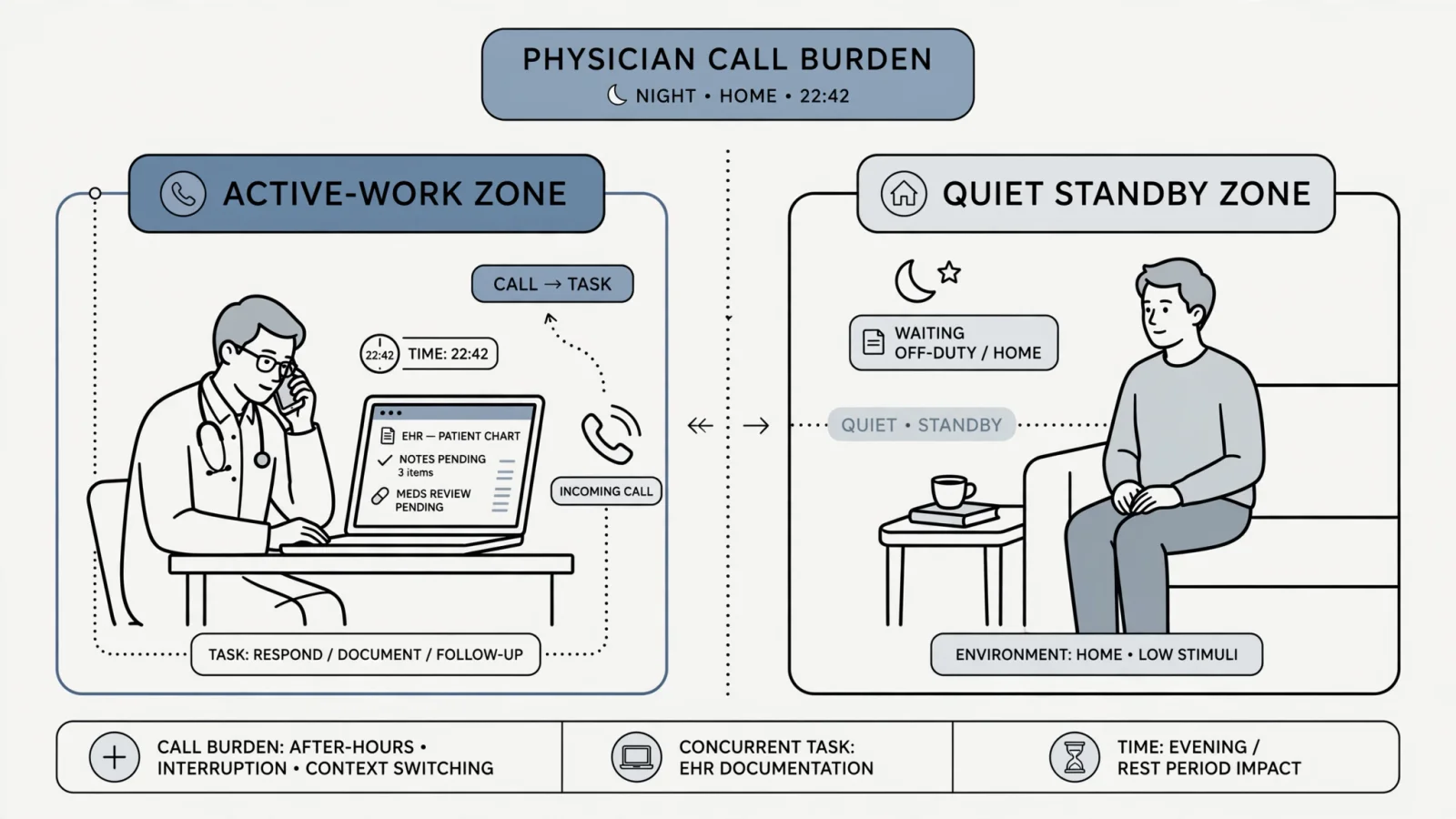
Telehealth platforms generate a continuous stream of asynchronous communication. Separating your scheduled clinical time from inbox monitoring, callbacks, portal messages, and urgent coverage preserves your downtime. Establishing clear boundaries also clarifies who handles patient handoffs during your paid time off or illness.
Check if you remain available during open slots, no-shows, late cancellations, failed connections, or low-volume days. Comparing call, night, weekend, flexibility, and autonomy expectations across roles helps you test whether the agreement matches the job's advertised lifestyle. WeekdayDoc provides salary comparisons, market percentiles, and negotiation scripts as pre-signing comparison tools to benchmark these expectations, though they never substitute for reading your specific agreement.

Make Documentation and Administrative Time Visible
Count the work around each encounter
Productivity models often hide the work occurring before and after a video connection. When compensation rests strictly on a per-visit rate, administrative tasks quickly dilute your hourly earnings.
CMS's evaluation and management booklet explains that medical records must support the reported service by documenting the encounter reason, relevant findings, assessment, and plan. Completing this documentation during or soon after the encounter adds to your daily load. Same-day E/M activities often include preparation, evaluation, counseling, ordering, communication with other clinicians, and care coordination, all of which take time that a simple visit count ignores.
Separate billing documentation from compensation
Billing and coding rules do not automatically decide what an employer pays an employee or contractor. The agreement can explicitly state whether pre-visit review, charting, and post-visit notes fall within your paid time.
Reviewing the contract for other unpaid tasks reveals the true scope of the role. Look for language covering portal messages, refills, forms, referrals, prior authorizations, patient callbacks, and quality reporting. Checking physician administrative time policies helps you see whether meetings, training, and coding corrections reduce your productivity credit. You might also ask whether the practice offers protected administrative block time and whether you complete documentation after your scheduled shift.
Consider a simple example. A 20-minute video visit might pay a set fee, but adding 10 minutes of charting, 5 minutes of technical troubleshooting, and 10 minutes of follow-up coordination consumes 45 minutes of your day. That changes your effective hourly rate. Asking the employer to identify every recurring task outside the appointment block clarifies the total commitment.
Review Malpractice, Tail, and Exit Terms
Identify the policy and telehealth scope
A simple employment contract can hide substantial liability and exit costs. The malpractice language needs to address every expected patient state and permitted modality, including video, audio-only, asynchronous care, messaging, and remote monitoring.
Identifying the type of coverage provided offers peace of mind. Occurrence coverage generally responds to events during the policy period regardless of when a claim is filed, while claims-made coverage depends on when the claim is made. Because "malpractice included" leaves too many variables undefined, you want to know the policy type, limits, deductibles, named-insured status, and whether the policy excludes outside moonlighting.
Assign tail, records, and post-termination duties
When leaving a claims-made policy, tail coverage protects against future claims. The AAFP physician employment checklist recommends confirming exactly who pays this premium upon your departure.
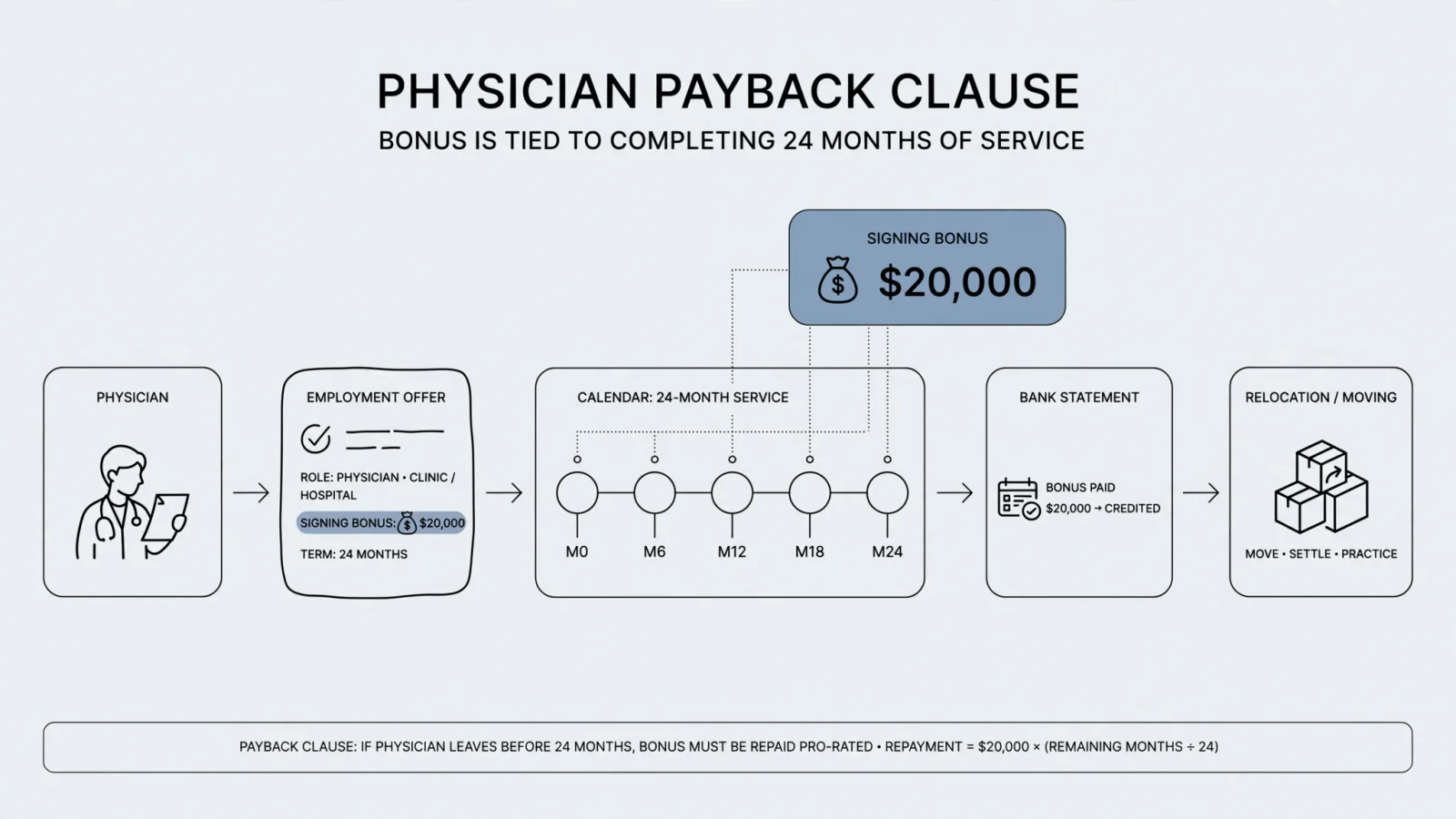
Discussing who pays tail coverage after termination without cause, employer breach, practice sale, closure, disability, license loss, or resignation gives you a clear exit plan. Check whether nose coverage is an available alternative. The agreement will also outline duties regarding records, patient notifications, unfinished notes, and portal messages after termination. Exit clauses often include bonus repayment, indemnification, confidentiality, non-solicitation, and noncompete terms. Since the enforceability of restrictive covenants proves highly jurisdiction-specific, professional legal review prevents missteps when an agreement assigns broad tail or post-employment obligations. Reviewing physician tail coverage details beforehand prepares you for this discussion.
Make Productivity Compensation Auditable
Define the credited unit and formula
Telehealth productivity compensation works best when it is measurable and controllable. Comparing salary, hourly, per-visit, collections-based, RVU, quality-bonus, and blended models helps you understand how you generate income.
Determine whether credit is based on scheduled, completed, billed, allowed, collected, or employer-attributed work. CMS's CY 2026 telehealth service list and POS 02/POS 10 guidance address Medicare billing mechanics, but they do not represent an employee's compensation promise or guarantee universal payment parity. If your pay relies on RVUs, specifying the CPT or HCPCS sources, the specific RVU file, the conversion factor, and any attribution thresholds creates a transparent baseline. A stable contract prevents the employer from changing the compensation formula unilaterally.
Test the model against real telehealth friction
Running a worked hypothetical tests the compensation model against daily operational friction. You can factor in completed visits, no-shows, late cancellations, and asynchronous messages.
Determine how failed connections and audio-only encounters affect your pay, and assess the impact of payer denials, write-offs, refunds, payer mix changes, and coding down-adjustments. As nurse practitioner contract negotiation strategies show, employer-controlled scheduling directly affects your ability to meet bonus thresholds. Securing regular financial reports, a correction process, and audit rights allows you to verify your credited visits, RVUs, collections, and bonus calculations.
Use a Red-Flag Checklist Before You Sign
Scan the high-impact clauses
Connecting legal exposure to workload helps you determine the take-home value of the offer. Use this scannable table to check the high-impact clause groups.
| Contract area | Define in writing | Red flag |
|---|---|---|
| Role and employment status | W-2 or independent contractor status; clinical scope; modality; supervisory duties; patient population | Job posting says "telehealth" but agreement allows broad reassignment |
| Patient geography | Approved patient states; location verification; travel and relocation process | "All 50 states" without a licensing or credentialing plan |
| Clinician work location | Permitted home states, office requirements, temporary work locations, privacy requirements | "Remote" but employer can require relocation or frequent onsite work |
| Licensure costs | State licenses, registrations, compact fees, renewals, CME, credentialing, DEA where applicable | Clinician bears unlimited licensing costs without knowing the expected state list |
| Technology | Platform, EHR, equipment, internet, support, backup process, downtime procedure | Clinician is responsible for outages but loses pay or productivity credit |
| Privacy and data | Secure workspace, recording, transcription, AI tools, data retention, access, vendor responsibilities | Vague "follow all policies" language with no technology or privacy policy attached |
| Emergency coverage | Patient location, local resources, escalation, disconnected-call process, crisis coverage | Clinician must independently manage emergencies across unfamiliar states |
| Schedule | Clinical blocks, admin blocks, time zones, notice, evenings, weekends, call, inbox coverage | "Flexible schedule" paired with unlimited availability |
| Documentation | Charting, messages, refills, referrals, prior authorizations, coding corrections, care coordination | Compensation is based only on face-to-face time |
| Productivity | Visit definition, RVU source, conversion factor, no-shows, denials, collections, audit rights | "Productivity bonus at employer discretion" |
| Malpractice | Policy type, limits, covered states, modality, tail or nose coverage, payment responsibilities | "Malpractice included" with no policy type or tail language |
| Termination | Notice, without-cause termination, loss of license, patient transition, tail, records, bonus repayment | Full clawback triggered by any departure regardless of cause |
| Restrictive terms | Noncompete, nonsolicit, confidentiality, outside work, patient communication after departure | Broad restriction that is not tied to a defined geography, term, or specialty |
Know when to get professional review
State-specific legal review adds a layer of protection for multistate practice contracts. Independent-contractor classification demands careful scrutiny to avoid tax and liability surprises, so engaging a qualified attorney makes sense if the agreement includes claims-made coverage, broad tail obligations, or sign-on bonus repayment clauses.
Professional review also protects you against restrictive covenants, broad indemnification requirements, unilateral compensation changes, and controlled-substance teleprescribing duties. An employer refusing to attach the expected patient-state list or clarify licensing costs often signals operational instability. Even when evaluating asynchronous telehealth roles, professional guidance prevents you from accepting hidden administrative burdens.
Compare the offer and answer common questions
Using an effective-compensation worksheet helps you compare offers fairly. It serves as a comparison tool rather than a regulatory or accounting formula, and you can calculate the result by dividing your annual cash compensation by your total required work hours.
Counting every expected task gives you the full picture. Include patient-facing appointments, pre-visit review, charting, messages, refills, prior authorizations, referrals, meetings, training, inbox coverage, on-call response, licensing work, and technology troubleshooting. A high top-line salary produces a poor hourly rate if the agreement demands unpaid inbox work and open-ended availability.
Are telehealth clinicians required to be licensed where the patient is located? The patient's location usually dictates the jurisdictional requirement. State-specific exceptions, registrations, compacts, and temporary-practice rules can alter this, which makes verifying the patient location before the appointment an ongoing priority.
Does a remote telehealth job let me work from any state? Your contract may limit your own work location based on privacy standards, tax laws, credentialing requirements, and employer policies.
Is charting time included in telehealth compensation? Medicare E/M time rules do not dictate how an employer pays you for charting, messaging, or administrative work. Because payment for these tasks varies, you need explicit definitions in your agreement.
What should malpractice language say in a telehealth contract? The malpractice section details the policy type, coverage limits, patient states, approved modalities, exclusions, tail or nose coverage, and who holds the payment responsibility after termination.
How should telehealth productivity pay be calculated? Your contract defines the credited unit, whether that is a completed visit, billed visit, RVU, or message. It also details how no-shows, denials, payer mix, and technical failures change the final calculation.
What happens if a patient travels during telehealth treatment? Clinicians reverify the patient's location and adhere to the rules of that specific state. The contract outlines whether the employer handles reassignment, rescheduling, referrals, or transitions of care.
Finding a sustainable clinical career means evaluating the real lifestyle and financial trade-offs before you sign a contract. WeekdayDoc helps clinicians look past the remote label by providing 0-to-10 work-life and burnout scores for every listed role. You can view visible call expectations, weekend requirements, schedule flexibility, and administrative burdens up front. Using our salary comparisons, market percentiles, and dollar-per-RVU benchmarks confirms whether the offer is financially fair. When you are ready to review an agreement, our AI contract scanner flags non-competes, tail coverage terms, and payback clauses to aid your review alongside a qualified attorney. Search our marketplace today to find a role that respects your time and your license.