Your Ultimate Guide to Finding Remote Healthcare Jobs
Discover the best remote healthcare jobs for clinicians seeking work-life balance. Our guide helps you find and land burnout-friendly telehealth roles.

Remote healthcare jobs are no longer some niche, futuristic career path. They've become a mainstream solution for clinicians fed up with burnout and for a healthcare system grappling with how patients want to be treated today. For physicians, NPs, and psychologists, these roles are a real chance to get some work-life balance back without leaving the profession you love. It’s about moving your work beyond the clinic walls.
The New Reality of Remote Work in Healthcare
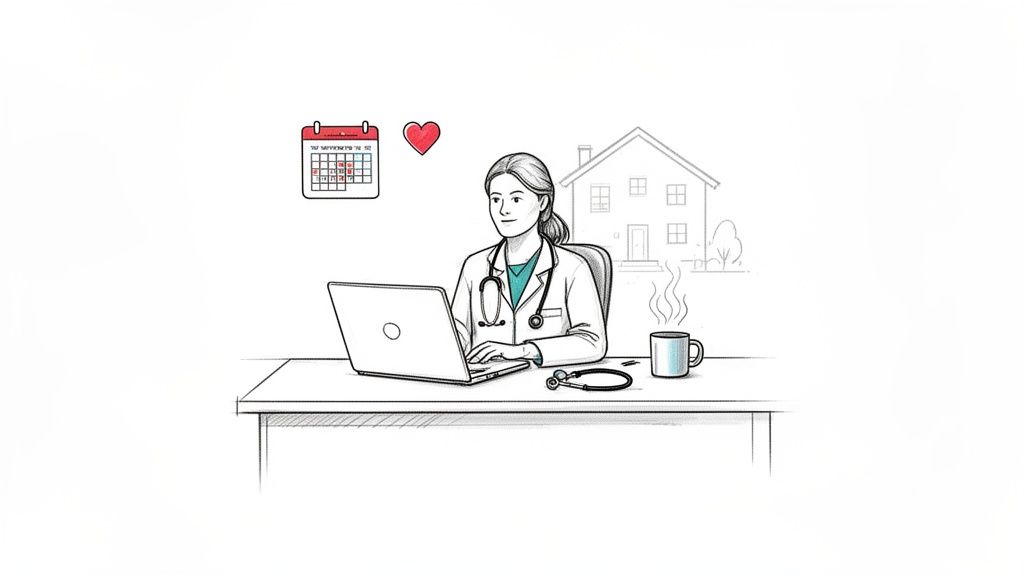
The idea of practicing medicine from your home office probably seemed impossible not too long ago. Now, it’s a critical part of our healthcare system, and it’s not just a temporary fad. This is a fundamental shift in how we deliver care and how clinicians can build careers that don’t completely drain them.
Two massive forces are pushing this change forward: rampant clinician burnout and chronic staffing shortages. It’s no secret that healthcare professionals are desperately seeking roles that give them more control over their schedules and a healthier way to integrate work with the rest of their lives. Remote work hits these needs head-on, offering a viable alternative to the relentless grind of traditional clinical settings.
The Forces Driving the Shift
The move to remote healthcare isn’t just about individual clinicians wanting a better life, though that’s a huge part of it. It’s also a strategic response from organizations facing system-wide problems. They're realizing that virtual care can make them more efficient, reach more patients, and attract the kind of top-tier talent that might otherwise just quit medicine altogether.
The workforce numbers tell the story. By 2026, the U.S. is expected to have 36.2 million people working remotely—that’s a staggering 417% jump from before the pandemic, with healthcare leading the charge. This isn't just a convenience; it's a necessity. Global health organizations are projecting a shortfall of 11 million health workers by 2030, making virtual care an absolutely critical piece of the puzzle.
A New Career Cornerstone
For physicians, nurse practitioners, and psychologists, this shift opens up a whole new world of possibilities. The demand for skilled clinicians in telehealth roles is exploding, creating all sorts of opportunities that fit with how people want to work and live now. These jobs empower you to redefine what a medical career looks like, on your own terms.
Remote work is no longer just a perk—it's becoming a cornerstone of a modern, resilient healthcare system. It offers a practical path for clinicians to continue their vital work without sacrificing their personal well-being.
As we dig into the specifics, you'll see how different remote jobs can fit your skills and your lifestyle. This guide is here to give you the insights you need to navigate this new landscape and find a role that supports both your professional goals and your personal freedom.
What Kinds of Remote Clinician Jobs Are Out There?
When most clinicians hear “remote healthcare,” they picture a live video call with a patient. That's definitely a big piece of the puzzle, but the reality is much broader and more interesting.
The world of remote medicine isn't one-size-fits-all. It’s a spectrum of roles that cater to different personalities, clinical skills, and how much patient interaction you actually want.
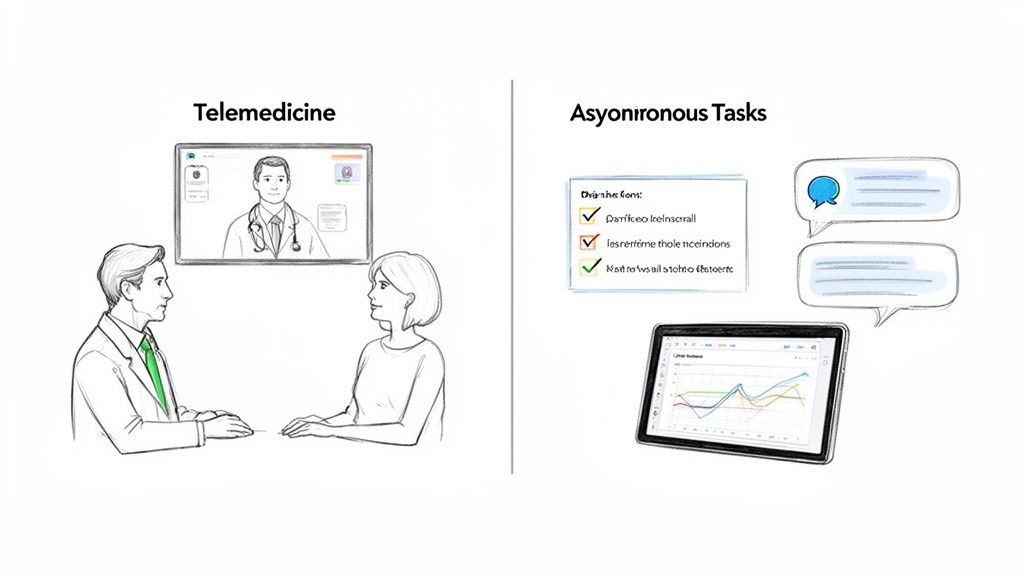
To really get a handle on it, you first need to understand the two main ways remote work happens: synchronous and asynchronous care. Think of it like this: a phone call is synchronous—you and the other person are interacting in real time. A text message is asynchronous—you send it, they read and reply whenever they can.
The same idea applies to remote medicine. Synchronous work is built around live interactions, while asynchronous work is done on your own schedule. Many of the best remote jobs actually mix both, creating a more balanced and dynamic workweek.
Synchronous Care: The Digital House Call
Synchronous care is the closest digital equivalent to a traditional clinic visit. It’s what most people think of when they hear "telehealth."
These jobs are all about live engagement and are a great fit for clinicians who genuinely enjoy the back-and-forth of patient connection. The goal is immediate diagnosis, treatment planning, and real-time consultation.
- Direct-to-Consumer Telehealth: This is the classic virtual urgent care model. You’re seeing patients via video for common issues like UTIs, rashes, or the common cold.
- Specialty E-Consults: You might hop on a live call with a primary care provider who needs your specialist expertise on a tricky case, helping guide their treatment plan right then and there.
- Virtual Therapy Sessions: For psychologists and other mental health professionals, this means conducting therapy sessions or managing medications through a secure video platform.
At its core, synchronous work is about real-time problem-solving. It demands sharp communication skills and the ability to build trust and rapport through a screen, just like you would in person.
Asynchronous Tasks: Deep Clinical Work, Your Way
Asynchronous work operates on a completely different rhythm. It frees you from the tyranny of the appointment schedule. These remote healthcare jobs involve clinical tasks that don't require the patient to be live on the other end.
This model is perfect for clinicians who prefer focused, deep work without the constant context-switching of back-to-back appointments. It offers a ton of flexibility, since you can usually complete tasks whenever you want, as long as you meet the deadline.
Common asynchronous roles include:
- Chart Review: Reviewing patient charts for insurance companies, legal teams, or hospital systems to check for accuracy, billing compliance, or quality metrics.
- Utilization Management (UM): This involves reviewing prior authorization requests to determine if a procedure or medication is medically necessary, ensuring care is both effective and appropriate.
- Clinical Informatics: Working with EHR data behind the scenes to improve clinical workflows, patient safety, and quality of care—often with no direct patient contact at all.
To give you a clearer picture, here’s a quick breakdown of how these roles stack up for different types of clinicians.
Key Remote Healthcare Roles and Responsibilities
| Role (Clinician Type) | Primary Responsibilities | Common Work Models | Key Skills Required |
|---|---|---|---|
| MD/DO | Direct-to-consumer telehealth, specialty e-consults, utilization management, chart review, clinical documentation improvement (CDI). | Synchronous, Asynchronous, Hybrid | Strong diagnostic skills, communication, ability to establish rapport on video, analytical skills for chart review. |
| NP/PA | Primary and urgent care telehealth visits, chronic disease management, remote patient monitoring, health coaching. | Primarily Synchronous, some Hybrid | Broad clinical knowledge, patient education, tech-savviness for remote monitoring tools, independent decision-making. |
| Psychologist/Therapist | Virtual therapy sessions (CBT, psychotherapy), mental health assessments, e-consults with PCPs. | Primarily Synchronous | Excellent active listening, empathy, building therapeutic alliance remotely, crisis management. |
Understanding the fundamental difference between these work models is the first step. It lets you zero in on the types of remote healthcare jobs that actually align with your clinical strengths, your personality, and what you really want out of your career. Whether you thrive on the energy of live patient care or the quiet focus of asynchronous work, there's a role out there for you.
How to Find Genuinely Burnout-Friendly Jobs
The idea of remote work sounds great, but let's be honest—not all remote healthcare jobs are the same. A listing might dangle the promise of working from home, but that doesn't automatically mean you'll get a better work-life balance. The real skill is learning to spot a truly sustainable role versus a high-stress job just wearing a remote-work disguise.
Think of it this way: a beautiful, high-end kitchen doesn't guarantee you'll make a delicious meal. You still need the right ingredients and a solid recipe. It's the same with a remote job—it needs the right company culture and structure to actually be "burnout-friendly." This means you have to be intentional in your search, looking for specific signs of a healthy work environment.
Decoding Job Descriptions for Red Flags
The job description is your first piece of evidence. Vague language or a heavy focus on productivity metrics with zero mention of team support is a huge warning sign. You want to see roles that clearly define expectations while also showing respect for your personal time.
Here are a few red flags to watch for:
- Ambiguous Hours: Phrases like "flexible schedule to meet business needs" can be code for "you're always on the clock." Look for clear definitions of core working hours.
- Overwhelming Responsibilities: If one job description reads like it's covering the duties of three different people, run. It's a classic sign that a company is understaffed and looking for one person to plug all the holes.
- No Mention of Support: Does the listing talk about mentorship, team collaboration, or professional development? If it's all about what you'll do for them and nothing about how they'll support you, you could end up working in a silo.
A truly burnout-friendly job description talks about outcomes and clinician well-being, not just a laundry list of demanding tasks. It's a signal that the employer gets it: a supported clinician provides the best care.
Using Smart Tools to Filter for Quality
Endlessly scrolling through job boards is a surefire way to get exhausted before you even start. This is where a specialized platform can make all the difference. WeekdayDoc, for instance, was built from the ground up to help clinicians find jobs that put work-life balance first by making the important details transparent right from the start.
This screenshot shows how you can instantly filter for the stuff that actually matters for a balanced life, like jobs with "No Call" or "No Weekends." These aren't just features; they're your first line of defense against burnout, filtering out the roles that simply don't fit your needs.
When you use tools like a ‘Burnout-Friendly Score’ and see clear salary data upfront, you're empowered to make a smart decision before you ever hit "apply." It completely changes the power dynamic, letting you focus your limited time and energy on opportunities that genuinely respect you.
For clinicians who aren't ready to make a huge leap, checking out curated lists of part-time physician jobs is a great way to dip your toes into a more balanced schedule. It’s a strategic way to find not just another job, but a sustainable career path.
Of all the promises that come with a remote medical career, the dream of practicing nationally from anywhere often slams into one giant wall: state licensing.
The very idea of getting licensed in multiple states can conjure up nightmares of endless paperwork, bureaucratic delays, and mounting fees. But what if it was less like taking a new driving test in every state you visit, and more like having a single driver's license that’s recognized across the country?
That’s the core idea behind interstate licensure compacts. These are formal agreements between states designed to slash the red tape for qualified clinicians. For anyone serious about a career in telehealth, understanding these compacts is non-negotiable—they are the key to unlocking the true potential of remote healthcare jobs.
Instead of trudging through the full application process for every single state medical board—a painful ordeal that can take months and cost a small fortune—these compacts offer an express lane. Think of it as a "fast pass" for your medical license.
Understanding the Major Licensure Compacts
For most clinicians looking at remote work, one of three major compacts will be their ticket to a multi-state practice. Each one is built for a different group of professionals, but they all share the same goal: cutting down the administrative headache.
Here’s a quick rundown of the big three:
- The Interstate Medical Licensure Compact (IMLC): This one is for physicians (MDs and DOs). It’s one of the most established compacts out there, and it lets eligible doctors get licensed in other member states in weeks, not months. You can find a map and more details on the IMLC's official site.
- The Nurse Licensure Compact (NLC): A game-changer for registered nurses (RNs) and licensed practical/vocational nurses (LPN/LVNs). The NLC allows a nurse to hold one multi-state license, giving them the authority to practice in all other participating states. Check out the NLC map here.
- The Psychology Interjurisdictional Compact (PSYPACT): Built for psychologists, this compact allows licensed professionals to practice telepsychology and even conduct temporary in-person work across state lines. The PSYPACT commission website has all the details.
Now, these compacts aren't a free-for-all. You have to hold an unrestricted license in a participating "home state" and meet a few other criteria, like having a clean disciplinary record. But if you qualify, the door to a much broader practice swings wide open.
The Process, Costs, and Why Your Employer Should Care
So, how does this actually work in practice? First, you apply through the commission that manages your profession's compact. Once they've confirmed you’re eligible, you can pick and choose which other participating states you want to add to your portfolio.
While the process is streamlined, it's not free. Expect to pay an initial application fee ranging from a few hundred to over a thousand dollars, on top of the actual licensing fees for each state you add.
The good news? The best telehealth employers get it. They know licensing is a barrier, and many offer serious support—from dedicated credentialing teams who chase the paperwork for you to stipends or full reimbursement for all the fees.
This kind of support is a massive green flag when you're evaluating remote healthcare jobs. A company that’s willing to invest in your multi-state licensure is a company that’s serious about building a real, sustainable remote team. It shows they see you as a long-term asset, ready to provide care wherever you're needed most.
Mastering Your Remote Job Application and Interview
Landing a great remote healthcare job takes more than just solid clinical chops. It's about proving you can be just as effective through a screen as you are in person. Your application and interview are where you make that case.You have to show them you're not just a great clinician, but a great remote clinician. That means shifting your resume's focus beyond your clinical wins. Think like the hiring manager for a telehealth company: they're screening for digital fluency, self-discipline, and killer written communication. These are the pillars of success when your team is distributed.
Tailoring Your Application for Remote Roles
Your standard CV probably won't cut it here. You need to reframe your experience to scream "telehealth-ready."
- Highlight Tech Proficiency: Don't just list the EHRs you've used. Get specific. Mention telehealth platforms, secure messaging apps, or even project management tools like Asana or Trello. This shows you can plug right into a digital-first workflow.
- Showcase Autonomy: Tell a story of independence with your past roles. Did you spearhead a project with minimal hand-holding? Develop a new clinic workflow on your own initiative? Frame these as proof you can get things done without someone looking over your shoulder.
- Emphasize Communication: Remote work runs on clear, crisp writing. Your cover letter and resume are your first chance to demonstrate this. They need to be flawless, articulating exactly why you’re the right fit.
For a real edge, check out some specialized medical resume examples and templates. They can help you structure your background in a way that clicks with telehealth recruiters.
Your resume needs to send a single, powerful message: "I have the clinical expertise you require, and the proven remote work skills to deliver it effectively from day one."
Nailing the Virtual Interview
Think of a video interview as a performance. Your goal is to project competence and professionalism through the screen. And that all comes down to preparation.
Master Your Tech Setup:
- Test Everything: Do a dry run with a friend the day before. Check your camera, mic, and internet connection. No last-minute surprises.
- Create a Professional Backdrop: Keep it simple and uncluttered. Good lighting is non-negotiable—make sure the light source is in front of you, not behind.
- Eliminate Distractions: Find a quiet room where you won't be interrupted. A barking dog or a surprise visitor can instantly derail the professional vibe you're trying to create.
And of course, many remote roles hinge on licensing. Before you even apply, you need to understand the landscape.
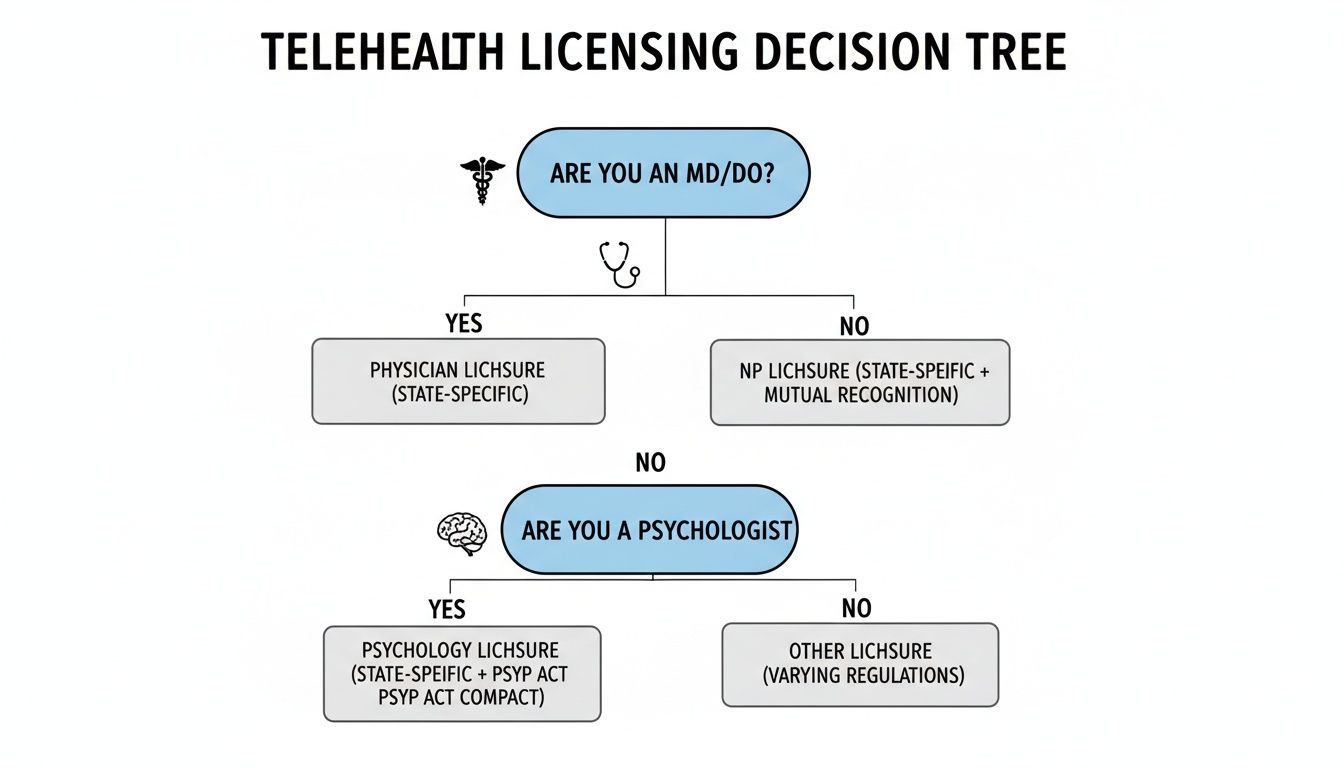
This decision tree breaks down the different licensing paths for physicians, NPs, and psychologists, spelling out the compacts and requirements unique to each profession. Get this part right, and you're already ahead of the game.
What Can You Really Earn in Remote Healthcare?

Let’s be honest: moving to a remote role isn’t just about a better lifestyle. It’s a huge financial decision. Getting a clear picture of the compensation landscape for remote healthcare jobs is the first step toward building the future you want, whether that’s paying off loans or chasing financial independence.
In telehealth, you’ll find that pay structures can be all over the map. Some roles are traditional salaried positions, while others might be hourly or based entirely on productivity, like a per-consult fee. Each one has its own pros and cons for income stability and growth, so it's critical to know which model fits your personal financial plan.
It’s More Than Just the Salary
The real financial win with remote work often comes from what you don't spend. Ditching the daily commute doesn't just save you a fortune on gas and car maintenance; it gives you back hours of your day. That reclaimed time is an asset. You could use it to pick up extra shifts, start that side hustle you've been dreaming about, or just invest in your own well-being.
Think about all the little expenses tied to an in-person job that just disappear:
- Commuting costs (gas, tolls, parking, transit passes)
- A professional wardrobe and the endless dry-cleaning bills
- Lunches and coffees bought out of convenience
These costs add up fast. Cutting them out is like giving yourself a raise before you even start negotiating. As you start looking at opportunities, it’s a good idea to compare salary and uncover your true value in this new market. It gives you the confidence to ask for what you're worth.
Mapping Out Your Financial Future
To make a smart career move, you need good data, not just guesswork. Tools built for clinicians can help you see exactly how a remote role could change your financial trajectory. For example, the WeekdayDoc Salary & FIRE Calculator lets you plug in different income scenarios and see how they accelerate your path to financial independence.
The pay for high-skill remote health roles is surprisingly strong, often keeping pace with the tech sector. It's not uncommon to see salaries in the $110K to $130K range for experienced clinicians.
This isn't a niche market anymore. Globally, 26% of eligible employees are now fully remote. Companies have also figured out that they can fill roles with technical skills 29% faster when they offer a remote option. If you want to dive deeper, you can discover more insights about remote work trends on FlexJobs. Understanding these market forces helps you position yourself to make the most of a career that finally puts you in control.
Answering Your Questions About Remote Healthcare Jobs
Making the leap to a remote healthcare career can feel like stepping into a whole new world. It's completely normal to have questions about how it all actually works. Many clinicians I talk to wonder if they have the right tech setup, or how they can possibly build a strong patient relationship through a screen.
The good news? The transition is usually far more straightforward than you might think. Most roles just require a stable high-speed internet connection, a decent webcam, and a private, quiet space to protect patient confidentiality. You don’t need to build a sophisticated IT department in your home office.
Building Connections Digitally
As for patient rapport, it really comes down to technique, not technology. Clinicians who thrive in telehealth are masters of active listening and showing empathy visually. Simple things like looking directly into the camera to simulate eye contact, using clear and reassuring language, and summarizing patient concerns build trust just as effectively as an in-person visit. The medium is different, but the core principles of compassionate care haven't changed.
The demand for these skills is exploding. Widespread clinician burnout and persistent staffing shortages are pushing remote healthcare firmly into the mainstream. In fact, a 2026 report showed healthcare was a leading remote industry, with the top 100 companies posting over 68,000 fully remote jobs in 2025 alone. That reflects a massive 49% jump in one year, with total listings hitting 424,778. You can dig into the full report on fully remote job trends from Virtual Vocations.
The most common misconception is that remote work is isolating. In my experience, many virtual care teams are incredibly connected, using digital tools to collaborate more intentionally than some in-person clinics ever do.
Ultimately, a successful transition hinges on embracing new ways to communicate and recognizing the immense opportunity to practice medicine on your own terms.
Ready to find a role that actually fits your life? On WeekdayDoc, we curate the best burnout-friendly remote healthcare jobs with transparent salaries and clear work-life boundaries. Start your search at https://www.weekdaydoc.com.