Where Can I Work as a Nurse Practitioner? 12 Burnout-Friendly Options for 2026
Searching where can I work as a nurse practitioner for better work-life balance? Explore 12 top settings like telehealth, specialty clinics, and more.

The question 'Where can I work as a nurse practitioner?' opens up a world of possibilities far beyond traditional clinical roles. Today's healthcare landscape offers diverse settings that prioritize work-life balance, allowing you to build a sustainable and fulfilling career without sacrificing your personal life. Many NPs are actively seeking roles with predictable schedules, no on-call duties, and environments that mitigate burnout. This guide is designed to provide a clear, actionable roadmap to those opportunities.
We will explore 12 distinct career paths, each offering a unique blend of autonomy, patient care, and lifestyle benefits. When exploring new NP career paths, understanding and effectively articulating your capabilities is key; we'll touch on the essential skills to highlight on your NP resume for these varied roles.
From telehealth and retail clinics to government agencies and private practice, we'll dive into the specifics of what each position entails. You will get a detailed look at:
- Typical day-to-day responsibilities and patient populations.
- The pros and cons of each work environment.
- Salary expectations and potential for financial growth.
- Actionable steps for finding positions that align with your goals.
We'll also demonstrate how to leverage platforms like WeekdayDoc to filter for 'No Call' or 'No Weekends' opportunities and assess a role's long-term sustainability with its Burnout-Friendly Score. This listicle moves beyond a simple list of jobs; it's a practical guide to help you find a position that fits your life now and supports your long-term career aspirations.
1. Hospital-Based Outpatient Clinics
For nurse practitioners seeking structured roles with predictable schedules, hospital-based outpatient clinics are a top-tier option. These clinics, affiliated with larger health systems, offer primary, specialty, or urgent care services within a traditional business-hours framework. NPs in these settings benefit from the resources and collaborative environment of a major hospital system while enjoying the focused patient care of an outpatient setting.
This environment often translates to a Monday-to-Friday schedule with minimal to no on-call duties, making it a compelling answer to "where can I work as a nurse practitioner with good work-life balance?" Examples include the Mayo Clinic's primary care facilities or Kaiser Permanente's walk-in care centers, which operate within established health networks.
Actionable Next Steps & Pro Tips
To ensure a role aligns with your expectations, it's crucial to ask targeted questions during the interview process. A predictable schedule is a major draw, but its reality can vary.
- Confirm Scheduling Policies: Explicitly ask about weekend and holiday coverage expectations. A role advertised as "weekday-only" might have an occasional Saturday rotation.
- Assess Workload: Inquire about patient-to-provider ratios and whether administrative time is built into the daily schedule. This helps gauge potential burnout risk.
- Negotiate Your Terms: If a clinic has minor on-call or weekend duties, don't be afraid to negotiate these points. The hiring process is your best opportunity to secure a schedule that fits your life.
Pro Tip: When evaluating roles on platforms like WeekdayDoc, use filters such as No Call/No Weekends and check the Burnout-Friendly Score to quickly identify hospital-affiliated clinics that truly prioritize clinician well-being. This data-driven approach helps you find a position that supports long-term career satisfaction.
2. Telehealth/Remote Primary Care
For nurse practitioners prioritizing autonomy and flexibility, telehealth and remote primary care roles are a game-changer. These positions leverage technology to deliver patient care virtually, allowing NPs to manage chronic conditions, conduct follow-ups, and treat minor acute illnesses from a home office. This model offers an unparalleled answer to "where can I work as a nurse practitioner" without a daily commute, often with highly flexible scheduling.
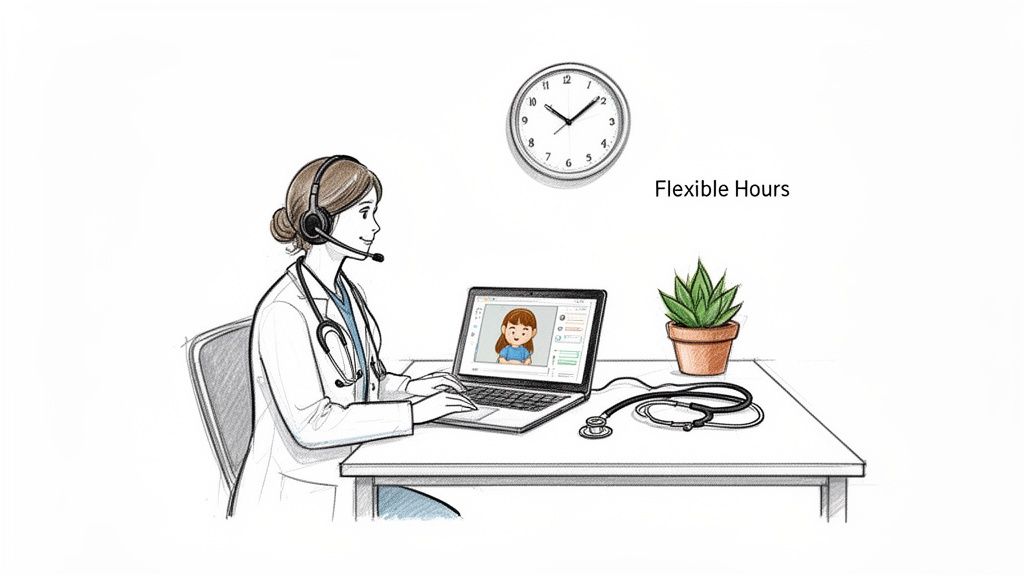
The work can be synchronous, involving live video appointments, or asynchronous, managing patient messages and care plans on your own time. Companies like Teladoc Health, Amwell, and CVS Minute Clinic's telehealth division are major employers in this space. These opportunities are not just convenient; they represent a significant shift toward more accessible and efficient healthcare delivery, making it a highly sought-after career path. For those wanting to dive deeper, you can find more information about remote nurse practitioner jobs on WeekdayDoc.com.
Actionable Next Steps & Pro Tips
To find a remote role that genuinely supports work-life balance, it's vital to look beyond the surface-level perks. A "flexible" schedule can mean different things to different employers.
- Clarify Licensing Requirements: Confirm which state licenses are required and whether the company offers assistance or reimbursement for obtaining new ones through programs like the Interstate Medical Licensure Compact.
- Define "Flexibility": Ask about core working hours, patient volume expectations per hour, and policies for responding to asynchronous messages. Some roles require logging in during specific windows, while others are truly self-scheduled.
- Understand the Compensation Model: Many telehealth roles use a per-visit fee or a hybrid salary-plus-incentive structure. Request a clear breakdown to understand your potential earnings and ensure it aligns with your financial goals.
Pro Tip: Use the Remote/Hybrid filter on WeekdayDoc to zero in on telehealth opportunities. Pay close attention to the Burnout-Friendly Score and Salary & FIRE projections for each listing. These tools help you evaluate not just the flexibility, but the long-term sustainability and financial viability of a remote NP career.
3. Urgent Care Centers
For nurse practitioners who thrive in a fast-paced environment treating acute conditions, urgent care centers offer a compelling alternative to traditional primary care. These facilities bridge the gap between primary care and the emergency room, managing non-life-threatening issues like sprains, minor lacerations, and common infections. NPs in this setting benefit from a dynamic, hands-on role with shift-based schedules that often eliminate overnight duties.
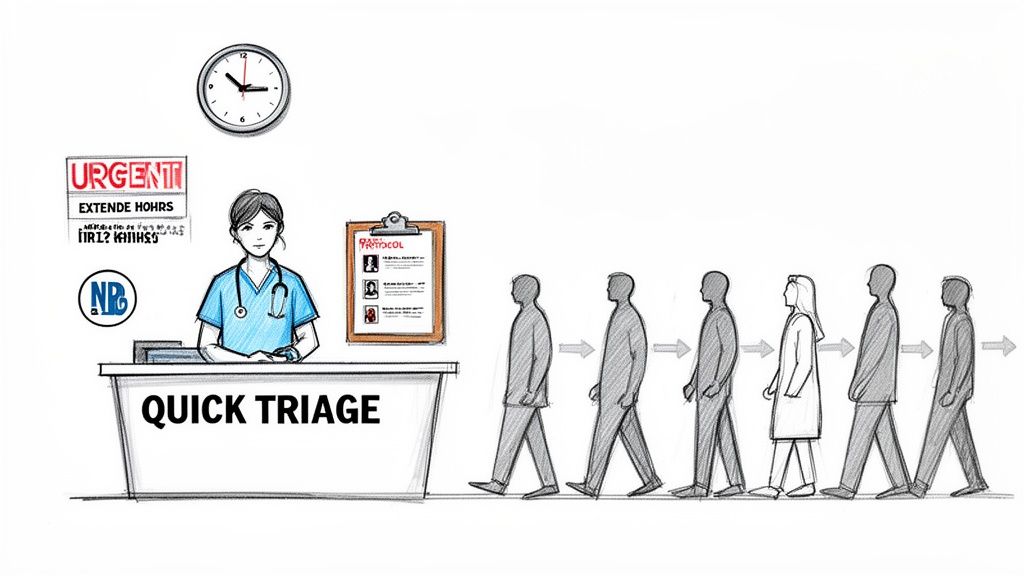
The structure of urgent care provides a unique answer to "where can I work as a nurse practitioner" that combines acute care with predictable hours. Unlike emergency departments, many centers operate on fixed shifts (e.g., 8am-8pm) with no on-call requirements. Examples include national chains like FastMed Urgent Care and CarePoint Health, as well as countless local independent centers, all of which rely heavily on NPs to manage high patient volumes efficiently.
Actionable Next Steps & Pro Tips
To ensure an urgent care role aligns with your work-life balance goals, it is essential to clarify scheduling specifics and workload expectations before accepting an offer.
- Confirm Shift Structure: Ask for a sample monthly schedule to understand the distribution of shifts, including required weekends and holidays.
- Assess Patient Volume: Inquire about the average number of patients seen per shift and the level of support staff (MAs, RNs) available. This will help you gauge the daily workload and potential for burnout.
- Negotiate Your Schedule: If you are seeking a primarily weekday role, state this preference during negotiations. Some larger urgent care networks may have the flexibility to accommodate these requests.
Pro Tip: When searching for urgent care positions on platforms like WeekdayDoc, use the No Call/No Weekends filter to pinpoint opportunities that fit a more traditional schedule. Pay close attention to the Burnout-Friendly Score to find centers known for manageable patient loads and supportive environments, ensuring your career remains both exciting and sustainable.
4. School and Occupational Health
For nurse practitioners prioritizing population health and predictable, business-hour schedules, school and occupational health settings are ideal. These roles involve providing preventive care, acute illness treatment, and health screenings to either students or employees, with work naturally following academic or corporate calendars. The focus is on wellness and prevention rather than high-acuity interventions, creating a lower-stress environment.
This career path directly answers the question of "where can I work as a nurse practitioner" with a built-in work-life balance. Examples include university health centers, corporate wellness programs at large employers like Google or Amazon, or government agency employee health services. These positions often come with generous time off that aligns with school breaks or federal holidays, making them highly sought after.
Actionable Next Steps & Pro Tips
To secure a position in these unique environments, you must showcase specific skills and ask the right questions to ensure the role meets your expectations for autonomy and scheduling.
- Highlight Population Health Skills: In your resume and interview, emphasize experience in preventive medicine, health education, and wellness program development.
- Confirm Calendar Alignment: Explicitly ask how the schedule works during summer breaks, holidays, or school closure days. Understand if the role is 10-month or year-round.
- Inquire About Autonomy: Ask about the scope of practice, involvement in health policy creation, and opportunities for leading wellness initiatives. This clarifies if you'll be a clinician or a program leader.
Pro Tip: When searching on platforms like WeekdayDoc, use filters like No Call/No Weekends and search keywords such as "University Health," "Corporate Wellness," or "Occupational Medicine." Cross-reference the Burnout-Friendly Score to find employers who genuinely support a sustainable work pace and clinician well-being.
5. Specialty Clinics (Non-Primary Care)
For nurse practitioners who desire deep expertise in a specific area of medicine, specialty clinics offer an ideal career path. These settings, such as dermatology, cardiology, endocrinology, or orthopedics, allow NPs to manage complex, focused patient populations. The work often involves managing chronic conditions or performing specialized procedures within a structured, outpatient environment.
This specialization typically translates to predictable, business-hour schedules with minimal to no on-call responsibilities, directly addressing the question of "where can I work as a nurse practitioner with a focused scope?" For instance, an NP in a rheumatology clinic managing autoimmune diseases or in an ophthalmology practice overseeing glaucoma patients will generally work a standard weekday schedule, allowing for excellent work-life integration.
Actionable Next Steps & Pro Tips
Transitioning into a specialty requires a proactive approach and targeted questioning during your job search to ensure the role matches your career goals and lifestyle needs.
- Verify Call and Weekend Duties: While many specialty roles are weekday-only, some, like cardiology, may have occasional call. Ask specifically, "What are the after-hours and weekend coverage requirements for NPs in this role?"
- Assess Training and Support: Inquire about the onboarding process, mentorship from specialty physicians, and support for continuing education or certifications. This is crucial for building expertise.
- Inquire About Procedural Volume: If the specialty involves procedures (e.g., dermatology or orthopedics), ask about the expected volume and opportunities for hands-on training to gauge the role's learning curve.
Pro Tip: When exploring specialty roles on a platform like WeekdayDoc, filter by specific Specialties like "Dermatology" or "Cardiology" and then apply the No Call/No Weekends filter. Cross-referencing these with the Burnout-Friendly Score helps you find a position that offers deep clinical engagement without sacrificing personal time.
6. Occupational Medicine and Employee Health Services
For nurse practitioners interested in workplace wellness and injury management, occupational medicine offers a highly structured and specialized career path. These roles are centered on employee health, focusing on injury prevention, treatment of work-related injuries, and managing occupational diseases. NPs in this field work directly with employers, either in corporate clinics or for dedicated occupational health groups, ensuring a safe and healthy workforce.
This setting almost guarantees a standard business schedule, aligning perfectly with the search for "where can I work as a nurse practitioner" without sacrificing weekends or evenings. You might find roles in the employee health clinics of large tech companies like Google, at manufacturing plants, or with consulting firms that manage health programs for various industries. The work is predictable, with a strong emphasis on preventative care and regulatory compliance, such as OSHA and workers' compensation laws.
Actionable Next Steps & Pro Tips
To succeed in this specialized field, it’s essential to demonstrate a commitment to workplace health and safety standards. The interview process will likely focus on your understanding of occupational health regulations and your ability to manage both clinical and administrative duties.
- Highlight Regulatory Knowledge: Be prepared to discuss your understanding of OSHA, the ADA, and workers' compensation. Mentioning these shows you grasp the unique legal and ethical landscape of the field.
- Showcase Preventative Care Skills: Inquire about the company's existing wellness and injury prevention programs. Ask how your role would contribute to or lead these initiatives, demonstrating proactive thinking.
- Discuss Autonomy and Collaboration: Ask about the level of autonomy in the role and how you will collaborate with HR, safety managers, and external specialists like physical therapists.
Pro Tip: Stand out by pursuing credentials like the Certified Occupational Health Nurse (COHN) or joining the American College of Occupational and Environmental Medicine (ACOEM). When searching on platforms like WeekdayDoc, use the Corporate Health/Wellness filter and check the Administrative Burden Score to find roles that balance clinical duties with manageable paperwork, ensuring a sustainable career.
7. Retail Health Clinics
For nurse practitioners prioritizing accessibility and direct patient care for common conditions, retail health clinics offer a unique and expanding career path. These clinics, located within pharmacies and large retail stores, provide walk-in services for minor acute illnesses, vaccinations, and preventive health screenings. NPs often function as the sole provider, allowing for significant autonomy in a fast-paced setting.
This environment is an excellent answer to "where can I work as a nurse practitioner" if you enjoy treating a high volume of straightforward cases with a focus on efficiency. Examples include well-known names like CVS MinuteClinic and Walgreens Healthcare Clinic, as well as growing players like Walmart Health and Kroger Health clinics. While schedules often include evenings and weekends to meet consumer demand, many positions offer flexibility and predictable shift-based work.
Actionable Next Steps & Pro Tips
To thrive in a retail setting, it’s vital to clarify role expectations and operational realities during the hiring process. Autonomy is a major benefit, but it comes with specific responsibilities.
- Clarify Scheduling and Flexibility: Ask specifically about how weekend and evening shifts are assigned. Inquire if there are options for weekday-only schedules or if a certain number of weekend shifts are mandatory per month.
- Understand Patient Volume Metrics: Request information on expected patient-per-hour or per-shift targets. This will help you gauge the pace of the clinic and assess whether it aligns with your preferred practice style.
- Confirm Compensation Structure: Many retail clinics offer hourly pay rather than a fixed salary. Be sure to ask if compensation is strictly hourly or if there are any productivity-based incentives or bonuses.
Pro Tip: When searching for roles on platforms like WeekdayDoc, filter by No Call/No Weekends to find retail clinic positions that might offer exclusively weekday shifts. Also, examine the Burnout-Friendly Score to identify employers who provide adequate support staff and manageable patient loads, ensuring your autonomy doesn't lead to isolation or overload.
8. Private Practice/Independent NP Practice
For the entrepreneurial nurse practitioner seeking ultimate autonomy, opening a private practice is a definitive answer to "where can I work as a nurse practitioner?" In states with full practice authority, NPs can establish and operate their own clinics independently. In other states, they can form collaborative practices with physicians, still retaining significant control over their work environment.
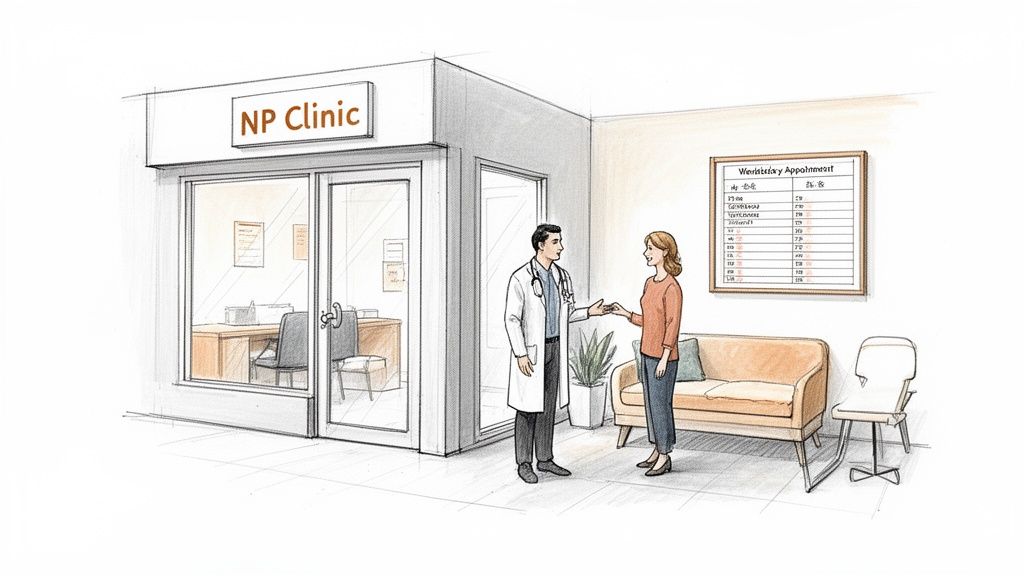
This path offers unparalleled freedom to set your own hours, choose your patient panel, and define your practice's mission. Examples range from direct primary care (DPC) models and concierge medicine to specialized boutique clinics focusing on areas like functional medicine. While the administrative burden is higher, the rewards of building a practice from the ground up are substantial, both professionally and financially.
Actionable Next Steps & Pro Tips
Successfully launching your own practice requires meticulous planning and a strong business acumen. It’s about more than just clinical skill; you become the CEO.
- Master State Regulations: Your state's Nurse Practice Act is your foundational document. Consult a healthcare attorney to understand specific requirements for independent practice, supervision, and prescribing.
- Develop a Solid Business Plan: Define your services, target patient population, marketing strategy, and financial projections. Decide whether you will accept insurance or operate on a cash-based or DPC model.
- Secure Proper Coverage: Obtain comprehensive malpractice insurance and business liability insurance before seeing your first patient. This step is non-negotiable for protecting yourself and your practice.
Pro Tip: Before going fully independent, consider partnering with an established private practice to learn the ropes of business operations. Use WeekdayDoc’s FIRE Calculator to model your potential income and map out a timeline for achieving financial independence as a practice owner.
9. Virtual Mental Health and Psychiatry
For Psychiatric-Mental Health Nurse Practitioners (PMHNPs), the digital landscape offers an unparalleled level of autonomy and flexibility. Virtual mental health platforms allow NPs to provide essential services like psychiatric assessments, medication management, and therapy coordination entirely remotely. This rapidly growing field directly addresses the increasing demand for accessible mental healthcare and is a fantastic answer to "where can I work as a nurse practitioner" with control over my schedule and location.
These roles often feature highly flexible hours, including options for asynchronous care where patient communication occurs via secure messaging rather than live video calls. This model minimizes the traditional pressures of a clinical setting and eliminates on-call duties for acute crises, which are typically managed by dedicated crisis teams. Platforms like Teladoc, Talkspace, and specialized remote psychiatry job boards are hubs for these opportunities, offering both employee and independent contractor models.
Actionable Next Steps & Pro Tips
To succeed in a virtual mental health role, it's vital to establish strong clinical protocols and professional boundaries from the start. The autonomy of remote work requires a proactive approach to ensure patient safety and personal well-being.
- Verify State Regulations: Telehealth laws vary significantly by state. Confirm licensure requirements, prescribing regulations for controlled substances, and any cross-state practice limitations before accepting a role.
- Establish Crisis Protocols: Ask how the platform handles psychiatric emergencies. Understand the exact steps for escalating care and connecting a patient in crisis with local, in-person resources. This is a non-negotiable for patient safety.
- Define Your Work Boundaries: Decide between synchronous (live video) and asynchronous (messaging) models. If offering asynchronous care, set clear expectations for response times to avoid being on-call 24/7.
Pro Tip: Use platform filters on WeekdayDoc to find roles that match your ideal practice style. Select Telehealth Only and review the Burnout-Friendly Score to identify employers with strong support systems for remote providers, ensuring your virtual practice is both sustainable and fulfilling.
10. Nursing Homes and Long-Term Care Facilities
For nurse practitioners with a passion for geriatric care, long-term care facilities offer a deeply rewarding career path. In these settings, such as skilled nursing facilities or assisted living communities, NPs function as primary care providers for a consistent patient panel. The role centers on managing chronic conditions, addressing acute illnesses, and coordinating comprehensive care plans within a collaborative, interdisciplinary team.
This specialized environment is an excellent answer to "where can I work as a nurse practitioner" if you seek autonomy and lasting patient relationships. Most roles operate on a predictable weekday schedule, with on-call duties often handled by a rotating group or a dedicated service. Examples include working for national providers like Brookdale Senior Living, regional nursing home chains, or hospital-affiliated skilled nursing facilities.
Actionable Next Steps & Pro Tips
To thrive in a long-term care setting, it's essential to understand its unique clinical and operational demands. Probing these areas during an interview will ensure the role is a good fit.
- Clarify On-Call Structure: Ask how after-hours calls are managed. Is there a shared rotation, a separate on-call provider, or are you expected to be the primary contact for your patient panel?
- Inquire About Caseload: Understand the expected number of patients you will manage. This directly impacts your ability to provide thorough, unhurried care and maintain documentation.
- Discuss Interdisciplinary Support: Ask about the roles of social workers, physical therapists, and other team members. Strong collaboration is key to effective geriatric care and reduces provider burnout.
Pro Tip: When searching for roles on platforms like WeekdayDoc, use filters like Geriatrics or Palliative Care combined with No Call/No Weekends. Additionally, review the Burnout-Friendly Score to find facilities that prioritize sustainable workloads and strong team support, which are crucial for long-term success in this field.
11. Government and Public Health Agencies
For nurse practitioners motivated by public service and seeking exceptional stability, government and public health agencies offer uniquely rewarding career paths. These roles, found at federal, state, and local levels, prioritize population health and offer structured environments with robust benefits, often including pensions. NPs in these settings focus on community wellness, disease prevention, and providing care to specific populations, such as veterans or indigenous communities.
This sector provides a clear answer to "where can I work as a nurse practitioner for stable, long-term employment?" Opportunities exist within the Department of Veterans Affairs (VA), the Indian Health Service (IHS), and state or county health departments. These positions typically feature predictable Monday-to-Friday schedules and generous paid time off, contributing to a sustainable work-life balance away from the pressures of private-sector productivity metrics.
Actionable Next Steps & Pro Tips
Navigating the government hiring process requires patience and a specific strategy. Asking the right questions is key to finding a role that aligns with your professional and personal goals.
- Clarify the Hiring Timeline: The federal and state hiring process can be lengthy. Ask about the expected timeline from application to onboarding to set realistic expectations.
- Inquire About Loan Forgiveness: Many public service roles, especially in underserved areas, qualify for programs like the Public Service Loan Forgiveness (PSLF) program. Confirm eligibility during your interview.
- Explore Mission-Driven Work: Understand the specific mission of the agency. A role at the VA is vastly different from one at a local health department focused on pediatric immunizations. Ensure the mission resonates with you.
Pro Tip: Use the government's official job board, USAJobs.gov, to find federal NP positions. When filtering, look for roles within the "Health System" job series (0610 for Nurse) and pay close attention to the grade (GS) level, as this determines salary and seniority. Networking with current government employees can also provide invaluable insight into agency culture.
12. Hybrid/Part-Time and Flexible Contract Roles
For nurse practitioners prioritizing ultimate flexibility and autonomy, crafting a portfolio career with hybrid, part-time, or contract roles is a powerful strategy. This approach involves combining multiple positions, such as working two days a week in a telehealth clinic, one day in urgent care, and filling in PRN shifts elsewhere. This model empowers you to design a schedule that aligns perfectly with personal, financial, or FIRE (Financial Independence, Retire Early) objectives.
This customizable path answers "where can I work as a nurse practitioner?" by allowing you to create your own answer. NPs can blend direct patient care with non-clinical work like consulting or chart review, leveraging diverse skills. Examples include taking on short-term locum tenens assignments through agencies like LocumTenens.com or combining a stable, part-time hospital clinic role with a flexible remote position, creating a varied and engaging work life.
Actionable Next Steps & Pro Tips
Successfully managing a portfolio career requires organization and proactive planning. Setting clear boundaries and expectations from the outset is key to preventing burnout and ensuring each role remains fulfilling.
- Secure Comprehensive Malpractice Insurance: Ensure your policy covers you across all work settings, whether clinical, remote, or consulting. Gaps in coverage can create significant personal risk.
- Establish Clear Contract Terms: For any contract or part-time role, insist on a written agreement that explicitly defines duties, scheduling expectations, and no-call policies. This prevents scope creep.
- Organize Your Finances: Working with an accountant familiar with self-employment and 1099 income is crucial. Keep meticulous records of income and expenses from each source. Learn more about the benefits of a flexible schedule in our guide to part-time physician jobs.
Pro Tip: Use WeekdayDoc's FIRE Calculator to model how different income streams from your portfolio career contribute to your long-term financial goals. This helps you strategically select roles that not only offer flexibility but also accelerate your path to financial independence.
Nurse Practitioner: 12 Work Settings Compared
| Setting | Implementation complexity | Resource requirements | Expected outcomes | Ideal use cases | Key advantages |
|---|---|---|---|---|---|
| Hospital-Based Outpatient Clinics | Moderate — institutional workflows, collaborative care | High — EHR, specialist access, admin support | Stable patient panels, career development, predictable flow | NPs seeking stable employment, benefits, team-based care | Predictable schedules, job security, strong resources |
| Telehealth / Remote Primary Care | Low–Moderate — platform onboarding, multi-state licensure possible | Low — reliable internet, home office, employer tech | Flexible hours, reduced commute, variable continuity of care | NPs desiring remote work, flexibility, part-time options | High schedule flexibility; lower exposure to illness |
| Urgent Care Centers | Moderate — fast triage workflows, shift turnover | Moderate — on-site supplies, staffing, protocols | High throughput, episodic care, clear shift boundaries | NPs preferring shift work without overnight call, acute non‑emergent care | Fast-paced work with strong hourly compensation |
| School & Occupational Health | Low — population-health focus, routine protocols | Low–Moderate — screening tools, employer/school support | Predictable hours, preventive impact, aligned calendars | NPs wanting excellent work–life balance and preventive roles | Excellent work–life balance; aligned holidays/vacations |
| Specialty Clinics (Non‑Primary Care) | Moderate–High — specialty training and procedures | Moderate — specialty equipment, mentorship, referrals | Deep clinical expertise, focused outcomes, procedure experience | NPs seeking specialty depth (derm, rheum, cardiology, etc.) | Opportunity to develop deep specialty skills |
| Occupational Medicine & Employee Health | Moderate — regulatory and employer-relations knowledge | Moderate — corporate partnerships, program resources | Improved workplace safety, preventive outcomes, steady hours | NPs interested in workplace health, policy, and prevention | Meaningful population health impact with stable hours |
| Retail Health Clinics | Low — protocol-driven, standardized workflows | Low — clinic space, basic supplies, pharmacy integration | Quick visits, high volume, limited longitudinal care | NPs wanting flexible shifts in retail settings | Convenient hours, protocol support, growing opportunities |
| Private Practice / Independent NP Practice | High — business setup, billing, compliance responsibilities | High — startup capital, malpractice, admin systems | High autonomy, variable income, potential for greater earnings | NPs seeking full control over practice model and schedule | Maximum autonomy and ability to align work with values |
| Virtual Mental Health & Psychiatry | Moderate — PMHNP credentialing, telepsychiatry regs | Low–Moderate — secure teleplatform, specialty training | Flexible remote work, meaningful psychiatric impact, broad reach | Psychiatric NPs wanting remote medication management/therapy coordination | High demand, flexible scheduling, meaningful mental health work |
| Nursing Homes & Long‑Term Care Facilities | Moderate — complex geriatric care and oversight | Moderate — interdisciplinary teams, documentation systems | Longitudinal relationships, complex chronic disease management | NPs focused on geriatrics, palliative care, facility leadership | Meaningful continuity of care and leadership roles |
| Government & Public Health Agencies | Moderate — bureaucratic processes, policy engagement | Moderate–High — stable funding, benefits, administrative support | Stable employment, population health impact, strong benefits | NPs seeking job security, pensions, and public‑health influence | Excellent benefits, job stability, policy impact |
| Hybrid / Part‑Time & Flexible Contract Roles | High — coordinate multiple contracts, credentialing across sites | Variable — self-managed tools, insurance, scheduling systems | Customizable schedule, diversified income, potential burnout reduction | NPs pursuing portfolio careers, locum work, FIRE/financial goals | Maximum scheduling control and flexibility; requires admin skill |
Crafting Your Sustainable NP Career
The journey to finding the perfect nurse practitioner role is not about finding a single "best" job; it's about discovering the best fit for you. As we've explored, the question of "where can I work as a nurse practitioner" has an astonishing number of answers, extending far beyond the traditional hospital or chaotic primary care clinic. Your advanced degree opens doors to diverse settings, from the predictable, structured environment of occupational health to the flexible, technology-driven world of telehealth.
The modern healthcare landscape has created a powerful demand for NPs in virtually every corner of the industry. You can leverage your skills in a retail clinic, provide essential services in a correctional facility, guide patients through end-of-life care in hospice, or even shape the future of medicine in academia and research. Each path offers a unique blend of patient interaction, clinical focus, and, most importantly, a distinct lifestyle.
The key takeaway is that you are in control. The era of accepting burnout as a standard part of the job is over. You have the power to define your career on your own terms, prioritizing what matters most, whether it's a weekday-only schedule, freedom from on-call duties, or a role that aligns with your long-term financial independence goals.
Shifting from Reactive to Proactive in Your Job Search
To truly build a sustainable career, you must shift from a reactive job search, where you simply take what's available, to a proactive one, where you intentionally seek roles that meet your specific criteria. This requires a new mindset and a more strategic approach.
- Define Your Non-Negotiables: Before you even begin looking, create a clear list of your "must-haves." Is a "no weekends" policy a deal-breaker? Is a manageable patient load essential for your well-being? Knowing your boundaries is the first step to enforcing them.
- Ask the Right Questions: During interviews, don't shy away from direct questions. Inquire specifically about patient panel sizes, administrative support, after-hours responsibilities, and the organization's culture around clinician well-being. The answers will reveal far more than the job description ever could.
- Look Beyond the Salary: While compensation is crucial, a high salary can sometimes mask a high-burnout environment. Consider the complete picture: benefits, paid time off, schedule flexibility, and opportunities for professional growth. A slightly lower-paying job with an excellent work-life balance is often a better long-term investment in your health and happiness.
Key Insight: The most fulfilling NP careers are not found by chance; they are intentionally designed. By strategically evaluating opportunities based on how they support your life outside of work, you protect your passion for patient care and prevent professional exhaustion.
Ultimately, your NP degree is a passport to a wide world of professional opportunities. The diverse roles we've covered, from government agencies to private specialty clinics, illustrate that you don't have to settle. By being deliberate and using the right tools to filter out the noise, you can pinpoint the exact setting that allows you to thrive both professionally and personally. Your ideal, burnout-proof NP career is not a myth; it’s waiting for you to find it.
Ready to stop scrolling through generic job boards and start your targeted search for a sustainable role? WeekdayDoc is a physician-founded platform designed specifically for clinicians seeking work-life balance. Use our powerful filters like 'No Call' and 'No Weekends,' check our proprietary Burnout-Friendly Score for each listing, and find your next great opportunity at WeekdayDoc today.