Remote Healthcare Compliance Jobs: Roles, Pay, and Fit
Explore remote healthcare compliance roles, including job titles, duties, qualifications, pay, schedules, and what to verify before applying.

The range of titles for remote healthcare compliance jobs can make a search feel overwhelming. Because these positions aren't standardized, daily responsibilities vary by employer, payer mix, and the regulatory framework governing the product line. Before applying, it helps to understand which rules the position covers. WeekdayDoc helps clinicians and healthcare professionals explore these openings by comparing schedule data and work-life signals, so you can evaluate whether a role matches your career goals. Since coverage and details vary by job, understanding the baseline expectations can help narrow your search.
The Scope of Remote Healthcare Compliance Roles
Broad Compliance Programs and Specialist Work
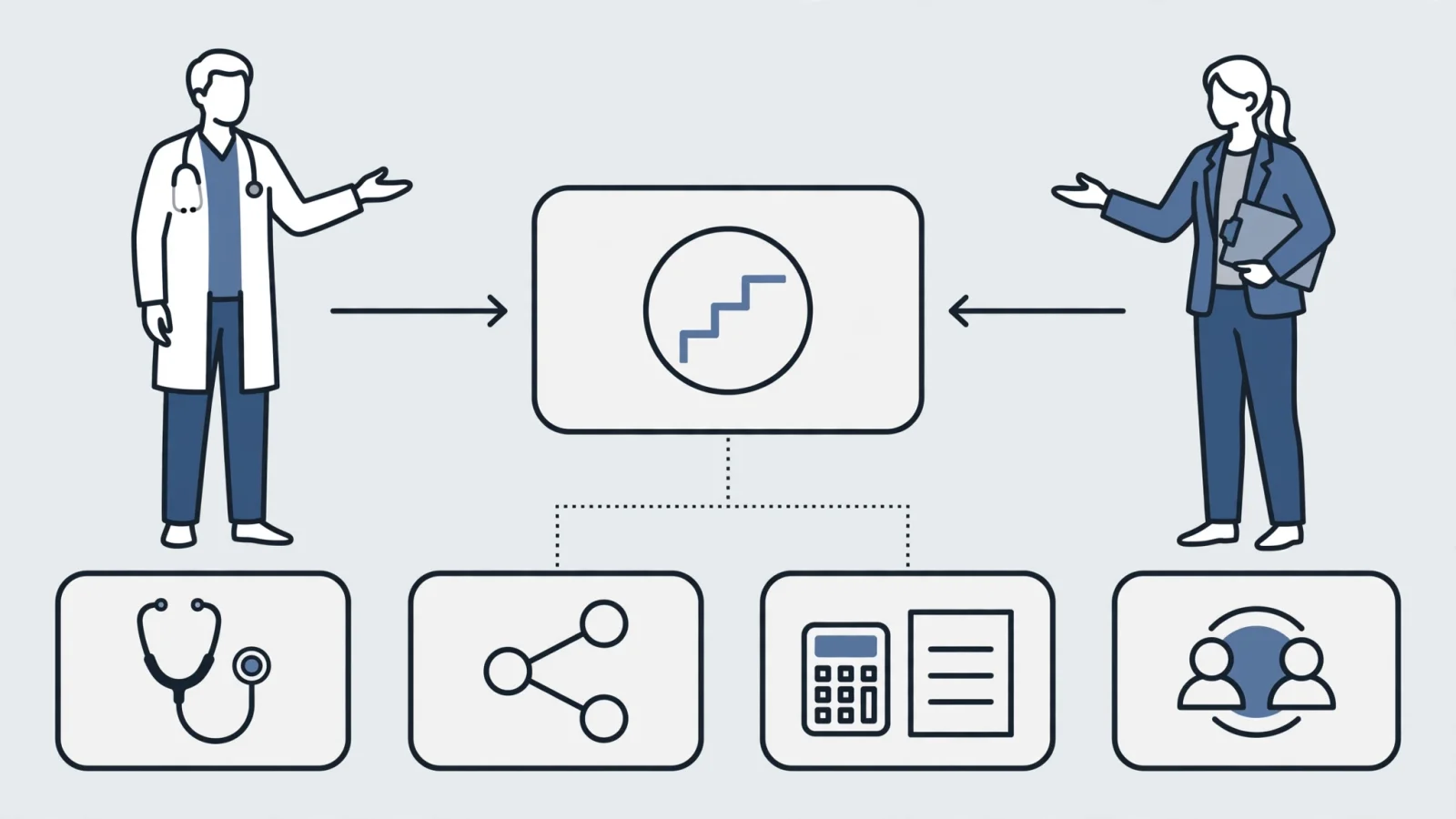
General healthcare compliance roles manage organization-wide policies, assess risk, coordinate audits, and handle internal investigations, while specialist roles narrow that focus. A specialist might spend their entire week reviewing medical coding, validating electronic health record (EHR) data for quality reporting, or translating new regulatory requirements into operational software changes. This daily workload depends heavily on the organization's size. Small clinics often combine these tasks into a single compliance officer position, whereas large health systems or insurance carriers split the work across entire departments.
Regulatory Frameworks Shape the Work
The HHS Office of Inspector General's General Compliance Program Guidance is voluntary and nonbinding, so it does not impose a uniform legal checklist on every employer. Its Section III covers the seven elements of compliance-program infrastructure.
OIG's Medicare Advantage guide is voluntary guidance for that segment, alongside the General Compliance Program Guidance that applies across the health care industry. Entities and individuals can use the Medicare Advantage guide to identify risks and implement compliance and quality programs, giving applicants a source for understanding the compliance scope of roles in that area.
Matching Job Titles to Compliance Workstreams
Employers use compliance job titles inconsistently, so searching the word "remote" alongside "compliance" often returns hundreds of unrelated financial or manufacturing positions. Matching your search terms to actual healthcare workstreams yields better results.
Program Management and Regulatory Implementation Titles
Terms like healthcare compliance analyst, compliance officer, or regulatory risk professional highlight broad program-management roles that align with the traditional compliance officer profile. These professionals handle policies, risk assessment, and program monitoring.
A Highmark Health posting for a Senior Regulatory Implementation and Assurance Analyst describes translating legislative and regulatory requirements into policy, process, and technology changes. It includes coordinating with affected departments, supporting external audits, tracking risk intake, and reporting status to risk partners, business leaders, and the Audit Committee.
System Design, Quality, and Coding Titles
If your background involves clinical documentation, searching for a clinical-quality regulatory analyst or EHR compliance analyst position makes sense. For example, CommonSpirit Health's Sr Regulatory Compliance Analyst (EPIC) role requires EHR expertise in measure mapping and clinical workflows, along with creating and maintaining documentation for audits and state and federal reporting.
Reviewing records and claims for billing accuracy falls under medical coding auditor or payment-integrity analyst titles. A recent Humana posting for an outpatient Medical Coding Auditor represents this title family well, showing how these roles focus on validating documentation against submitted billing codes.

Daily Workflows in Remote Compliance
Job titles provide a broad category, but daily tasks define the actual position. The U.S. Bureau of Labor Statistics outlines standard duties for compliance officers, including staying current on relevant rules, developing policies and procedures, assessing compliance risks, conducting compliance audits and assessments, training staff, investigating possible violations, documenting findings, and measuring program effectiveness. The profile also highlights evaluating policies and rules, identifying risks, and advising individuals and organizations.
Managing Enterprise Risk and Investigations
Enterprise risk roles involve constant coordination across an organization. A daily routine might include tracking regulatory implementation, managing risk intake, updating policy changes, and reporting findings to business leaders. These analysts coordinate audit responses and present information to an audit committee, requiring them to gather documentation from multiple departments. Because they identify gaps in current procedures and secure leadership buy-in for corrective actions, the majority of their day involves meetings, policy drafting, and project management.
Validating EHR Data and Auditing Coding
Specialist roles focus on data integrity and continuous record review. Analysts monitor specific quality measures, validate data within the EHR, and prepare regulatory submissions before communicating findings to clinical teams. Because the work centers on system logic and responding to electronic quality audits, the day includes testing EHR workflows and mapping clinical data to regulatory requirements. Professionals transitioning from remote healthcare data analyst jobs often adapt easily to these data-heavy validation tasks.
Coding auditors spend their time directly inside medical records. They review charts and claims, apply complex coding guidance, and document audit results. Working through a queue of claims, these auditors verify the accuracy of the assigned codes against the physician's documentation to generate reports on coding errors or missing information.

Common Qualifications for Compliance Positions
No single entry requirement exists for this field, as the path depends entirely on the employer's specific needs and the technical demands of the open role.
Education, Experience, and Certifications
While a bachelor’s degree is typical for entry-level positions, industry experience and professional certifications frequently substitute for formal education. Current postings highlight how these standards fluctuate. Highmark requires a related bachelor’s degree or permits six years of related progressive experience as a substitute, alongside five years of experience interacting with regulators and oversight bodies. Rather than mandating a specific compliance certification, they list a CPA, CISA, or JD as preferred qualifications.
Conversely, technical roles demand system-specific knowledge. An EHR analyst position might ask for a bachelor’s degree or equivalent experience, but place a heavy emphasis on software proficiency, requiring three years of Epic experience and an Epic certification.
Many professionals pursue the Certified in Healthcare Compliance (CHC) credential offered by the Health Care Compliance Association (HCCA). Meeting the general professional pathway requirements involves at least one year in a full-time compliance role or 1,500 hours of direct compliance duties completed within the two years prior to applying. The HCCA also offers an accredited-university certificate pathway providing an experience exemption under specific conditions. The CHC functions as a recognized professional credential rather than a universal prerequisite, meaning applicants benefit from checking the current HCCA requirements before enrolling in a program.
Transition Paths for Clinical Staff
Clinicians looking to leave bedside care often view compliance as a logical transition, though a clinical license alone rarely secures a position. Roles involving audit, coding, data privacy, and regulatory policy require distinct operational knowledge beyond patient care.
Positions in EHR quality-reporting, documentation-review, and coding-audit offer direct paths for utilizing clinical expertise. Many health systems prefer candidates with an RN license or pharmacy-technician experience for quality-focused roles, provided they also meet the software proficiency requirements. Clinicians evaluating remote utilization review nurse jobs frequently find that their chart-review skills translate well to compliance auditing once they learn the relevant regulatory frameworks.
Compensation for Remote Compliance Professionals
Compensation depends on seniority, the complexity of the regulatory framework, the specific specialty, and the employer's location strategy.
Industry Salary Benchmarks
The Bureau of Labor Statistics reports a projected median annual wage of $80,730 for compliance officers across all industries, while those specifically working in the healthcare and social assistance sector see a median closer to $72,580. These figures represent broad occupation-level and industry-level benchmarks. Since they do not isolate remote work or account for specialist titles like regulatory implementation analyst or coding auditor, candidates use them as a starting baseline rather than a strict rule.
Analyzing Job Posting Salary Ranges
Individual job postings provide current snapshots of employer budgets. A senior analyst role might list a base-pay range of $79,300 to $127,100, while a system-specific regulatory analyst position lists an hourly range of $43.10 to $64.11. Because listings sometimes omit the pay period next to the range, applicants need to verify the basis before comparing offers.
These posting ranges serve as examples of active employer budgets rather than definitive market-wide bands, especially since location adjustments often apply to remote workers. Some employers scale compensation based on the applicant's local cost of living, whereas others offer a flat national rate. WeekdayDoc helps navigate these variables by displaying visible salary context and market percentiles where the data is available, giving you a clearer picture of a role's true value when reviewed alongside listing-level schedule details.
Location and Scheduling Realities for Remote Positions
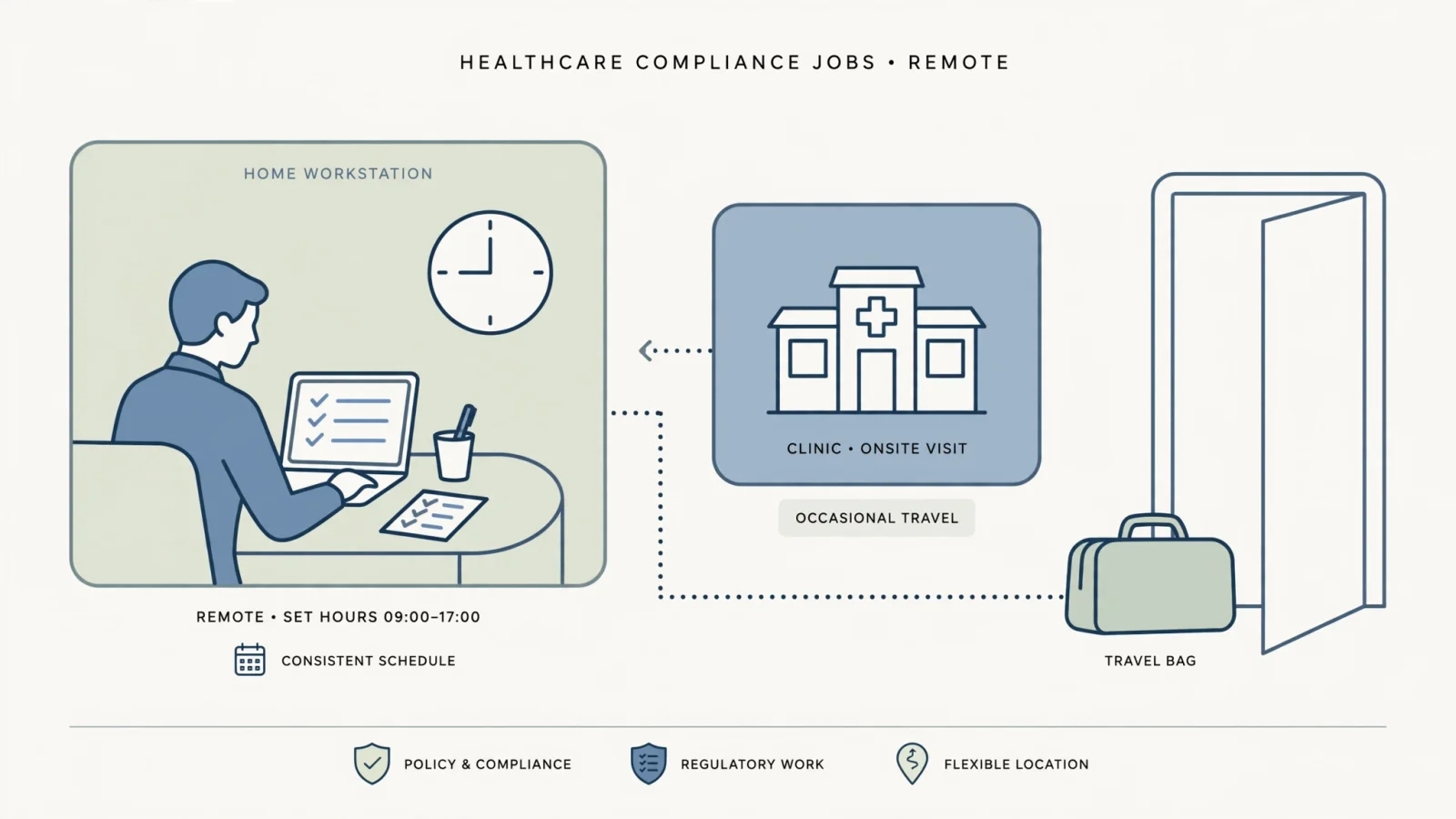
The word "remote" indicates you do not commute to a central office every day, though it rarely guarantees nationwide eligibility, self-selected hours, or a complete lack of travel.
Understanding Travel and State Eligibility
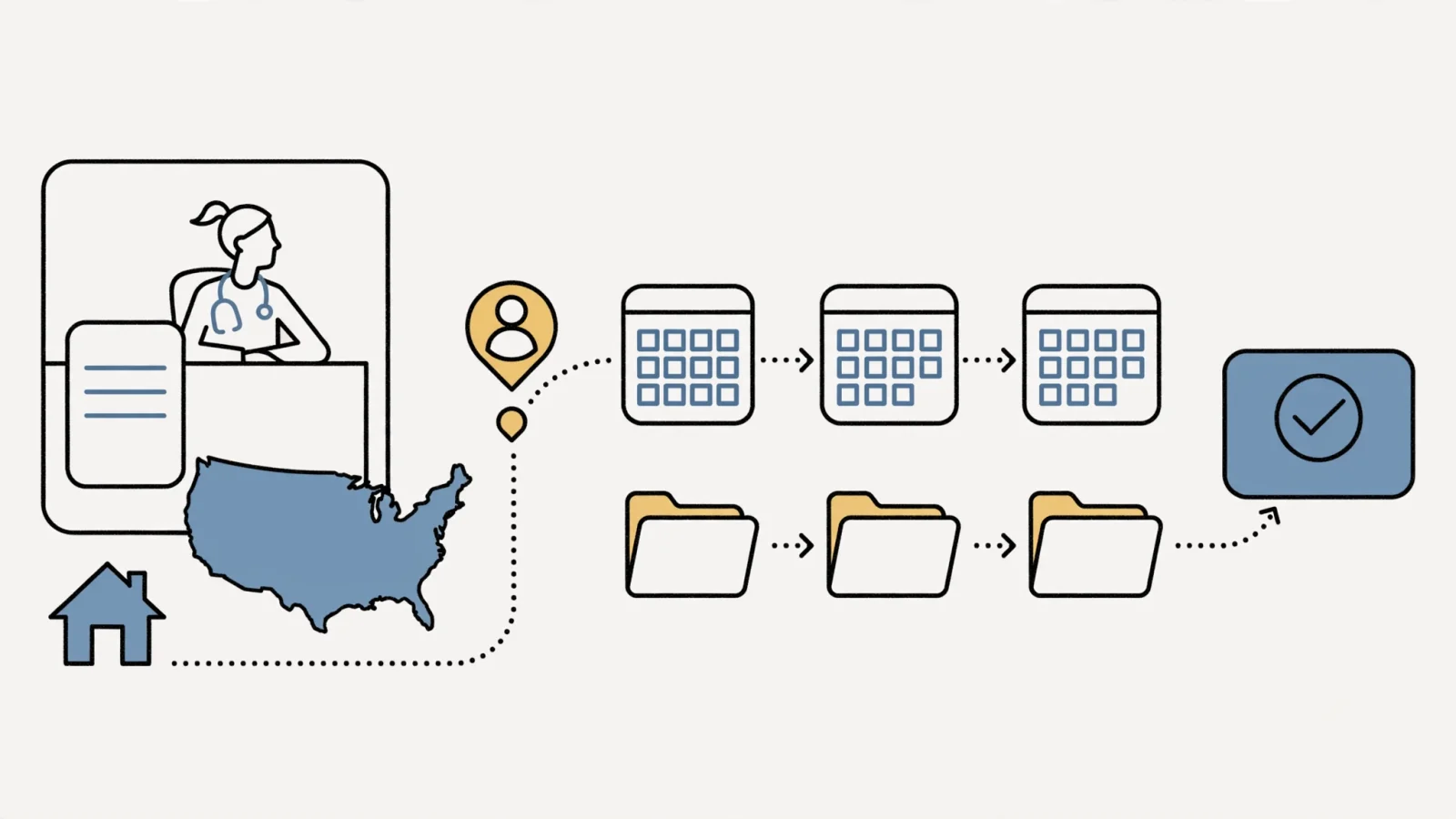
Compliance work generally operates on full-time, standard schedules, though investigations or major audit deadlines often extend those hours. Many roles require travel for training sessions, site inspections, or annual meetings. Current postings confirm these practical limits; one remote role might specifically name Chicago and outline a strict 8 a.m. to 5 p.m. schedule with no travel, while another lists a 0% to 25% travel requirement. A high travel percentage means a quarter of your time could involve visiting physical sites or attending in-person meetings despite the remote label.
Workload Expectations and Home Office Setup
Working from a home office does not automatically equal a low-stress job, as remote compliance professionals manage tight regulatory deadlines, complex data sets, and strict documentation standards. Factoring in the actual workload and expected flexibility provides a more accurate view of the position.
Applicants benefit from reviewing the required time zones and core business hours, alongside asking whether the employer allows schedule flexibility after the initial training period. Peak periods driven by regulatory submission deadlines or internal audit cycles shape the daily routine. Production metrics also shape the workload; coding auditors often face daily chart-review quotas and rigid turnaround targets. Clarifying your level of autonomy regarding corrective actions and home workspace expectations, including provided equipment, dedicated internet speeds, and privacy standards for handling protected health information, can prevent surprises later.
WeekdayDoc adds context to these factors by calculating a work-life or burnout score for listings where sufficient data exists. Incorporating variables like schedule flexibility, administrative burden, and autonomy, this score helps you compare the realistic demands of a remote position.
Evaluating Active Remote Compliance Openings
Evaluating remote healthcare compliance jobs requires looking past the job title and the remote label to compare the actual requirements, compensation, and daily workload.
Verifying Status and Location Limits
Job boards often display listings with expired deadlines alongside those accepting rolling applications, so checking the company's career page can help establish whether a vacancy remains active.
Remote eligibility varies: some jobs are open nationwide, while others restrict hiring to states where the employer already operates for tax purposes. Identifying the compliance workstream helps clarify whether the role focuses on enterprise risk, EHR data validation, or clinical coding. Comparing the required qualifications with your background can also show whether specific software certifications or clinical licenses are mandatory or preferred.
Comparing Duties and Compensation Details
Compensation ranges are easier to compare once you know whether they're annual or hourly and whether the employer adjusts salary based on geographic location. The expected schedule, time zone, and travel requirements also shape the role, especially if it involves quarterly onsite visits. Reporting lines show who receives audit findings and who holds responsibility for implementing corrective actions. Performance metrics, such as record-review quotas or regulatory submission turnaround times, give you a clearer picture of the daily pressure.
Finding a remote role that matches your clinical background, salary requirements, and lifestyle goals relies on accurate information. WeekdayDoc provides a career marketplace designed specifically for healthcare professionals. Browse active job openings, review the available work-life or burnout scores, and compare market salary contexts. Create your account at WeekdayDoc to start evaluating roles that support a sustainable career.