Virtual Patient Sitter Jobs: Pay, Duties & Fit
See what virtual patient sitter jobs involve, what employers pay and require, and how to tell whether “virtual” means work-from-home.
The word "virtual" in a job title typically implies a home office and a morning commute from your bedroom to a desk. However, healthcare support staff exploring virtual patient sitter jobs need to read the fine print, because "virtual" refers to how you observe the patient rather than where you sit. Some of these roles require you to clock in at a hospital monitoring center or report directly to a clinical unit.
At WeekdayDoc, we help healthcare professionals evaluate the lifestyle and financial trade-offs of a role before applying. Deciding whether an observation position fits your career means looking beyond the title at the worksite, shifts, monitoring load, and compensation. Those details help you judge whether a posting offers a sustainable schedule or a high-stress, facility-based shift.
The Mechanics of Virtual Patient Sitter Jobs
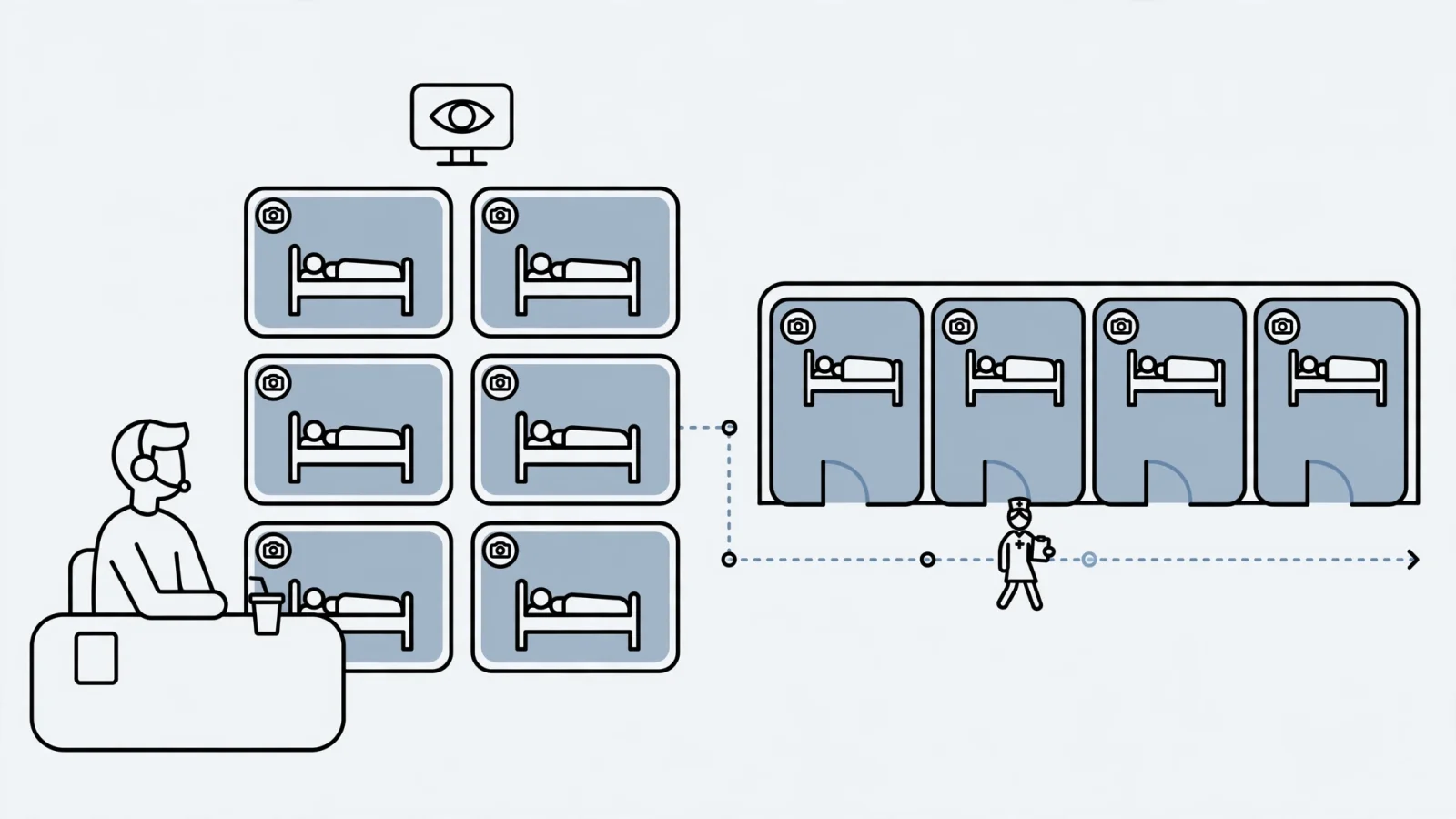
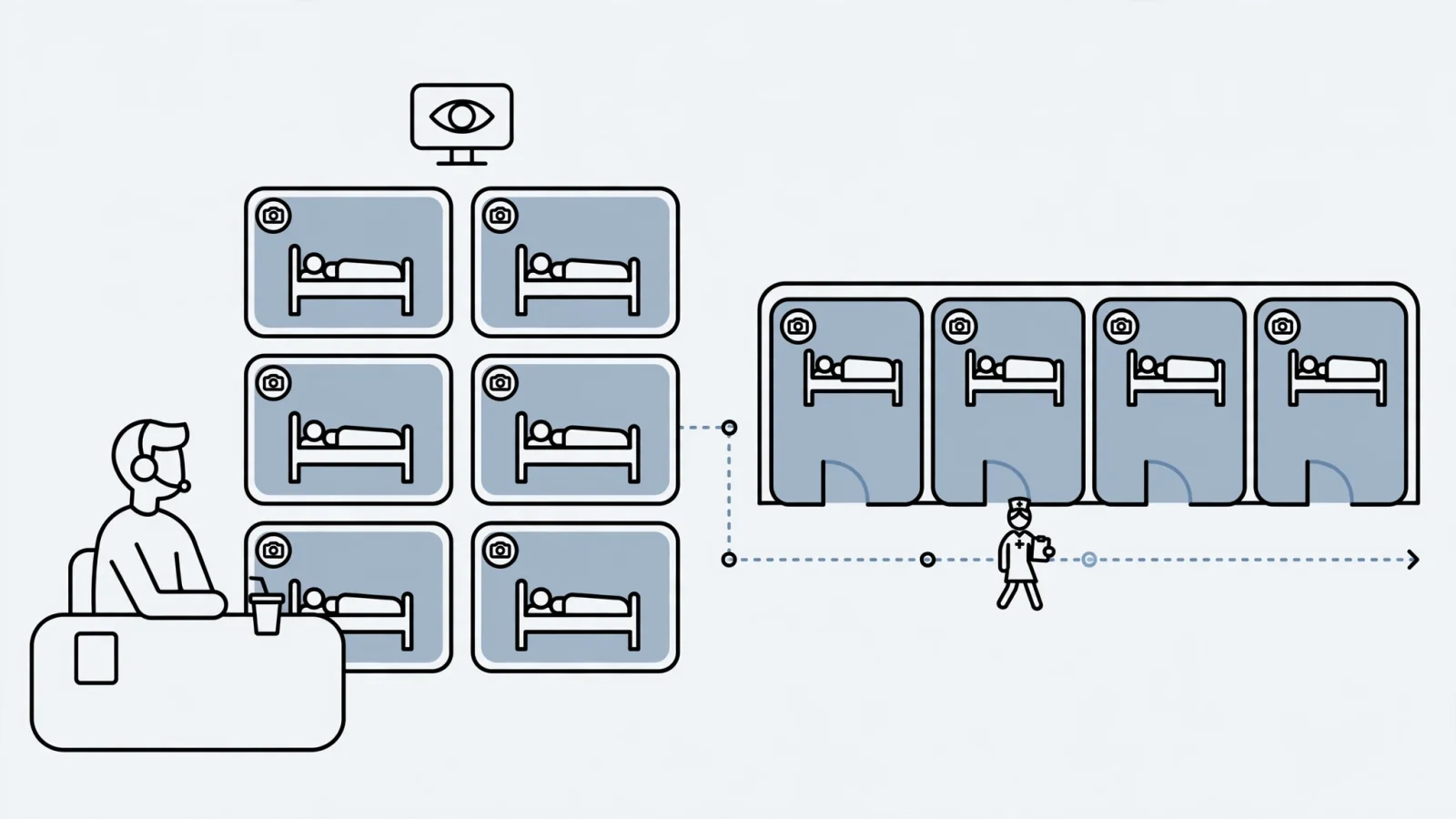
Hospitals employ patient sitters to monitor individuals at risk of falling or other safety concerns. Traditional bedside observation assigns a staff member to remain with the patient. Virtual patient observation offers another approach, using video and two-way audio to let an observer monitor multiple patient rooms from a centralized location.
How remote patient observation works
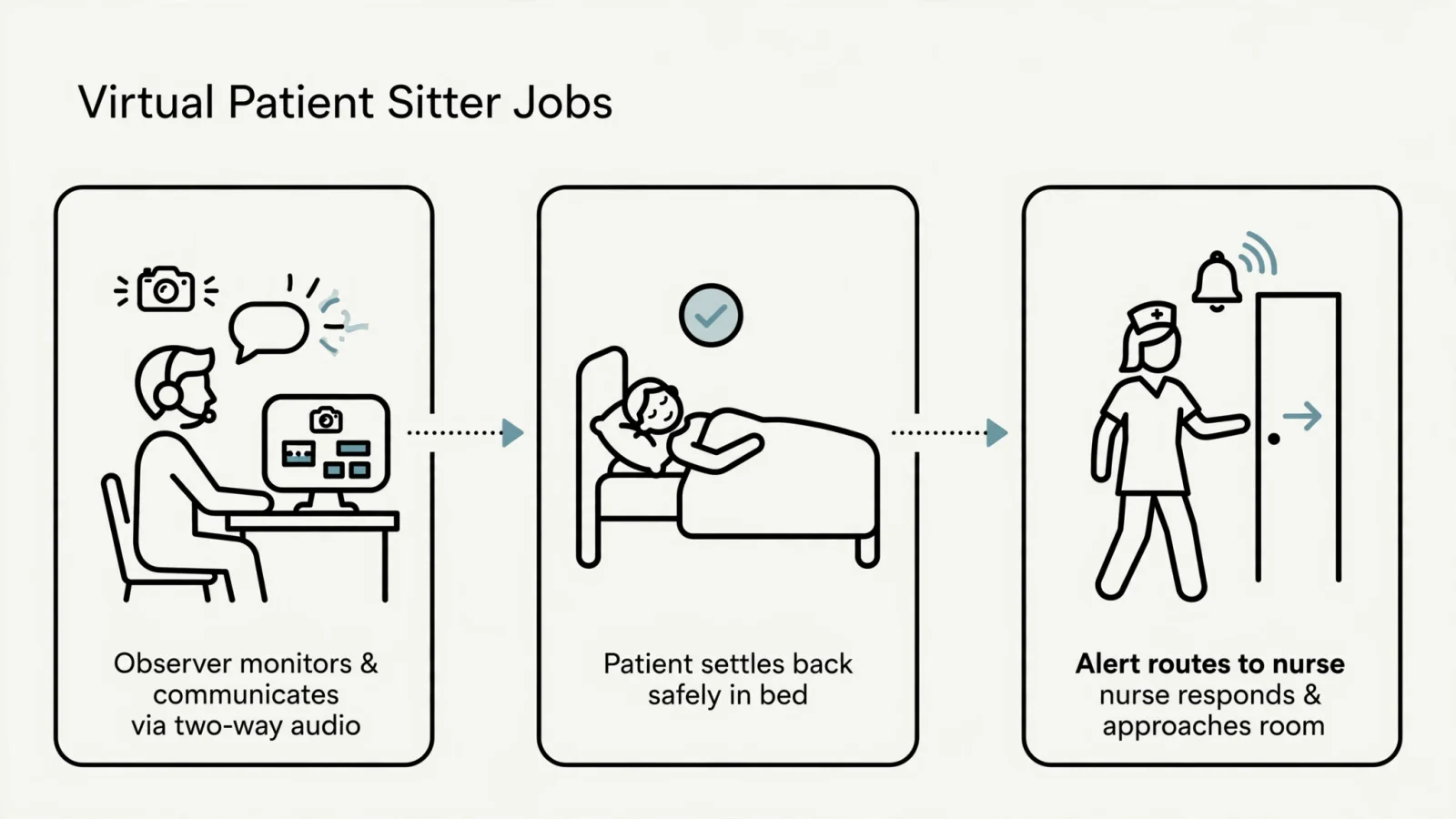
Instead of sitting beside one bed, you monitor multiple camera feeds simultaneously. When a patient attempts to stand without assistance, you use the audio system to provide verbal redirection, then promptly alert nursing staff so they can intervene physically, as described in a Cleveland Clinic Virtual Patient Companion posting.
These patient-safety support roles operate differently from telehealth clinician positions. You do not perform independent diagnosis or dictate treatment plans. The position relies on sustained attention, precise communication, and strict adherence to escalation protocols.
Job titles to include in your search
Employers use several different names for this function. Searching strictly for the term "sitter" limits your options, so broaden your query to include virtual patient observer, virtual patient companion, virtual patient safety associate, telesitter, tele-sitter, and patient observation assistant.
Evaluating these postings requires a practical work-life lens to assess the worksite requirements, shift length, total number of assigned screens, and compensation structure. A job called "telesitter" might still place you in a basement monitoring room for weekend overnight shifts.
Worksite Realities: Facility vs. Home-Based Monitoring
Remote patient observation does not guarantee a home-based job, as employers may require observers to work at a designated facility or clinical unit.
Central monitoring stations and hybrid roles
A recent Cleveland Clinic Careers posting describes a centralized monitoring location in Beachwood, Ohio, where the observer watches multiple patients. The posting provides an example of an on-site role rather than a home-based position.
A Main Line Health posting lists a worksite in Radnor, Pennsylvania, for a dual role combining video-room duties with physical rounds on admitted patients. The role also includes setting up equipment and supporting bedside staff during physical rounds.
Confirm the worksite and any bedside duties
These postings represent different staffing models rather than universal industry rules. Ask whether the position is home-based, facility-based, or hybrid, and what is expected if the video system goes down or an on-site response is needed.
Check the required worksite before scheduling an interview by reviewing the location and physical requirements sections of the job description. Requirements such as lifting or pushing equipment, or responding to alarms, can indicate in-person duties, so ask where those tasks take place.
Daily Duties and Expected Qualifications
Every organization structures its safety protocols differently, so the specific duties assigned to an observer depend on the hospital's software platform and patient acuity.
Observation, redirection, documentation, and handoffs
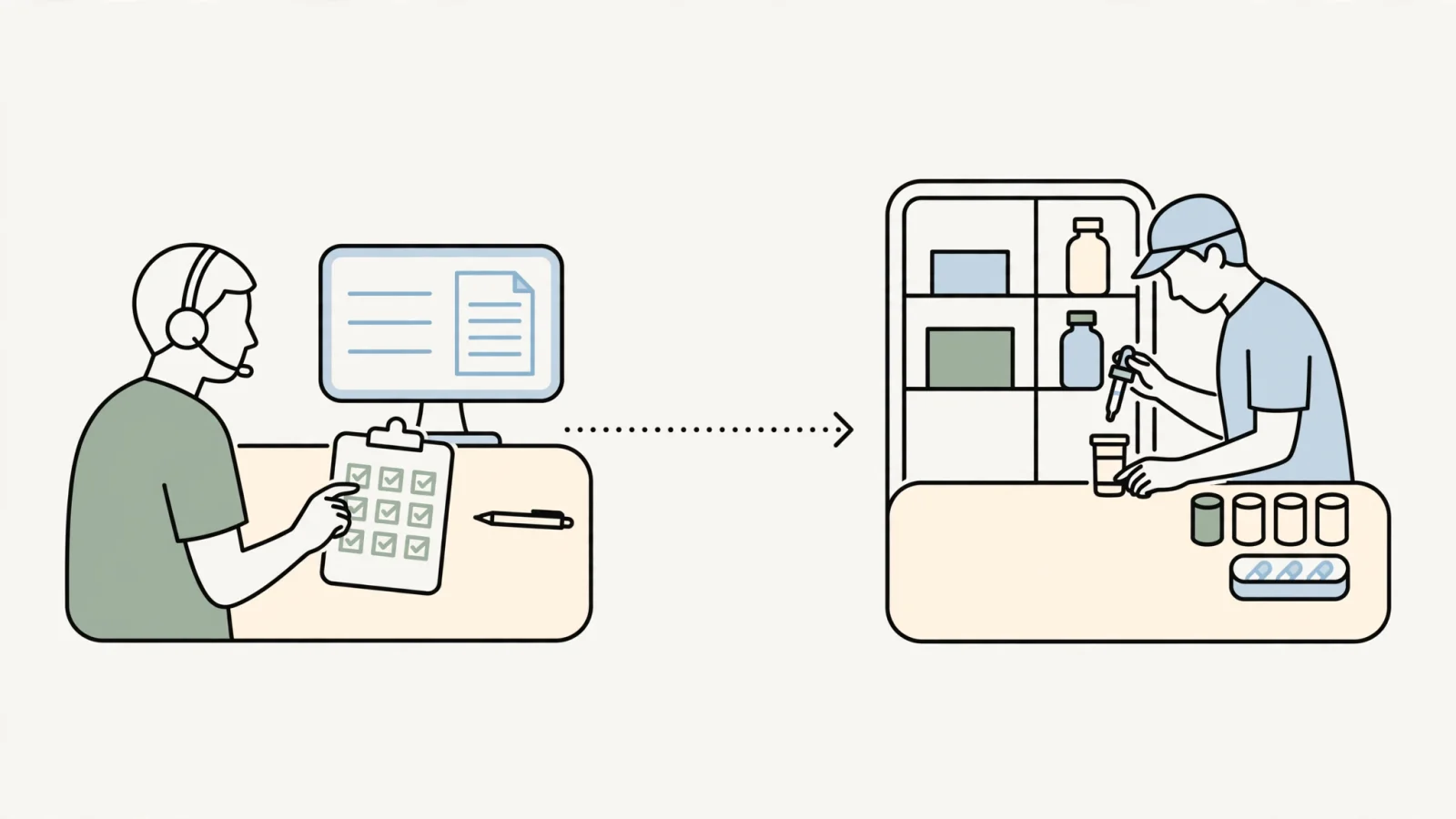
Continuous video observation of one or more patients forms the core expectation of the role. You watch for behavioral changes, signs of distress, or unauthorized attempts to leave the bed. Upon seeing a safety risk, you activate a two-way audio system to ask the patient to stop, and then trigger an alert to the nursing staff.
The University Hospitals listing assigns observers to document observations in the electronic health record (EHR) and use secure communication tools to coordinate with the bedside care team. It also requires employees to protect patient health information, so confidentiality is a condition of employment.
Education, experience, and credentials vary
Candidates looking for patient sitter jobs with no experience can use listings to distinguish required qualifications from preferred experience. For example, the Main Line Health listing requires a high school diploma or equivalent and Basic Life Support (BLS) certification, while related healthcare experience is preferred.
Employers value sustained attention, basic computer proficiency, and the ability to multitask during simultaneous situations. If two patients attempt to leave their beds at the same moment, you have to know which escalation procedure to follow first.
Compensation and Shift Patterns for Virtual Sitters
Advertised rates for observation roles track closely with other unlicensed clinical support positions. The specific compensation depends on the shift pattern, the facility location, and your previous healthcare experience.
Compare advertised rates with the shift
For broader context, the BLS's May 2025 median annual wage estimates put nursing assistants at $42,260 and orderlies at $38,290. Because the figures are for those occupations, compare local postings to understand rates for virtual sitter roles.
| Employer and Title | Advertised Pay and Schedule | Shift Context |
|---|---|---|
| Main Line Health Weekend Virtual Patient Safety Associate | $17.00–$19.00 Saturday and Sunday, 7:00 p.m.–7:00 a.m. | This is a per diem schedule for weekend nights. Candidates should also confirm benefit eligibility. |
Ask about workload, breaks, and predictability
The livability of a job depends on more than the hourly base rate, because nights, weekends, patient load, and break coverage dictate whether a role is sustainable.
Rotating shifts can make consistent sleep harder, while per diem roles may not guarantee weekly hours and may have different benefit-eligibility rules. At WeekdayDoc, our work-life scoring system weights schedule predictability and weekend expectations heavily because those factors directly drive burnout. A $19 hourly rate feels different when you are tracking several patients at four in the morning on a Saturday without a guaranteed relief person for a meal break.
Ask the recruiter whether shift differentials apply to overnight or weekend hours and how they change the base rate.
Questions to Ask Before Accepting an Offer
Job descriptions omit operational details that shape your daily stress, so use the interview to ask focused questions before accepting an offer.
Worksite, responsibilities, patient load, and escalation
Start by clarifying the physical location and the exact scope of the duties.
- Where will you work? Check whether the role is home-based, located at a centralized off-site monitoring station, stationed on a noisy hospital unit, or a mixed rounding role.
- Are your duties screen-only? Ask if the role includes physical rounds, bedside support, equipment setup, or stocking unit supplies.
- How many patients will you observe at once? The Cleveland Clinic posting lists 15 to 20 patients at a time, but that figure applies to its role. Ask for the assignment-specific ratio and how it changes with patient acuity.
- How does escalation work? Discuss the protocol to find out who receives your alerts and what specific communication tools you use. Ask what happens if the camera feed or audio connection fails during your shift.
Schedule, training, pay, breaks, and privacy
Next, review the financial expectations and the schedule requirements.
- What are the exact hours? Ask if shifts are fixed or rotating, and clarify the expectations for weekends, holidays, and mandatory overtime.
- How are breaks covered? Observation remains continuous, so ask if the hospital provides dedicated relief staff to watch the screens while you use the restroom or eat a meal.
- What training do they cover? Ask whether the facility pays for your BLS certification, EHR training, and employer orientation.
- What does the pay range include? Pin down the pay rate for the specific shift being offered, checking for shift differentials, guaranteed weekly hours, per diem status, and benefit eligibility.
- What documentation procedures apply? Discuss expectations for logging events, end-of-shift handoffs, and required privacy and confidentiality training.
Deciding if a Virtual Sitter Role Fits Your Career
A screen-based monitoring job fits specific personality types and life circumstances. You have to weigh the demands of sustained screen attention, precise communication, protocol-driven escalation, and detailed documentation against your personal needs.
Who may find the work a good fit
For some people, these roles can offer an entry point at a major health system and a chance to build internal experience. Nursing students may find per diem or weekend night shifts easier to fit around classes while gaining exposure to hospital protocols and EHR systems. If you prefer highly structured tasks with clear, binary protocols, such as pressing a designated button when a patient attempts to stand, the work offers predictability.
However, if you struggle to maintain focus on static screens for hours at a time, this position may cause fatigue. The job requires sitting still, staying alert during night shifts, and remaining calm when multiple alarms trigger at once.
How it differs from remote clinical practice
Clinicians and advanced practice providers considering a career change need to understand the scope distinction. These unlicensed healthcare-support roles differ from licensed telehealth practice and aren't a clinical alternative for a nurse or physician seeking a break from the bedside.
Those limits matter when considering patient-safety outcomes. Hospitals market these systems as safety upgrades, but monitoring represents only one part of a complex patient-safety process. A 2020 systematic review in the Annals of Internal Medicine evaluated sitters as a patient safety strategy for reducing hospital falls. Across eight studies, researchers found moderate-certainty evidence that interventions including video monitoring reduced sitter use and either did not affect or reduced falls. However, the review found no randomized trials, and every included study had at least one methodological limitation. A virtual sitter can alert the floor but cannot physically catch a falling patient, so patient safety still depends on bedside staff receiving and responding to the alert.
Approach the interview as an opportunity to screen the employer. Ask about the worksite, calculate the true hourly rate based on the shift, and ensure the patient ratio allows you to do the job safely.
WeekdayDoc is the clinician career marketplace built around sustainable work. We make schedule quality, burnout risk, and compensation comparable at the job level so you understand the lifestyle trade-offs of a role. Whether you are looking for remote opportunities, flexible clinical shifts, or tools to benchmark your contract, explore our specialized job board and salary data at WeekdayDoc.com.