Medical Writing Remote Jobs: A Clinician's Guide for 2026
Discover medical writing remote jobs tailored for clinicians. Land your dream role with our expert 2026 guide.
You finish clinic late, open an inbox that still needs attention, and see tomorrow's schedule already packed. The question isn't whether you can keep pushing. It's whether your clinical expertise can support a different kind of work, with fewer interruptions and clearer control over your time.
Medical writing remote jobs can offer that reset, but they aren't an effortless escape from medicine. The market is credential-gated, compensation varies sharply by pathway, and “remote” doesn't automatically mean low stress. Clinicians who approach the transition as a professional repositioning, rather than a casual side project, are more likely to find work that protects both income and recovery time.
Why Clinicians Are Pivoting to Remote Medical Writing
A physician may leave the clinic after the last patient, finish documentation at home, and still carry the emotional residue of a demanding day. An NP may have a full schedule followed by messages, refills, and coordination tasks. A psychologist, pharmacist, or PA may be managing work that has expanded far beyond the appointment itself. In each case, the problem isn't a lack of commitment. It's a work design that makes uninterrupted recovery difficult.
Burnout is a workforce-level risk, not an isolated complaint. A systematic review and meta-analysis found that burnout affected 52% of health care workers overall during the COVID-19 era, with rates of 66% among nurses and physicians. Those findings are reported in the systematic review of health care worker burnout. For clinicians considering medical writing, that context matters because the transition often begins with a practical question: how can I continue using clinical judgment without preserving every feature of clinical overload?
Remote medical writing changes the work pattern. Instead of moving from exam room to inbox to urgent interruption, the writer usually works against defined deliverables, review cycles, and deadlines. That structure brings its own pressure, but it can remove the constant task-switching that makes clinical days feel unfinishable.
Telework can support sustainability
The evidence doesn't suggest that telework solves burnout by itself. It does show a meaningful association between telework access and better workforce sustainability. In a six-year Veterans Health Administration survey, workers who teleworked most of the time had lower burnout than workers who didn't telework, with reported ranges of 26.2% to 37.7% versus 30.5% to 40.0% across 2018 through 2022. The difference was statistically significant, as documented in the Veterans Health Administration telework and burnout study.
A review of practitioners who could work from home also found reports of higher job satisfaction, better work-life balance, a more sustainable workload, and greater likelihood of staying with the organization long term. The review of working from home and clinician sustainability supports a cautious conclusion: remote work can improve the conditions around professional practice when employers design it well.
Practical rule: Treat remote medical writing as a career reset, not a fantasy escape. The work still demands precision, accountability, and deadlines, but it may let you exchange clinical interruption for controlled production.
The Main Remote Medical Writing Pathways
Remote medical writing is a group of careers, not one job title. The deliverables, review standards, client relationships, and entry requirements differ across regulatory writing, medical education, health communication, publication planning, and freelance content.
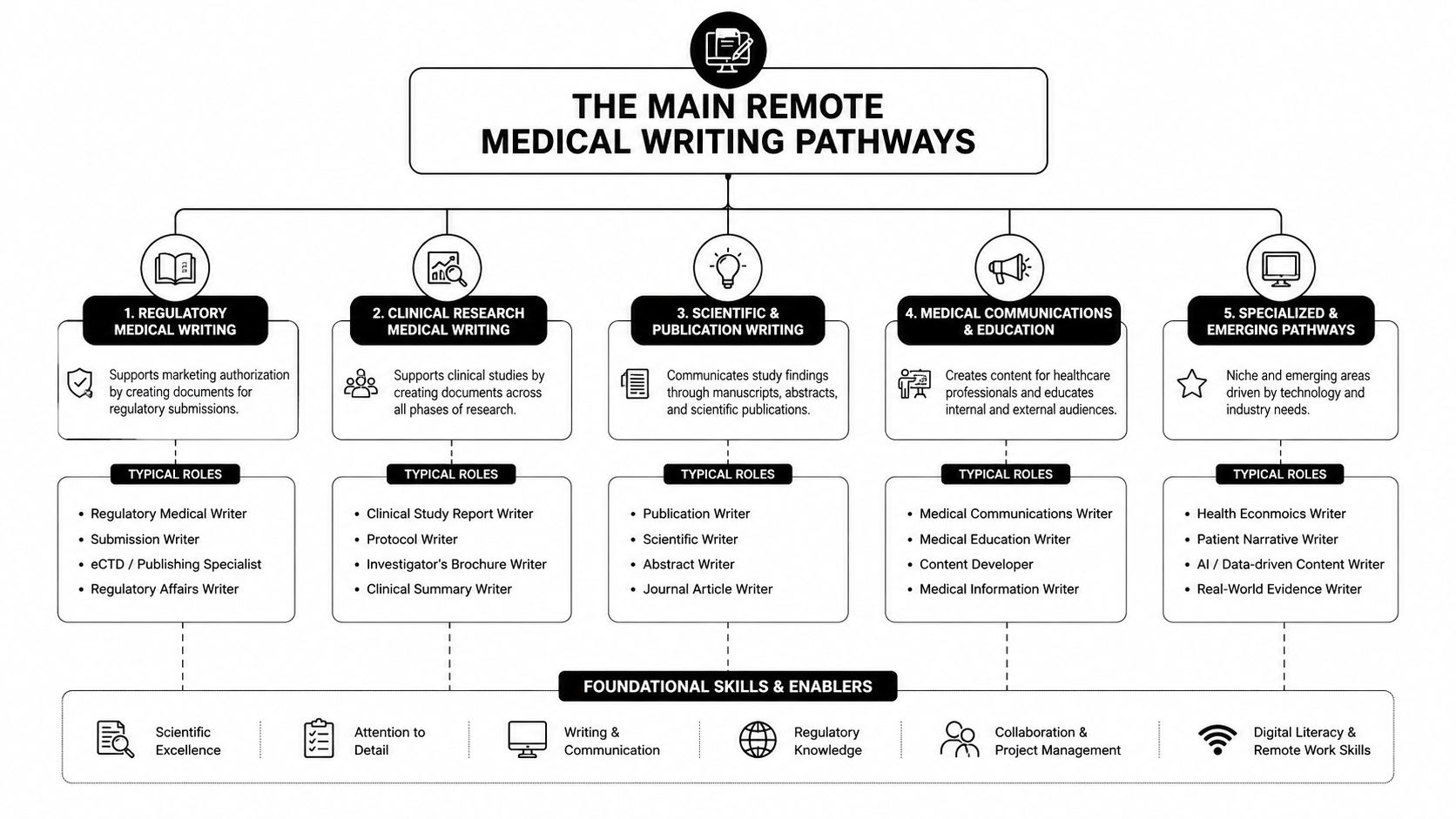
Regulatory writing
Regulatory writers prepare documents that must align with submission requirements, clinical evidence, and strict quality controls. Clinical degrees help, but employers often want prior regulatory or medical communications experience. A physician or pharmacist with clinical trial exposure, protocol work, safety reporting, or guideline experience may have a stronger bridge than a clinician whose writing background is limited to chart notes.
Medical education and publications
Medical education can include slide decks, speaker materials, advisory board content, and continuing medical education deliverables. Publication planning may involve manuscripts, abstracts, posters, and communication plans. These pathways can suit clinicians who've contributed to research, taught trainees, written guidelines, or presented at professional meetings.
The market remains credential-gated. Current postings often request 3 to 5 or more years of medical writing or medical communications agency experience, and some prefer advanced degrees such as MD, PharmD, RN, NP, PA, or PhD, according to the current medical writer job requirements. That means a clinical doctorate can establish subject-matter credibility, but it doesn't automatically replace writing experience.
Health communication and freelance content
Health communication includes patient education, disease awareness, public-facing content, and materials for educated or nonclinical audiences. Freelance medical content may be more accessible to a clinician making a direct transition, especially when the portfolio demonstrates accurate translation of complex information into readable language.
Employers are also placing greater emphasis on disease-area expertise. Recent listings show preferences for areas such as hematology and oncology, neurology, and immunology. If your practice background aligns with one of those specialties, make it prominent rather than burying it in a long clinical CV.
Fit test: If a posting requires agency experience you don't have, don't assume your clinical title will overcome that gap. Target roles where your specialty knowledge, teaching, research, or patient communication directly maps to the deliverables.
Remote formats now include fully remote employment, hybrid-eligible roles, and contract or freelance arrangements. Many positions also expect comfort with cloud collaboration tools, virtual medical education formats, and deadline-heavy workflows. Review physician job requirements before applying, then separate requirements you already meet from those you'll need to prove through samples or bridge work.
What Remote Medical Writers Actually Earn
Salary transparency should come before a large application campaign. Independent salary data place U.S. remote medical writer compensation around $80,364 annually, while broader U.S. medical writer compensation is reported at $111,322, illustrating a substantial remote-versus-total-market gap in the available datasets. The remote medical writer salary data should be treated as a market reference, not a promise for every specialty or employer.
Another dataset reports an average base pay of $82,750 per year, a common range of $71,500 to $95,250, and 1,175 anonymous salary submissions in its remote medical writer data. That signal supports a practical baseline target of $70,000 to $90,000 for many U.S. remote searches, with higher compensation justified when the role involves regulatory writing, specialty therapeutics, or complex deliverables. See the remote medical writer compensation data when benchmarking a specific offer.
| Role Type | Typical Range | Upper Quartile Triggers |
|---|---|---|
| General remote medical writing | $70,000 to $90,000 baseline target | Strong portfolio, independent project ownership, specialized clinical knowledge |
| Regulatory or high-complexity writing | Above the general baseline when justified by scope | Regulatory experience, specialty therapeutics, submission-critical deliverables |
| Broader U.S. medical writer market | $111,322 reported average | Total-market roles, specialized experience, and responsibilities beyond remote-only datasets |
The comparison is useful because clinicians often anchor on their existing clinical compensation and conclude that writing is automatically underpaid. A better approach is to compare scope, schedule control, benefits, call exposure, and long-term sustainability, not base salary alone.
How to set your target
Use the baseline band to screen roles, not to undersell yourself. A clinician moving directly into writing may need to accept a lower initial target than an experienced agency writer, while someone bringing regulatory expertise or a highly sought specialty may have grounds to negotiate toward the upper end.
Don't accept vague promises that specialized work will be “priced later.” Ask what deliverables define the role, who owns quality review, how deadlines are set, and whether evening or weekend availability is expected.
Building a Portfolio and Resume That Gets Interviews
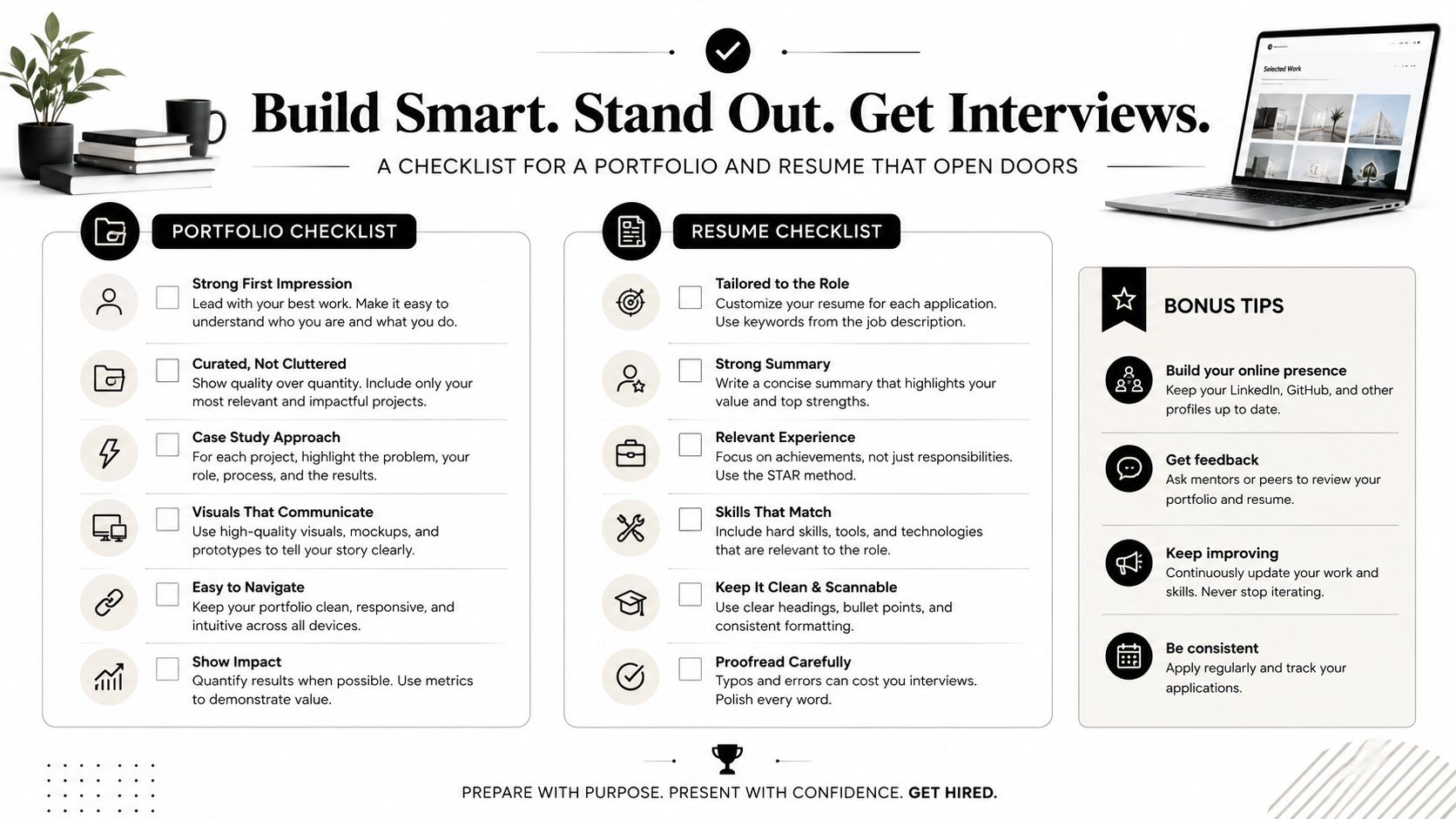
Clinical expertise is valuable, but hiring managers can't evaluate it from a list of procedures, clinic sessions, or diagnoses alone. They need evidence that you can produce clean, audience-appropriate writing under review.
Start with three samples that show range. A physician might create a concise regulatory evidence summary, a CME-style slide deck with speaker notes, and a patient education article. A pharmacist could build a medication counseling piece, a literature synthesis, and a formulary-focused briefing. An NP or PA might produce a clinical pathway summary, a patient-facing explainer, and a disease-state education module. A psychologist can demonstrate expertise through psychoeducation, treatment evidence summaries, and clinician-facing educational content.
Build samples that answer hiring questions
Each sample should make its intended audience obvious. Label whether it's for a patient, clinician, regulator, payer, or professional education audience. Include references where appropriate, explain your role if the work is based on a real project, and remove protected health information.
A portfolio doesn't need to be elaborate. A well-organized PDF or simple professional page can work if it lets a reviewer quickly see accuracy, structure, tone, and revision discipline. For presentation ideas, review these actionable portfolio examples for writers, then adapt the format to medical and scientific audiences.
Rebuild the resume around writing evidence
Your clinical CV probably leads with appointments, training, and procedures. A writing-focused resume should lead with communication outcomes and evidence of editorial judgment.
- Publication history: List manuscripts, abstracts, posters, book chapters, and guideline contributions.
- Education work: Include lectures, CME development, patient materials, trainee teaching, and committee presentations.
- Evidence synthesis: Highlight literature reviews, protocol development, quality improvement reports, and clinical pathways.
- Audience translation: Show where you converted complex information for patients, clinicians, administrators, or interdisciplinary teams.
- Review experience: Mention peer review, editorial review, compliance review, and repeated revision under deadline.
A physician with no formal writing title can still position a guideline project as evidence synthesis and a patient handout as audience-specific health communication. A pharmacist who has written formulary documents can frame that work as concise, evidence-based medical communication. Use C.V. guidance for doctors to identify clinical material worth translating into a writing resume.
Hiring signal: A polished sample that matches the employer's audience often carries more weight than a long list of credentials with no visible writing output.
Where to Find Burnout-Friendly Remote Medical Writing Roles
Generic job searches return remote roles, but they rarely reveal whether “flexible” means protected weekdays or work that follows you home. Search by deliverable and schedule, not by the word remote alone.
Begin with targeted terms such as regulatory medical writer, medical communications writer, publication writer, medical education writer, clinical content writer, and scientific editor. Add your specialty when it improves relevance, such as oncology medical writer or neurology medical communications. Then inspect the posting for employment type, review structure, expected response times, and meeting patterns.
Read schedule language literally
A posting may say remote while expecting availability across multiple time zones, rapid responses during launches, or frequent evening meetings. Look for clues:
- Call and weekend wording: Search for “on call,” “after-hours,” “weekend support,” “urgent requests,” and “launch coverage.”
- Deadline language: “Fast-paced” and “multiple competing priorities” aren't automatic deal breakers, but ask how priorities are reset when new work arrives.
- Meeting expectations: Ask whether recurring meetings occur outside your preferred workday.
- Contract boundaries: Confirm whether a contractor is paid for revisions, meetings, research, and administrative work, or only final copy.
- Manager access: Find out how feedback is delivered and who makes the final decision when reviewers disagree.
WeekdayDoc is one option for clinicians who want a more targeted search. Its listings include remote, hybrid, and in-person opportunities with filters for role, specialty, and work style, along with explicit “No Call” and “No Weekends” markers and salary information. You can also review curated remote medical writing job categories rather than treating every remote listing as equally compatible with recovery time.
Use outreach to expose hidden requirements
A short message to a hiring manager can clarify fit before you invest in an application:
“My clinical background is in neurology, and I've developed clinician education materials and patient-facing resources. Does this role require prior agency employment, or would a specialty clinician with a portfolio be considered?”
That question surfaces the credential gate without apologizing for your background. For contract roles, ask whether successful freelancers are considered for longer-term work, but don't assume contract-to-hire is guaranteed.
Negotiating Schedule Control and Long-Term Financial Goals
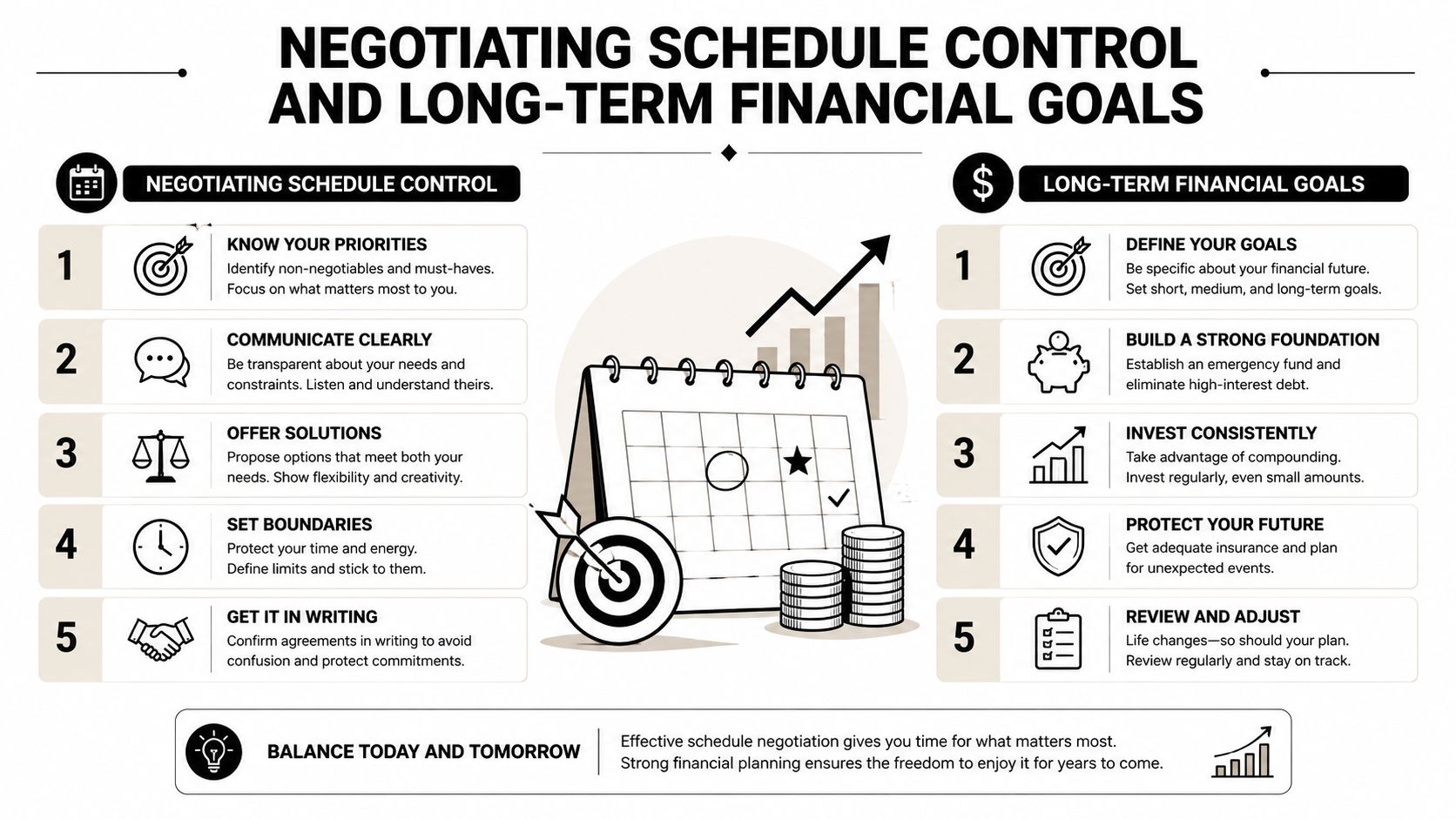
A remote offer is only sustainable if the schedule is defined. Base pay matters, but so do call expectations, weekend availability, meeting load, revision limits, and the employer's process for urgent work.
For VA physicians, the relationship between telework access and burnout was especially clear. Physicians who weren't approved to telework had 57% higher adjusted odds of burnout than physicians working full-time remotely, while raw burnout rates were 43% versus 33% overall. Psychiatry specialists showed the same pattern, 52% versus 43%, according to the VA physician telework and burnout findings.
That evidence doesn't prove that every remote writing role will reduce burnout. It does support treating schedule control as a legitimate employment condition rather than a lifestyle preference.
Negotiate the operating rules
Ask for terms in plain language:
- No-call expectation: “Please confirm that this position has no clinical call, after-hours coverage, or weekend response requirement.”
- Weekday boundaries: “My availability is limited to agreed weekday hours. How does the team handle urgent requests outside that window?”
- Deliverable scope: “How many review rounds are included, and who approves changes that expand the original assignment?”
- Workload visibility: “How are deadlines prioritized when several projects become urgent at the same time?”
- Meeting protection: “Which meetings are recurring, and are any scheduled outside the standard workday?”
Put the answers in writing. A friendly interview conversation won't protect you if the offer letter defines the job broadly.
The financial case for a sustainable role also deserves attention. A remote position with predictable weekdays and low commuting overhead may support consistent saving more effectively than a higher-paying clinical role that repeatedly disrupts your ability to work, rest, or plan. For clinicians pursuing FIRE, the relevant calculation includes income, benefits, taxes, workload, and how reliably you can maintain the job.
Use a structured job offer evaluation framework, then compare the offer against your personal floor for income and your nonnegotiable limits for time. Weekday-only work isn't automatically healthy, but unclear availability is a predictable source of boundary erosion.
If you're evaluating medical writing remote jobs, use WeekdayDoc to compare curated remote and weekday-oriented opportunities, review salary information, and identify listings with explicit schedule protections. Visit WeekdayDoc to search for roles that fit your specialty, work style, and long-term financial goals.