Explore in demand medical jobs: Top Burnout-Friendly Roles & Salaries
Discover in demand medical jobs and learn which clinician roles offer burnout-friendly schedules, competitive salaries, and remote options.
The traditional path in medicine often glorifies long hours, overnight calls, and weekend shifts as badges of honor. But for a growing number of clinicians, this model is a direct route to burnout, compromising both personal well-being and patient care. The good news is that the healthcare landscape is evolving, creating a new class of in demand medical jobs that prioritize work-life balance without sacrificing clinical impact or financial stability.
This shift is driven by significant growth in telehealth, corporate wellness initiatives, and digital health technologies. These advancements have opened doors to roles with more predictable schedules, minimal-to-no call responsibilities, and flexible work environments, including fully remote and hybrid options. For the MD, DO, NP, PA, or psychologist ready to reclaim their personal time, these opportunities represent a sustainable future in medicine. While certain roles offer inherent advantages, understanding broader strategies for avoiding burnout at work is key to a truly fulfilling medical career.
This guide moves beyond generic advice and provides a practical roadmap. We have curated 10 of the most sought-after, burnout-friendly roles available today. For each position, we will detail demand trends, typical settings, salary expectations, and concrete steps for making a successful transition. Let's explore how you can leverage your clinical expertise in a career that values both your professional skills and your life outside of medicine.
1. Telehealth Physician (Primary Care)
The rise of digital health has solidified the Telehealth Physician as one of the most in demand medical jobs for clinicians prioritizing work-life balance. This role involves providing virtual primary care services, including consultations, chronic disease management, and preventive care, entirely through digital platforms. The primary appeal lies in its flexibility, the elimination of a daily commute, and the ability to work from nearly anywhere, offering a significant departure from traditional, in-person clinical settings.
Demand and Growth Outlook
The demand for remote primary care physicians skyrocketed post-2020 and continues to grow. States with progressive telehealth parity laws, such as California, Texas, and New York, often present the most opportunities. Companies like Teladoc Health, MDLive, and Ro are constantly expanding their networks to meet patient demand for convenient access to care. This sustained growth makes telehealth a stable and future-proof career path.
Who This Role Suits Best
This role is ideal for MDs and DOs in Family Medicine, Internal Medicine, or Pediatrics seeking to escape the physical and administrative burdens of a traditional clinic. It also attracts clinicians nearing retirement who wish to continue practicing with a reduced workload, or those pursuing financial independence (FIRE) who need a flexible income stream.
Key Transition Steps
Transitioning into a telehealth role requires careful contract negotiation to protect your time and well-being.
- Verify No-Call Guarantees: Ensure your contract explicitly states no on-call responsibilities.
- Confirm Patient Panel Sizes: Ask for the maximum number of patients you will be assigned to prevent overload.
- Negotiate Response Times: Aim for a 24-hour window for responding to asynchronous patient messages.
- Clarify Scheduling Flexibility: Confirm advance notice requirements for schedule changes.
Pro Tip: When evaluating telehealth opportunities, ensure the benefits package, including health insurance and retirement contributions, is equitable to what is offered for in-person roles.
At WeekdayDoc, you can easily find and compare these types of roles. Our platform allows you to filter specifically for remote, no-call positions and provides a Burnout-Friendly Score to help you identify the best-fit opportunities. Learn more about telehealth physician jobs and see how our tools can streamline your search.
2. Occupational Health Physician
For clinicians seeking a predictable schedule outside of traditional patient care, the role of an Occupational Health Physician is one of the most stable in demand medical jobs. This specialty focuses on the health, safety, and wellness of employees in a corporate setting. Responsibilities include managing workplace injuries, conducting pre-employment physicals, developing wellness programs, and ensuring regulatory compliance, all within a structured corporate environment that typically operates on a standard Monday to Friday schedule.
Demand and Growth Outlook
The demand for occupational health physicians is consistently strong, particularly within large corporations committed to employee well-being and risk management. Companies in manufacturing, technology, and energy, such as Intel, DuPont, and Chevron, often have robust in-house health departments. Growth is driven by an increasing focus on preventative care and mental health in the workplace, making this a resilient and expanding field for physicians.
Who This Role Suits Best
This role is a perfect fit for MDs or DOs, especially those board-certified in Occupational Medicine, Preventive Medicine, or Family Medicine, who desire a departure from the high-stress, fee-for-service clinical model. It appeals to physicians who enjoy a mix of clinical work and administrative strategy and who value a predictable, no-call, no-weekend work life. The corporate setting offers a unique opportunity to impact population health on a smaller, more focused scale.
Key Transition Steps
Transitioning into a corporate occupational health role requires a focus on aligning with business hours and culture.
- Target Large Corporations: Focus your search on companies with 500+ employees, as they are most likely to have dedicated health departments.
- Negotiate No-Call Clauses: Ensure your employment contract explicitly states no on-call or after-hours responsibilities.
- Clarify Clinical vs. Admin Time: Request a clear breakdown of your schedule to understand the balance between patient care and administrative or meeting obligations.
- Prioritize Wellness Culture: Seek employers with established wellness and return-to-work programs, as this indicates a healthier work environment.
Pro Tip: Board certification in Occupational Medicine can significantly increase your earning potential and desirability as a candidate. If you're not certified, highlight any experience in public health, preventative medicine, or corporate wellness.
At WeekdayDoc, our platform is designed to help you find these unique corporate roles. You can filter for in-person or hybrid positions with guaranteed no-call schedules and use our Burnout-Friendly Score to assess the work-life balance of each opportunity. Learn more about part-time physician jobs and see how you can secure a role that fits your lifestyle.
3. Telehealth Psychiatrist
The urgent need for accessible mental healthcare has positioned the Telehealth Psychiatrist as one of the most significant and in demand medical jobs today. This role involves providing remote psychiatric services, such as evaluations, medication management, and therapy, through secure video platforms. The appeal is rooted in the high demand for psychiatric care, the ability to reach underserved populations, and the professional autonomy that comes with a virtual practice.

Demand and Growth Outlook
The demand for virtual psychiatrists continues to surge, driven by a national shortage of mental health professionals and growing public acceptance of telehealth. If you're considering this career path, understanding common patient needs, such as diagnosing conditions like ADHD, is crucial. For more details on adult diagnosis, you can explore resources on finding a psychiatrist for ADHD. Major platforms like Doctor on Demand, Talkspace, and Ginger are aggressively recruiting psychiatrists to expand their networks and reduce patient wait times, ensuring a stable and impactful career.
Who This Role Suits Best
This role is perfectly suited for MDs and DOs specializing in Psychiatry who desire a more controlled and flexible work environment than traditional inpatient or outpatient settings. It also attracts clinical psychologists and psychiatric NPs/PAs who provide therapy and medication management. The model offers an excellent path for clinicians seeking to build a private practice with lower overhead or transition to part-time work without sacrificing patient impact.
Key Transition Steps
Entering telehealth psychiatry requires setting clear boundaries to ensure both patient safety and your own well-being.
- Verify Crisis Protocols: Confirm the platform has a clear, established protocol for handling psychiatric emergencies and patient crises.
- Negotiate Patient Panel Size: Aim for a manageable panel (e.g., 200-300 active patients for full-time) to ensure quality care.
- Clarify Malpractice Coverage: Ensure your malpractice insurance explicitly covers multi-state telehealth practice.
- Secure Ramp-Up Support: Negotiate a guaranteed minimum income for the initial months as you build your patient panel.
Pro Tip: When joining a telehealth platform, ask about the administrative and EMR support provided. A streamlined system for charting, e-prescribing, and billing can significantly reduce your administrative workload and prevent burnout.
WeekdayDoc simplifies the search for high-quality remote psychiatry roles. Our platform features filters for no-call and schedule flexibility, while our Burnout-Friendly Score helps you identify employers committed to clinician well-being. Learn more about remote psychiatry jobs and find a position that aligns with your professional and personal goals.
4. Clinical Psychologist (Telehealth)
The destigmatization of mental health and the rise of virtual care have positioned the Telehealth Clinical Psychologist as one of the most in demand medical jobs for mental health professionals. This role involves providing therapy, assessments, and mental health counseling through secure digital platforms. Its appeal is rooted in the high degree of schedule control, the ability to work from a private home office, and the elimination of on-call responsibilities, creating a sustainable and balanced career path.
Demand and Growth Outlook
The demand for licensed psychologists who offer virtual services is immense and continues to outpace supply. Platforms like BetterHelp and Talkspace are constantly recruiting, while private practices have successfully transitioned to fully remote models. States with high population density and progressive mental health coverage, such as California, New York, and Illinois, show particularly strong growth. The ongoing mental health crisis ensures that telehealth psychology will remain a high-growth field for the foreseeable future.
Who This Role Suits Best
This role is ideal for licensed Clinical Psychologists (PhD or PsyD) seeking to escape the demands of community mental health centers or large hospital systems. It offers a viable path for clinicians wanting to build a private practice without the overhead of a physical office, as well as those who desire a flexible schedule to accommodate family life or other professional interests.
Key Transition Steps
Successfully transitioning to a telehealth practice involves setting up a professional and secure virtual environment.
- Invest in HIPAA-Compliant Tech: Choose a secure and reliable telehealth platform like Doxy.me or SimplePractice.
- Establish Firm Boundaries: Clearly define your availability and set strict expectations for out-of-session communication.
- Diversify Your Client Base: Combine work on a large platform with private pay clients to create multiple income streams.
- Focus on a Niche: Develop a specialty in a high-demand area like trauma (PTSD), OCD, or couples therapy to attract clients and command higher rates.
Pro Tip: When starting a remote practice, consider joining a virtual group practice initially. This provides built-in administrative support, peer consultation, and a steady stream of referrals, reducing the initial burden of client acquisition.
At WeekdayDoc, we help psychologists find remote roles that respect their boundaries. Our platform features opportunities with clearly defined schedules and no on-call duties, and our Burnout-Friendly Score helps you quickly identify positions that promote professional well-being. Learn more about telehealth psychologist jobs and find a role that fits your life.
5. Physician Assistant (Telehealth - Chronic Disease)
For Physician Assistants (PAs) seeking predictable, high-impact roles, telehealth-based chronic disease management has emerged as one of the most stable in demand medical jobs. This position involves managing patients with conditions like diabetes, hypertension, and COPD through virtual platforms, often using protocol-driven care models. The focus on structured, asynchronous communication and scheduled virtual visits creates a highly predictable work environment, free from the urgent demands of acute care.
Demand and Growth Outlook
The demand for PAs in telehealth chronic disease management is expanding rapidly as healthcare systems prioritize preventative care and value-based outcomes. Companies specializing in digital health, such as Livongo (part of Teladoc Health) and Omada Health, are leading this trend by hiring PAs to scale their programs. States with large aging populations and high incidences of chronic illness, including Florida, Arizona, and Texas, show particularly strong growth and offer numerous remote opportunities.
Who This Role Suits Best
This role is perfectly suited for Physician Assistants who excel in patient education, data monitoring, and guideline-based medicine. It's a great fit for PAs looking for a departure from the high-stress, unpredictable nature of emergency medicine or inpatient care. The predictable scheduling also makes it an excellent choice for those balancing family responsibilities or pursuing other interests outside of medicine.
Key Transition Steps
Successfully moving into this specialized telehealth role requires attention to specific contractual details.
- Verify Physician Collaboration: Clarify the level of physician oversight and ensure it aligns with your state's requirements and your preference for autonomy.
- Negotiate Patient Panel Size: Ask for clear limits on your patient panel to ensure you can provide high-quality care without being overwhelmed.
- Seek No-Call Guarantees: Confirm that your contract explicitly states no on-call duties, protecting your evenings and weekends.
- Prioritize Strong Training: Inquire about the company's onboarding and training processes for their specific platform and care protocols.
Pro Tip: When evaluating telehealth PA roles, ensure the scope of practice is clearly defined and that you are provided with robust administrative and technical support to focus on clinical tasks.
At WeekdayDoc, our platform helps PAs find these specialized telehealth positions. You can use our advanced filters to search for remote, no-call roles focused on chronic disease management and review our Burnout-Friendly Score to identify employers committed to clinician well-being. Find PA telehealth jobs and explore opportunities that fit your life.
6. Physician Medical Director (Corporate Wellness & Telehealth)
For physicians aiming to blend clinical expertise with strategic leadership, the Medical Director role in corporate wellness or telehealth offers a compelling career path. This executive-adjacent position involves providing clinical oversight, shaping healthcare strategy, and ensuring quality of care for organizations like Teladoc Health, Ro, or large self-insured corporations. It’s one of the most dynamic in demand medical jobs because it moves a clinician from direct patient care into a high-impact role shaping health outcomes on a larger scale, often with significant schedule flexibility and compensation.
Demand and Growth Outlook
The demand for physician leaders is expanding rapidly, especially within the digital health and corporate wellness sectors. As companies like Amazon and CVS/Aetna continue to invest heavily in integrated health initiatives, the need for experienced clinical strategists grows. Opportunities are concentrated in tech hubs and major metropolitan areas, but many roles now offer remote or hybrid arrangements, widening the geographic pool. Venture-backed telehealth startups are also a major source of these roles, creating a competitive market for physicians with business acumen.
Who This Role Suits Best
This role is a perfect fit for MDs and DOs who possess strong leadership skills and are interested in healthcare administration, policy, and business strategy. Physicians with an MBA or equivalent management experience are particularly well-suited. It is an ideal exit ramp for clinicians experiencing burnout from direct patient care but who want to remain influential in the healthcare field, leveraging their deep clinical knowledge to guide organizational decisions.
Key Transition Steps
Transitioning into a medical director role requires a strategic shift from clinical practice to executive leadership.
- Clarify Clinical vs. Admin Time: Negotiate a clear breakdown of your responsibilities, aiming for 10-20% maximum clinical time.
- Define Decision-Making Authority: Ensure your contract explicitly outlines your scope of authority in clinical governance and strategy.
- Negotiate Equity: For roles at startups or venture-backed companies, negotiating for equity or stock options is a key part of the compensation package.
- Align on Work-Life Balance: Discuss expectations around after-hours availability and travel to ensure the role meets your personal goals.
Pro Tip: When evaluating these opportunities, look beyond the salary and consider the company's mission, culture, and long-term vision. A strong alignment is crucial for job satisfaction in a leadership role.
At WeekdayDoc, our platform helps you identify these unique leadership positions. You can use our advanced filters to find director-level roles with specific schedule requirements and use our Salary & FIRE Tools to evaluate complex compensation packages that may include equity. Explore leadership and administrative jobs to find your next high-impact role.
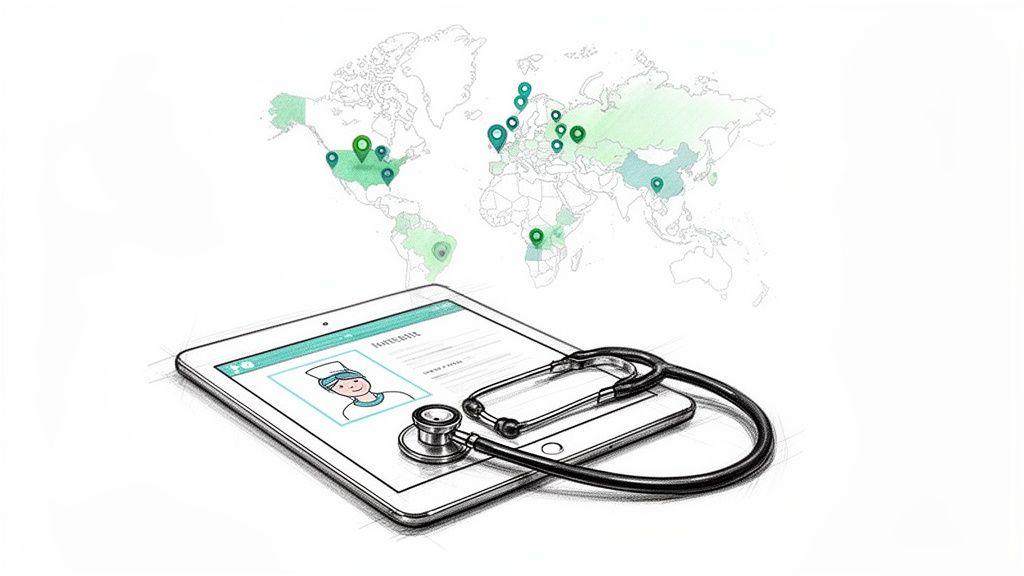
7. Nurse Practitioner (Telehealth - Primary Care)
The expansion of scope-of-practice laws and the growing acceptance of virtual care have positioned the Telehealth Nurse Practitioner as one of the most in demand medical jobs today. This role involves providing comprehensive primary care, from diagnosing and treating common illnesses to managing chronic conditions, all through secure digital platforms. For NPs, it offers a path to greater autonomy, a significantly improved work-life balance, and the ability to serve diverse patient populations without the constraints of a physical clinic.
Demand and Growth Outlook
Demand for telehealth NPs is surging, driven by a national shortage of primary care providers and increasing patient preference for convenient, accessible healthcare. States with Full Practice Authority (FPA) for NPs, such as Arizona, Washington, and Maine, offer the most robust opportunities. Major telehealth companies like Teladoc, MDLive, and CVS MinuteClinic are actively recruiting NPs to lead their virtual primary care programs and meet the needs of employer-sponsored health plans.
Who This Role Suits Best
This role is ideal for experienced Family Nurse Practitioners (FNPs) or Adult-Gerontology Nurse Practitioners (AGNPs) who are licensed in multiple states or hold a Nurse Licensure Compact (NLC) license. It appeals to those seeking to escape the administrative overhead of a traditional practice, clinicians looking for a flexible schedule to accommodate family life, and NPs aiming to build a patient panel in a modern, technology-forward environment.
Key Transition Steps
To successfully move into a telehealth NP role, focus on clarifying your scope and contractual obligations.
- Verify Scope-of-Practice Rules: Confirm how the platform handles state-specific collaborative practice agreements and prescribing regulations.
- Negotiate Patient Panel Size: Aim for a manageable panel of 150-250 active patients to ensure quality care without burnout.
- Confirm Malpractice Coverage: Ensure the company provides comprehensive malpractice insurance that specifically covers telehealth services.
- Clarify Prescribing Autonomy: Ask about any formulary restrictions or approval processes for prescribing medications.
Pro Tip: Look for organizations with established NP leadership roles. The presence of a Chief Nursing Officer or Director of Advanced Practice Providers often indicates a supportive and well-structured environment for NPs.
At WeekdayDoc, we make it simple to find telehealth NP roles that respect your expertise and schedule. Use our platform to filter for remote, no-call positions and check the Burnout-Friendly Score to identify opportunities that promote professional autonomy and well-being. Find a telehealth NP job that aligns with your career goals.
8. Pathologist (Remote/Digital Pathology)
The advent of digital pathology has transformed the field, creating one of the most compelling in demand medical jobs for pathologists seeking autonomy and focus. This role involves diagnosing diseases by examining digital images of tissue samples (whole slide imaging) on a computer screen rather than through a traditional microscope. This shift allows for remote work, asynchronous workflows, and a significant reduction in the physical demands and urgent interruptions common in hospital-based labs.
Demand and Growth Outlook
Demand for digital pathologists is rapidly expanding as more health systems and private labs adopt digital workflows to improve efficiency and access specialized expertise. States with large academic medical centers and biotech hubs, like Massachusetts, California, and Maryland, are leading this transition. Companies such as PathAI and Leica Biosystems, alongside innovative hospital networks, are actively recruiting pathologists comfortable with digital platforms and AI-assisted diagnostic tools, making it a high-growth specialty.
Who This Role Suits Best
This position is perfectly suited for board-certified Anatomic and Clinical Pathologists (MD/DO) who excel at focused, analytical work and prefer an independent environment. It is an excellent fit for pathologists who find the constant on-site demands of a hospital lab draining, those seeking to sub-specialize from a remote location, or senior pathologists wanting to transition away from administrative duties and focus purely on diagnostic work.
Key Transition Steps
Successfully moving into remote pathology hinges on ensuring your work environment is technologically sound and contractually protected.
- Clarify Case Volume Caps: Negotiate a maximum number of cases or slides per day to prevent burnout.
- Define Turnaround Times: Get explicit, written expectations for case turnaround times.
- Verify Technical Support: Ensure robust, 24/7 IT support is available for platform issues.
- Understand QA Processes: Ask about the quality assurance structure and how peer review is conducted remotely.
Pro Tip: When considering a digital pathology role, inquire about opportunities to gain or leverage sub-specialty expertise. Remote work allows labs to access specialists globally, which can be a powerful negotiating tool for your skills.
At WeekdayDoc, our platform helps you identify these specialized remote roles. You can use our filters to find pathology positions with no on-site requirements and assess their work-life balance using our unique Burnout-Friendly Score to ensure the role aligns with your career goals.
9. Radiologist (Teleradiology)
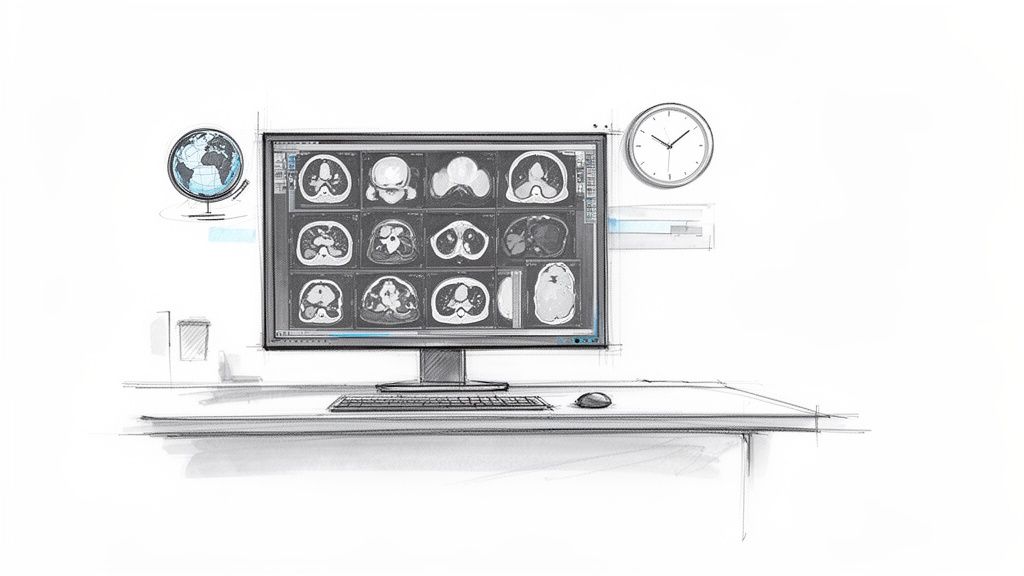
For radiologists seeking ultimate location independence and a highly focused workload, teleradiology has emerged as one of the most in demand medical jobs. This role involves remotely interpreting medical images such as X-rays, CT scans, and MRIs from a dedicated home workstation. The asynchronous nature of the work, combined with high earning potential and the ability to work for practices across the globe, offers unparalleled autonomy compared to traditional, hospital-based radiology.
Demand and Growth Outlook
The demand for teleradiology services is surging, driven by a shortage of on-site radiologists, the need for after-hours coverage, and the push for subspecialty interpretations. This has created a robust market with numerous opportunities. Major players like vRAD and Teleradiology Solutions (TRS), as well as innovative platforms like 6 Dx, are continuously recruiting board-certified radiologists. The growth outlook is strong globally, allowing for flexible scheduling across different time zones.
Who This Role Suits Best
This position is a perfect fit for board-certified MD or DO radiologists who excel in an independent, focused environment. It is particularly attractive to those with fellowship training in subspecialties like neuroradiology or musculoskeletal imaging. Radiologists who want to eliminate the non-clinical burdens of hospital practice, such as administrative meetings and interdepartmental politics, will find this career path highly rewarding.
Key Transition Steps
Successfully transitioning to a teleradiology career requires a focus on both clinical and technical preparedness.
- Invest in Equipment: Plan for a high-quality, FDA-approved diagnostic monitor, which can cost between $5,000 and $10,000.
- Negotiate Volume Caps: Clarify case volume expectations and negotiate caps to prevent burnout.
- Seek Transparency on Case Mix: Ask about the expected frequency of STAT cases versus routine studies.
- Diversify Your Portfolio: Consider working with multiple platforms to diversify income and gain exposure to different systems.
Pro Tip: Before committing, rigorously evaluate a company's IT support and infrastructure. Reliable technical assistance is non-negotiable when your entire practice depends on a seamless digital workflow.
At WeekdayDoc, you can filter for remote radiology positions and use our platform to compare compensation models and scheduling demands. Our tools are designed to help you find a role that aligns with your professional goals and personal life, ensuring your move to teleradiology is a sustainable one.
10. Clinical Informatics Physician
For clinicians with a passion for technology and systems improvement, the Clinical Informatics Physician role is one of the most intellectually stimulating in demand medical jobs. This specialty merges clinical practice with information science to optimize healthcare delivery through technology. Responsibilities include leading electronic health record (EHR) implementation, analyzing clinical data to improve patient outcomes, and developing digital health strategies, often in non-patient-facing, strategic positions.
Demand and Growth Outlook
The push for digital transformation in healthcare has created immense demand for physicians who can bridge the gap between clinical practice and IT. Health systems are actively recruiting for roles like Chief Medical Information Officer (CMIO), while EHR vendors such as Epic and Cerner seek clinical experts to guide product development. This field is rapidly expanding, especially in health systems focused on value-based care and population health, making it a secure and influential career path.
Who This Role Suits Best
This role is a perfect fit for MDs and DOs who are systems-thinkers and enjoy problem-solving on a large scale. It attracts clinicians frustrated by inefficient workflows who want to enact meaningful change from within. The often predictable, project-based nature of the work, with regular business hours and no direct patient call, is ideal for those seeking an alternative to the relentless pace of traditional clinical practice.
Key Transition Steps
Moving into clinical informatics requires a blend of clinical credibility and technical knowledge.
- Pursue Board Certification: Consider board certification through the American Medical Informatics Association (AMIA) to formalize your expertise.
- Gain Project Experience: Volunteer for EHR optimization committees or workflow design projects within your current organization.
- Target Key Employers: Focus on large health systems undergoing digital upgrades or established health IT vendors like Philips Healthcare.
- Develop Business Skills: Enhance your value by building a strong understanding of business operations and financial management.
Pro Tip: Networking is crucial. Attend industry conferences like HIMSS or AMIA to connect with health IT leaders and learn about emerging opportunities directly from the source.
At WeekdayDoc, you can find non-clinical and administrative roles that match your unique skill set. Use our platform to filter for leadership positions and connect with employers who value clinical expertise in strategic, non-patient-facing capacities. Learn more about non-clinical physician jobs and explore roles that redefine what a medical career can be.
Top 10 In-Demand Medical Jobs Comparison
| Role | Implementation Complexity | Resource Requirements | Expected Outcomes | Ideal Use Cases | Key Advantages |
|---|---|---|---|---|---|
| Telehealth Physician (Primary Care) | Moderate — EHR integration, multi-state licensure hurdles | Secure telehealth platform, EHR access, reliable internet, credentialing | Improved access and continuity, moderate per-visit efficiency | Routine primary care, chronic follow-ups, preventive visits | Predictable hours, geographic flexibility, work‑life balance |
| Occupational Health Physician | Low–Moderate — corporate policies and compliance training | On-site program infrastructure, OSHA/regulatory knowledge, employer systems | Reduced workplace injuries, measurable wellness ROI | Employee wellness programs, workers' comp, safety audits | Stable M–F schedule, corporate benefits, preventive impact |
| Telehealth Psychiatrist | Moderate — credentialing, crisis protocols, DEA considerations | Secure telepsychiatry platform, state licenses, telehealth‑friendly malpractice | Rapid access to care, efficient med management, high demand | Medication management, remote psychiatric evaluations, employer programs | Higher reimbursement, schedule control, reduced emergency exposure |
| Clinical Psychologist (Telehealth) | Moderate — state licensure, HIPAA compliance, platform setup | Secure therapy platform, licensure, supervision/CPD resources | Strong therapeutic outcomes, variable income by model | Individual therapy, specialized niches (CBT/DBT/trauma), assessments | Complete schedule control, private‑pay potential, deep patient work |
| Physician Assistant (Telehealth - Chronic Disease) | Low–Moderate — protocol adoption, supervision agreements | EHR, standardized care protocols, physician collaboration | Measurable chronic disease improvements, predictable panels | Protocol‑driven chronic care (diabetes, HTN, COPD) | High demand, predictable schedule, measurable outcomes |
| Physician Medical Director (Corporate Wellness & Telehealth) | High — strategic, regulatory, and governance complexity | Leadership skills, program budgets, legal/compliance support | Organizational program growth, cost containment, quality metrics | Program design, vendor selection, corporate health strategy | Executive compensation, strategic impact, equity/bonus upside |
| Nurse Practitioner (Telehealth - Primary Care) | Moderate — state scope variability and collaborative rules | Prescribing authority (state‑dependent), EHR, telehealth platform | Expanded access to primary care, high patient throughput | Primary care visits, chronic disease management, employer panels | High demand, schedule autonomy, multi-state practice potential |
| Pathologist (Remote/Digital Pathology) | Moderate–High — digital slide workflows, QA and validation | Digital scanners, AI tools, validated platform, CAP standards | Asynchronous diagnostics, consistent turnaround times | Remote reads, QA, subspecialty consults, pooled services | Predictable schedule, intellectual work, minimal patient contact |
| Radiologist (Teleradiology) | High — credentialing, PACS integration, high‑fidelity displays | High‑resolution monitors, secure PACS, robust IT and credentialing | High throughput reads, scalable income potential | Image interpretation, after‑hours/overnight reads, global coverage | Very high earning potential, flexible scheduling, global reach |
| Clinical Informatics Physician | High — informatics training, change management, governance | EHR access, analytics platforms, informatics certification | Improved workflows, reduced clinician burden, data‑driven decisions | EHR optimization, digital transformation, quality improvement | Strategic impact, C‑suite adjacency, predictable non‑clinical schedule |
How to Find Your Burnout-Friendly Role with WeekdayDoc
The landscape of modern medicine is undeniably shifting. The traditional, high-pressure clinical path is no longer the only option for dedicated professionals like you. As we've explored throughout this guide, a diverse and growing array of in demand medical jobs now offers what was once considered a rarity: a sustainable career that prioritizes both professional fulfillment and personal well-being.
From the burgeoning world of telehealth to specialized roles in occupational health and clinical informatics, the opportunities are vast. We've seen how roles like Teleradiologist, Telehealth Psychiatrist, and Remote Pathologist are not just hypotheticals but thriving fields offering six-figure salaries, flexible schedules, and a significant reduction in the stressors that lead to burnout. These positions leverage your extensive training in new and exciting ways, proving that you don't have to sacrifice your quality of life to make a meaningful impact.
Key Takeaways: Your Path Forward
Recapping the critical insights from our exploration, several key themes emerge as you plan your next career move:
- Technology is Your Ally: The rise of digital health platforms has unlocked unprecedented flexibility. Roles in telehealth, teleradiology, and clinical informatics are fundamentally changing where and how medicine is practiced, breaking down geographical barriers and offering more control over your work environment.
- Specialization Creates Opportunity: Niche fields like occupational medicine and corporate wellness are gaining prominence. Employers are increasingly recognizing the value of clinician-led initiatives, creating director-level positions that blend medical expertise with strategic leadership, often with predictable, business-hour schedules.
- Burnout-Friendly is the New Standard: The demand for roles with no-call, no-weekend, and no-overnight requirements is not a trend; it's a fundamental shift in professional expectations. The most forward-thinking healthcare organizations are structuring roles to attract and retain top talent by building sustainability directly into the job description.
- Your License is a Gateway: Whether you are an MD, DO, NP, PA, or psychologist, your credentials open doors to a variety of these modern roles. The key is understanding which opportunities align best with your specific licensure and skillset, from primary care telehealth for NPs to digital pathology for MDs/DOs.
Taking Action: From Information to Implementation
Understanding these opportunities is the first step. The next is to translate that knowledge into a tangible job search strategy. This is precisely where a targeted approach becomes crucial. Generic job boards often mix these burnout-friendly gems with thousands of traditional, high-intensity roles, forcing you to waste valuable time sifting through irrelevant listings.
Your time is your most valuable non-renewable resource. A focused job search, using tools designed specifically for your needs, is not a luxury—it's a necessity for reclaiming your career and your life.
This is where WeekdayDoc transforms the search process. Our platform was built by physicians who experienced the same frustrations you have. We recognized the critical need for a curated space dedicated exclusively to in demand medical jobs that respect your work-life boundaries. Instead of wading through endless postings, you can use our advanced filters to instantly find opportunities that match your specific license and desired schedule. With features like the proprietary Burnout-Friendly Score and state-specific FIRE calculators, you are empowered with transparent data to make informed decisions that align with both your career and financial goals.
The path to a more balanced and fulfilling medical career is clearer than ever before. The roles exist, the demand is high, and the tools to find them are at your fingertips. By embracing these new models of care, you can rediscover your passion for medicine on your own terms, building a professional life that is not only successful but also sustainable for the long haul.
Ready to find a role that fits your life? Stop searching through endless irrelevant listings and start exploring curated, burnout-friendly opportunities on WeekdayDoc. Visit WeekdayDoc to filter for your perfect weekday-only, no-call job and take the first real step toward a more sustainable medical career.